For three decades, photographer Paul Nicklen has lived amidst the highest density of cougars on Vancouver Island, yet a clear sighting remained elusive. This profound respect for the elusive nature of apex predators, a sentiment echoed by John Vaillant’s observation that "The tiger will see you a hundred times before you see him once," fueled a deep-seated desire to witness these magnificent felines in their natural habitat. This aspiration culminated in an expedition to Chilean Patagonia, a region renowned for its dramatic landscapes and its iconic pumas.
The Journey Begins: From Passport Perils to Patagonian Majesty
The journey to Chilean Patagonia was not without its initial challenges. A lost passport and an unexpected detour to a Brazilian embassy tested the photographer’s resolve before he could finally set foot in Chile. His base for this photographic pursuit was a meticulously restored estancia, a traditional Patagonian ranch, situated on the periphery of the world-famous Torres del Paine National Park. The estancia, still equipped with operational farming and livestock apparatus, offered a tangible link to the region’s heritage.
The burgeoning ecotourism industry in Torres del Paine has transformed the economic landscape of the region. Driven by the park’s breathtaking granite peaks and pristine wilderness, visitors are increasingly drawn to its natural beauty. The owners of the estancia are exemplary of this shift, having embraced a philosophy of coexistence with the wildlife that was once perceived as a threat to their livestock. This harmonious relationship is nurtured by the estancia’s staff, a vibrant team of locals who embody the enduring values of gaucho culture – honesty, diligent work, and profound generosity.
Ecotourism’s Rise in Torres del Paine
Torres del Paine National Park, a UNESCO Biosphere Reserve since 1978, attracts over a million visitors annually, primarily drawn by its dramatic glacial landscapes, towering granite spires, and diverse wildlife. This influx has spurred significant economic development, with ecotourism becoming a cornerstone of the local economy. However, it has also raised questions about sustainable tourism practices and the impact on the delicate Patagonian ecosystem. The shift in perspective from viewing wildlife as a threat to understanding its intrinsic value and economic potential through tourism represents a significant evolution in the region’s conservation ethos.
Tracking the Elusive Puma: A Guide’s Expertise
Central to the expedition’s success was Rodrigo, a seasoned guide and recognized puma expert within the estancia’s employ. Rodrigo possessed an intimate knowledge of the local pumas, an understanding akin to familial connection. Under his expert guidance, the expedition ventured deep into the heart of puma territory. The transition from cultivated agricultural land to the rugged terrain of striking rock formations, serene snow-fed lakes, and vast expanses of grassland, known as pampas, marked their progression into the wild. Towering granite peaks of the Andes loomed ever larger, forming a dramatic backdrop to their search.
The Puma’s Adaptive Strategies
Pumas (Puma concolor), also known as cougars or mountain lions, are masters of camouflage, their powerful, flexible musculature and padded paws enabling silent, calculated movements through diverse habitats. Their ability to blend seamlessly into their surroundings is a testament to millions of years of evolutionary adaptation, making them apex predators and highly successful hunters. Studies indicate that pumas are highly adaptable, capable of thriving in a wide range of environments, from dense forests to arid deserts and mountainous regions. Their diet typically consists of large mammals, such as guanacos, deer, and rabbits, but they are known to be opportunistic feeders.
The First Encounter: Petaka and Her Kittens
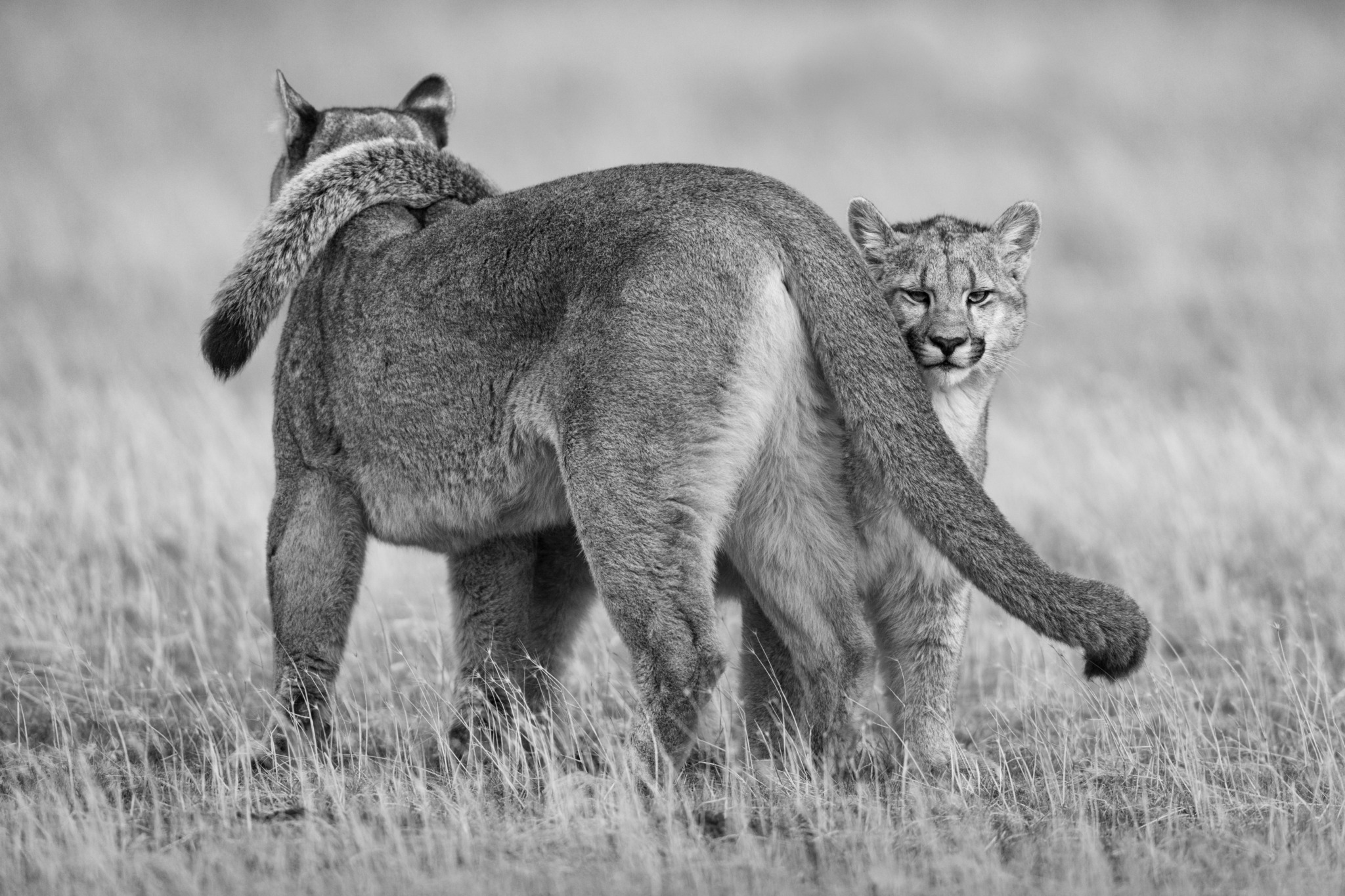
It was in the shadow of these formidable mountains that the expedition encountered its first puma: a female of considerable renown, affectionately known as Petaka, accompanied by her two young kittens. Petaka’s calm demeanor and her apparent indifference to human presence had cultivated a legendary status among those who frequent the mountains of Torres del Paine and its environs.
Legal Protections and Puma Behavior
In stark contrast to some neighboring regions, pumas in Chile are afforded protected species status, with hunting largely prohibited. This conservation measure has, in turn, influenced the behavior of some puma populations within the area. These individuals have become accustomed to the presence of humans, often choosing to disregard them entirely as they go about their natural routines. This remarkable adaptation allows for a unique opportunity for observers to witness wild animals in a state of natural calm and contentment.
The photographer had the profound privilege of observing Petaka as she attentively cared for her offspring. The silent hours were spent in quiet observation, a profound emotional experience as the playful kittens tumbled and frolicked in the grass, their mother a picture of serene vigilance. This encounter underscored the delicate balance between human presence and the preservation of wild spaces.
A Blizzard’s Embrace: Unexpected Solitude
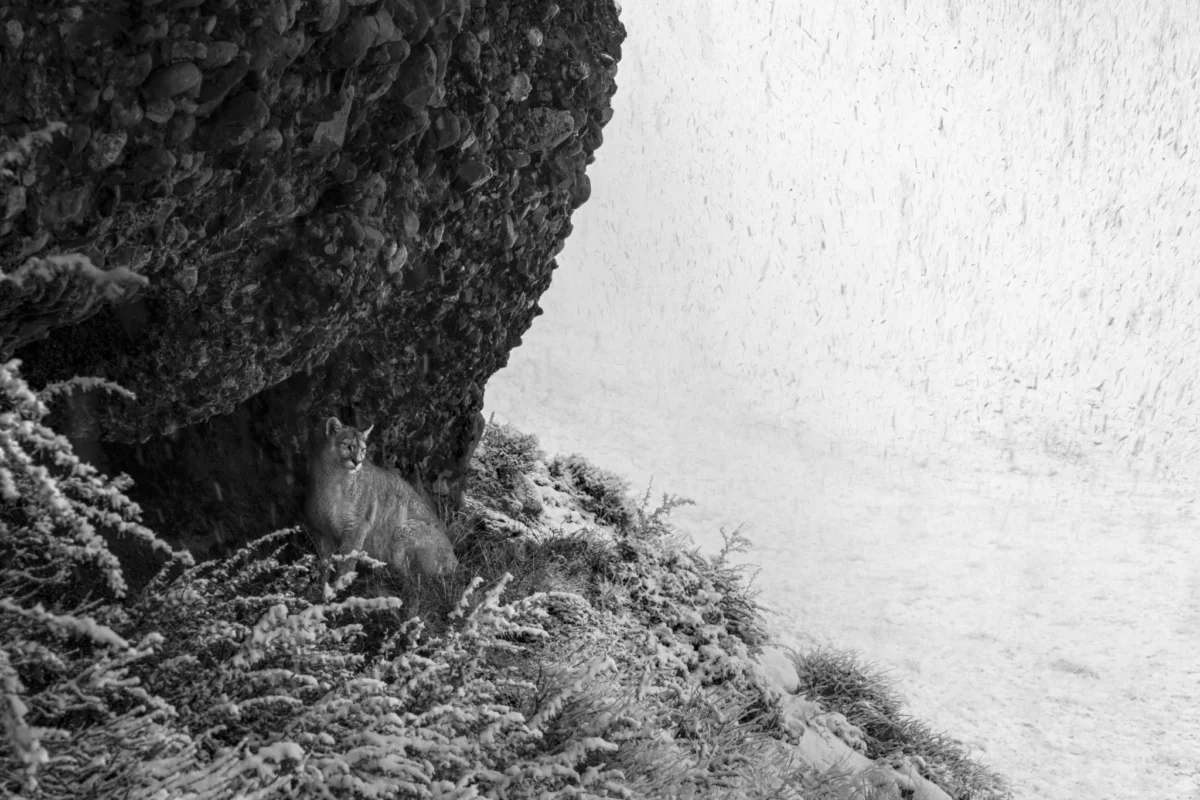
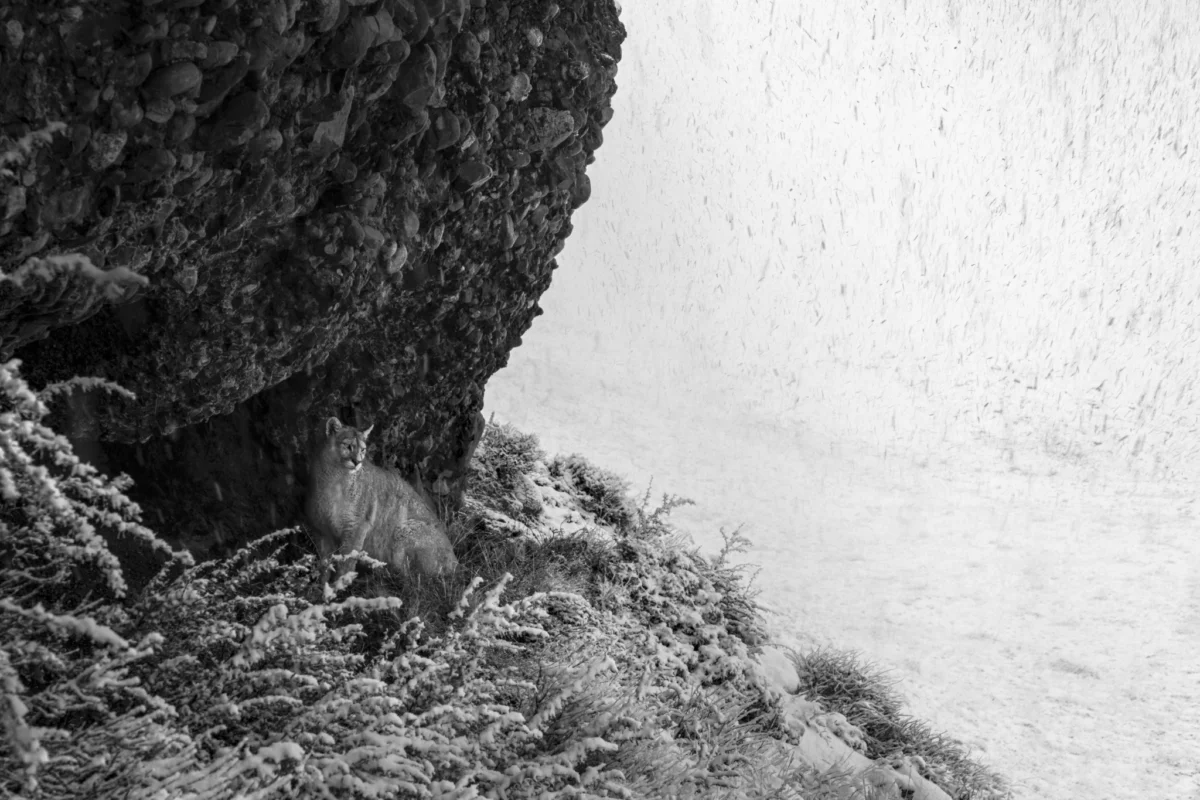
Shortly after this heartwarming encounter with Petaka and her family, and after observing other resident pumas within the park, the notoriously capricious mountain weather took a dramatic turn. The winds intensified, carrying the first hesitant flakes of snow, which soon escalated into a full-blown blizzard, enshrouding the landscape in a hushed, close embrace. Seeking refuge from the storm, the photographer retreated to the protective alcoves of mountainside caves, intending to wait out the inclement weather.
It was within the relative shelter of one such cave that an extraordinary event unfolded. A large puma emerged from the swirling snow, settling just a few feet away, seemingly seeking the same respite from the elements. Instinct took over; breath was held, and the camera lens was kept steady, a silent testament to the burgeoning excitement within.
For an extended period, an improbable silence permeated the makeshift sanctuary. Snowdrifts accumulated, softening the landscape below, as two unlikely companions shared the confined space, each absorbed in their own quiet vigil. The puma, with an almost regal detachment, never once acknowledged the human presence, its gaze fixed outward, keenly observing the surrounding environment.
The Significance of Non-Intervention
This encounter highlights a crucial aspect of wildlife photography and conservation: the importance of allowing animals their natural space and autonomy. The puma’s unperturbed demeanor in the presence of a human observer is a direct result of its protected status and the respectful approach adopted by those who venture into its domain. The absence of perceived threat allows for moments of profound, albeit passive, coexistence. This aligns with the principles of ethical wildlife observation, which prioritize the well-being of the animal above all else, fostering a relationship based on mutual respect rather than intrusion.
The Clearing Storm and a Profound Realization
As the blizzard finally relented and the weather began to clear, revealing a pristine canvas of fresh snow, the puma quietly departed, melting back into the newly sculpted landscape. It was only then, with the departure of the majestic creature, that the dam of suppressed emotion finally broke. The experience was overwhelming, a profound affirmation of the wildness and raw beauty of nature.
This fleeting moment of shared solitude with a wild animal, within one of the planet’s most awe-inspiring ecosystems, was described as an immeasurable gift. It served as a powerful reminder that when nature is afforded the space to recover and flourish, humanity can become a witness to the full spectrum of life on Earth, experienced in its most authentic, untamed, and unimaginably profound form.
Broader Implications: Conservation and Human-Wildlife Coexistence
The experiences in Chilean Patagonia underscore the vital importance of conservation efforts and the successful implementation of policies that protect endangered species. The pumas’ adaptation to human presence in Torres del Paine, while remarkable, is a direct consequence of dedicated conservation initiatives and a shift in local attitudes towards wildlife.
Data on Puma Populations and Conservation Success
While precise, up-to-the-minute population data for pumas in Torres del Paine can be challenging to obtain due to their elusive nature and vast habitat, studies and park management reports consistently indicate a healthy and stable population within the protected areas. The successful reintroduction of native prey species, such as guanacos, and the management of human activities within and around the park have been crucial factors in sustaining these populations. Organizations like the Wildlife Conservation Society (WCS) and local Chilean environmental agencies play a significant role in monitoring wildlife, conducting research, and implementing conservation strategies in the region.
The story of Petaka and her kittens, and the solitary encounter during the blizzard, serves as a potent narrative for the ongoing dialogue surrounding human-wildlife coexistence. As ecotourism continues to grow, the challenge lies in balancing economic benefits with the imperative to protect these fragile ecosystems and their inhabitants. The success of Torres del Paine offers a model for how well-managed protected areas, coupled with community engagement and robust conservation policies, can foster a future where both humans and wildlife can thrive.
The photographer’s journey, marked by both personal anticipation and profound encounters, ultimately culminates in a deep appreciation for the wild, raw, and untamed spirit of nature, a spirit that, when given the chance, can offer unparalleled experiences and a renewed sense of wonder.