For three decades, the author lived on Vancouver Island, a region boasting one of the highest cougar densities globally, yet only managed a fleeting glimpse of these elusive felines. This prolonged immersion in a landscape teeming with apex predators, while yielding minimal direct encounters, fueled a deep-seated yearning to witness these powerful creatures in their natural element. The opportunity to photograph the famed pumas of Chilean Patagonia presented itself, a chance that, despite the author’s reserved expectations, ignited a palpable sense of anticipation.
A Challenging Overture to Patagonia
The journey to Chilean Patagonia was not without its initial tribulations. A lost passport and an unexpected detour to a Brazilian embassy marked a rocky start, underscoring the logistical complexities of international travel to remote regions. Upon finally arriving in Chile, the author was welcomed at a lodge situated on the periphery of Torres del Paine National Park. This unique accommodation, a repurposed estancia, still bore the functional remnants of its agricultural past, including farming and livestock equipment.
The burgeoning ecotourism industry in the region, driven by the magnetic allure of Torres del Paine’s pristine peaks, has transformed the economic landscape. The estancia owners, like many in the area, have adapted to this shift, embracing a philosophy of coexistence with the very wildlife that was once perceived as a threat to their livestock. The staff, a vibrant ensemble of local individuals, continue to embody the enduring values of gaucho culture – honesty, hard work, and profound generosity. This cultural bedrock provides a unique context for understanding the human-wildlife dynamic in this rugged Patagonian terrain.
The Shadow of the Andes: Encountering Petaka and her Kittens
The quest for puma encounters began in earnest under the guidance of Rodrigo, a local guide renowned for his expertise and intimate knowledge of the region’s puma population. Rodrigo’s reputation as a puma expert, treating the animals almost like family, instilled confidence in the expedition. Venturing deep into the heart of what is undeniably puma territory, the landscape transitioned dramatically. Cultivated fields gave way to dramatic rock formations, pristine glacial lakes fed by snowmelt, and vast expanses of rolling grasslands, known as pampas. As the trek progressed, the imposing granite spires of the Andes Mountains loomed larger, forming a breathtaking backdrop to the unfolding wilderness.
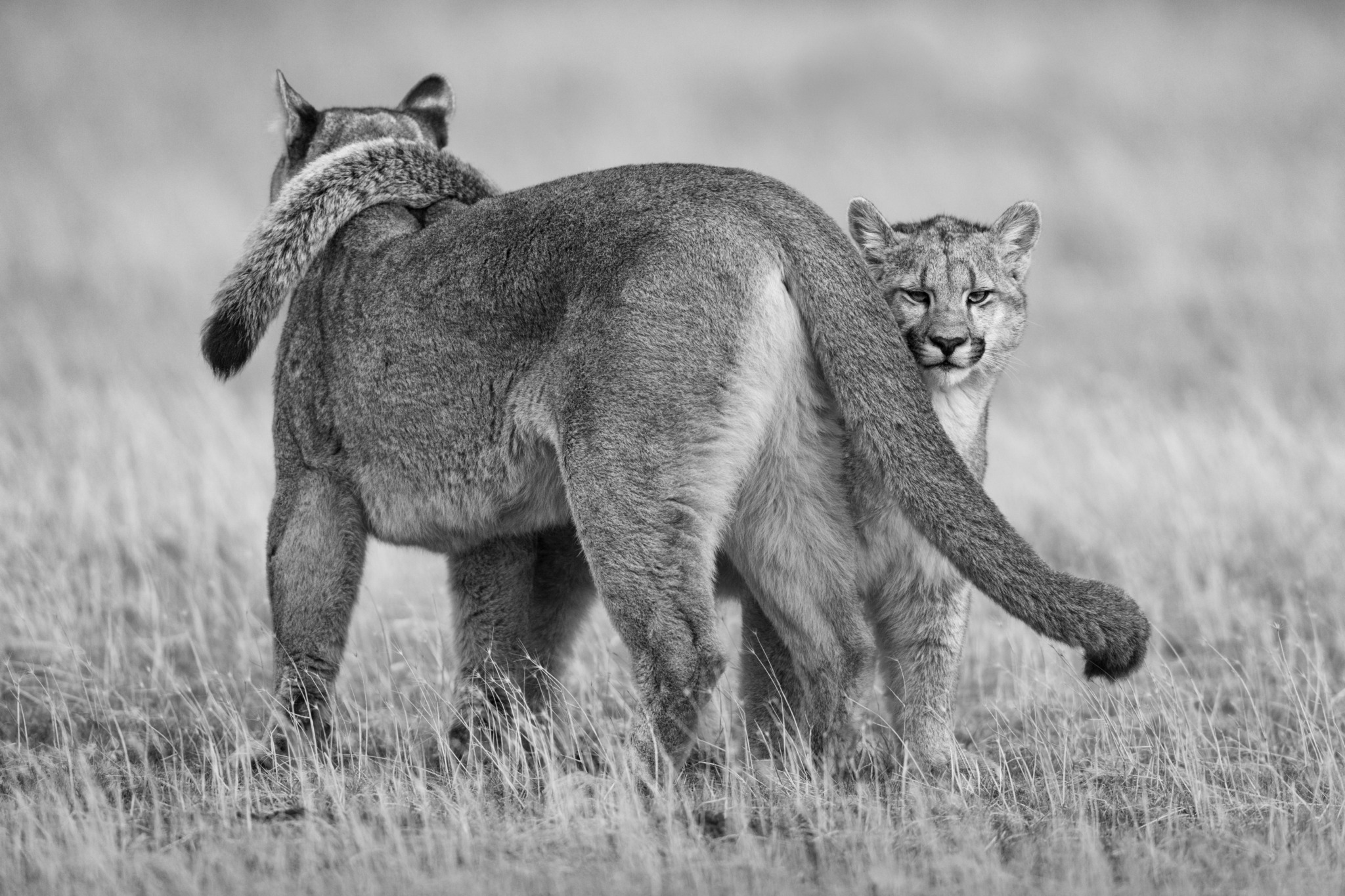
It was within this majestic setting, in the omnipresent shadow of the Andes, that the first significant encounter occurred. The subject was Petaka, a female puma of near-legendary status within the park and its surrounding areas, accompanied by her two young kittens. Petaka’s remarkable composure and her apparent indifference to human presence have cemented her as an icon among visitors to Torres del Paine. This behavioral adaptation is a direct consequence of the conservation efforts in Chile, where pumas are designated as a protected species, with hunting largely prohibited. This protective status has allowed certain puma populations to habituate to the presence of humans, enabling them to continue their lives with a degree of undisturbed normalcy. For the photographer, observing a wild animal exhibit such tranquility and contentment in the mere act of existing was a profound and deeply satisfying experience. The privilege of witnessing Petaka tenderly nurturing her offspring, their playful interactions in the grass unfolding just yards away, was an emotionally resonant moment, underscoring the beauty of natural family bonds.
A Blizzard’s Embrace: An Unforeseen Communion
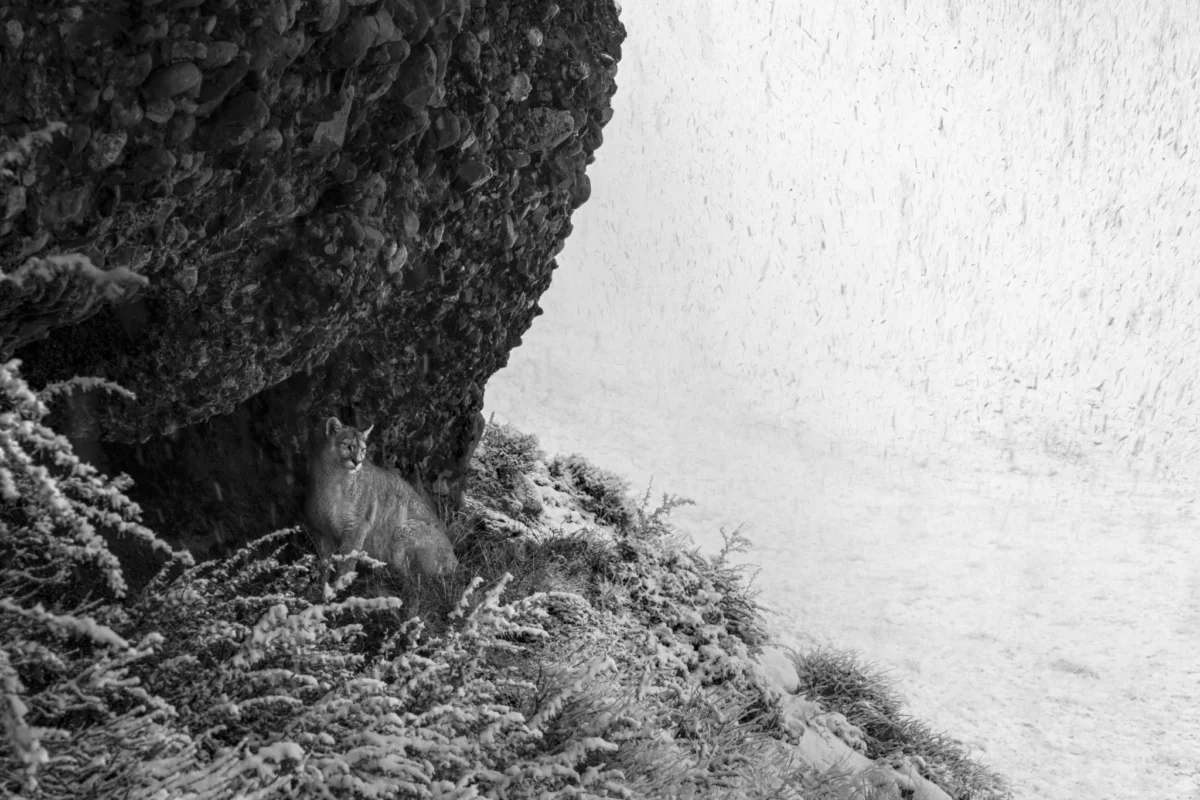
Shortly after these initial observations of Petaka and her growing family, the notoriously volatile Patagonian weather took a dramatic turn. The winds intensified, ushering in the first hesitant flakes of snow, which soon coalesced into a full-blown blizzard. The storm descended with an almost tangible presence, blanketing the landscape in a profound silence and drawing the world into a close, intimate embrace. Seeking refuge from the inclement weather, the photographer found shelter within a mountainside cave, a natural alcove offering respite from the biting wind and swirling snow.
It was in this secluded haven that an extraordinary event unfolded. A large puma, emerging as if from the very fabric of the snowstorm, appeared and settled within mere feet of the photographer. The proximity was startling, and instinct took over. The photographer instinctively held their breath, striving to maintain a steady hand on the camera, the surge of adrenaline and excitement palpable. For an extended period, an unspoken truce existed between human and feline. They shared the silent confines of the cave, two unlikely companions weathering the storm, surrounded by the accumulating snowdrifts that softened the landscape below. The puma, demonstrating an unwavering focus on its surroundings, never once acknowledged the presence of its human observer. This profound stillness, this shared vulnerability to the elements, created a moment of profound connection.
As the blizzard finally abated and the skies began to clear, revealing a pristine, snow-covered world, the puma silently departed, melting back into the freshly painted canvas of the landscape. It was only then, with the departure of the wild creature, that the dam of pent-up emotion broke. This unexpected encounter, born from the crucible of a harsh storm, served as a powerful testament to the restorative power of nature. When ecosystems are granted the space and respect to thrive, humanity is afforded the opportunity to witness the unadulterated essence of life on Earth, a raw, wild, and awe-inspiring spectacle. The fleeting moment of shared existence with a wild puma, in one of the planet’s most breathtaking natural theaters, was described as an unparalleled gift.
The Puma’s Domain: Ecological and Conservation Context
Chilean Patagonia, particularly the region surrounding Torres del Paine National Park, represents a critical habitat for the South American puma (Puma concolor). This vast wilderness, characterized by its dramatic mountain ranges, expansive grasslands, and glacial lakes, provides an ideal environment for these apex predators. Puma populations in this region have historically faced challenges, including habitat fragmentation due to agricultural expansion and conflicts with livestock owners. However, a significant shift in conservation policy and public perception has occurred over the past few decades.
Supporting Data and Conservation Efforts:
- Protected Status: Pumas are classified as a protected species throughout Chile. This designation, enacted through national legislation, prohibits hunting and imposes strict regulations on any activities that could harm puma populations or their habitats.
- Torres del Paine National Park: Established in 1959, Torres del Paine National Park is a UNESCO World Biosphere Reserve. Its expansive territory of over 181,000 hectares encompasses a diverse range of ecosystems, from windswept steppes to glacial fjords, providing crucial refuge for numerous species, including pumas.
- Ecotourism’s Role: The rise of ecotourism in Patagonia has created economic incentives for local communities to protect wildlife and their habitats. Many estancias, once primarily focused on livestock, have diversified into eco-lodges and wildlife viewing operations, recognizing the economic value of a healthy ecosystem. This transition fosters a greater understanding and appreciation for the ecological importance of species like the puma.
- Human-Wildlife Coexistence: The observed habituation of some pumas to human presence in areas like Torres del Paine is a complex phenomenon. It is not indicative of domestication but rather a behavioral adaptation to environments where they perceive less threat. This adaptation, while allowing for closer observation, also necessitates responsible tourism practices to avoid stressing the animals or altering their natural behaviors. Research into puma behavior in habituated areas is ongoing, focusing on understanding the long-term impacts of human presence.
Broader Implications and Future Outlook
The experience in Chilean Patagonia offers a profound illustration of the potential for successful human-wildlife coexistence when conservation policies are effectively implemented and supported by local communities. The shift from viewing pumas as a threat to livestock to recognizing their intrinsic value and ecological importance has been instrumental in their recovery and continued presence in these iconic landscapes.
Analysis of Implications:
- Economic Viability of Conservation: The success of ecotourism in Patagonia demonstrates that protecting wildlife and their habitats can be economically sustainable. This model provides a powerful argument for further investment in conservation initiatives globally, showcasing how environmental stewardship can drive economic growth.
- Shifting Perceptions: The photographer’s initial apprehension, rooted in the general understanding of pumas as elusive and potentially dangerous, is contrasted with the reality of encountering habituated individuals. This highlights the importance of accurate information and direct experience in shaping public perception and fostering empathy towards wildlife.
- The Importance of Wild Spaces: The narrative underscores the irreplaceable value of wild, undeveloped landscapes. These spaces are not merely scenic backdrops but complex ecosystems that support biodiversity and provide essential ecological services. The preservation of such areas is crucial for the long-term health of the planet.
- Lessons for Global Conservation: The story of Patagonian pumas serves as a beacon of hope for other regions grappling with human-wildlife conflict. It suggests that with dedicated conservation efforts, scientific understanding, and community engagement, even the most elusive and powerful predators can continue to thrive alongside human populations.
The profound experience of sharing a snowstorm with a wild puma in Patagonia is more than just a personal anecdote; it is a powerful narrative that speaks to the resilience of nature and the potential for harmonious coexistence. It is a reminder that by affording wild spaces the respect and protection they deserve, we unlock the opportunity to witness the planet’s most extraordinary wonders, unfiltered and untamed. The future of these magnificent creatures and the wild landscapes they inhabit hinges on our continued commitment to conservation and our willingness to learn from the silent wisdom of the wild.