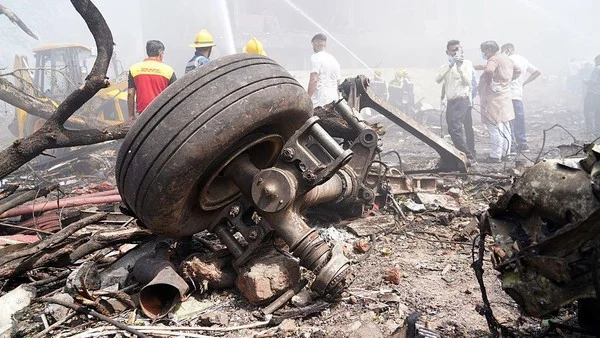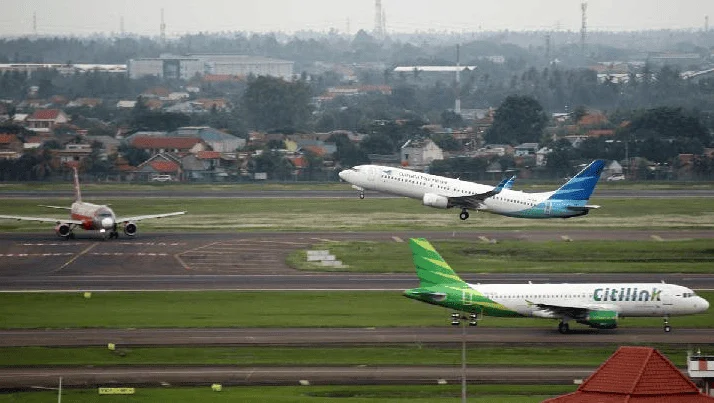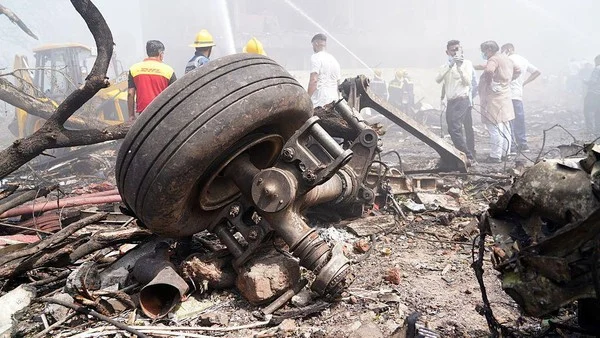
The aviation world remains in a state of profound mourning and intense scrutiny following the catastrophic loss of Air India flight AI-171 on June 12, 2025. The Boeing 787 Dreamliner, a cornerstone of modern long-haul aviation, went down in the vicinity of Sardar Vallabhbhai Patel International Airport in Ahmedabad, India, during the final stages of its journey from London Heathrow. Of the 245 souls on board, including 232 passengers and 13 crew members, official reports have confirmed a staggering toll with only one individual miraculously surviving the impact. As the wreckage is cleared and the grieving process begins for hundreds of families worldwide, the focus of the global aviation community has shifted toward the recovery and analysis of the aircraft’s "black boxes"—the Flight Data Recorder (FDR) and the Cockpit Voice Recorder (CVR). These devices hold the definitive record of the flight’s final moments and are currently being processed in a high-security laboratory in New Delhi under the supervision of international experts.
The Final Minutes: A Chronology of Flight AI-171
To understand the gravity of the investigation, one must look at the timeline of the flight’s final hour. Flight AI-171 departed London Heathrow on schedule, traversing European and Middle Eastern airspace without any reported anomalies. The Boeing 787-8, registered under the Air India fleet as a relatively young aircraft with a robust maintenance record, maintained a steady cruising altitude of 37,000 feet for the majority of the journey.
According to preliminary radar data and Air Traffic Control (ATC) logs, the descent into Ahmedabad began at approximately 6:15 PM local time. Weather conditions at the time were reported as "challenging but within operational limits," characterized by pre-monsoon turbulence and intermittent heavy rain. At 6:42 PM, the flight crew acknowledged landing instructions for Runway 23. However, just four minutes later, at 6:46 PM, ATC units noticed a sudden and unexplained deviation in altitude. The aircraft, which should have been on a stabilized approach, exhibited a sharp rate of descent. Witnesses on the ground reported seeing the aircraft struggling to maintain a level pitch before it disappeared from radar screens and impacted an open area approximately 5 kilometers from the airport perimeter.
The Critical Role of the Flight Recorders
The recovery of the Flight Data Recorder (FDR) and Cockpit Voice Recorder (CVR) within 24 hours of the crash was a significant milestone for the investigation team. Despite the term "black box," these units are painted in high-visibility heat-resistant orange to aid recovery efforts in charred wreckage or deep water.
The FDR is designed to record at least 88 different parameters, though modern units on the Boeing 787 often track over 1,000 variables. These include airspeed, altitude, vertical acceleration, engine performance, and the precise position of flight control surfaces such as the rudder, ailerons, and flaps. Simultaneously, the CVR captures all audio within the cockpit, including pilot conversations, radio transmissions, and ambient sounds like engine noise or mechanical alarms.
The Indian Ministry of Civil Aviation has confirmed that the units were transported to the Aircraft Accident Investigation Bureau (AAIB) headquarters in New Delhi. Given the international implications of a Dreamliner crash, the investigation has been joined by representatives from the United States National Transportation Safety Board (NTSB), the Federal Aviation Administration (FAA), and technical engineers from Boeing. This tripartite collaboration ensures that the data extraction process adheres to the highest global standards of forensic integrity.
Technical Focus: The Flap System Hypothesis
While the full analysis of the black box data may take weeks or even months to finalize, investigators are currently scrutinizing a specific technical theory: a failure in the aircraft’s flap system. Flaps are movable panels on the trailing edge of the wings that increase lift and drag, allowing an aircraft to fly safely at the lower speeds required for takeoff and landing.
Initial telemetry suggests that AI-171 may have experienced an "asymmetric flap deployment" or a total failure of the flap actuation system during the final approach. If one wing’s flaps deploy while the other’s fail, it can create a violent rolling motion that is difficult for pilots to counteract at low altitudes. Alternatively, if the flaps fail to deploy entirely while the aircraft is slowing down for landing, the plane could reach a "stall" speed, where the wings no longer generate enough lift to stay airborne.
The investigation will cross-reference the FDR data—showing the physical position of the flaps—with the CVR audio to determine if the pilots received a "Flap Relief" or "Slat/Flap Kar" warning on their cockpit displays.
The Global Impact on the Boeing 787 Fleet
The Boeing 787 Dreamliner has long been hailed as a revolutionary aircraft due to its composite-material fuselage and fuel efficiency. However, the AI-171 disaster has prompted a wave of concern across the industry. There are currently over 1,100 Boeing 787s in service globally with major carriers including United Airlines, Qatar Airways, and All Nippon Airways (ANA).

Following the crash, several civil aviation authorities have issued "Enhanced Inspection Notices." While a global grounding has not yet been ordered, airlines have been advised to perform rigorous checks on the high-lift flight control systems and hydraulic actuators of their 787 fleets. The outcome of the AI-171 investigation could lead to a mandatory Airworthiness Directive (AD) from the FAA, which would legally require all 787 operators to implement specific hardware or software fixes if a design flaw is identified.
Official Responses and Diplomatic Coordination
The tragedy has elicited responses from the highest levels of government. India’s Minister of Civil Aviation issued a statement emphasizing transparency: "Our priority is to provide answers to the families of the victims. The investigation will be conducted with absolute impartiality, and every byte of data from the flight recorders will be scrutinized by the world’s leading experts."
Boeing also released a formal communique, stating, "We extend our deepest condolences to the families of those lost on Air India flight AI-171. A Boeing technical team is on the ground in India to provide all necessary assistance to the investigating authorities under the direction of the NTSB and the AAIB."
The presence of the NTSB is standard protocol for accidents involving American-manufactured aircraft. Their role is not to assign blame but to determine the "probable cause" of the accident to prevent future occurrences. This international cooperation is vital, as it allows investigators to compare the AI-171 data with previous "near-miss" incidents or maintenance reports involving the 787 series worldwide.
The Human Element and the Sole Survivor
Amidst the technical jargon of flight paths and hydraulic pressures, the human element of the AI-171 crash remains the most poignant aspect. The lone survivor, currently in critical but stable condition at a specialized trauma center in Ahmedabad, represents a rare anomaly in high-impact aviation accidents. Medical experts suggest that the survivor’s position in the aircraft—reportedly in the rear section of the fuselage—may have played a role in their survival, as the tail section sometimes breaks away and absorbs less of the initial kinetic energy during certain types of impacts.
Investigators hope that once the survivor is medically cleared, they may be able to provide a firsthand account of the cabin environment in the final seconds—whether there was smoke, unusual vibrations, or if the crew issued emergency bracing commands. While physical data from the black boxes is more reliable, the human testimony can provide context to the "startle factor" the crew may have faced.
Broader Implications for Aviation Safety
The crash of AI-171 serves as a grim reminder that despite the unprecedented safety of modern aviation, risks remain. The investigation is expected to delve into "human-machine interface" (HMI). Even if a mechanical failure occurred, the probe will look at how the Boeing 787’s fly-by-wire system communicated that failure to the pilots. Did the automation help or hinder their efforts to recover the aircraft?
Furthermore, the disaster has reignited debates regarding the "Real-Time Black Box" technology. Many safety advocates argue that flight data should be streamed via satellite to the cloud in real-time, rather than relying on the physical recovery of recorders from a crash site. If AI-171 had been streaming its data, investigators would have known the cause of the crash within minutes of the impact, potentially allowing for immediate safety alerts to other aircraft in the air.
Conclusion: The Path to the Final Report
As the analysis in New Delhi continues, the aviation industry remains on edge. The process of decoding the black boxes involves meticulously synchronizing the CVR and FDR data to create a second-by-second reconstruction of the cockpit environment. This "digital twin" of the accident will allow investigators to see exactly what the pilots saw and hear exactly what they heard.
A preliminary report is expected within 30 days, which will provide factual data without drawing final conclusions. The full, comprehensive report—which will include safety recommendations and a definitive cause—could take up to a year to complete. For now, the world waits for the black boxes to speak, hoping that the lessons learned from the tragic loss of Air India AI-171 will pave the way for a safer future in the skies.