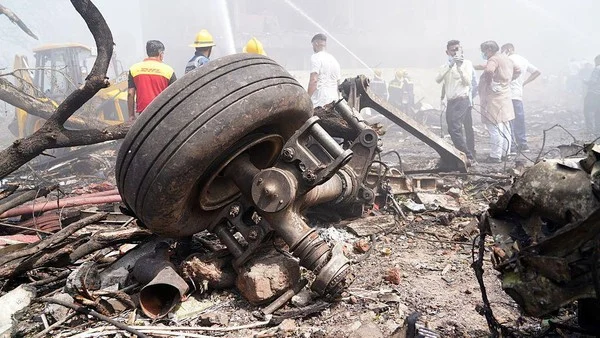
The global aviation community remains in a state of mourning and high alert following the catastrophic crash of Air India flight AI-171 on June 12, 2025. The Boeing 787 Dreamliner, which was operating a scheduled international service from London Heathrow to Sardar Vallabhbhai Patel International Airport in Ahmedabad, went down during its final approach, resulting in the deaths of 244 of the 245 people on board. As the wreckage is cleared and the grieving process begins for the families of the victims, the focus of the Indian government and international aviation regulators has shifted toward the recovery and analysis of the aircraft’s "black boxes." These devices—the Flight Data Recorder (FDR) and the Cockpit Voice Recorder (CVR)—are currently being scrutinized in a high-security laboratory in New Delhi, as investigators race to determine whether the tragedy was caused by mechanical failure, human error, or environmental factors.
Chronology of the AI-171 Disaster
Flight AI-171 departed London Heathrow at its scheduled time, carrying a diverse manifest of business travelers, families, and tourists. The Boeing 787-8, a flagship of the Air India fleet, was reportedly in excellent mechanical condition prior to takeoff, having passed its most recent safety inspections. For the majority of the long-haul flight, the journey was described as routine. Radar data indicates that the aircraft maintained its cruising altitude and speed without incident as it crossed European and Middle Eastern airspace.
The situation changed rapidly as the aircraft entered Indian airspace and began its descent toward Ahmedabad. According to preliminary radar telemetry, the aircraft was positioned for a standard approach to Runway 23. However, at approximately 4,000 feet, air traffic control (ATC) noticed a deviation in the aircraft’s speed and glide slope. While the weather at the time was reported as overcast with moderate winds, it was not initially considered severe enough to cause a loss of control. The final communication from the cockpit was brief, and shortly thereafter, the aircraft disappeared from radar screens, impacting the ground several kilometers short of the airport perimeter. Emergency response teams arrived at the site within minutes, but the intensity of the post-crash fire made rescue operations nearly impossible, leading to the heartbreaking confirmation that only one passenger had survived the impact.
The Role of the Flight Data and Cockpit Voice Recorders
The recovery of the Flight Data Recorder (FDR) and the Cockpit Voice Recorder (CVR) within 24 hours of the crash was a significant breakthrough for the investigation. Despite the high-impact nature of the crash and the subsequent fire, the "black boxes"—which are actually painted bright orange for visibility—remained intact due to their crash-survivable memory units. These units are designed to withstand extreme G-forces, underwater pressure, and temperatures exceeding 1,000 degrees Celsius.
The FDR is expected to provide a comprehensive digital map of the flight’s final moments. It records thousands of parameters, including airspeed, altitude, vertical acceleration, engine performance, and the position of flight control surfaces like the rudder, elevators, and flaps. Simultaneously, the CVR will provide the "human" element of the story. It captures all sounds in the cockpit, including the pilots’ conversations, radio transmissions, and any automated cockpit warnings or mechanical clicks that might indicate a system failure. The synchronization of these two data streams will allow investigators to reconstruct a second-by-second animation of the flight, revealing exactly what the pilots saw and how the aircraft responded to their inputs.
Technical Scrutiny: The Flap System and the Boeing 787
One of the primary areas of interest for the investigative team, which includes experts from the Indian Directorate General of Civil Aviation (DGCA), the U.S. National Transportation Safety Board (NTSB), and Boeing’s own technical units, is the aircraft’s flap system. Early reports from ground observers and preliminary data analysis suggest that the aircraft may have experienced a "configuration issue" during the landing phase.
Flaps are essential components on the trailing edge of the wings that increase lift and drag, allowing an aircraft to fly at lower speeds during takeoff and landing. If the flaps fail to deploy symmetrically—where one side extends further than the other—it can cause a "split-flap" condition, leading to an uncommanded roll that is extremely difficult for pilots to correct at low altitudes. Alternatively, if the flaps failed to deploy at all, the aircraft would have been forced to land at a much higher speed, potentially leading to a stall if the pilots attempted to maintain a standard approach profile. The Boeing 787 utilizes a sophisticated fly-by-wire system to manage these surfaces, and investigators are looking closely at whether a software glitch or a mechanical actuator failure played a role in the AI-171 disaster.

The Sole Survivor and the Human Toll
The survival of a single individual from a high-speed impact and fire is often described as a "miracle" in aviation circles. The survivor, currently being treated at a specialized trauma center in Ahmedabad, remains in critical but stable condition. While this individual was likely seated in a section of the fuselage that broke away from the main fire zone, their testimony—once they are medically cleared to speak—could provide vital context regarding the cabin environment before the crash. Did the oxygen masks drop? Was there an announcement from the captain? Was there an unusual vibration or sound?
Meanwhile, the identification of the 244 deceased is a grim task being handled by forensic teams. The manifest included several high-profile individuals and families returning home, making the tragedy a national event in India. Air India has established a dedicated family support center to assist with the repatriation of remains and to provide psychological counseling to those affected. The airline’s CEO issued a somber statement, vowing full transparency and "unwavering support" for the victims’ kin, while also promising that the airline would leave no stone unturned in finding the truth.
Broader Implications for Global Aviation
The crash of AI-171 has sent shockwaves through the aviation industry, particularly concerning the Boeing 787 Dreamliner. As one of the most advanced commercial aircraft in the world, the 787 has a generally strong safety record. However, any hull loss of this magnitude triggers immediate scrutiny of the entire global fleet. Aviation authorities in the United Kingdom, the United States, and the European Union are closely monitoring the Indian investigation. If a systemic mechanical flaw is discovered in the 787’s flight control systems, it could lead to a global grounding of the aircraft type, similar to the 2013 battery issues or the more recent 737 MAX crisis.
Furthermore, the incident has placed Air India’s safety protocols under the microscope. Since its acquisition by the Tata Group, the airline has been undergoing a massive transformation, including the purchase of hundreds of new aircraft and a complete overhaul of its operational standards. This accident is a significant setback for the brand’s "new era" and highlights the immense challenges of maintaining safety excellence during a period of rapid expansion.
Official Responses and International Cooperation
The Indian Ministry of Civil Aviation has emphasized that the investigation will be conducted according to ICAO (International Civil Aviation Organization) Annex 13 standards. This ensures that the probe is focused solely on accident prevention rather than apportioning blame. The involvement of the NTSB is a standard protocol because the aircraft was manufactured in the United States. Their expertise in interpreting FDR data from Boeing aircraft will be crucial in ensuring the accuracy of the final report.
Boeing has also deployed a technical team to New Delhi to assist. In a brief press release, the manufacturer stated: "We extend our deepest condolences to the families of those lost on Air India flight AI-171. Our technical team is on the ground to provide any assistance requested by the investigating authorities as they work to understand the cause of this accident."
The Path Forward: Searching for Answers
As the digital data from the black boxes is downloaded, the next phase of the investigation will involve "spectral analysis" of the cockpit recordings and a physical "iron bird" reconstruction of the aircraft’s systems. This involves using a ground-based simulator to replicate the exact conditions of AI-171 to see if pilots can recover from the hypothesized failure.
The results of the preliminary report are expected within 30 days, as per international norms. However, a final, comprehensive report could take a year or longer. The aviation world knows that the safety of millions of future passengers depends on the accuracy of this investigation. From the wreckage in Ahmedabad to the high-tech labs in New Delhi, the search for answers continues. The memory of the 244 lives lost on June 12, 2025, serves as a sobering reminder of the stakes involved in every takeoff and landing, and the industry’s collective responsibility to ensure that such a tragedy never happens again.