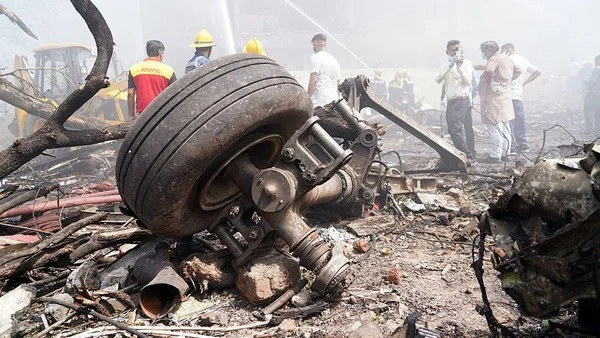
The global aviation community remains in a state of profound shock following the catastrophic loss of Air India flight AI-171, a Boeing 787 Dreamliner that crashed on the outskirts of Ahmedabad, India, on June 12, 2025. The flight, which originated from London Heathrow (LHR) and was destined for Sardar Vallabhbhai Patel International Airport (AMD), met its tragic end during the final stages of its approach. Of the 245 souls on board, including 233 passengers and 12 crew members, authorities have confirmed that only one passenger survived the impact—a recovery described by medical professionals as nothing short of miraculous. As the nation mourns, the focus has shifted from search and rescue to a high-stakes forensic investigation centered on the aircraft’s "black boxes," which were recovered from the debris field and transported under heavy security to a specialized laboratory in New Delhi.
The investigation is being spearheaded by the Directorate General of Civil Aviation (DGCA) and the Aircraft Accident Investigation Bureau (AAIB) of India. Recognizing the international significance of the event, the Indian government has formally invited the United States National Transportation Safety Board (NTSB) and technical representatives from Boeing to assist in the data extraction and analysis. The objective is to reconstruct the final moments of the flight with millisecond precision to determine whether a mechanical failure, human error, environmental factors, or a combination thereof led to the deadliest aviation disaster on Indian soil in decades.
A Chronology of Flight AI-171: From London to the Final Approach
Flight AI-171 departed London Heathrow at approximately 09:45 GMT on June 11, 2025. The journey across Europe and the Middle East was reported as routine, with the Boeing 787-9 Dreamliner maintaining a steady cruise altitude and showing no signs of technical distress according to transponder data. As the aircraft entered Indian airspace in the early morning hours of June 12, the flight crew initiated their descent toward Ahmedabad.
At 04:12 IST, the aircraft made its initial contact with Ahmedabad Air Traffic Control (ATC). Weather conditions at the time were characterized by the early onset of the monsoon season, featuring intermittent heavy rain and moderate turbulence, though visibility remained within acceptable limits for a standard instrument landing. By 04:28 IST, AI-171 was cleared for approach to Runway 23.
The situation deteriorated rapidly within the next four minutes. Radar telemetry indicates that at 04:30 IST, the aircraft’s altitude and airspeed began to fluctuate erratically. At 04:31 IST, a brief, garbled transmission was received from the cockpit, though the exact nature of the distress call remains a subject of intense scrutiny. Seconds later, the aircraft disappeared from radar screens. Eyewitnesses on the ground reported seeing the wide-body jet banking sharply at a low altitude before it impacted an open field approximately five kilometers from the airport perimeter, erupting into a massive fireball upon contact.
The Critical Role of the Flight Data and Cockpit Voice Recorders
The recovery of the Flight Data Recorder (FDR) and the Cockpit Voice Recorder (CVR) within 12 hours of the crash was a significant breakthrough for the investigative team. Despite the intense heat of the post-crash fire, the devices, which are engineered to withstand extreme temperatures and impact forces, were found largely intact.
The FDR is expected to provide a digital map of the aircraft’s performance. It tracks over 1,000 parameters, including airspeed, altitude, vertical acceleration, engine thrust, and the position of flight control surfaces such as the rudder, elevators, and flaps. Simultaneously, the CVR will provide the "human" context of the tragedy. It records all sounds in the cockpit, including the pilots’ conversations, radio transmissions, and any automated alarms or mechanical clicks that might indicate a system failure.
In the New Delhi laboratory, the process of "reading" these recorders is meticulous. The devices must first be cleaned of contaminants and, if water-damaged, dried using specialized vacuum ovens. Once the memory modules are accessed, the data is downloaded and synchronized. This allows investigators to overlay the pilots’ verbal reactions with the physical movements of the plane, creating a comprehensive 4D reconstruction of the accident.
Preliminary Technical Focus: The Flap System Theory
While official conclusions are months away, preliminary evidence has led investigators to scrutinize the aircraft’s flap system. Flaps are movable panels on the trailing edge of the wings that increase lift and drag, allowing an aircraft to fly safely at the lower speeds required for takeoff and landing.

Initial reports from the crash site and early data pings suggest that the Boeing 787 may have experienced a "flap asymmetry" or a total failure of the flap actuation system during its final configuration for landing. If one wing’s flaps extend while the other’s remain retracted, it can create a violent rolling moment that is difficult for pilots to counteract at low altitudes. Furthermore, a failure of the flaps to deploy at all would force the aircraft to land at a much higher speed than normal, significantly increasing the risk of a stall if the pilot attempts to slow the plane down to standard approach speeds.
The Boeing 787 Dreamliner utilizes a sophisticated "fly-by-wire" system, where pilot inputs are translated into electronic signals. Investigators will be looking closely at whether a software glitch or a localized electrical failure could have prevented the mechanical components of the wing from responding to the crew’s commands.
Official Responses and Global Reaction
The tragedy has prompted immediate responses from the highest levels of government and industry. Indian Prime Minister Narendra Modi expressed his "deepest condolences to the families who have lost their loved ones in this horrific accident" and assured the public that the investigation would be transparent and exhaustive. The Ministry of Civil Aviation has announced an interim compensation package for the victims’ families while the legal process for final settlements begins.
Air India, which has been undergoing a massive transformation and fleet expansion under the ownership of the Tata Group, issued a statement emphasizing its commitment to safety. "Safety is the cornerstone of our operations. We are cooperating fully with the investigating authorities to understand the root cause of this tragedy," the airline stated.
In Seattle, Boeing executives have deployed a technical team to India. The 787 Dreamliner has been a flagship of modern aviation, praised for its fuel efficiency and advanced composite materials. Any finding that points to a systemic mechanical flaw could have massive implications for the hundreds of 787s currently in service with airlines worldwide, potentially leading to emergency Airworthiness Directives (ADs) or even temporary groundings for inspection.
The Lone Survivor: A Beacon of Hope Amidst Tragedy
The survival of a 28-year-old passenger, identified as a textile engineer returning from a business trip in London, has become a focal point of national attention. Found by local villagers who were the first to arrive at the scene, the survivor was located in a section of the tail that had broken away from the main fuselage before the primary explosion. Currently in critical but stable condition at an Ahmedabad hospital, the survivor’s testimony could eventually provide investigators with a firsthand account of the cabin environment and the sensations of the aircraft’s final maneuvers.
Broader Impact on Aviation Safety and Policy
The AI-171 disaster is expected to trigger a significant review of aviation safety protocols in India and beyond. Specifically, it highlights the challenges of "Short-Final" emergencies, where pilots have mere seconds to react to catastrophic system failures.
- Fleet-Wide Inspections: Regulatory bodies like the FAA (USA) and EASA (Europe) are monitoring the New Delhi probe closely. If the flap failure theory is substantiated, a global inspection of the Boeing 787’s high-lift systems will likely be mandated.
- Pilot Training Protocols: The disaster may lead to new simulator training requirements focusing on "unreliable airspeed" and "control surface failure" scenarios during the landing phase.
- Airport Infrastructure: The crash has also reignited debates about the adequacy of buffer zones around major Indian airports, as the proximity of the crash site to residential outskirts highlighted the potential for even greater ground casualties.
Conclusion: The Long Path to Answers
The analysis of the black boxes from Air India AI-171 is the beginning of a long and painful journey toward the truth. While the data may be extracted within days, the full final report—which will integrate metallurgical analysis of the wreckage, weather modeling, and maintenance records—could take over a year to complete.
For the families of the 244 victims, the technical findings will offer little solace for their loss, but they are essential for the "safety-first" culture of global aviation. Every crash in the history of flight has led to innovations and changes that make the skies safer for those who follow. As the investigators in New Delhi pore over the digital echoes of AI-171’s final seconds, the goal remains clear: to ensure that the lessons learned from this tragedy prevent such a loss from ever occurring again. The eyes of the world remain on Ahmedabad, waiting for the black boxes to yield the secrets they hold.