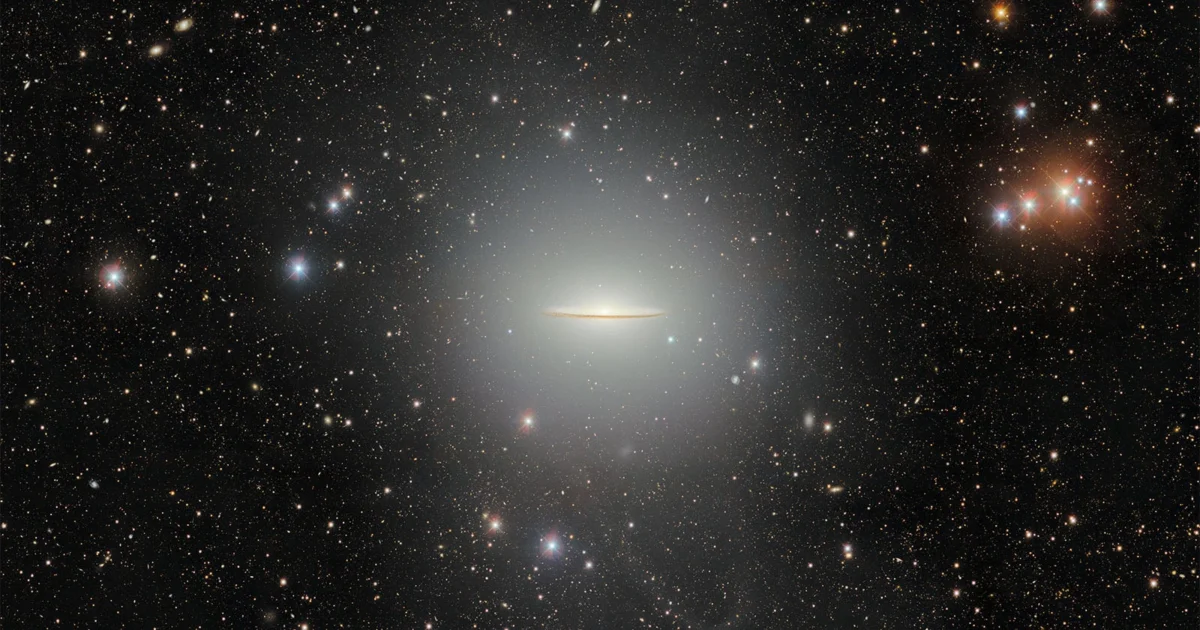
In a monumental achievement for ground-based astronomy, the 570-megapixel Dark Energy Camera (DECam), mounted on the Victor M. Blanco 4-meter Telescope at the Cerro Tololo Inter-American Observatory (CTIO) in Chile, has delivered an exceptionally detailed, side-on view of Messier 104, famously known as the Sombrero Galaxy. This breathtaking new image not only showcases the galaxy’s iconic "dusty brimmed hat" appearance with unparalleled clarity but also unveils previously unseen features, including an expansive glowing halo and a sweeping stellar stream, providing crucial insights into the galaxy’s turbulent past and ongoing evolution. The data, processed by a collaborative team from CTIO/NOIRLab/DOE/NSF/AURA, highlights DECam’s extraordinary sensitivity and wide-field imaging capabilities, pushing the boundaries of our understanding of galactic dynamics and the distribution of dark matter.
The Sombrero Galaxy: A Cosmic Icon and Scientific Enigma
Messier 104, or M104, has long been a favorite target for both professional astronomers and amateur stargazers due to its striking visual characteristics and relative accessibility. Located approximately 30 million light-years from Earth in the constellation Virgo, it is one of the most prominent and massive objects within the Virgo Galaxy Cluster, spanning an impressive 50,000 light-years across. Its classification as an Sa/Sb spiral galaxy, characterized by a large, bright central bulge and a prominent dust lane, gives it the appearance of a celestial sombrero, a moniker that has endured since its early telescopic observations.
The galaxy’s discovery dates back to May 11, 1781, when French astronomer Pierre Méchain first observed it. Charles Messier, the renowned French astronomer and comet hunter, independently rediscovered it six days later and subsequently added it as the 104th entry in his catalog of nebulae and star clusters, intended to prevent misidentification with comets. Messier’s catalog, compiled in the late 18th century, remains a cornerstone for amateur astronomers, and M104 stands out as one of its most visually captivating members.
Its allure stems not only from its aesthetic appeal but also from the wealth of scientific information it harbors. Astronomers have long been intrigued by its unusually large and luminous central bulge, which harbors a supermassive black hole estimated to be one of the most massive known, with a mass approaching one billion times that of our Sun. The galaxy’s intricate system of globular star clusters, numbering around 2,000—significantly more than the Milky Way’s approximately 150—also offers a unique laboratory for studying stellar populations and galactic formation processes.
DECam’s Unprecedented View: A Technological Marvel
The new image from the Dark Energy Camera represents a significant leap forward in capturing the Sombrero Galaxy’s intricate details. DECam, an instrument originally designed for the Dark Energy Survey (DES), is a marvel of modern astronomical engineering. Commissioned in 2012, it is housed at the prime focus of the Victor M. Blanco 4-meter Telescope, a cornerstone facility of the U.S. National Science Foundation’s NOIRLab, situated at the lofty elevation of Cerro Tololo in the Chilean Andes. This location provides pristine access to the Southern Hemisphere’s clear, dark skies, ideal for deep-space observations.
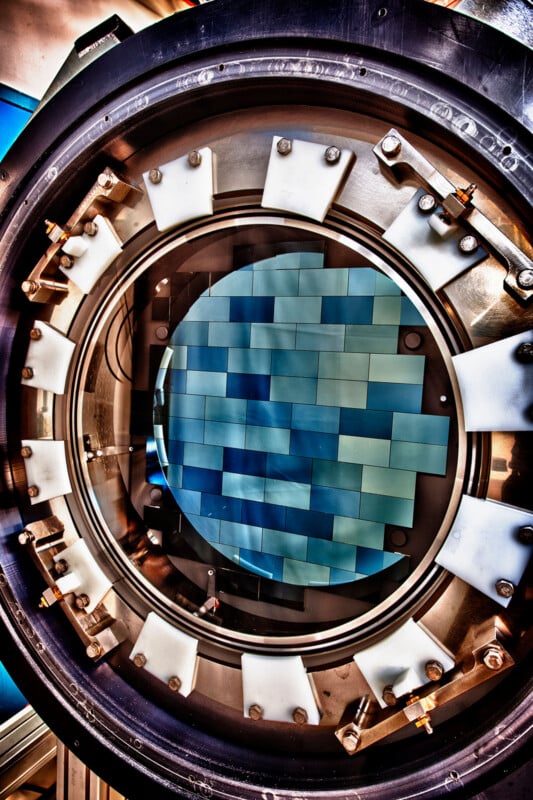
DECam boasts an array of 62 charge-coupled devices (CCDs), each capable of capturing 2048 x 2048 pixels, totaling an astounding 570 megapixels. This immense resolution, combined with a wide field of view equivalent to 2.2 degrees across (roughly nine times the area of the full Moon), allows DECam to image vast swathes of the sky with extraordinary sensitivity and depth. While its primary mission is to map hundreds of millions of galaxies to understand the mysterious force accelerating the expansion of the Universe—dark energy—its capabilities make it an invaluable tool for imaging individual galaxies and nebulae with unprecedented clarity. The camera’s exceptional light-gathering power and broad spectral coverage enable it to detect faint, extended structures that often remain elusive to other instruments.
Unveiling Hidden Structures: The Halo and Stellar Stream
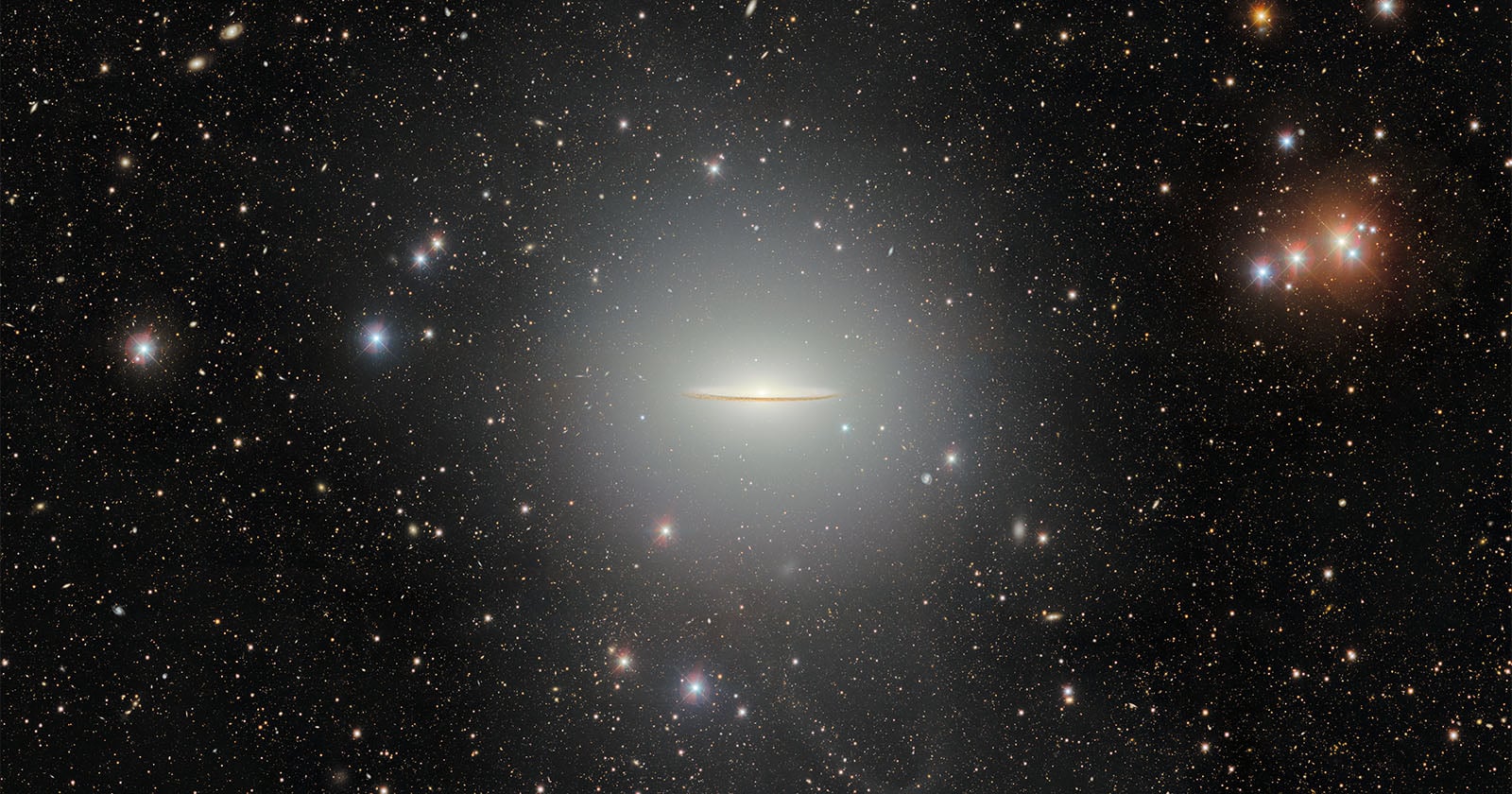
The latest DECam image of the Sombrero Galaxy has revealed features with a level of detail and expanse previously unattainable for this particular object from ground-based telescopes. Most notably, the image prominently displays the galaxy’s glowing halo, a diffuse envelope of stars and dark matter that extends significantly beyond the visible disk. This halo is observed to stretch to approximately three times the width of the Sombrero Galaxy itself, a scale and clarity that NOIRLab suggests is a first for this object.
The discovery and detailed mapping of this extensive halo are scientifically significant. Galactic halos are believed to be fossil records of a galaxy’s assembly history, containing stars stripped from smaller satellite galaxies that have merged with the larger host over cosmic timescales. The composition and structure of these halos can provide clues about the types and number of merger events a galaxy has undergone. Furthermore, galactic halos are thought to be dominated by dark matter, the enigmatic substance that constitutes about 27% of the Universe’s mass and interacts gravitationally but not electromagnetically. Detailed observations of stellar motions within these halos can help astronomers infer the distribution and properties of dark matter, a key objective of DECam’s broader mission.
Adding to the intrigue, the DECam image also captures a "sweeping stellar stream" extending from the southern side of the galaxy. Stellar streams are elongated structures of stars that are gravitationally pulled away from smaller galaxies or globular clusters as they are tidally disrupted by the gravitational forces of a larger galaxy. The presence of both an extended halo and this distinct stellar stream strongly supports the hypothesis that the Sombrero Galaxy has undergone at least one major galactic merger in its distant past with a smaller satellite galaxy. Such mergers are fundamental processes in galaxy evolution, driving star formation, influencing galactic morphology, and contributing to the growth of supermassive black holes.
Deciphering Galactic Evolution: The Science Behind the Image
Scientists are particularly interested in the Sombrero Galaxy’s intricate system of globular star clusters, which number in the thousands. These ancient, tightly bound collections of millions of stars are among the oldest structures in galaxies, providing a snapshot of the early Universe. Studying their distribution, age, and metallicity (the abundance of elements heavier than hydrogen and helium) within the Sombrero’s halo and disk can offer profound insights into the galaxy’s formation epoch and subsequent evolutionary stages. The high resolution of DECam allows for a more comprehensive census and characterization of these clusters, especially those in the fainter outer regions.
Furthermore, the supermassive black hole at the Sombrero’s core remains a compelling area of study. While DECam’s optical images do not directly resolve the black hole, they provide critical context for multi-wavelength observations. The intense brightness of the galaxy’s nucleus, visible in the DECam image, is a manifestation of the dense concentration of stars around this black hole. Understanding the relationship between the central black hole’s mass and the properties of its host galaxy’s bulge is a crucial topic in astrophysics, hinting at co-evolutionary processes where the growth of a black hole and its host galaxy are intimately linked.
The thin, dark band of cold dust and hydrogen gas tracing the perimeter of the Sombrero’s disk is another significant feature. This dust lane is where most of the galaxy’s current star formation takes place. DECam’s sensitivity to faint light allows for detailed examination of this region, providing clues about the ongoing star formation activity and the distribution of interstellar medium within the galaxy.
The Power of Collaboration: Ground-Based and Space Observatories
While DECam offers an unparalleled wide-field perspective from Earth, its observations complement those from space-based telescopes like the Spitzer Space Telescope, the Hubble Space Telescope, and the James Webb Space Telescope (JWST). Each of these instruments provides a unique window into the Sombrero Galaxy across different wavelengths, collectively building a holistic picture.
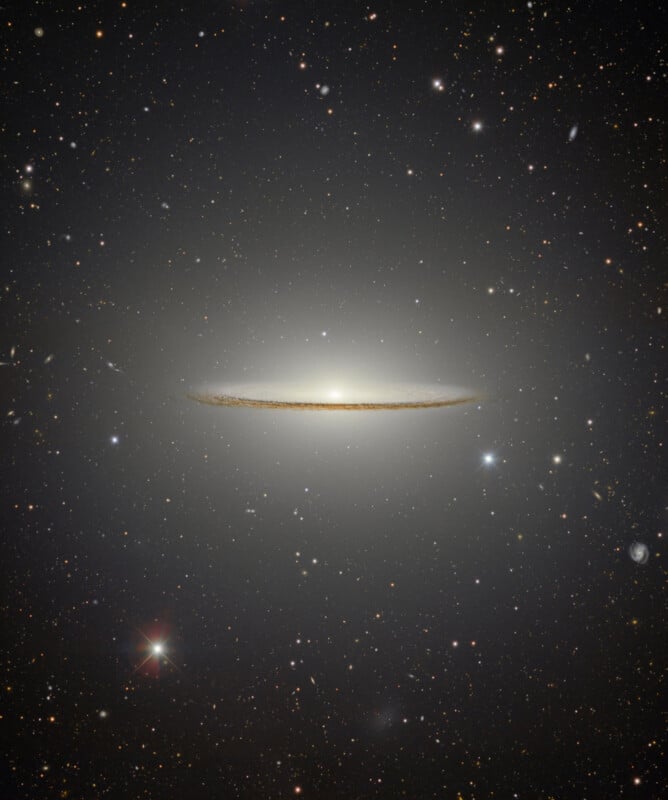
Hubble, with its exceptional angular resolution in visible and ultraviolet light, has provided iconic, detailed close-ups of the galaxy’s central regions and globular clusters. Spitzer, an infrared telescope, excelled at peering through dust to reveal hidden star formation and the distribution of warm dust. JWST, the newest infrared giant, offers even greater sensitivity and resolution in the infrared, allowing scientists to study cooler dust, molecular gas, and extremely distant, faint objects with unprecedented clarity.
DECam’s strength lies in its ability to image a vast area of the sky with high sensitivity, effectively capturing the galaxy’s extended features like the halo and stellar stream that might be too spread out for the narrower fields of view of space telescopes. This synergy between ground-based wide-field surveys and targeted, high-resolution space observations is crucial for modern astrophysics, allowing scientists to piece together the full story of cosmic objects from their intimate details to their expansive environments. The Blanco Telescope, with DECam, serves as a vital bridge in this observational network, providing foundational data for follow-up studies by other world-class instruments.
A Window to the Dark Universe: DECam’s Broader Mission
Beyond its stunning images of iconic galaxies, the Dark Energy Camera’s primary mission continues to be the investigation of dark energy and dark matter. By meticulously mapping the distribution of galaxies across vast cosmic distances, DECam helps astronomers understand how these mysterious components influence the Universe’s large-scale structure and expansion history. The Sombrero Galaxy image, while captivating in its own right, also serves as a powerful demonstration of DECam’s capabilities to detect faint, extended structures—the very kind of features that can be used to trace the gravitational influence of dark matter in galactic halos.
The ongoing research at NOIRLab, supported by the NSF and DOE, is at the forefront of this quest. The data collected by DECam contributes to an ever-growing archive that is analyzed by scientists worldwide, helping to refine cosmological models and test theories about the fundamental nature of the Universe.
Inspiring the Next Generation: Amateur Astronomy and Public Outreach
The Sombrero Galaxy’s enduring popularity among amateur astronomers is a testament to its visual splendor and the inspiration it provides. NSF NOIRLab actively promotes public engagement, recognizing that images like this new DECam capture are powerful tools for inspiring interest in science and astronomy. Citizen science projects often leverage the enthusiasm of amateur astronomers, and the Sombrero Galaxy frequently features in public outreach efforts, serving as a gateway for many to explore the wonders of the cosmos. The release of such high-resolution images, especially with full-resolution versions made available, encourages a deeper appreciation for astronomical research and the cutting-edge technology that makes it possible.
Looking Ahead: The Future of Deep-Sky Imaging
The new DECam image of the Sombrero Galaxy underscores the continuing importance of ground-based observatories equipped with advanced instrumentation. As technology evolves, future generations of wide-field cameras and telescopes will continue to push the boundaries of sensitivity and resolution, promising even more profound discoveries about galaxy evolution, the nature of dark matter, and the vast tapestry of the Universe. The detailed insights gained from this observation of Messier 104 are not merely a beautiful picture; they are a critical piece of the puzzle in humanity’s ongoing quest to understand our cosmic origins and destiny.
Image credits: CTIO/NOIRLab/DOE/NSF/AURA, Image Processing: T.A. Rector (University of Alaska Anchorage/NSF NOIRLab), D. de Martin & M. Zamani (NSF NOIRLab)