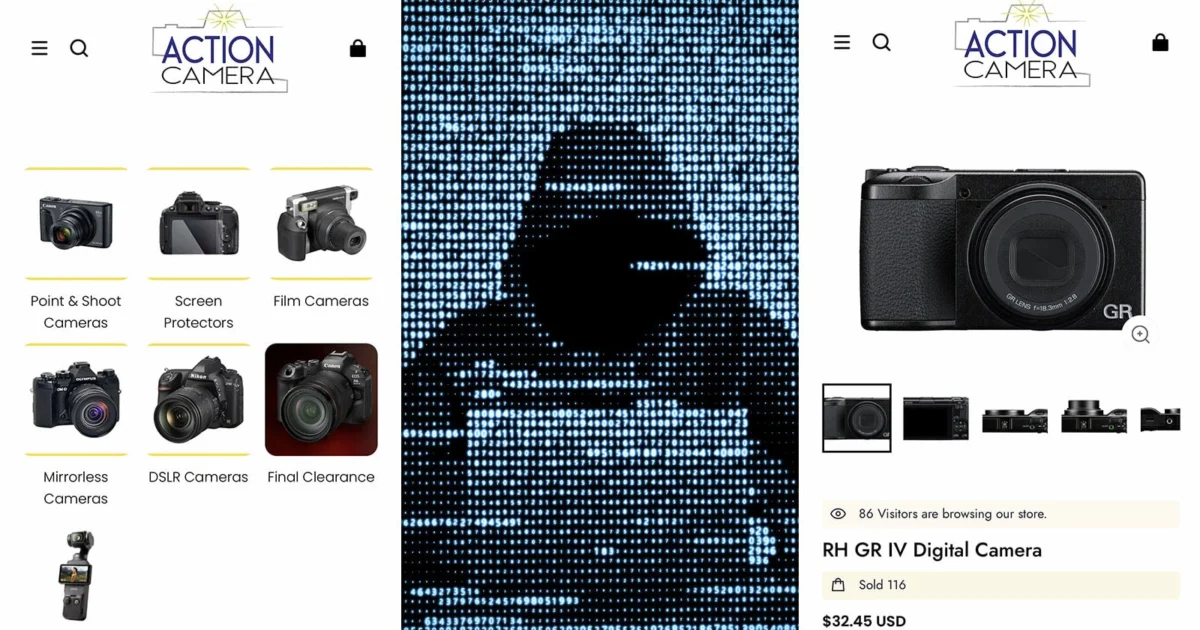
A sophisticated online scam operation has emerged, actively impersonating Action Camera, a long-standing, reputable camera retailer with physical locations in Nevada and California. This fraudulent scheme leverages social media platforms, particularly TikTok, to funnel unsuspecting consumers to a deceptive website that uses Action Camera’s legitimate branding to peddle non-existent camera equipment at impossibly low prices, ultimately defrauding buyers and eroding the trust built by the authentic business over four decades. The incident underscores a growing trend of identity theft targeting businesses, highlighting the challenges small to medium-sized enterprises face in safeguarding their digital presence and reputation against increasingly elaborate cybercriminal tactics.
The fraudulent activity first came to light through the vigilance of Brian White, the manager of Action Camera’s Reno, Nevada, location. White recounted to PetaPixel how his team received an unusual email from a customer inquiring about the status of a Canon PowerShot camera order. The customer, having placed an order through what they believed to be Action Camera’s online store, was surprised by the lack of confirmation and delivery updates. The email included a screenshot of a receipt for a Canon SX740, showing a charge of $73.59 – a price dramatically below market value for such a camera. What immediately raised a red flag for White was the appearance of Action Camera’s logo prominently displayed at the top of the receipt, yet the transaction was entirely unknown to their legitimate sales system. Upon investigation, Action Camera confirmed to the customer that they had fallen victim to a scam and promptly requested the fraudulent website’s URL to investigate further.
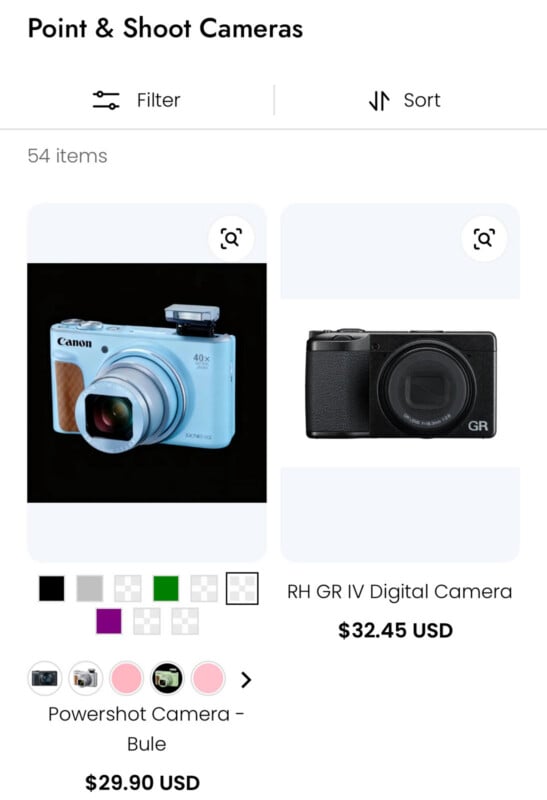
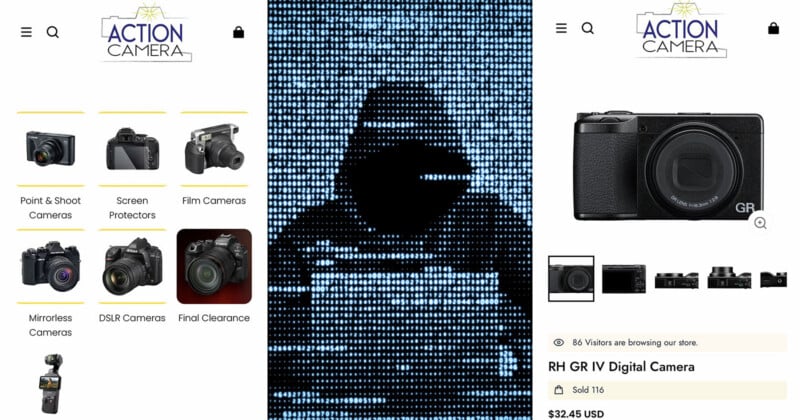
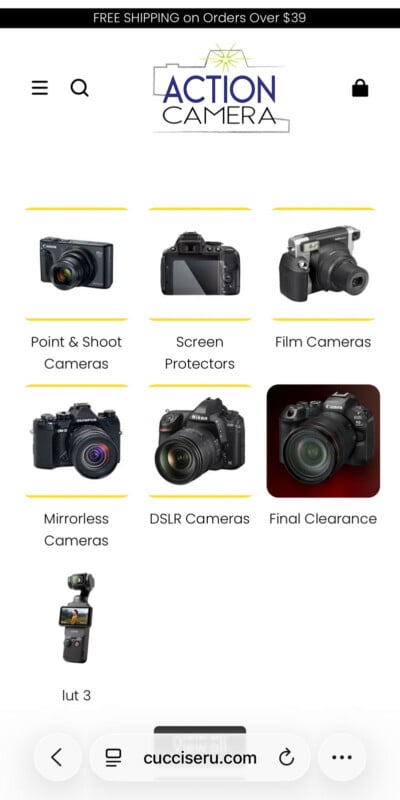
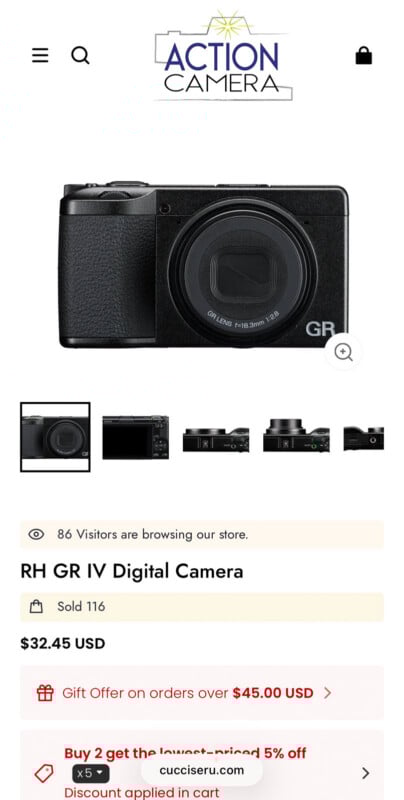
The website identified by the defrauded customer was www.cucciseru.com. Initial examination of the site on a desktop browser revealed a bizarre and incongruous collection of what appeared to be AI-generated clothing items, a clear departure from Action Camera’s specialized photographic equipment offerings. However, the deceptive nature of the scam deepened significantly when accessed via specific links originating from TikTok, particularly on mobile devices. Under these conditions, cucciseru.com transformed, presenting itself as a fully functional camera store. This mobile-optimized version showcased a diverse inventory of 54 different camera models, ranging from popular point-and-shoots like the Canon PowerShot SX740 and Ricoh GR IV, to novelty devices such as the Kodak Charmera, rugged waterproof models like the OM System Tough TG-7, and even high-end luxury cameras including the Leica Q3 43 and Sony RX1R III. The prices advertised were, as White described, "absurd," with a Ricoh GR IV listed for $32.45 and a Leica Q3 43 for $55.90 – figures that are fractions of their genuine retail value. The consistent element across both the desktop (clothing) and mobile (camera) iterations of the scam site was the unauthorized use of Action Camera’s distinctive logo, lending a false veneer of authenticity to the illicit operation. This chameleon-like behavior of the fraudulent website is a common tactic employed by sophisticated scammers to evade detection and tailor their deception to specific traffic sources, maximizing their reach and potential for victim engagement.

A crucial component of this particular scam’s success lies in its heavy reliance on social media promotion. Brian White noted the pervasive presence of numerous "influencers" on TikTok actively promoting the website’s purported camera deals and embedding direct links to cucciseru.com. These accounts, often boasting substantial follower counts, created and shared nearly 80 videos showcasing various point-and-shoot camera models, implicitly endorsing the fraudulent storefront. This tactic exploits the inherent trust many social media users place in influencer recommendations, especially younger demographics who frequently use platforms like TikTok as a primary source for product discovery and purchasing decisions. The sheer volume and apparent legitimacy of these sponsored posts create a compelling illusion, making it challenging for an average consumer to discern between genuine endorsements and paid scam promotions. The user who first alerted Action Camera to the scam explicitly mentioned being swayed by the multitude of TikTok users showcasing their "purchases" and linking to the fake site, illustrating the profound impact of this social engineering element.
This incident is not an isolated event but rather indicative of a broader and escalating problem of online retail fraud. The Federal Trade Commission (FTC) regularly issues warnings about deceptive online practices, reporting billions of dollars in consumer losses annually due to scams, a significant portion of which stems from online shopping fraud. Business impersonation, a form of identity theft, has become increasingly prevalent as scammers leverage readily available branding and e-commerce templates to create convincing fake storefronts. Last summer, PetaPixel itself reported on a similar wave of fake Leica Store websites that appeared online, promising high-end Leica cameras at similarly impossible discounts. These sites, much like cucciseru.com, often lured victims through social media ads and posts, offering products like a Leica D-Lux 8 for $448.18 – prices that, while not as comically low as those on cucciseru.com, were still far below market value and a clear indicator of fraud. These recurring patterns highlight a sophisticated, often international, network of cybercriminals who continually adapt their methods, targeting both niche markets (like photography enthusiasts) and broader consumer bases with tempting but ultimately fraudulent offers. The anonymity afforded by offshore domain registrars, such as Dynadot Privacy Service used by cucciseru.com, further complicates law enforcement efforts to trace and prosecute the perpetrators, allowing these operations to persist and proliferate.
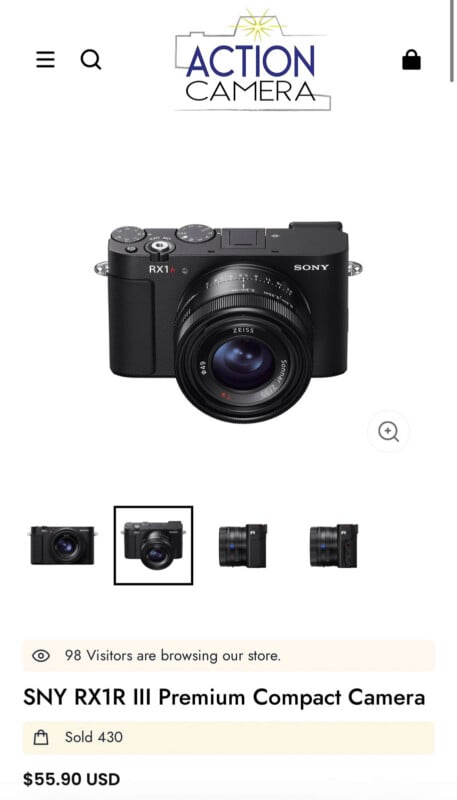
In light of these prevalent threats, both Brian White and consumer protection experts emphasize several critical red flags and preventative measures consumers should adopt when shopping online, particularly for high-value items like cameras. The most obvious indicator of a scam is a price that seems "too good to be true." As White correctly pointed out, a Ricoh GR IV for $32.45 or a Leica Q3 for $55.90 defies economic reality and should immediately trigger suspicion. Beyond pricing, consumers should scrutinize product details: the fake Action Camera site offered the Canon SX740 in an array of colors not genuinely available for the model, a subtle but revealing inconsistency.
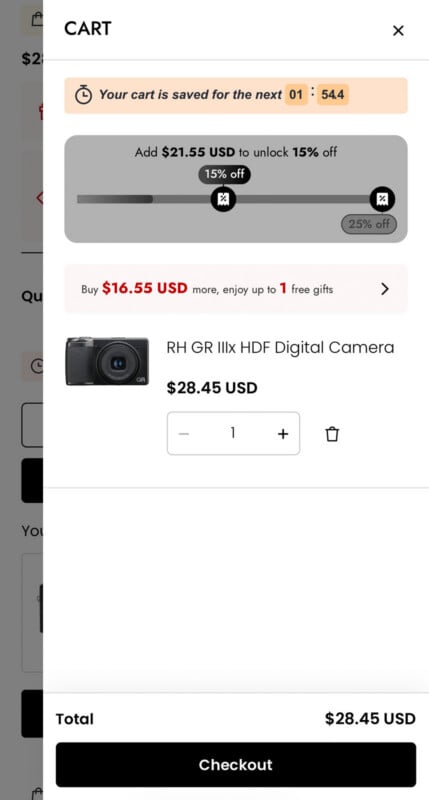
Crucially, consumers must always verify the website’s URL. Even if a familiar logo appears, a mismatched or unfamiliar domain name (like cucciseru.com instead of actioncamera.com) is a definitive sign of fraud. Checking the domain registration details through WHOIS lookups can sometimes reveal anonymity services, which, while not inherently nefarious, are often favored by scammers. Furthermore, White strongly advises consumers to leverage local resources first: "I would encourage anyone who is looking for a camera to first call their local camera store (if they have one) even just to inquire if something like this seems legitimate. Or order one from them." If a local option isn’t available, thorough research into actual retail prices from multiple trusted sources and purchasing directly from established, reputable retailers like B&H, Adorama, or the manufacturer’s official website are paramount. Reputable online stores typically have transparent contact information, clear return policies, and secure payment gateways. The absence of these, or generic, unhelpful customer service contacts, should raise alarms. Consumers should also be wary of social media "influencers" promoting deals that appear unrealistic; genuine brand partnerships are usually clearly disclosed and link to official retail channels.
The broader implications of such scams extend beyond individual financial losses. For legitimate businesses like Action Camera, the unauthorized use of their brand identity inflicts significant damage. It erodes customer trust, forces the business to expend resources on damage control and customer education, and can negatively impact their reputation, even if they are the victim. "Our business is relatively small but we really pride ourselves on being able to have a positive impact on the photographic community," White lamented. "It deeply saddens and alarms me that we are involved with someone else’s scam." The constant need to differentiate themselves from fraudulent counterparts drains resources and diverts attention from core business operations, hindering growth and innovation. Moreover, the proliferation of these scams contributes to a general climate of mistrust in online commerce, making consumers more hesitant to engage with legitimate online retailers, particularly smaller, independent businesses that rely on their digital presence.

For over 40 years, the real Action Camera, with its physical stores in Reno, Nevada, and Rocklin, California, has been a cornerstone of the photographic community, selling authentic cameras and equipment, hosting educational classes, and organizing outreach events for local photographers. Their commitment to fostering a passion for photography and ensuring customer satisfaction stands in stark contrast to the predatory practices of the scam operation. While they do ship to customers outside their immediate area, Brian White’s primary motivation in speaking out is not merely about sales, but about protecting the broader community. "I want consumers to be protected and aware so they don’t become discouraged to continue their pursuit for photo/video," White stated, underscoring the ethical responsibility he feels towards enthusiasts and professionals alike. This incident serves as a stark reminder that in the increasingly complex digital landscape, vigilance and informed consumer choices are the most powerful defenses against sophisticated online fraud. The fight against these pervasive scams requires a collective effort from businesses, social media platforms, law enforcement, and, most importantly, educated consumers.