The Natural History Museum has offered an exclusive preview of 15 extraordinary images from the Wildlife Photographer of the Year 2026 competition, setting the stage for the highly anticipated Grand Title announcement. These images represent a mere fraction of the 100 finalists selected from an astounding pool of over 65,000 entries submitted by photographers worldwide. The annual competition, renowned globally for celebrating the finest wildlife photography, serves not only as a platform for artistic excellence but also as a powerful tool for global conservation awareness. The full exhibition of the top 100 images is slated to open to the public at the Natural History Museum in London on Friday, October 16, 2026, promising a visually captivating and thought-provoking journey into the natural world.
A Legacy of Photographic Excellence and Conservation Advocacy
For over six decades, the Wildlife Photographer of the Year competition, developed and produced by the Natural History Museum, has been at the forefront of showcasing nature’s beauty and fragility. What began in 1965 as a modest initiative with just 361 entries has evolved into a globally recognized benchmark for wildlife photography, attracting participants from nearly 100 countries. The competition’s enduring mission is to inspire curiosity, wonder, and a deeper understanding of the natural world, ultimately encouraging action for its future. Each year, the winning and highly commended images travel to millions worldwide through exhibitions, publications, and digital platforms, amplifying the messages of conservation and environmental stewardship. The 2026 edition continues this proud tradition, drawing an unprecedented number of submissions, a testament to the competition’s growing influence and the dedication of wildlife photographers globally.
The judging process is meticulously rigorous, conducted anonymously by an international panel of expert judges drawn from diverse fields including wildlife photography, filmmaking, science, and conservation. Their mandate is to evaluate entries based on several key criteria: creativity, originality, technical excellence, and the compelling narratives each photograph conveys. This holistic approach ensures that winning images are not merely aesthetically pleasing but also possess significant scientific, emotional, or educational value. The 100 shortlisted images, including the 15 highlighted finalists, have all met these exacting standards, representing a pinnacle of visual storytelling and technical mastery.
Glimpses into Nature’s Drama: The Highly Commended Finalists
The unveiled "Highly Commended" images offer a diverse cross-section of wildlife encounters, from fleeting moments of predator and prey to poignant scenes of urban adaptation and environmental struggle. Each photograph tells a unique story, captured with immense skill and patience:
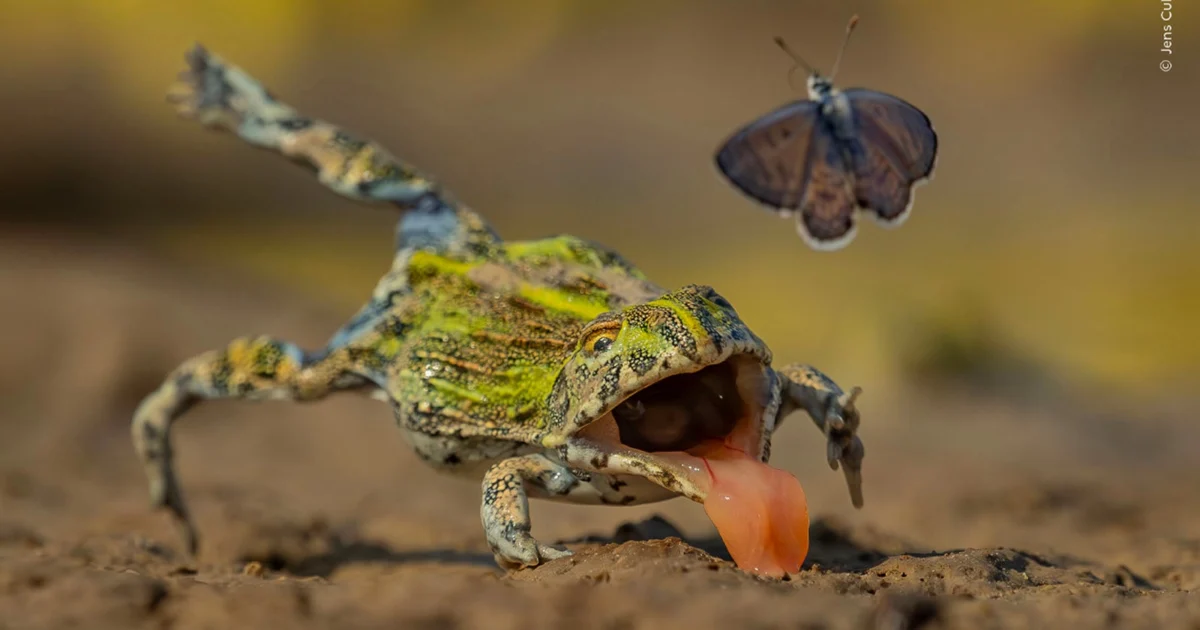
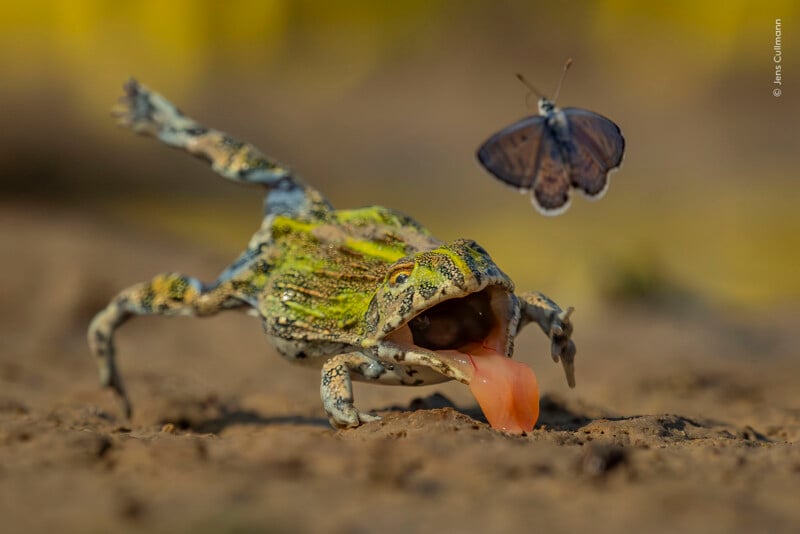
- "The Narrow Escape" by Jens Cullmann (Behavior: Amphibians and Reptiles): Shot in Botswana, this dramatic image captures an African babul butterfly narrowly evading the lightning-fast lunge of an African bullfrog. The photograph freezes a moment of primal instinct and survival, highlighting the incredible reflexes of both predator and prey in the wild. Cullmann’s impeccable timing underscores the constant struggle for existence in natural ecosystems, where life and death can be decided in a fraction of a second.
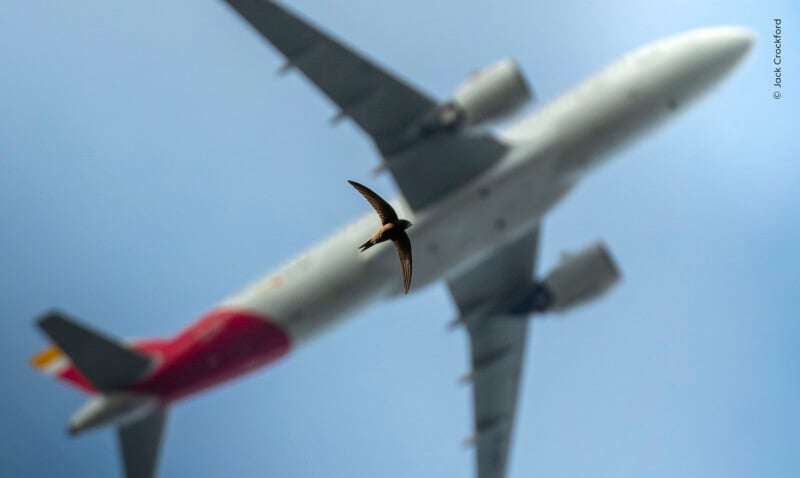
- "Urban Synchronicity" by Jack Crockford (15-17 Years): A remarkable study in contrasts, this image features a low-flying swift mirroring the trajectory of an incoming passenger plane against the vast sky near Heathrow Airport. Crockford’s photograph eloquently illustrates the increasing intersection of urban development and wildlife habitats, prompting reflection on how species adapt to human-dominated landscapes and the delicate balance that must be maintained. The precision of the swift’s flight against the mechanical giant offers a poignant commentary on nature’s resilience.
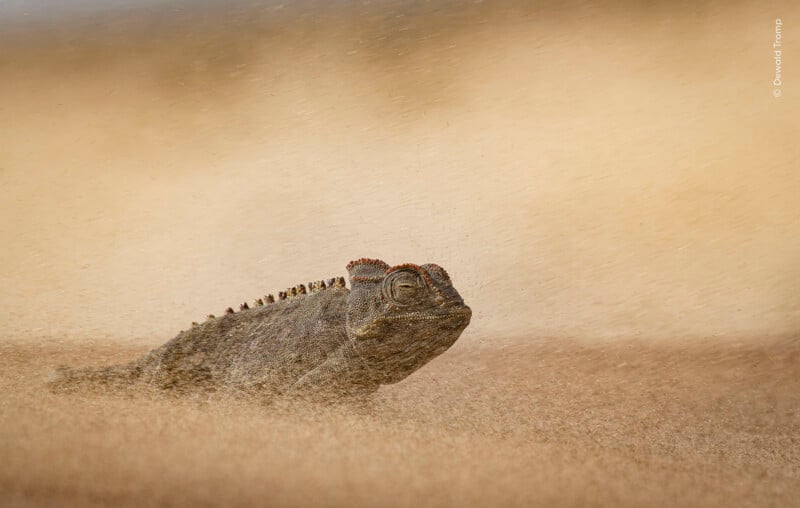
- "Chameleon’s Resolve" by Dewald Tromp (Animals in their Environment): Set against the desolate beauty of the Namib Desert, Tromp’s image portrays a Namaqua chameleon steadfastly enduring a sandstorm. Particles of sand whip across its body, emphasizing the harsh, unforgiving environment it inhabits. The photograph is a powerful testament to the adaptability and sheer will to survive exhibited by creatures in extreme conditions, showcasing the chameleon’s camouflage and stoicism amidst the elements.
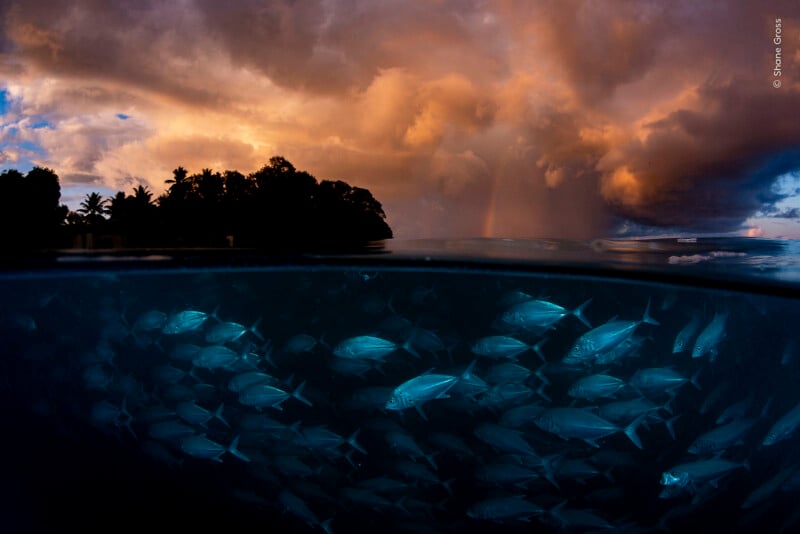
- "Silver Swirl" by Shane Gross (Oceans: The Bigger Picture): A breathtaking split-level shot captures a vibrant school of bigeye trevally swirling beneath the surface in the Seychelles, juxtaposed with a serene sunset sky and a faint rainbow. Gross’s image highlights the mesmerizing collective behavior of marine life and the critical importance of healthy ocean ecosystems. It serves as a visual reminder of the beauty residing beneath the waves and the intricate connections between marine and terrestrial environments.
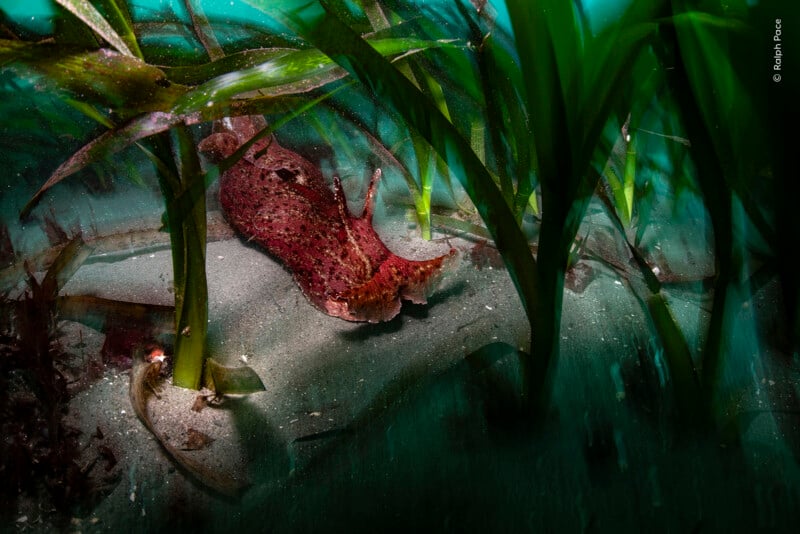
- "Eelgrass Wanderer" by Ralph Pace (Wetlands: The Bigger Picture): In the rich underwater tapestry of Monterey Bay, Pace photographs a sea hare gracefully gliding through an eelgrass meadow. This image draws attention to the often-overlooked beauty and ecological significance of wetland habitats and their diverse invertebrate inhabitants. It underscores the vital role of such underwater meadows as nurseries and feeding grounds for countless marine species, contributing to the overall health of coastal waters.
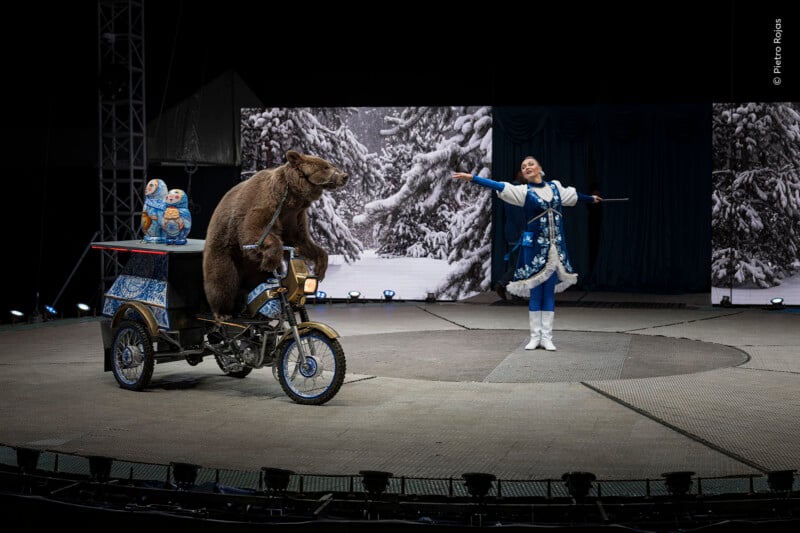
- "The Performer" by Pietro Rojas (Photojournalism): A stark and thought-provoking photograph, Rojas captures a muzzled brown bear riding a decorated three-wheeled motorcycle at a circus in Doha. This image serves as a potent piece of photojournalism, sparking critical discussions about animal welfare, exploitation, and the ethics of using wild animals for entertainment. It brings to the fore the tension between human spectacle and animal dignity, a recurring theme in contemporary conservation discourse.
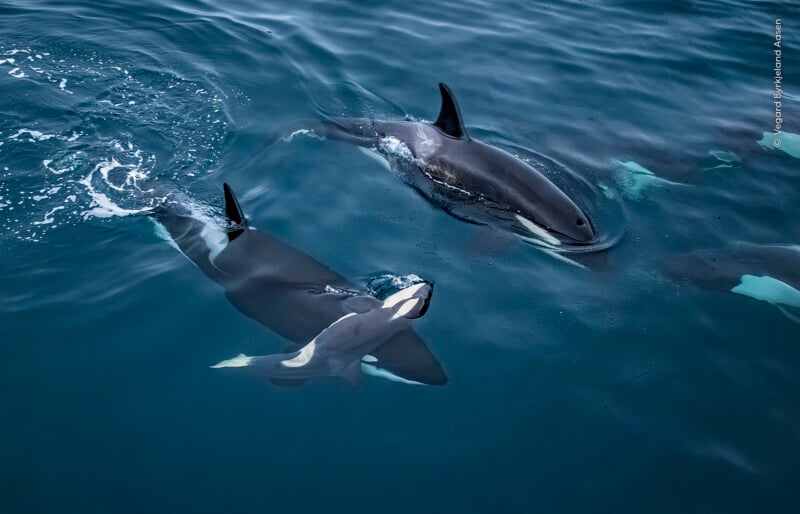
- "Grief in the Fjord" by Vegard Byrkjeland Aasen (Behavior: Mammals): This aerial view depicts an adult orca carrying a deceased calf off the coast of Norway. The poignant image speaks volumes about maternal grief and the emotional lives of marine mammals. It also subtly hints at potential environmental challenges, such as pollution or disease, that might contribute to such tragedies in marine populations, urging viewers to consider the wider health of ocean environments.
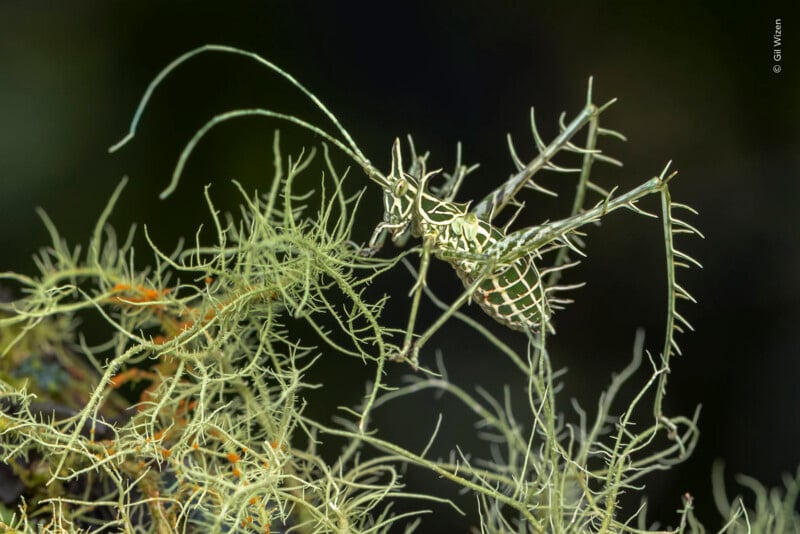
- "Lichen Dragon" by Gil Wizen (Behavior: Invertebrates): A macro masterpiece, Wizen’s photograph reveals a 15-millimeter lichen dragon katydid expertly camouflaged on a lichen-covered branch in the Andes Mountains of Ecuador. The intricate detail showcases the incredible evolutionary adaptations for survival in the insect world. It celebrates the often-unseen beauty and complexity of invertebrates, emphasizing their crucial roles within biodiversity-rich ecosystems like the Andean cloud forests.
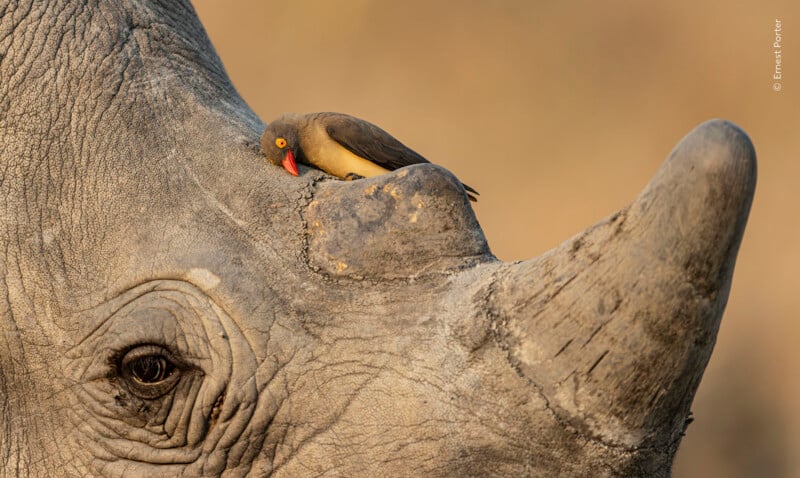
- "Rhino’s Companion" by Ernest Porter (Behavior: Birds): Captured in the soft afternoon light of South Africa, Porter’s image shows a red-billed oxpecker cleaning its bill against a rhinoceros’s tough skin. This photograph beautifully illustrates a classic example of mutualism in the animal kingdom, where both species benefit from the interaction. It also serves as a subtle reminder of the precarious existence of rhinos and the broader efforts needed for their conservation amidst poaching threats.
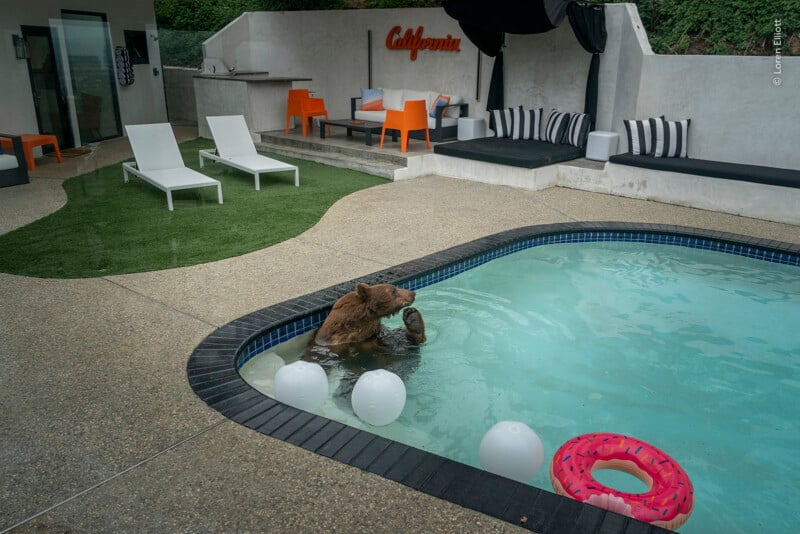
- "Unexpected Dip" by Loren Elliott (Urban Wildlife): Elliott’s candid shot features a black bear taking a refreshing dip in a swimming pool adorned with beach balls and a pink donut float in southern California. This image perfectly encapsulates the challenges and adaptations of urban wildlife, as human expansion increasingly encroaches on natural habitats. It highlights the complex relationship between humans and animals in shared landscapes, often leading to unexpected encounters.
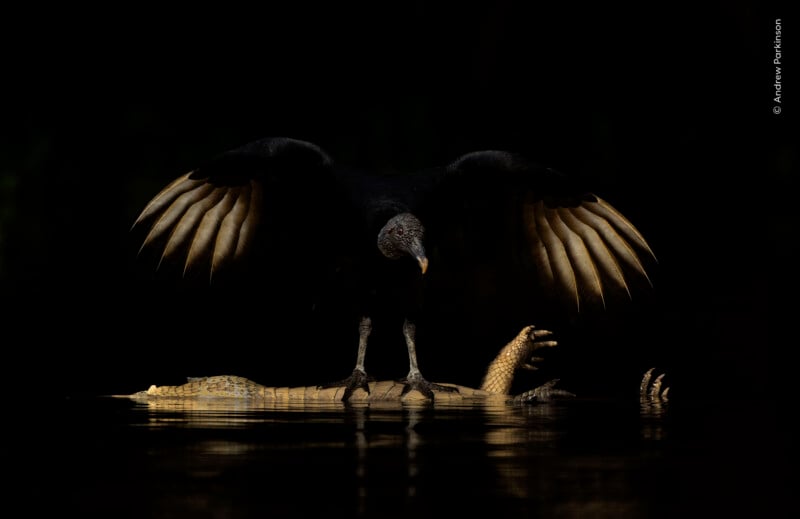
- "Vulture’s Feast" by Andrew Parkinson (Animal Portraits): In Brazil’s Pantanal wetlands, Parkinson captures a black vulture standing majestically atop the carcass of a yacare caiman, wings spread wide. This powerful portrait underscores the vital role of scavengers in maintaining ecological balance, cleaning ecosystems and recycling nutrients. It’s a raw depiction of the cycle of life and death in one of the world’s most biodiverse wetland regions.
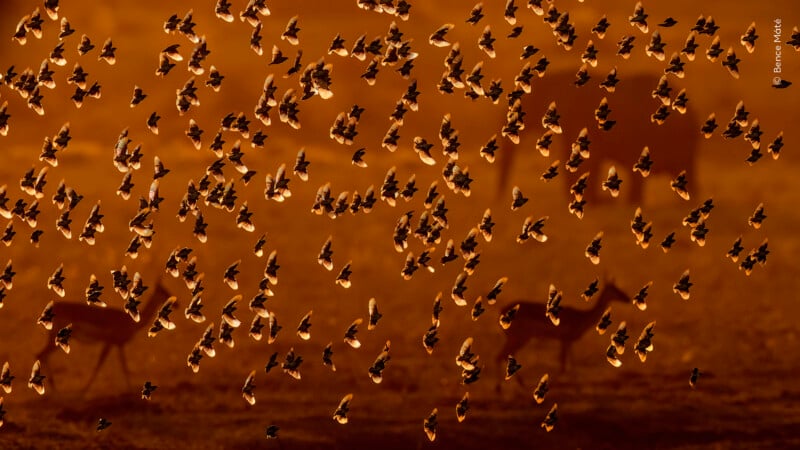
- "Thirsty Flock" by Bence Mate (Behavior: Birds): Mate’s panoramic photograph captures a massive flock of birds descending to a small pond in Kenya’s Tsavo East National Park at sunset, while two antelopes stand in the background. The image powerfully conveys the significance of water sources in arid landscapes and the sheer scale of wildlife congregation around them. It speaks to the challenges of water scarcity and the delicate balance of life in African savannas.
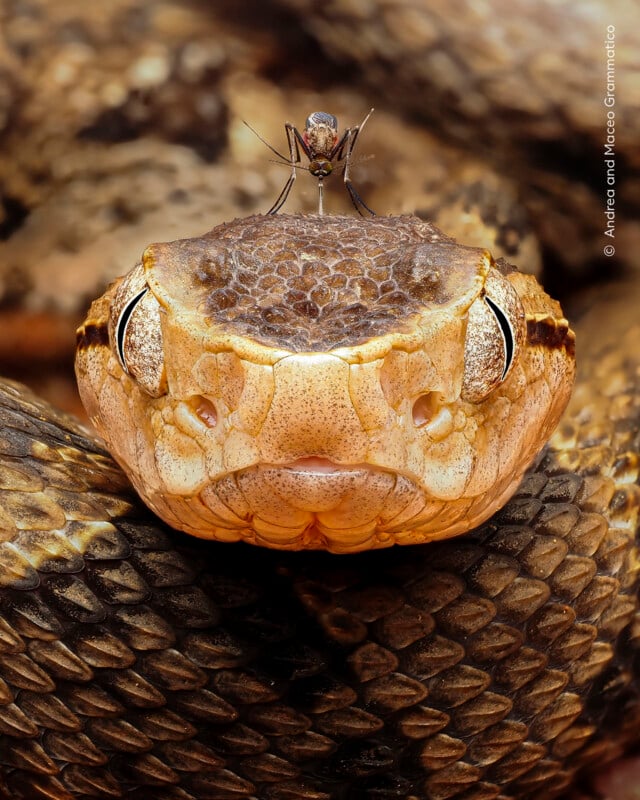
- "Viper’s Blood Meal" by Andrea and Maceo Grammatico (Animal Portraits): A truly unique and unsettling close-up, this photograph shows a mosquito delicately drinking blood from the head of a venomous pit viper. The image highlights the intricate and often surprising interspecies interactions found in nature, demonstrating the audacity and survival strategies of even the smallest creatures. It’s a testament to macro photography’s ability to reveal hidden worlds.
- "Leopard and Squirrel" by Allegra Hutton (Behavior: Mammals): In the vibrant Okavango Delta of Botswana, Hutton captures a dynamic black-and-white image of a young leopard chasing a squirrel up a tree. The photograph perfectly freezes a moment of high-stakes predator-prey interaction, showcasing the agility and raw instinct of both animals. It’s a compelling narrative of survival and the constant dance of life in the African wilderness.
- "Tokyo Toad" by Sora Miyazawa (11-14 Years): Miyazawa’s atmospheric shot shows an Eastern Japanese toad navigating the wet metal grate of Tokyo’s streets shortly after rainfall, with blurred urban lights in the background. This image, captured by a young talent, brilliantly portrays the resilience of urban wildlife and their ability to thrive in unexpected environments. It’s a poignant reminder that nature persists even in the heart of bustling metropolises.
The Prestigious Awards Ceremony and Global Reach
The highly anticipated announcement of the category winners, along with the coveted Grand Title and Young Grand Title awards, is scheduled for Tuesday, October 13, 2026. This prestigious ceremony will be hosted live at the Natural History Museum in London and will be accessible to a global audience via a live stream on the Museum’s official YouTube channel. This digital outreach ensures that the powerful messages and stunning visuals reach millions, fostering a worldwide community dedicated to appreciating and protecting wildlife.
Following the awards, the flagship exhibition will open its doors at the Natural History Museum, London, on October 16, 2026. This exhibition will then embark on an international tour, bringing the compelling stories and breathtaking imagery to diverse audiences across the globe. Each year, the exhibition visits approximately 25 countries, reaching millions of people and reinforcing the competition’s role as a global ambassador for nature.
Broader Impact: Inspiring Conservation Through Imagery
The Wildlife Photographer of the Year competition extends far beyond a mere photographic contest; it is a vital catalyst for conservation. The images often serve as powerful visual evidence of environmental issues, from habitat loss and climate change to species decline and human-wildlife conflict. By presenting these realities through compelling artistry, the competition educates the public, influences policy-makers, and inspires individuals to take action.
The stories behind the photographs frequently highlight species that are rarely seen or environments that are under threat, bringing these critical narratives to the forefront of public consciousness. For instance, images depicting animals in urban settings, like the swift in London or the bear in California, underscore the urgent need for integrated conservation strategies that consider human-dominated landscapes. Similarly, photojournalism entries, such as the bear in the circus, ignite essential conversations about ethical treatment of animals and the responsibilities humans hold towards wildlife.
Moreover, the competition nurtures new talent, particularly through its Young Wildlife Photographer of the Year categories. Encouraging young people like Jack Crockford and Sora Miyazawa to engage with nature through photography instills a lifelong appreciation for biodiversity and cultivates the next generation of conservation advocates and visual storytellers. The skills honed by these young photographers contribute to a growing global network of individuals dedicated to documenting and protecting the planet.
In conclusion, the Wildlife Photographer of the Year 2026 finalists represent more than just exceptional photography; they are vital documents of our planet’s natural heritage and powerful calls to action. As the world awaits the final announcements and the opening of the exhibition, the anticipation underscores the profound connection between art, science, and the urgent imperative to safeguard our shared natural world for future generations. The Natural History Museum, through this competition, continues to affirm its role as a leading voice in global conservation, using the universal language of photography to bridge cultures and inspire change.