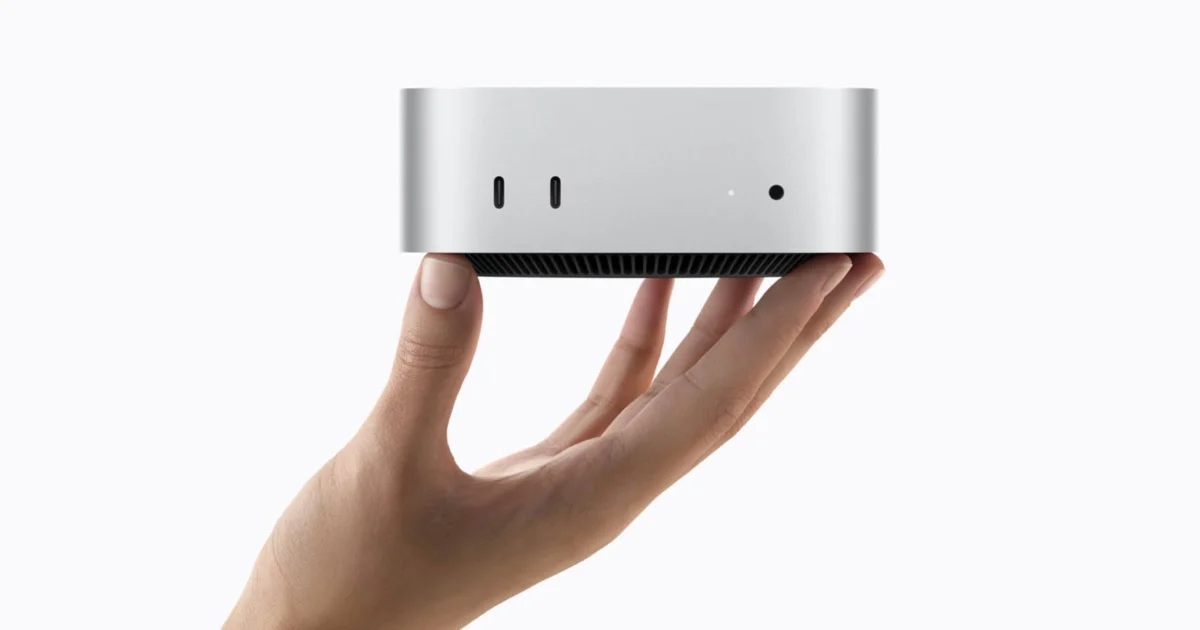
Apple has officially unveiled the highly anticipated next generation of its popular Mac mini series, featuring the groundbreaking M6 chip and the robust M5 Pro chip, marking a significant leap forward in compact desktop computing. This release comes at a crucial time, addressing the recent scarcity of the previous generation which saw unprecedented demand, highlighting the Mac mini’s enduring appeal as a versatile and powerful machine. The announcement solidifies Apple’s commitment to its custom silicon architecture, pushing the boundaries of performance and power efficiency within its smallest desktop form factor.
The new Mac mini lineup introduces two distinct configurations tailored to various user needs, each powered by Apple’s latest advancements in chip technology. The entry-level model, now equipped with the brand new M6 chip, starts at $899, while a more powerful variant featuring the M5 Pro chip is available from $1,699. Both starting prices reflect a $100 increase over their predecessors, a premium justified by the substantial enhancements in processing power, graphical capabilities, and integrated artificial intelligence (AI) acceleration. These machines, consistent with the Mac mini’s design philosophy, require an external monitor, keyboard, and mouse, offering users the flexibility to integrate them into existing setups or customize their peripherals.
Unpacking the M6 Mac mini: A New Standard for Everyday Power
The M6-powered Mac mini establishes a new baseline for performance in Apple’s compact desktop offerings. This configuration boasts a significant upgrade with a 12-core CPU, representing two additional cores compared to the previous M4 generation. Complementing this is a 12-core GPU, also an increase of two cores, designed to deliver enhanced graphical fidelity and processing speed. A pivotal innovation in the M6 chip is the integration of Neural Accelerators within each core, a first for the Mac mini line. This architectural advancement is projected to deliver a staggering 4x faster AI performance and 2x faster graphics compared to the Mac mini equipped with an M4 chip, signaling a strong focus on on-device machine learning capabilities.
The base M6 Mac mini comes configured with 16GB of unified memory and 256GB of solid-state storage. Unified memory, a hallmark of Apple Silicon, allows the CPU, GPU, and Neural Engine to access the same pool of high-bandwidth, low-latency memory, optimizing data transfer and overall system responsiveness. This configuration is ideally suited for a broad spectrum of users, from students and home office workers to creative professionals engaged in photo editing, video playback, and light-to-moderate content creation. The boosted AI performance opens doors for smoother operation of sophisticated software features leveraging machine learning, such as advanced image processing, intelligent search functions, and real-time audio enhancements.
The M5 Pro Mac mini: A Compact Powerhouse for Professionals
For users demanding even greater computational muscle, Apple presents the Mac mini with the M5 Pro chip. Positioned as an ultracompact powerhouse for complex pro workflows, this variant is engineered to tackle the most intensive tasks with ease. The M5 Pro features an 18-core CPU and a formidable 20-core GPU, offering a substantial boost over the M6 and previous generations of standard M-series chips. The base configuration for the M5 Pro model includes 24GB of unified memory and 512GB of storage, providing ample resources for demanding applications and large datasets.
Apple emphasizes that the M5 Pro chip also benefits immensely from Neural Accelerators integrated into its GPU cores. According to Apple’s press release, this translates into "significant gains in AI compute compared to the previous Mac mini, allowing users to tackle more advanced AI workflows like photo and video upscaling, and running large diffusion models faster than ever." This capability is particularly crucial for professionals in fields such as graphic design, 3D rendering, video production, and scientific computing, where AI-driven tools are becoming increasingly prevalent for tasks like denoising footage, generating textures, or accelerating complex simulations. The M5 Pro Mac mini effectively brings workstation-level performance to a remarkably small footprint, making it an attractive option for professional studios, developers, and researchers.
Enhanced Connectivity and Modern Design Philosophy
Beyond the internal silicon upgrades, both new Mac mini models feature a suite of connectivity enhancements designed to meet modern demands. Both versions now support Wi-Fi 7, offering significantly faster wireless speeds and lower latency compared to previous Wi-Fi standards, crucial for high-bandwidth activities like 8K video streaming or large file transfers. Bluetooth 6 is also integrated, providing improved reliability and efficiency for connecting a wide array of wireless peripherals.
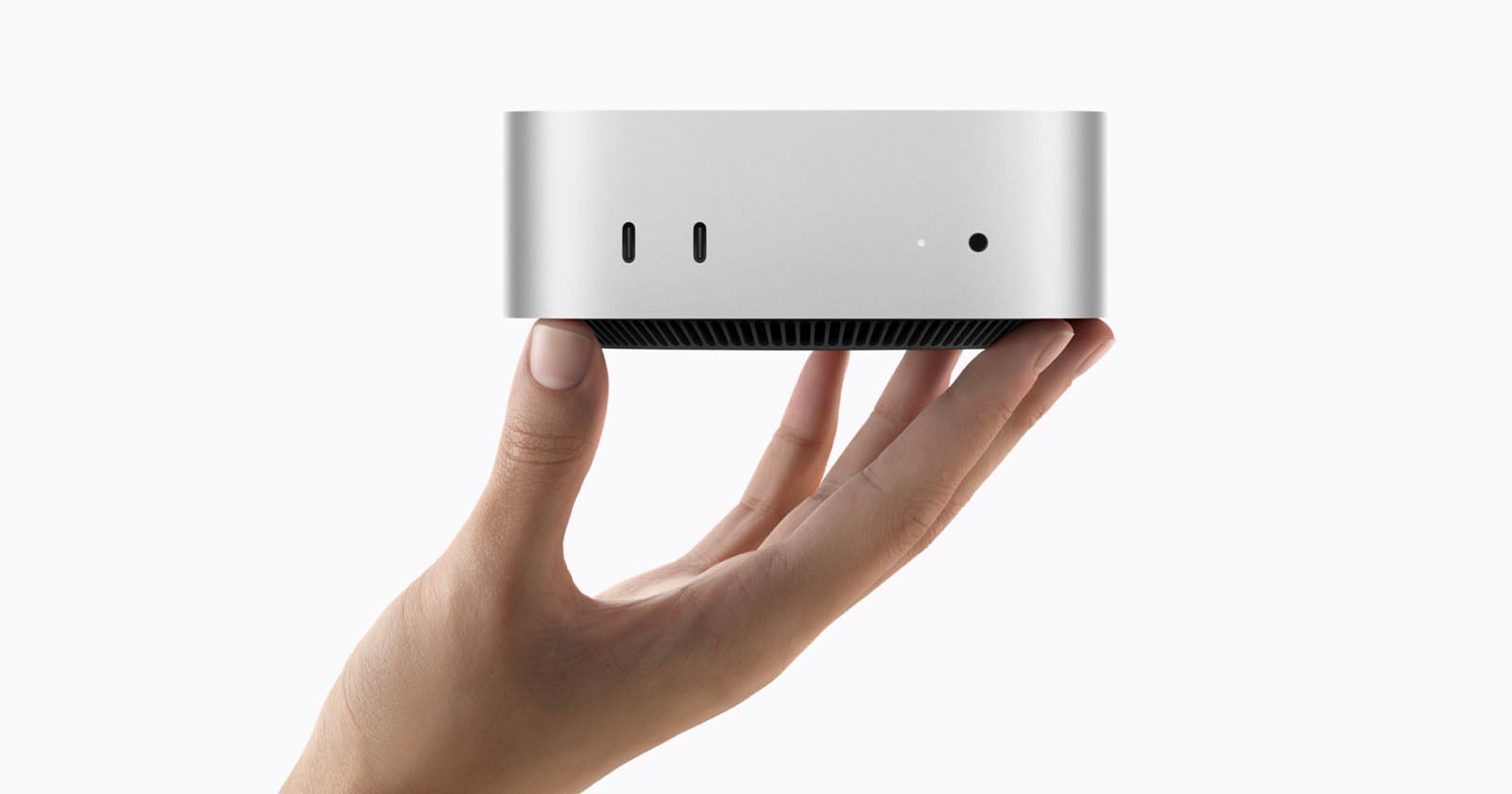
Physical connectivity options are robust, catering to both casual and professional users. The front panel of both models includes two convenient USB-C ports and a headphone jack, allowing easy access for accessories and audio devices. The rear panel differentiates the two variants slightly: the M6 Mac mini features three Thunderbolt 4 ports, while the M5 Pro Mac mini elevates this to three Thunderbolt 5 ports. Thunderbolt 5, a newer standard, offers even greater bandwidth for external displays, storage arrays, and other high-performance peripherals, further cementing the M5 Pro’s position for professional use cases. Both models also include an HDMI port for display output and a 2.5-gigabit Ethernet port, offering high-speed wired network access, a vital feature for data-intensive environments. The compact, iconic Mac mini design remains largely unchanged, emphasizing its unobtrusive presence and versatility in any setting.
A Legacy of Innovation: The Mac mini’s Journey
The Mac mini has a rich history dating back to its introduction in January 2005, conceived as an affordable entry point into the Apple ecosystem for users who already owned a monitor, keyboard, and mouse. Over the years, it has evolved from a basic desktop into a highly capable machine, often serving roles far beyond its initial scope, including home media servers, development machines, and even as a compact server rack solution in data centers.
The most significant transformation for the Mac mini, and indeed the entire Mac lineup, began in November 2020 with the introduction of the M1 chip, marking Apple’s decisive shift away from Intel processors to its custom-designed Apple Silicon. This transition brought unprecedented gains in performance-per-watt, revolutionizing the capabilities of compact Macs. Subsequent iterations, including the M2, M3, and M4 chips, have continually refined this architecture, with each generation delivering incremental yet meaningful improvements in CPU, GPU, and Neural Engine performance. The M5 chip, introduced earlier in 2025, further pushed these boundaries, setting the stage for the latest M6 and M5 Pro chips to achieve even higher levels of computational prowess and efficiency, particularly in the realm of AI. The recent scarcity of the previous generation Mac mini underscores its sustained popularity and the market’s eager anticipation for these next-gen models.
Apple Silicon: A Chronology of Performance Evolution
Apple’s journey with its custom silicon for the Mac began in earnest with the M1 chip in late 2020, which delivered a staggering performance leap and efficiency gains that reshaped expectations for desktop and laptop computers. The M1 utilized a 5-nanometer process, integrating CPU, GPU, Neural Engine, and unified memory onto a single system-on-a-chip (SoC). This integration significantly reduced latency and improved overall system responsiveness.
The M2 chip, introduced in 2022, built upon this foundation with increased transistor count, higher memory bandwidth, and further optimized CPU and GPU cores. While not a revolutionary leap like the M1, it offered steady, measurable improvements across the board. The M3, arriving in 2023, brought significant advancements in graphics architecture, introducing features like Dynamic Caching and hardware-accelerated ray tracing, making Macs even more formidable for gaming and professional rendering. In 2024, the M4 chip put a stronger emphasis on artificial intelligence capabilities with an enhanced Neural Engine, catering to the growing demands of on-device AI processing.
The M5 chip, released in early 2025, further refined these aspects, likely benefiting from process node improvements and architectural optimizations. Now, the M6 chip represents a monumental step, being Apple’s "first 2-nanometer chip." This process node shrink is critical, allowing for a higher density of transistors, which translates to more processing power and greater energy efficiency within the same or even smaller physical footprint. The M5 Pro, also featured in this Mac mini release, follows Apple’s strategy of offering professional-grade variants (Pro, Max, Ultra) that scale up core counts, memory bandwidth, and specialized accelerators to meet the needs of the most demanding workflows. This chronological progression illustrates Apple’s relentless pursuit of self-sufficiency and performance leadership in the silicon space.
The AI Imperative: Neural Accelerators and Future Workflows
The explicit mention and emphasis on Neural Accelerators in each core of both the M6 and M5 Pro chips highlight Apple’s strategic alignment with the burgeoning field of artificial intelligence. These dedicated hardware components are optimized for machine learning tasks, performing calculations far more efficiently than general-purpose CPU or GPU cores for AI workloads.
The implications of this integration are profound. On-device AI processing offers several advantages: enhanced privacy, as data doesn’t need to be sent to the cloud for processing; increased speed, reducing latency for real-time AI applications; and improved power efficiency, extending battery life in portable devices and reducing energy consumption in desktops. For users, this translates into tangible benefits across a wide range of applications. In photography and video editing, AI can power sophisticated features like intelligent object recognition, automated color correction, super-resolution upscaling, and advanced noise reduction. Generative AI models, such as those used for text-to-image or video generation, can run locally with greater speed and fidelity. Natural language processing tasks, like voice commands, real-time translation, and intelligent document analysis, also see significant boosts. This move positions the Mac mini not just as a powerful computer, but as a highly capable AI workstation, ready to handle the next generation of intelligent applications and workflows that are rapidly becoming central to many industries.
Market Positioning and Competitive Landscape
The new Mac mini with M6 and M5 Pro chips reinforces its unique position within Apple’s product ecosystem and the broader PC market. Within Apple’s lineup, it serves as a crucial bridge: more powerful and expandable than the iMac (which integrates a display) but more accessible and compact than the Mac Studio, which is designed for ultimate professional performance. Its "bring your own display" philosophy allows for cost savings and customization that appeal to a wide user base.

In the competitive landscape, the Mac mini directly challenges Windows-based mini PCs and small form-factor desktops. While competitors like Intel’s NUC series or various AMD Ryzen-based mini PCs offer compelling performance and value, Apple’s integrated hardware-software ecosystem, unified memory architecture, and the distinct advantages of its custom silicon (particularly in power efficiency and AI acceleration) provide a strong differentiation. For professional users, the M5 Pro Mac mini offers a relatively cost-effective entry point into high-performance computing for tasks that might otherwise require more expensive Mac Studio or even Mac Pro configurations. Its compact size also makes it an attractive option for embedded systems, digital signage, and specialized workstations where space is at a premium. The $100 price increase, while notable, is likely to be perceived as reasonable given the significant generational leaps in chip technology and capabilities.
Official Endorsement and Broader Industry Impact
Apple’s Chief Hardware Officer, Johny Srouji, articulated the company’s vision for the updated Mac mini in an official statement: "Mac mini has always been our most versatile Mac. Whether it’s being used as a home computer, powering a professional studio, or as an always-on agentic device, it’s the little Mac that can do it all." He further emphasized the advancements: "Today, we’re taking this versatility even further. With a more powerful CPU and graphics, Neural Accelerators in the GPU, and higher memory bandwidth, Mac mini with M6 delivers a whole new level of AI performance. And with up to an 18-core CPU and 20-core GPU, Mac mini with M5 Pro is an ultracompact powerhouse for complex pro workflows. We can’t wait to see all the incredible ways people will use it next."
These statements underscore Apple’s confidence in the Mac mini’s adaptability and its strategic importance in the company’s hardware portfolio. The industry typically responds to Apple’s chip announcements with keen interest, dissecting performance claims and anticipating the real-world impact on various benchmarks and professional applications. The introduction of the M6 as Apple’s first 2-nanometer chip is particularly significant, as it indicates Apple’s continued leadership in semiconductor manufacturing technology and its ability to consistently push the envelope of what’s possible in terms of performance and efficiency. This development will undoubtedly influence future chip designs across the tech industry, driving competition and innovation.
Implications for Creative and Professional Markets
The new Mac mini models, especially the M5 Pro variant, hold profound implications for creative and professional markets. Photographers will benefit from faster image processing, quicker previews, and more responsive AI-driven editing tools in applications like Adobe Photoshop and Lightroom, or Apple’s own Photos. Videographers and filmmakers can expect smoother playback of high-resolution footage, faster rendering times in Final Cut Pro, DaVinci Resolve, and Adobe Premiere Pro, and accelerated AI features for tasks like stabilization, object tracking, and upscaling. Music producers will appreciate the increased core count and memory bandwidth for handling complex projects with numerous tracks, virtual instruments, and effects plugins in DAWs like Logic Pro and Ableton Live.
Developers will find the enhanced CPU and memory performance invaluable for compiling code, running virtual machines, and managing large development environments. The improved Neural Accelerators will also be crucial for machine learning engineers and data scientists working with large datasets and complex AI models. Furthermore, the Mac mini’s compact size and robust performance make it an ideal choice for educational institutions, small businesses, and enterprises looking for powerful yet discreet workstations or servers for specific tasks. The integration of macOS 27, which will ship with these new machines no later than September 22, will further optimize the hardware-software synergy, delivering a cohesive and powerful user experience.
In conclusion, the refreshed Mac mini lineup, featuring the cutting-edge M6 and M5 Pro chips, represents a significant evolution for Apple’s most versatile desktop. By integrating advanced silicon, pioneering 2-nanometer technology with the M6, and heavily investing in on-device AI acceleration, Apple has not only addressed the high demand for its compact desktop but has also set a new standard for performance, efficiency, and intelligence in this form factor. These new models are poised to empower a wide array of users, from everyday consumers to demanding professionals, ushering in a new era of powerful and efficient computing within the iconic Mac mini design. The pre-order availability and upcoming shipment signal an exciting period for Mac users and the broader technology landscape.