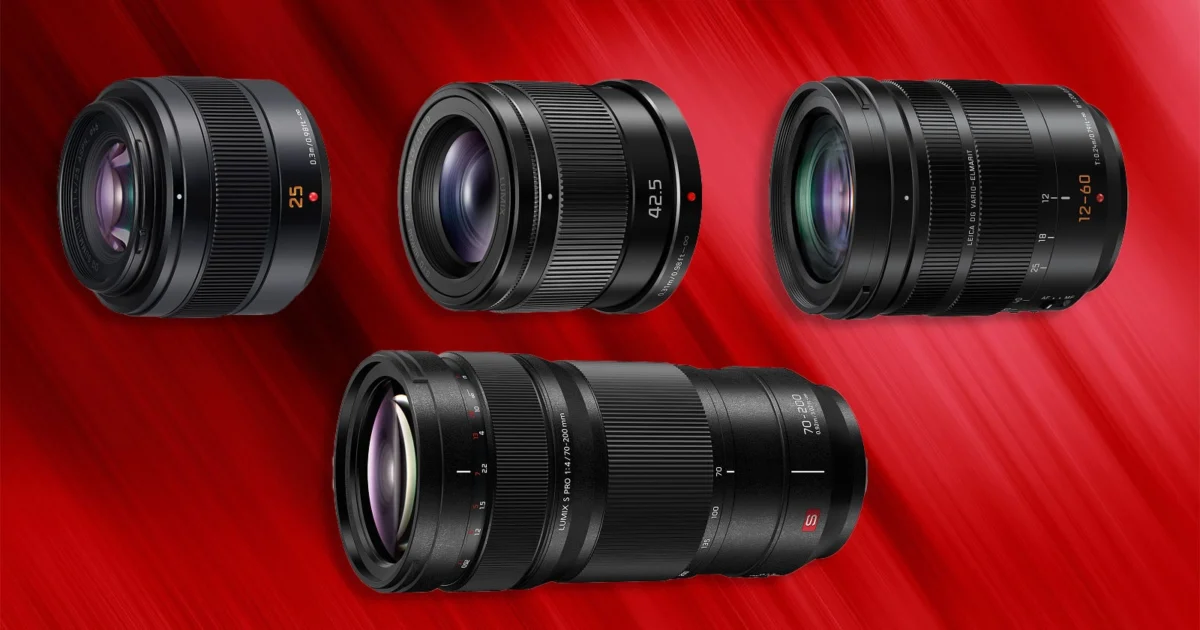
Panasonic has officially unveiled refreshed versions of four popular Lumix lenses, a move that includes three significant updates for its Micro Four Thirds (M43) system and one for its full-frame L-Mount Lumix S system. This announcement, detailed via Panasonic Japan, comes amidst swirling industry speculation regarding the future of the Micro Four Thirds format, particularly concerning Panasonic’s long-term investment in it. The updates, though modest in nature, are interpreted by many as a clear signal of Panasonic’s sustained support for these critical lens lines and, by extension, for the M43 ecosystem itself.
A Closer Look at the Refreshed Micro Four Thirds Lenses
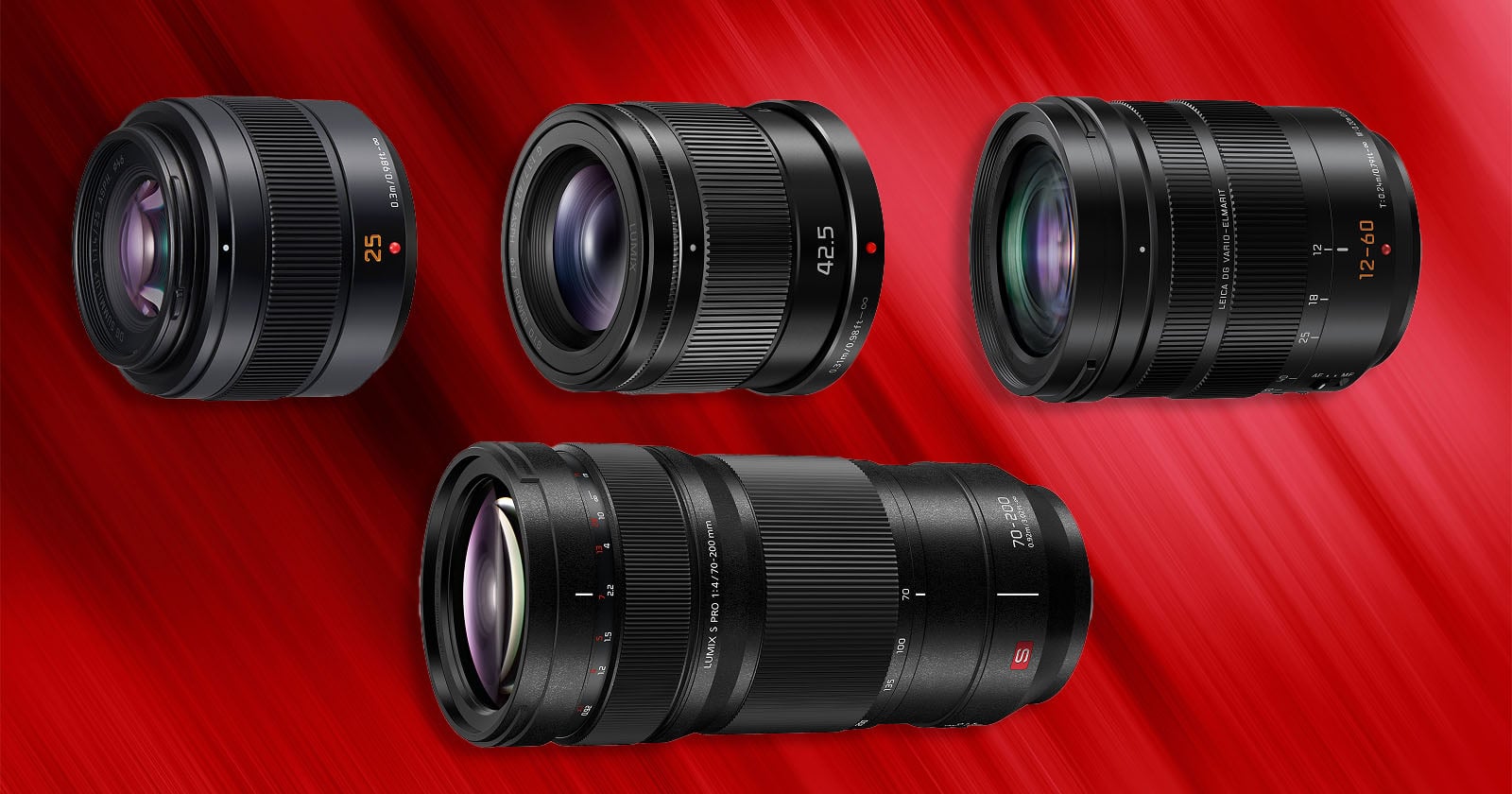
The core of Panasonic’s latest announcement focuses on three highly regarded Micro Four Thirds lenses, each receiving subtle yet functional enhancements. These lenses are the Panasonic Leica DG Summilux 25mm f/1.4 II ASPH., the Lumix G 42.5mm f/1.7 ASPH. Power OIS, and the Leica DG Vario-Elmarit 12-60mm f/2.8-4 ASPH. Power OIS. The significance of these updates extends beyond the technical specifications, addressing both practical usability and the broader market perception of Panasonic’s commitment to M43.
The most notable universal upgrade for the two Power OIS lenses (the 42.5mm f/1.7 and the 12-60mm f/2.8-4) is the incorporation of a new fluorine coating on their front elements. Fluorine coatings are a premium feature increasingly found on professional-grade optics, renowned for their hydrophobic and oleophobic properties. This specialized coating repels water, oil, and other contaminants, making the front lens element significantly easier to clean. For photographers and videographers working in diverse or challenging environments, such as dusty trails, rainy conditions, or coastal areas where salt spray is a concern, this translates to improved resilience and reduced maintenance time. The coating helps prevent smudges, fingerprints, and water droplets from adhering to the glass, thereby maintaining optimal image clarity and reducing the risk of permanent damage from abrasive cleaning attempts.
Beyond the fluorine coating, Panasonic has also addressed specific user experience aspects related to reflections from the front lens rings. For the Panasonic Leica DG Summilux 25mm f/1.4 II ASPH. and the Lumix G 42.5mm f/1.7 ASPH. Power OIS, the previously white lettering on the front ring has been changed to a darker gray. This seemingly minor aesthetic alteration serves a practical purpose: reducing potential reflections during close-up photography. When shooting subjects at very close distances, particularly with strong artificial light sources like flashes or continuous LED lights, bright lettering on the lens barrel can sometimes reflect into the image, creating unwanted artifacts or flares. By opting for a more subdued, dark gray, Panasonic aims to mitigate this issue, enhancing the professional output for macro and close-up enthusiasts.
The Leica DG Vario-Elmarit 12-60mm f/2.8-4 ASPH. Power OIS receives an even more pronounced anti-reflection modification. For this versatile zoom lens, Panasonic has entirely removed any color fill from the front ring lettering, opting instead for engraved letters without white pigment. This design choice is intended to achieve the same goal as the darker gray lettering on its counterparts – minimizing reflections when working in close proximity to subjects. The 12-60mm f/2.8-4 is particularly lauded in the Micro Four Thirds community as an excellent "normal zoom" lens, offering a flexible focal range and a relatively fast aperture, making it suitable for a wide array of photographic disciplines, including close-up work. This subtle refinement underscores Panasonic’s attention to detail and commitment to optimizing even established, high-performance optics for demanding professional use cases.
The L-Mount System Enhancement
Panasonic’s commitment to its full-frame L-Mount system, developed in alliance with Leica and Sigma, also sees an update. The Lumix S Pro 70-200mm f/4 OIS, a cornerstone telephoto zoom in the L-Mount lineup, now also incorporates the advanced fluorine coating on its front element. This enhancement aligns the 70-200mm f/4 with the high-end professional standards expected of the Lumix S Pro series, ensuring durability and ease of maintenance for photographers who rely on this lens for events, sports, wildlife, and portraiture in various environmental conditions. Given the professional usage of such a telephoto zoom, the addition of a robust fluorine coating is a welcome practical improvement that enhances the lens’s longevity and performance in the field.
Chronology and Availability
According to information released by Panasonic Japan, all four of these refreshed lenses are slated for availability in mid-September. To distinguish these updated versions from their predecessors, Panasonic has introduced new SKUs, appending an "A" to the end of the existing model names. For example, the updated Lumix S Pro 70-200mm f/4 will now carry the designation S-R70200A. This clear demarcation ensures that consumers can easily identify the enhanced versions, differentiating them from older stock.
Background Context: The Micro Four Thirds Conundrum
The announcement of these refreshed Micro Four Thirds lenses takes on particular significance when viewed against the backdrop of recent industry speculation. For some time, "rumblings" within the photography community have suggested that Panasonic might be gradually scaling back its investment in the Micro Four Thirds system, potentially even contemplating a withdrawal. These concerns were fueled by several factors: a perceived slowdown in new M43 camera body and lens releases from Panasonic, the discontinuation or increasing scarcity of certain existing M43 lenses, and Panasonic’s highly visible and growing commitment to the full-frame L-Mount Alliance.
The Micro Four Thirds system, jointly developed by Olympus (now OM Digital Solutions) and Panasonic in 2008, pioneered the mirrorless camera revolution. It offered a compelling combination of compact camera bodies and lenses, excellent image stabilization, and a vast ecosystem of interchangeable lenses from multiple manufacturers. Its smaller sensor (approximately 17.3 x 13mm, compared to 36 x 24mm for full-frame) allowed for significantly smaller and lighter equipment, making it a favorite among travel photographers, videographers, and enthusiasts who prioritized portability without compromising too much on image quality.
However, over the past decade, the camera market has witnessed a strong shift towards full-frame mirrorless cameras. Advances in sensor technology have made full-frame systems more compact and affordable, eroding some of M43’s traditional advantages. Major manufacturers like Sony, Canon, Nikon, and even Panasonic itself (with its Lumix S series) have heavily invested in full-frame, leading many to question the long-term viability of smaller sensor formats, especially for manufacturers with dual-system strategies.
Panasonic’s robust development of its L-Mount system, including a growing lineup of high-performance S series cameras and lenses, further fueled the speculation about M43. While OM Digital Solutions (inheritors of the Olympus camera division) has repeatedly reaffirmed its unwavering commitment to Micro Four Thirds, Panasonic’s position seemed less explicit, leading to uncertainty among its M43 user base. The fact that some of the very lenses now being refreshed were previously difficult to find or rumored to be discontinued only added to the anxiety within the M43 community.
Analysis of Implications: A Strategic Reaffirmation
In this context, the refresh of three cornerstone Micro Four Thirds lenses, even with relatively minor updates, is a powerful statement. It signals that Panasonic is not abandoning the M43 system but rather ensuring the continued availability and modern relevance of key optics. The updates, though not revolutionary, are thoughtful and address practical concerns for users.
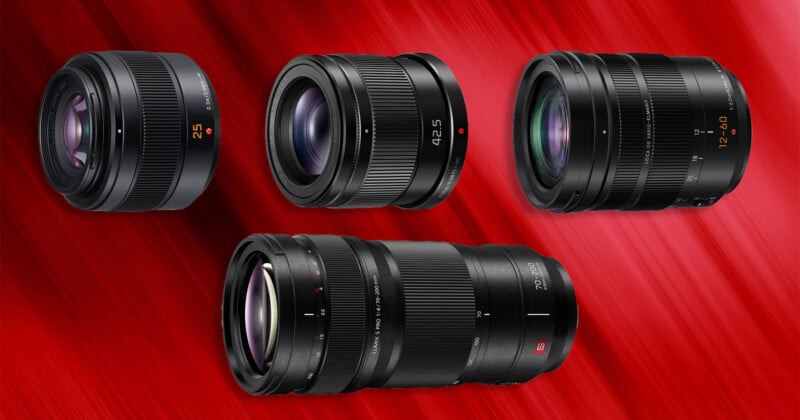
Firstly, bringing these lenses "back in full production" – or at least clarifying their continued availability and refreshing them – alleviates concerns about supply chain issues or a phased withdrawal. It assures existing and potential M43 users that popular and essential focal lengths will remain accessible. The 25mm f/1.4 II is a classic "nifty fifty" equivalent, beloved for its shallow depth of field and low-light performance. The 42.5mm f/1.7 is an excellent portrait lens, offering beautiful bokeh and optical image stabilization. The 12-60mm f/2.8-4 is a highly versatile standard zoom, often bundled with higher-end M43 bodies. These are not niche lenses; they are workhorses for many photographers.
Secondly, the nature of the updates – particularly the fluorine coating and anti-reflection measures – indicates that Panasonic is refining its existing M43 offerings rather than simply maintaining them. The fluorine coating, a premium feature, improves durability and user experience, aligning these lenses with modern expectations for professional-grade optics. The anti-reflection changes, while subtle, demonstrate an understanding of the specific needs of photographers who engage in close-up work or those operating in controlled lighting environments, enhancing the lenses’ utility for video production and specialized photography where light control is paramount. These are not superficial changes but rather functional improvements that extend the practical lifespan and competitive edge of these lenses.
This move suggests a strategic balancing act by Panasonic. While the L-Mount system represents their push into the high-end professional full-frame market, Micro Four Thirds continues to serve a vital segment that values portability, deep depth of field (beneficial for certain video applications and macro photography), and a comprehensive, compact lens lineup. By refreshing these lenses, Panasonic is effectively reaffirming its commitment to its existing M43 customer base and ensuring that its popular camera bodies like the Lumix GH series (highly regarded for video production) have robust and updated lens options. It signifies that M43 is not being phased out but rather maintained as a distinct, viable, and supported system within Panasonic’s broader imaging portfolio.
Broader Impact and Implications
The implications of this announcement extend beyond just Panasonic. For the Micro Four Thirds system as a whole, it provides a renewed sense of confidence. While OM Digital Solutions has been a vocal advocate for the format, Panasonic’s explicit commitment, however modest, reinforces the idea that M43 remains a vibrant and supported platform from both its founding partners. This could encourage new users to invest in the system and reassure existing users about the longevity of their equipment.
For the wider camera market, it highlights the continued diversification of strategies among manufacturers. While many brands are consolidating around full-frame, Panasonic (along with OM Digital Solutions) demonstrates that there is still a valuable niche for smaller, lighter systems that deliver professional results. This could also be seen as a response to market demands for durable and user-friendly equipment, where practical enhancements like fluorine coatings are increasingly expected.
Ultimately, these refreshed Lumix lenses are more than just minor technical updates; they represent a strategic communication from Panasonic. They convey a clear message that the company intends to continue supporting its Micro Four Thirds users with quality, updated optics, while simultaneously enhancing its professional L-Mount offerings. This approach ensures that Panasonic remains competitive across different market segments, catering to diverse photographic and videographic needs with both compact, versatile M43 options and high-performance, full-frame L-Mount solutions. The availability in mid-September will allow photographers and videographers to experience these subtle yet significant improvements firsthand, reinforcing Panasonic’s ongoing presence in the dynamic world of digital imaging.