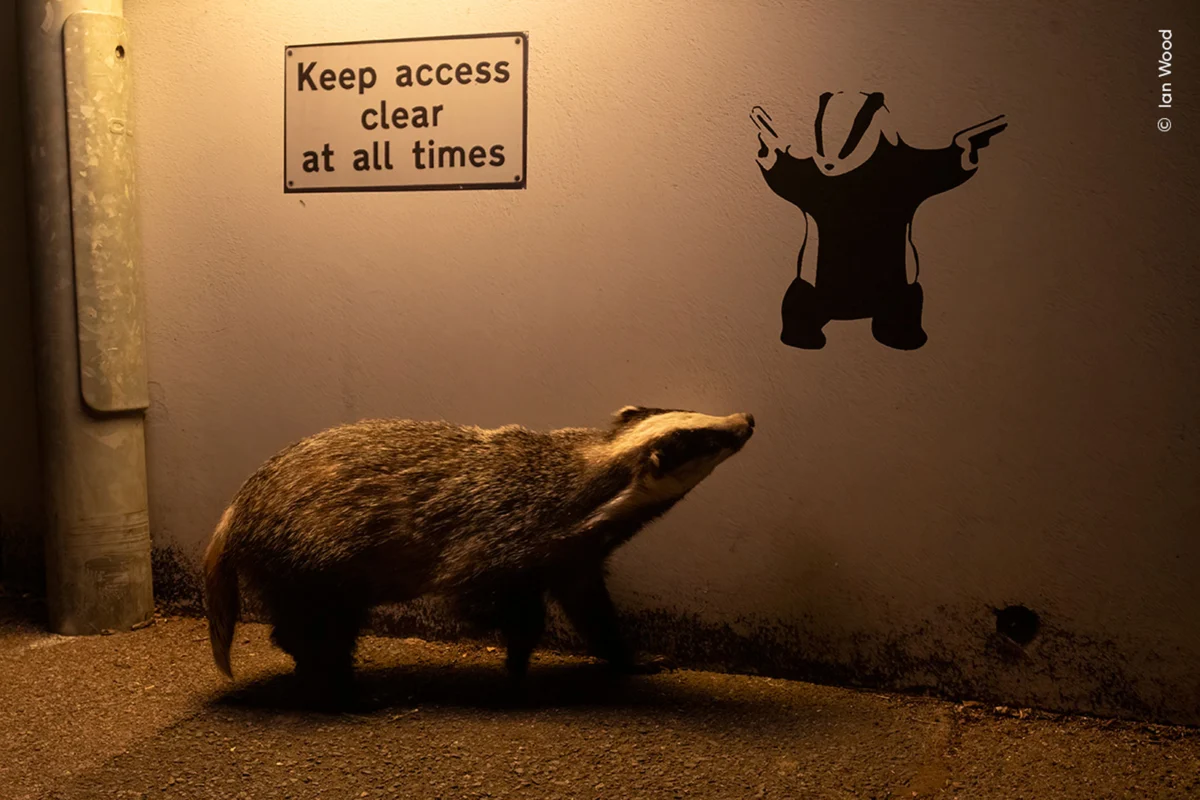
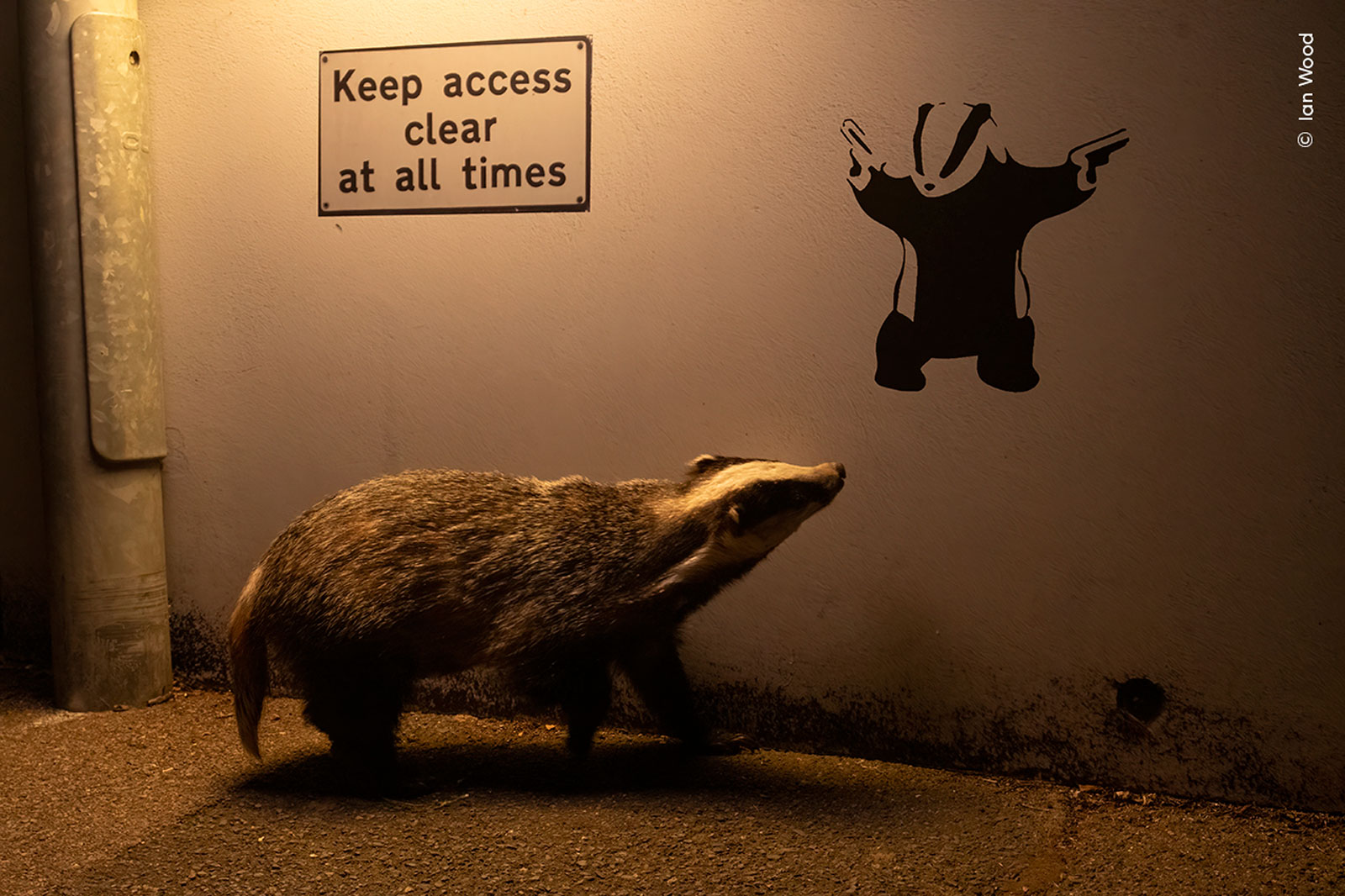
British photographer Ian Wood has been crowned the winner of the tenth edition of the Wildlife Photographer of the Year People’s Choice Award 2024, with his compelling image titled ‘No Access’. The photograph, a perfectly timed capture of a Eurasian badger pausing to glance at a piece of graffiti in St Leonards-on-Sea, England, resonated deeply with a global audience, securing the top spot in a fiercely contested public vote. This landmark win not only celebrates Wood’s artistic vision and patience but also casts a vital spotlight on the delicate coexistence of urban wildlife and human environments, igniting a crucial conversation about conservation challenges, particularly concerning badger populations in the UK.
The Winning Shot: "No Access" Unpacked
Ian Wood’s ‘No Access’ is a masterclass in urban wildlife photography, blending the raw reality of the natural world with the indelible marks of human presence. The image features a solitary Eurasian badger, a creature often associated with rural landscapes, ambling along a pavement in the coastal town of St Leonards-on-Sea. What elevates the photograph beyond a mere snapshot is the badger’s perfectly timed upward glance towards a section of graffiti on a wall that distinctly reads "No Access." This visual juxtaposition creates a poignant narrative, inviting viewers to ponder the boundaries, both literal and metaphorical, that separate human and animal worlds.
Wood’s dedication to capturing this unique moment is evident in his meticulous approach. Having observed local residents leaving food scraps on the pavement for foxes, he noted that badgers from a nearby sett had also begun to frequent the area for foraging. Recognizing the photographic potential, particularly after witnessing a badger traverse this specific stretch of pavement late one night, Wood strategically set up a small hide at the roadside. The scene was illuminated solely by the ambient glow of a lamppost, adding a dramatic, almost theatrical quality to the nocturnal encounter. The resulting photograph is not just a testament to Wood’s skill but a powerful symbol of nature’s resilience and adaptability in increasingly urbanized landscapes. It prompts reflection on how wildlife navigates, and often thrives, in environments shaped by human activity, challenging conventional perceptions of where and how wild animals exist.
Ian Wood’s Vision: More Than Just a Photograph
Upon learning of his victory, Ian Wood expressed a profound sense of gratitude and humility. "The outpouring of badger love since my photo was nominated for the People’s Choice Award has been beautifully overwhelming," he stated, adding that winning was "truly humbling." However, Wood was quick to emphasize that beneath the celebratory surface of his winning image lies a "darker side" – a critical conservation message he hopes the photograph will amplify.
Wood, who resides in rural Dorset, is actively involved in re-wilding initiatives aimed at enhancing habitats for a diverse array of wildlife. His concern for badgers stems from the ongoing badger cull in parts of England, a controversial government policy designed to control bovine tuberculosis (bTB) in cattle. The cull, which involves the licensed killing of badgers, has been a subject of intense debate among scientists, conservationists, and farmers for years. Proponents argue it is a necessary measure to protect livestock and the agricultural economy, while opponents contend that its effectiveness is questionable, it causes immense suffering, and alternative solutions like vaccination and improved biosecurity should be prioritized.
Wood fears that the continued cull has "decimated their numbers" and, if not halted, could lead to badgers becoming increasingly confined to urban settings in many parts of England as their rural habitats become less hospitable. He views his winning photograph as an urgent call to action. "My hope is for this image to raise awareness of the damaging effect of the badger cull and help push for change," he articulated. This powerful plea transforms ‘No Access’ from a captivating image into a potent tool for advocacy, leveraging the universal appeal of wildlife photography to draw attention to pressing conservation issues.
The Wildlife Photographer of the Year: A Legacy of Excellence
The Wildlife Photographer of the Year (WPY) competition, developed and produced by the Natural History Museum, London, stands as one of the most prestigious and longest-running wildlife photography competitions in the world. Established in 1965, it has evolved over six decades into a globally recognized platform that celebrates the natural world’s beauty, fragility, and diversity through the lens of exceptional photographers. The competition’s core mission is to shine a light on inspiring and impactful stories from the natural world, fostering a deeper connection between people and nature, and ultimately creating advocates for our planet.

The People’s Choice Award, now in its tenth edition, serves as a democratic extension of the main competition. It offers the public an opportunity to engage directly with the nominated images, allowing their collective voice to select a favourite from a curated shortlist. This public involvement not only enhances the competition’s reach but also provides a barometer of what stories and images resonate most powerfully with a broad international audience. The WPY competition attracts entries from amateur and professional photographers of all ages and from every corner of the globe, underscoring its universal appeal and impact. The sheer volume of submissions—nearly 60,000 images for the sixtieth competition alone—testifies to its enduring influence and the passion it inspires within the global photographic community.
Public Engagement: A Record-Breaking Mandate
The 2024 People’s Choice Award saw unprecedented levels of public participation, with a record number of over 76,000 wildlife photography and nature enthusiasts from around the world casting their votes. This remarkable turnout for the 25 nominated images underscores a growing global interest in wildlife conservation and the powerful role visual storytelling plays in fostering awareness and engagement. The democratic nature of the award allows the public to champion images that not only showcase technical brilliance but also evoke strong emotional responses and highlight pressing environmental concerns.
The record-breaking vote count is a significant indicator of the public’s desire to connect with nature, even if it’s through a digital screen. In an era marked by increasing environmental challenges, platforms like the People’s Choice Award offer a tangible way for individuals to participate in the broader conservation narrative. It demonstrates that compelling imagery can transcend geographical and cultural boundaries, uniting people in their appreciation for the natural world and their concern for its future. The collective voice of over 76,000 voters sends a clear message about the profound impact that a single, well-captured photograph can have.
The Natural History Museum’s Endorsement
Dr. Douglas Gurr, Director of the Natural History Museum, London, lauded Ian Wood’s winning image, articulating its significance within the museum’s broader mission. "Ian’s flawlessly timed image offers a unique glimpse of nature’s interaction with the human world, underscoring the importance of understanding urban wildlife," Dr. Gurr remarked. His statement highlights a key theme that the museum consistently promotes: the intricate relationship between humanity and the natural environment, even within bustling urban settings.
The museum’s endorsement further emphasizes the photograph’s ability to transcend mere aesthetic appreciation. Dr. Gurr continued, "His exceptional photograph serves as a powerful reminder that local nature and wildlife, often just outside our homes, can inspire and captivate us." This sentiment resonates deeply with the museum’s educational and outreach goals, encouraging people to look closer at the biodiversity that exists in their immediate surroundings. It reinforces the idea that conservation begins at home, with an appreciation for the creatures that share our spaces. The museum, as a custodian of natural history and a leading voice in scientific research and public engagement, uses platforms like the Wildlife Photographer of the Year to inspire a global audience towards a deeper understanding and stewardship of the planet.
Beyond the Winner: A Glimpse at Highly Commended Masterpieces
While ‘No Access’ captured the top prize, the competition featured four other outstanding images that garnered ‘Highly Commended’ status, each a testament to the diverse beauty and drama of the natural world and the extraordinary talent of the photographers. These images also deeply impressed wildlife enthusiasts worldwide and further underscore the exceptional quality of the entries.
Francisco Negroni’s ‘Earth and Sky’ presents an unforgettable spectacle from Chile. This photograph captures a rare double lenticular cloud, dramatically illuminated at nightfall by the fiery lava emanating from the Villarrica volcano. Negroni’s image is a breathtaking fusion of celestial and terrestrial power, a stark reminder of our planet’s immense geological forces and atmospheric phenomena. The contrast between the ethereal clouds and the incandescent lava creates a sense of awe and wonder, showcasing the raw, untamed majesty of nature.
From a very different setting, Jess Findlay’s ‘Edge of Night’ delivers an action shot of a ghostly barn owl. The image captures the owl in mid-flight, exiting through the hayloft window of a derelict barn, embarking on its nocturnal hunt. Findlay’s photograph is rich with atmosphere, depicting the owl as a silent, efficient hunter against the encroaching darkness. It offers an intimate glimpse into the secretive world of these magnificent birds, highlighting their crucial role as predators in rural ecosystems and their adaptability to human-made structures.
Michel d’Oultremont’s ‘Whiteout’ transports viewers to a snowy landscape in Belgium, where a stoat sits alert, observing its territory. The creature is perfectly camouflaged, its winter coat blending seamlessly into the pristine white surroundings. D’Oultremont’s image not only showcases the stoat’s exquisite natural camouflage but also captures its intense vigilance and resilience in harsh conditions. It’s a subtle yet powerful portrait of survival and adaptation, drawing attention to the often-overlooked small predators of temperate regions.
Finally, David Northall’s intriguing capture, ‘Spiked’, depicts a raw moment of interspecies conflict. The photograph shows a bloodied yet determined honey badger returning to finish off a Cape porcupine, which had earlier defended itself fiercely. Northall’s image is a powerful, unvarnished portrayal of the brutal realities of the wild, highlighting the tenacity of both predator and prey. It’s a striking reminder of the daily struggles for survival in the animal kingdom, capturing a moment of intense drama and resilience.
These four highly commended images, alongside Wood’s winner, represent the pinnacle of wildlife photography, each telling a unique story and transporting viewers to different corners of the planet, from volcanic landscapes to snowy plains and urban alleys.
The Rigorous Journey: From Thousands to Five
The selection process for the Wildlife Photographer of the Year People’s Choice Award is a testament to the rigorous standards of the overall competition. The journey begins with an overwhelming number of submissions—nearly 60,000 images were entered for the sixtieth Wildlife Photographer of the Year competition from photographers across the globe. An international judging panel, comprised of leading experts in photography, natural history, and conservation, meticulously reviews these entries. Their task is to identify images that not only demonstrate exceptional technical skill and artistic merit but also tell compelling stories, capture significant natural history moments, and adhere to strict ethical guidelines regarding wildlife photography.

From this vast pool, a shortlist of 25 images is carefully chosen by the Natural History Museum, London, and the international judging panel for the People’s Choice Award. These 25 images represent a diverse array of species, behaviours, and habitats, designed to showcase the breadth and beauty of the natural world. It is from this elite group of 25 that the public votes to select the ultimate winner and the four highly commended images. This multi-stage selection process ensures that only the most impactful, scientifically relevant, and aesthetically pleasing photographs reach the final public vote, guaranteeing a high standard for the People’s Choice selections.
Exhibition and Future Horizons
The five celebrated images – Ian Wood’s ‘No Access’ and the four highly commended photographs – are currently on display, offering both online access and interactive viewing experiences at the flagship exhibition at the Natural History Museum, London. The exhibition provides a unique opportunity for visitors to immerse themselves in these captivating narratives, fostering a deeper appreciation for wildlife photography and the urgent conservation messages they convey. This special display will remain open to the public until June 29, 2025, allowing ample time for audiences to witness these extraordinary visual stories firsthand.
Looking ahead, the Natural History Museum and the Wildlife Photographer of the Year competition continue their enduring mission to inspire and inform. Images submitted for the sixty-first competition are already undergoing the meticulous judging process by an international panel of experts. The anticipation will build towards the next annual awards ceremony, which is scheduled to take place at the Natural History Museum, London, in October 2025. This upcoming event will once again celebrate the power of photography to connect people with nature and champion the cause of global conservation. The cyclical nature of the competition ensures a continuous flow of fresh perspectives and urgent stories from the natural world, keeping the conversation around wildlife and environmental stewardship vibrant and relevant.
Photography as a Catalyst for Change
Ian Wood’s triumph with ‘No Access’ is more than just an accolade for a remarkable photograph; it is a powerful affirmation of photography’s unique emotive power to connect people with nature and ignite critical conversations. The image, depicting an urban badger, serves as a poignant reminder that wildlife is not confined to remote wildernesses but often thrives, or struggles, in the very heart of human habitation. This highlights the increasing relevance of urban wildlife photography, which challenges preconceived notions and encourages a deeper understanding of local biodiversity.

Moreover, Wood’s use of his win to advocate against the badger cull underscores the potential for award-winning photography to become a potent tool for environmental activism. By bringing a controversial conservation issue to a global audience, the photograph transcends its artistic merit to become a symbol of broader ecological challenges. The Wildlife Photographer of the Year competition consistently shines a light on such inspiring and impactful stories, fulfilling its role as a vital platform for conservation. In an era where biodiversity loss and climate change pose existential threats, the compelling visual narratives woven by photographers like Ian Wood are indispensable in fostering awareness, inspiring action, and creating a global community of advocates for our precious planet. The ongoing success of WPY reinforces the enduring belief that an image can indeed speak a thousand words, and sometimes, those words can spark meaningful change.