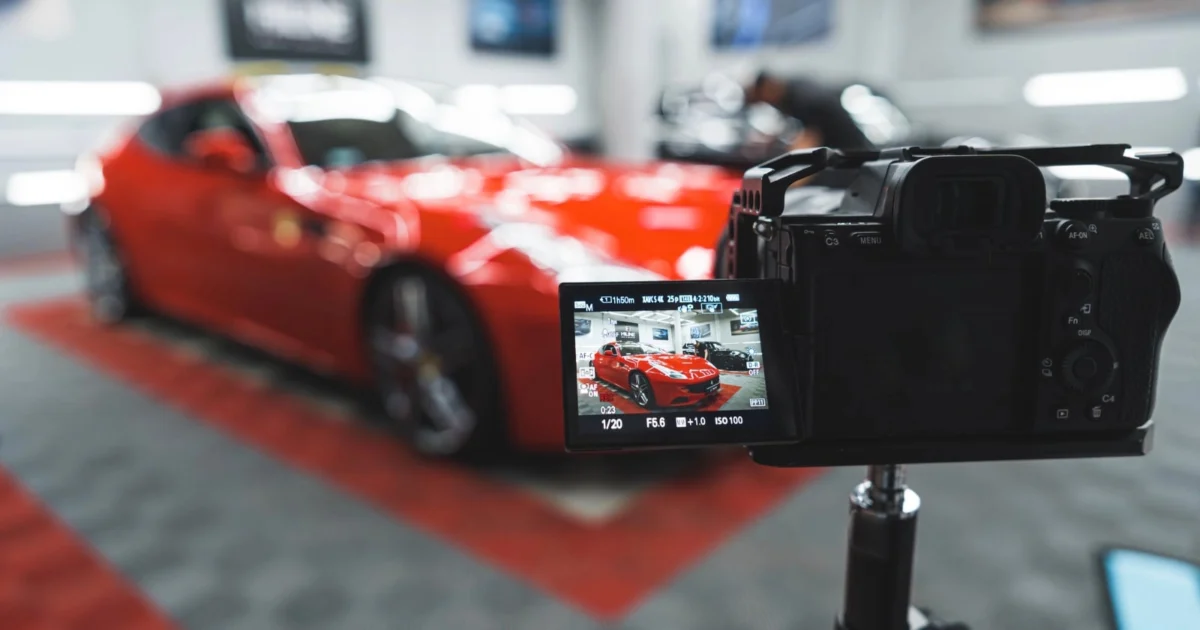
EVOX Productions LLC, a prominent automotive photography company, has initiated a significant lawsuit against the artificial intelligence image generator Midjourney, accusing the AI platform of illicitly copying tens of thousands of its copyrighted vehicle photographs without authorization. The legal action, filed on Thursday, July 30, 2026, in the U.S. District Court for the Central District of California, represents a crucial development in the escalating legal battle between creative industries and generative AI developers over intellectual property rights. This lawsuit adds to a growing list of high-profile legal challenges confronting Midjourney, highlighting fundamental questions about data sourcing, fair use, and the economic future of content creators in the age of artificial intelligence.
The Allegations: Unlicensed Use and Direct Competition
At the heart of EVOX Productions’ complaint are claims that Midjourney systematically ingested vast quantities of the company’s proprietary automotive imagery into its training datasets without seeking licenses or obtaining explicit consent. EVOX, which prides itself on being a market leader in high-quality automotive photography, asserts that its extensive catalog—encompassing nearly every commercially available car make and model sold in the U.S. since 2000—was a prime target for Midjourney’s data collection efforts. These images are ubiquitous, appearing across myriad dealership websites and online vehicle marketplaces, often without consumers realizing the extent of EVOX’s footprint in the digital automotive landscape.
According to the lawsuit, as reported by Bloomberg Law News, Midjourney allegedly downloaded these copyrighted images from publicly accessible online datasets. A particularly contentious point raised by EVOX is the accusation that Midjourney not only failed to secure proper licensing but also systematically stripped away critical copyright information, including watermarks, image credits, and metadata, before incorporating the photos into its AI model’s training regimen. This alleged removal of identifying information could be interpreted as an attempt to obscure the original source and ownership of the content, further complicating the legal defense for Midjourney.
EVOX further contends that Midjourney’s AI was specifically engineered to "reproduce and mimic" the visual characteristics, styles, and content of the images it was trained on, including EVOX’s distinctive automotive photographs. The lawsuit articulates a direct competitive threat, arguing that Midjourney is effectively profiting from a product that directly rivals EVOX’s core licensing business. By allowing users to generate high-quality car images through a monthly subscription model, Midjourney ostensibly bypasses the need for potential clients to license photographs from EVOX, thereby undermining the value of EVOX’s intellectual property and its revenue streams. EVOX states that Midjourney’s actions have demonstrably harmed its business by diminishing the market value of its copyrighted portfolio and weakening the financial incentive for the company to continue investing in the creation of new, high-quality automotive imagery. The company is seeking injunctive relief to halt Midjourney’s alleged unlawful use of its photographs and demanding monetary compensation for damages incurred.
EVOX Productions LLC: A Pillar of Automotive Visuals
EVOX Productions LLC has established itself over decades as an indispensable resource for the automotive industry’s visual content needs. Founded with a mission to provide comprehensive and high-quality visual assets for vehicle sales and marketing, EVOX has meticulously built an archive that represents an unparalleled visual history of the American automobile market. Their process involves professional photographers meticulously capturing vehicles from multiple angles, under various lighting conditions, and often in controlled studio environments, ensuring consistency and accuracy across their vast library. The sheer scale of their operation, having photographed virtually every make and model since 2000, underscores the significant investment in time, resources, and creative expertise required to build such an asset base.
This extensive library is not merely a collection of images; it is a critical component of the digital infrastructure supporting car sales. Dealerships, online aggregators, and manufacturers rely on EVOX’s licensed content to present vehicles accurately and appealingly to potential buyers. The company’s business model is predicated on the value of this intellectual property, generating revenue through licensing agreements that allow clients to use these high-quality visuals legally. The alleged unauthorized use by Midjourney, therefore, strikes at the very core of EVOX’s business model and the principle of intellectual property protection that underpins the creative economy.
Midjourney: At the Forefront of Generative AI and Legal Scrutiny
Midjourney is a leading generative artificial intelligence program and service developed by a San Francisco-based independent research lab. Launched in mid-2022, it quickly gained widespread popularity for its ability to generate sophisticated, high-resolution images from textual prompts, known as "prompts." Users can describe virtually any scene, object, or style, and Midjourney’s algorithms, trained on massive datasets of existing images, synthesize novel visuals. Its accessibility and impressive output quality have made it a tool for artists, designers, and hobbyists, but also a flashpoint for legal and ethical debates.
The core technology behind Midjourney, like other generative AI models such as Stability AI’s Stable Diffusion and OpenAI’s DALL-E, relies on deep learning architectures, particularly diffusion models. These models learn patterns, styles, and semantic relationships from vast collections of images and their associated text descriptions. The controversy arises from the nature of these training datasets, which often comprise billions of images scraped from the internet without explicit permission from copyright holders. Proponents of generative AI argue that this process constitutes "fair use," akin to how a human artist learns by studying existing works. Critics, however, contend that directly copying and ingesting copyrighted material for commercial gain, especially when the AI’s output directly competes with the original creators, constitutes infringement.
A Broader Legal Battle: Midjourney’s Multiple Fronts
The lawsuit filed by EVOX Productions is not an isolated incident but rather the latest in a series of significant legal challenges confronting Midjourney. The AI image generator is currently embroiled in multiple high-profile copyright infringement lawsuits, signaling a growing concerted effort by content creators and intellectual property owners to protect their rights in the face of rapidly advancing AI technology.
Notably, Midjourney is being sued by major entertainment conglomerates, including Disney, Universal Studios, and Warner Bros. These lawsuits, filed in late 2025 and early 2026, allege widespread copyright infringement based on Midjourney’s ability to generate AI pictures of recognizable characters and intellectual properties, such as Yoda from Star Wars or specific characters from Warner Bros. franchises. The entertainment giants argue that the AI models were trained on their copyrighted works without permission and that the output directly infringes upon their valuable intellectual property. The ability of Midjourney to produce images that are strikingly similar or direct derivatives of copyrighted characters has fueled these legal actions, raising concerns about brand dilution, unauthorized merchandising, and the erosion of control over proprietary content.
These cases collectively represent a critical juncture for intellectual property law. They seek to clarify whether the act of training an AI model on copyrighted material, and the subsequent generation of new content, falls under the legal doctrine of fair use or constitutes actionable infringement. The outcomes of these lawsuits are poised to establish significant legal precedents that could shape the future development and deployment of generative AI technologies across various industries.
Midjourney’s Defense: Fair Use and Counter-Allegations
In response to the growing wave of lawsuits, Midjourney has consistently maintained its stance that training AI on copyrighted material qualifies as fair use. This legal doctrine, enshrined in U.S. copyright law, permits limited use of copyrighted material without acquiring permission from the rights holder, for purposes such as criticism, comment, news reporting, teaching, scholarship, or research. Midjourney’s argument generally posits that the AI model transforms the original works into something new, rather than merely reproducing them, and that the training process itself is transformative, not an act of infringement. They often liken the AI’s learning process to that of a human artist drawing inspiration from existing art, arguing that no individual copyrighted work is directly copied or displayed in its original form.
Furthermore, Midjourney has adopted an aggressive counter-strategy in some of these cases. In its defense against the Hollywood studios, for instance, Midjourney has not only denied the allegations but has also sought to compel Disney, Universal, and Warner Bros. to disclose their own internal usage of similar generative AI tools. This move, reported in July 2026, suggests an attempt to highlight potential hypocrisy or to establish a broader industry practice of AI adoption, thereby weakening the studios’ claims of unique harm or infringement. Midjourney’s legal team appears to be aiming to demonstrate that the very companies accusing them of copyright theft are themselves engaging in similar technological practices, albeit perhaps behind closed doors. This tactic could complicate the legal narrative and force a deeper examination of AI ethics and copyright practices across the entire creative sector.
The Legal Labyrinth: Fair Use, Transformative Use, and Market Impact
The central legal debate in these cases revolves around the interpretation of "fair use," particularly the concept of "transformative use." A key factor in determining fair use is whether the new work "transforms" the original by adding new expression, meaning, or message. Courts typically weigh four factors: the purpose and character of the use (commercial vs. non-profit, transformative vs. derivative), the nature of the copyrighted work, the amount and substantiality of the portion used, and the effect of the use upon the potential market for or value of the copyrighted work.
EVOX Productions’ lawsuit specifically targets the "effect upon the potential market" factor. By alleging that Midjourney’s output directly competes with and devalues its licensed photographs, EVOX directly challenges Midjourney’s fair use defense. The argument is that if users can generate comparable automotive imagery for a subscription fee from Midjourney, they will no longer need to license from EVOX, thus creating a direct economic harm. This contrasts with arguments that might apply to search engines indexing images (where the use is primarily for discovery, not direct substitution).
Legal scholars and intellectual property experts are closely watching these cases. The sheer scale of data ingestion by AI models, involving billions of images, makes traditional copyright enforcement mechanisms challenging. If courts rule that AI training on copyrighted material, even without explicit licensing, constitutes fair use, it could dramatically reshape intellectual property rights, potentially diminishing the control creators have over their work and its use in new technologies. Conversely, if courts find such training to be infringement, it could necessitate a fundamental shift in how AI models are developed and trained, requiring developers to secure comprehensive licenses for their datasets, a potentially monumental and costly undertaking.
Economic Implications for the Creative Industries
The implications of these lawsuits extend far beyond the immediate parties involved, potentially reshaping the economic landscape for photographers, artists, illustrators, and other creative professionals. The creative economy, a significant contributor to global GDP, relies heavily on the protection of intellectual property rights to incentivize creation and innovation. For companies like EVOX, the ability to license their unique and high-quality content is their primary source of revenue. If AI generators can replicate or produce similar content at a fraction of the cost, without compensating the original creators, it could severely devalue existing creative works and undermine the financial viability of many creative businesses.
For individual photographers, the rise of generative AI poses an existential threat. The potential for AI to produce imagery that once required skilled human effort, extensive equipment, and significant time investment, raises concerns about job displacement and the erosion of professional standards. A 2023 report by Goldman Sachs estimated that generative AI could automate 300 million full-time jobs globally, with creative industries being among the most susceptible. While specific figures for automotive photography are scarce, the broader photography market, estimated at over $100 billion annually, could see significant disruption. The EVOX lawsuit, therefore, is not just about a single company’s rights but represents a collective stand for the economic stability of an entire professional sector.
The Future of AI Development and Regulation
The outcomes of the EVOX v. Midjourney case, alongside the ongoing lawsuits from Hollywood studios, will undoubtedly influence the future trajectory of AI development and potentially spur new legislative efforts. A ruling in favor of the plaintiffs could necessitate a "permissioned data" model for AI training, where developers would be required to license all copyrighted content used in their datasets. This could lead to a significant increase in development costs, potentially favoring larger tech companies with greater resources for licensing, or driving innovation towards models trained on entirely public domain or openly licensed content.
Conversely, a ruling in favor of Midjourney’s fair use defense could accelerate the proliferation of generative AI, potentially leading to an explosion of AI-generated content across all creative domains. This scenario would place a greater burden on human creators to distinguish their work and find new avenues for value creation, possibly pushing them towards highly specialized, niche, or performance-based creative outputs that are harder for AI to replicate.
Beyond the courts, these cases are fueling discussions among policymakers globally about the need for clearer regulations for AI. Governments in the U.S., EU, and other regions are already exploring frameworks to address issues like copyright, data privacy, accountability, and transparency in AI. The legal challenges against Midjourney serve as a stark reminder of the urgent need to reconcile rapid technological advancement with established legal and ethical principles, ensuring that innovation does not come at the expense of creators’ rights and economic stability. The automotive photography sector, through EVOX’s pioneering lawsuit, has now firmly joined the chorus of creative voices demanding clarity and justice in the evolving landscape of artificial intelligence.