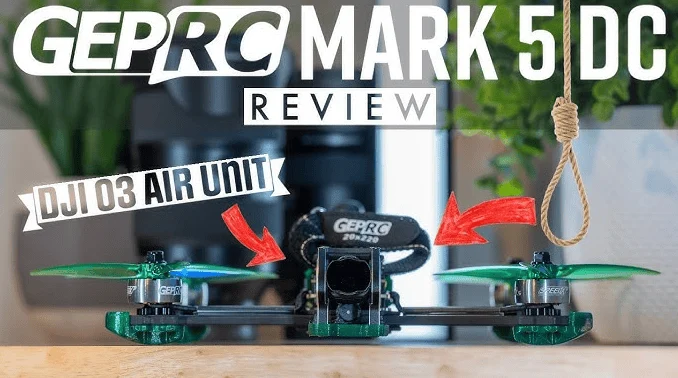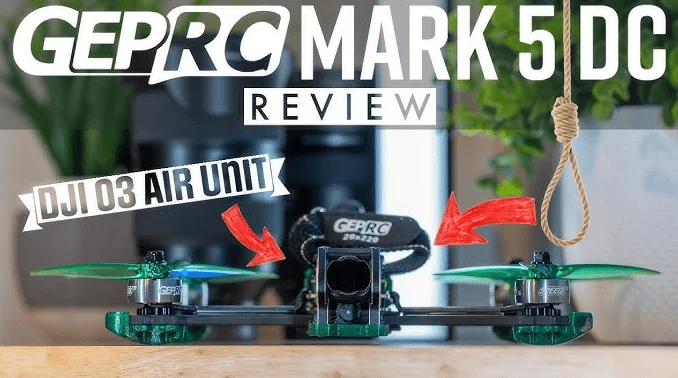
The GEPRC MARK5 DC HD O3 FPV represents a significant milestone in the evolution of first-person view (FPV) aviation, merging industrial-grade structural engineering with cutting-edge digital imaging to meet the rigorous demands of professional cinematographers and freestyle enthusiasts alike. As the drone industry pivots toward more integrated and streamlined solutions, this model stands out by incorporating the DJI O3 Air Unit into a refined "DeadCat" frame configuration, effectively eliminating the need for external action cameras while maintaining high-fidelity video output. This transition marks a departure from traditional FPV setups where pilots were often forced to choose between the agility of a lightweight racer and the stability required for high-definition recording.
The Strategic Engineering of the DeadCat Frame
The "DC" in the GEPRC MARK5 DC title refers to the "DeadCat" frame geometry, a design choice that has become the gold standard for cinematic FPV flight. Unlike the traditional "X" or "Squashed X" frames used in racing—where the propellers are equidistant from the center of the flight controller—the DeadCat configuration pushes the front arms further apart and slightly backward. This specific geometry ensures that the propellers remain entirely outside the camera’s field of view, even when using ultra-wide lenses or low-tilt camera angles.
Constructed from high-strength 3K carbon fiber, the frame is designed to withstand the high-velocity impacts common in freestyle maneuvers. The MARK5 utilizes a unique "bridge" design for its camera mount, incorporating 7075-T6 aluminum alloy components. This aerospace-grade material provides a rigid structure for the DJI O3 camera, which is critical for reducing "jello" (high-frequency vibrations) in the video feed. By isolating the camera from the main vibrations of the motors, GEPRC ensures that the onboard stabilization algorithms, such as DJI’s RockSteady, can operate with maximum efficiency.
Imaging Excellence: The Integration of the DJI O3 Air Unit
At the heart of the GEPRC MARK5 DC HD O3 is the DJI O3 Air Unit, a component that has revolutionized the FPV ecosystem by providing a 1/1.7-inch CMOS sensor capable of recording 4K video at 60 frames per second. With a maximum bitrate of 130 Mbps and a 155-degree super-wide field of view (FOV), the imaging system rivals standalone action cameras that were previously strapped to the top of drones, adding unnecessary weight and drag.
The O3 system supports the D-Cinelike color profile, which offers professional editors a wider dynamic range for color grading in post-production. For pilots, the system provides a low-latency 1080p digital transmission to FPV goggles, allowing for precise navigation through complex environments. This dual-purpose functionality—serving as both the primary flight link and the high-definition recording device—significantly simplifies the pre-flight checklist and reduces the overall takeoff weight of the aircraft, thereby extending flight times and improving power-to-weight ratios.
Propulsion and Power Systems Analysis
To handle the demands of 4K cinematic capture and high-speed freestyle, the MARK5 is equipped with SPEEDX2 2107.5-1960KV motors. These motors are optimized for 6S LiPo battery configurations, which have become the industry standard for 5-inch drones due to their ability to maintain consistent voltage levels throughout the flight. The 1960KV rating provides a balanced mix of low-end torque for smooth cinematic glides and high-end "punch" for aggressive recovery maneuvers.
Managing this power is the GEP-F722-45A AIO (All-in-One) flight controller or a dedicated stack featuring a 45A BLHeli_32 ESC (Electronic Speed Controller). The use of the F722 processor ensures high-speed loop frequencies, allowing the flight controller to process gyro data and make motor corrections hundreds of times per second. This results in a "locked-in" feeling for the pilot, where the drone responds instantaneously to stick inputs without oscillating or drifting. Furthermore, the ESC supports telemetry and bidirectional DShot, enabling advanced features like RPM filtering, which further cleans up the flight performance by targeting specific motor noise frequencies.
A Chronology of the MARK Series Development
The development of the MARK5 DC is the result of years of iterative feedback from the global FPV community.
- MARK2 & MARK3 Era: These early models focused on durability and traditional "X" frames, primarily targeting the burgeoning freestyle market.
- MARK4 Transition: The MARK4 introduced a more compact and lighter design, but pilots still struggled with prop-interference in high-definition digital feeds as systems like the original DJI Air Unit became popular.
- MARK5 Launch: The initial MARK5 was released to critical acclaim, focusing on a refined "Squashed X" for freestyle.
- The DC HD O3 Update: Recognizing the shift toward professional cinematography, GEPRC introduced the DeadCat (DC) variant specifically to house the DJI O3 Air Unit. This version addressed the thermal management issues of the O3 unit by including dedicated cooling vents and a more spacious internal layout to prevent overheating during long-range flights or high-ambient temperature conditions.
Technical Specifications and Component Synergy
The technical architecture of the GEPRC MARK5 DC HD O3 is a study in component synergy. Every part is selected to complement the others:
- Wheelbase: 225mm, providing a stable platform for 5-inch propellers.
- Propellers: Gemfan 5136 or HQProp Ethix S5, chosen for their efficiency and grip in corners.
- Antenna System: A custom-designed rear mount holds the O3 dual-polarized antennas at an optimal angle to ensure signal integrity even when the drone is tilted away from the pilot.
- Cooling: The O3 unit is notorious for generating heat while stationary; the MARK5 frame design facilitates airflow through the center stack to mitigate this risk.
Supporting data suggests that a 6S 1300mAh to 1500mAh battery provides an optimal flight window of approximately 5 to 8 minutes, depending on the aggressiveness of the pilot. For professional sets, this duration is often sufficient to capture a "one-take" cinematic sequence through a building or across a landscape.
Market Implications and Professional Adoption
The release of integrated O3 drones like the MARK5 DC has caused a paradigm shift in how production houses approach FPV. Historically, a "Cinewhoop" or a 5-inch drone would carry a GoPro, adding roughly 120g to 160g to the payload. By removing the external camera, the GEPRC MARK5 DC HD O3 operates with less inertia, making it safer to fly near subjects and more responsive in tight spaces.
Industry analysts note that this "all-in-one" approach lowers the barrier to entry for high-end FPV cinematography. However, it also places a premium on pilot skill, as the primary flight camera is also the high-stakes recording camera. If the O3 unit is damaged in a crash, the pilot loses both their vision and their footage—a risk that professional pilots mitigate through the MARK5’s robust protective "roll cage" design.
Regulatory Landscape and Safety Compliance
As a 5-inch drone, the GEPRC MARK5 DC typically falls into a weight category (over 250g) that requires registration and compliance with Remote ID regulations in regions like the United States (FAA) and the European Union (EASA). GEPRC has anticipated these requirements by providing mounting points for Remote ID modules and ensuring the flight controller has sufficient UART ports for GPS integration.
Safety is further enhanced by the inclusion of a loud "lost model" buzzer and pre-configured failsafe protocols. In the event of a signal loss, the drone can be programmed to perform a controlled landing or, if equipped with GPS, a "Return to Home" maneuver. These features are essential for professionals operating in urban environments or over difficult terrain where recovering a downed aircraft would be challenging.
Comparative Analysis: MARK5 vs. Competitors
When compared to rivals such as the iFlight Nazgul Evoque or the Lumenier QAV-S, the GEPRC MARK5 DC is often praised for its "maintenance-friendly" design. The use of a central bolt system allows for quick arm replacements in the field—a crucial feature for professional pilots who cannot afford long downtimes during a shoot. While the Nazgul series is often cited for its flashy LED aesthetics, the MARK5 is perceived as a more utilitarian, "workhorse" aircraft, focusing on structural rigidity and vibration dampening over visual flair.
Conclusion and Future Outlook
The GEPRC MARK5 DC HD O3 FPV is more than just a hobbyist tool; it is a sophisticated piece of aerial technology that reflects the current state of the FPV industry. By prioritizing a clean field of view, 4K internal recording, and a durable 6S power system, GEPRC has delivered a platform that serves the dual needs of high-speed freestyle and cinematic production.
As digital transmission technology continues to advance, we can expect future iterations to further reduce weight and increase the level of autonomy available to the pilot. For now, the MARK5 DC remains a benchmark in the 5-inch category, offering a compelling blend of power, precision, and image quality that pushes the boundaries of what is possible in the world of FPV flight. Whether it is used for capturing a high-speed car chase or performing technical acrobatics in an abandoned warehouse, this drone provides the reliability and performance required to turn a pilot’s vision into high-definition reality.