In a landmark move for the global automotive and technology sectors, BYD, the world’s leading manufacturer of new energy vehicles (NEVs), has officially unveiled its integrated smart drone system developed in strategic partnership with DJI, the global leader in civilian drone technology. This collaboration marks a significant milestone in the evolution of intelligent transportation, transitioning the role of the electric vehicle (EV) from a mere mode of transport to a sophisticated hub for integrated aerial robotics and artificial intelligence. By embedding a high-performance drone directly into the vehicle’s architecture, BYD and DJI are introducing a "Vehicle-to-Drone" (V2D) ecosystem that promises to redefine the parameters of travel documentation, situational awareness, and outdoor exploration.
The announcement comes at a time when the Chinese automotive industry is shifting its focus from basic electrification to advanced intelligence. This project, which has been under development as part of BYD’s broader "Xuanji" architecture, signifies the first mass-produced implementation of an automotive-integrated drone system. The system is designed to provide drivers with a "third eye" in the sky, offering a seamless interface between the car’s internal infotainment system and the drone’s flight controls, effectively democratizing aerial cinematography and reconnaissance for the everyday driver.
Technical Integration and the Smart Docking System
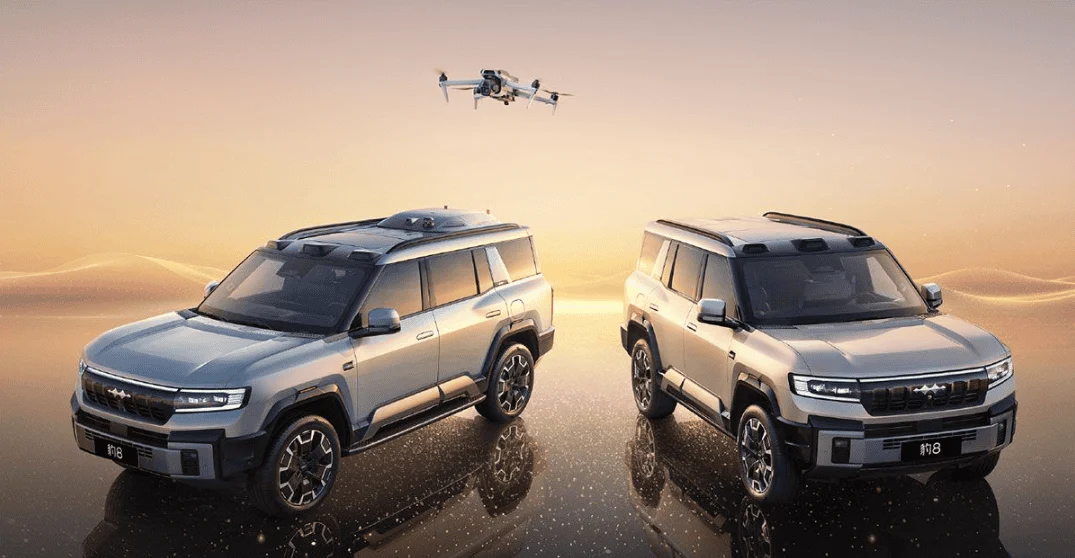
The core of this innovation lies in the specialized "Vehicle-Mounted Drone Bay" integrated into the roof of the vehicle. Unlike third-party accessories that require manual setup, BYD’s smart drone system is fully automated. The drone resides within a climate-controlled, dust-proof compartment on the roof of the vehicle. When the driver initiates a launch command via the in-car touchscreen or voice control, the compartment opens, and the drone takes off autonomously.
The integration extends to the vehicle’s power management system. The drone dock features an intelligent battery-swapping or fast-charging mechanism that ensures the aircraft is always ready for flight. Leveraging DJI’s expertise in flight stability and BYD’s prowess in energy storage, the system manages the drone’s power levels in real-time, drawing energy from the vehicle’s large traction battery. This synergy eliminates the "range anxiety" typically associated with drone batteries, as the vehicle acts as a mobile charging station.
Advanced AI and Autonomous Flight Capabilities
The smart drone is equipped with DJI’s industry-leading flight algorithms and BYD’s customized AI software. This allows for a suite of autonomous functions that require minimal input from the driver. One of the standout features is the "One-Click Fly-to-Follow" mode. In this setting, the drone automatically tracks the vehicle as it moves, maintaining a consistent altitude and distance while utilizing advanced obstacle avoidance sensors to navigate through complex environments like forested roads or mountainous terrain.
Furthermore, the drone utilizes high-precision GPS and visual positioning systems to ensure it can return to the vehicle even if the car has moved from the original takeoff point. This "Return-to-Vehicle" (RTV) feature is a significant upgrade over standard "Return-to-Home" functions found in consumer drones, which typically return to a static coordinate. The drone calculates the vehicle’s real-time trajectory and lands precisely on the moving or stationary docking bay, where it is then secured and recharged.
Enhancing Safety and Situational Awareness
While the entertainment value of aerial photography is a major selling point, BYD has emphasized the safety implications of this technology. The drone serves as a reconnaissance tool for drivers, particularly in off-road or emergency scenarios. By launching the drone, a driver can inspect the road conditions ahead, identify traffic congestion beyond their line of sight, or scout for obstacles in difficult terrain.
In the event of a breakdown or an emergency in a remote area, the drone can be used to gain a higher vantage point to search for landmarks or transmit coordinates. The high-resolution camera system, featuring 4K video capabilities and advanced stabilization, provides a clear, lag-free feed directly to the vehicle’s internal 15.6-inch rotating screen. This allows the driver and passengers to monitor the environment in high definition, enhancing the overall security and confidence of the travel experience.

Chronology of Development: From Concept to Reality
The journey toward this integrated system began in early 2023, when BYD Chairman and President Wang Chuanfu announced a massive 100 billion yuan ($14 billion) investment into "Intelligent Driving" technologies. The goal was to move beyond the "first half" of the EV revolution—electrification—and dominate the "second half"—intelligence.
- Q1 2023: BYD and DJI established a joint task force of engineers to study the aerodynamic impacts of roof-mounted docks and the electromagnetic interference between vehicle electronics and drone transmission systems.
- January 2024: At the "BYD Dream Day" event, the company showcased a prototype of the Yangwang U8, its luxury off-road SUV, equipped with a DJI drone bay. This was the first public demonstration of the automated launch and landing sequence.
- Late 2024: Testing moved to extreme environments, including the high-altitude regions of Tibet and the scorching deserts of Xinjiang, to ensure the docking mechanism and drone sensors could withstand temperature fluctuations and dust.
- March 2025: The official commercial launch of the smart drone package was announced, initially as an option for the Yangwang brand, with plans to trickle down the technology to the Denza and Fang Cheng Bao lineups.
Market Implications and Competitive Landscape
The launch of the BYD-DJI drone system places BYD at the forefront of the "lifestyle vehicle" market. Competitors like Xpeng have focused on flying cars (eVTOL), which face significant regulatory hurdles and infrastructure challenges. In contrast, BYD’s approach of integrating a small, regulated drone into a road-legal vehicle is viewed by analysts as a more pragmatic and immediately marketable solution.
Industry experts suggest that this feature will be particularly popular in the luxury SUV segment, where buyers often engage in overlanding, camping, and outdoor photography. By providing a built-in professional-grade cinematography tool, BYD is adding a unique value proposition that traditional luxury manufacturers like Land Rover or Mercedes-Benz have yet to match.
However, the technology also brings challenges. Privacy advocates have raised concerns about the potential for increased aerial surveillance, while aviation authorities in various regions are currently reviewing how "vehicle-launched" drones fit into existing airspace regulations. To mitigate these issues, the BYD system includes built-in geofencing, preventing the drone from taking off in "No-Fly Zones" such as airports or sensitive government installations.
Broader Impact on the Automotive Industry
The integration of drones into the automotive ecosystem is likely to trigger a new "feature war" among global automakers. As software-defined vehicles (SDVs) become the standard, the ability to integrate external hardware seamlessly will be a key differentiator. We can expect other manufacturers to follow suit, potentially partnering with drone makers or developing their own proprietary aerial units.
Beyond consumer use, the potential for commercial applications is vast. Delivery companies could use vehicle-integrated drones to complete "last-mile" deliveries from a moving van. Utility companies could use such systems for automated inspections of power lines or pipelines along a driven route. BYD’s move is essentially a proof-of-concept for a future where land and air transport are no longer separate entities but parts of a unified mobility network.
Conclusion: A New Era of Intelligent Travel
The BYD smart drone, powered by DJI technology, represents more than just a high-tech gadget; it is a fundamental shift in how we perceive the capabilities of a car. By successfully merging the worlds of automotive engineering and aerial robotics, BYD has demonstrated its commitment to leading the next generation of smart mobility.
As this technology becomes more accessible, it will likely change the way people document their lives and interact with their surroundings. The "third-person perspective," once reserved for video games and professional film sets, is now a reality for the average driver. With its high-resolution imaging, autonomous flight paths, and seamless vehicle integration, the BYD-DJI partnership has set a new benchmark for the industry. Whether this becomes a standard feature across all vehicles remains to be seen, but for now, BYD has firmly positioned itself as the pioneer of the skies above the road. The future of driving is no longer confined to the pavement; it has taken flight.