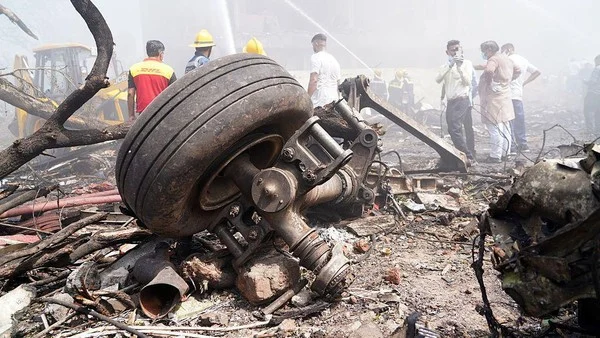
The global aviation community remains in a state of profound mourning and rigorous scrutiny following the catastrophic crash of Air India Flight AI-171 on June 12, 2025, an event that has now transitioned into a complex forensic investigation centered on the aircraft’s recovered flight recorders. The Boeing 787-8 Dreamliner, which was operating a high-profile long-haul route from London Heathrow (LHR) to Sardar Vallabhbhai Patel International Airport in Ahmedabad (AMD), plummeted during its final approach, resulting in the deaths of 244 of the 245 individuals on board. As the lone survivor continues to receive intensive medical care, international investigators from the Indian Aircraft Accident Investigation Bureau (AAIB), the United States National Transportation Safety Board (NTSB), and technical experts from Boeing have converged in New Delhi to begin the delicate process of extracting data from the Digital Flight Data Recorder (DFDR) and the Cockpit Voice Recorder (CVR), commonly known as the "black boxes."
The recovery of these devices represents the most critical milestone in the investigation since the wreckage was located in the vicinity of Ahmedabad. The black boxes, which are painted in high-visibility international orange rather than black, were retrieved from the tail section of the aircraft, where they are strategically placed to maximize the likelihood of surviving high-impact forces. These devices are engineered to withstand temperatures of up to 1,100 degrees Celsius for 60 minutes and pressures equivalent to depths of 6,000 meters underwater. In the case of AI-171, the recorders appear to have sustained significant external charring but remain structurally intact, offering hope that the solid-state memory chips inside will provide a comprehensive second-by-second account of the flight’s final moments.
Chronology of Flight AI-171
To understand the gravity of the investigation, one must look at the timeline of the flight’s operation on June 12. Flight AI-171 departed London Heathrow at approximately 09:45 GMT, following a routine pre-flight inspection and boarding process. The first eight hours of the flight were reported as uneventful, with the aircraft maintaining a steady cruise altitude of 37,000 feet (FL370) as it crossed European and Middle Eastern airspace. Weather conditions along the route were generally favorable, and the crew maintained regular communication with various Air Traffic Control (ATC) centers.
The situation began to change as the aircraft entered Indian airspace and commenced its descent toward Ahmedabad. According to preliminary radar telemetry, the aircraft began its scheduled arrival procedure around 20:15 local time. At 20:32, the flight was cleared for an ILS (Instrument Landing System) approach to Runway 23. It was during this critical phase—transitioning from the descent to the final approach configuration—bahat the aircraft’s flight path began to show anomalous altitude fluctuations. At 20:38, radar contact was lost approximately 12 nautical miles from the airport. Ground witnesses reported seeing the aircraft in a steep bank before it disappeared behind a line of trees, followed by a massive explosion and fire.
Technical Focus: The Flaps System Hypothesis
While the investigation is in its infancy, early telemetry data and initial wreckage inspections have led investigators to focus on the aircraft’s high-lift devices, specifically the wing flaps. Flaps are movable panels on the trailing edge of the wings that increase lift and drag, allowing an aircraft to fly at lower speeds during takeoff and landing. In the case of AI-171, there are indications that the crew may have experienced a "flap asymmetry" or a total failure of the flap actuation system as they attempted to configure the plane for landing.
A failure in the flap system at a low altitude is a critical emergency. If one side’s flaps deploy while the other’s remain retracted, it can create a severe rolling moment that may exceed the pilot’s ability to compensate with the ailerons. The Boeing 787 utilizes an advanced fly-by-wire system designed to inhibit such movements, but investigators are looking into whether a rare mechanical shear or a software glitch could have bypassed these safeguards. The FDR data will be essential in confirming the exact position of the flap handles in the cockpit versus the actual physical position of the surfaces on the wings at the time of impact.
International Investigative Collaboration
The scale of the tragedy has necessitated an unprecedented level of international cooperation. Under ICAO Annex 13, the state of occurrence (India) leads the investigation, but the state of manufacture (USA) and the aircraft manufacturer (Boeing) play vital roles. The NTSB has dispatched a "Go Team" consisting of flight deck recorders specialists, systems engineers, and power plant experts.
The Indian Ministry of Civil Aviation has emphasized that the analysis in New Delhi is being conducted with total transparency. "Our priority is the truth," stated a spokesperson for the Ministry. "The families of the 244 victims deserve to know why their loved ones did not come home. We are utilizing the most advanced spectral analysis and data recovery tools available to ensure that not a single byte of information from the CVR or FDR is overlooked."

The Cockpit Voice Recorder (CVR) is expected to be particularly revealing. It captures all sounds in the cockpit, including the pilot’s conversations, radio transmissions, and even the "clicks" of switches or the sound of warning chimes. Investigators will be listening for the "Master Caution" or "Master Warning" alarms, which would indicate that the aircraft’s onboard computers had detected a system failure before the pilots were necessarily aware of it.
Broader Implications for the Boeing 787 Fleet
The crash of AI-171 has sent shockwaves through the global aviation market, particularly for operators of the Boeing 787 Dreamliner. The 787 is a cornerstone of modern long-haul aviation, praised for its fuel efficiency and passenger comfort. However, a hull loss of this magnitude inevitably leads to questions regarding fleet-wide safety.
Aviation regulatory bodies, including the Federal Aviation Administration (FAA) in the United States and the European Union Aviation Safety Agency (EASA), are monitoring the preliminary findings closely. If the black box analysis reveals a systemic mechanical flaw in the 787’s flap actuators or electronic controller units, it could trigger a global Airworthiness Directive (AD), requiring immediate inspections or even the temporary grounding of certain 787 tail numbers. Air India has already announced a "precautionary internal review" of its remaining Dreamliner fleet, though it has stopped short of grounding the aircraft.
Social and Economic Impact
Beyond the technicalities, the human cost of the AI-171 disaster is staggering. The passenger manifest included prominent business leaders, students returning home for the summer, and several families traveling together. The lone survivor, currently in critical condition at an Ahmedabad trauma center, remains unable to provide a statement, leaving the black boxes as the only "witnesses" to the event.
Economically, the crash has impacted Air India’s stock valuation and raised concerns regarding insurance liabilities, which are estimated to exceed hundreds of millions of dollars. The aviation insurance industry is bracing for one of the largest payouts in recent years, covering hull loss, passenger liability, and potential legal settlements.
The Path Forward
The process of de-layering the data from the recorders is expected to take several weeks. Once the raw data is extracted, it must be synchronized—matching the pilot’s voices with the flight parameters—to create a digital recreation of the flight. This "flight animation" will allow investigators to see exactly what the pilots saw on their displays and how the aircraft responded to their inputs.
As the investigation continues, the Ministry of Civil Aviation has urged the public and the media to avoid speculation. "Air crash investigations are marathons, not sprints," said a veteran investigator. "We have to rule out everything from bird strikes and engine failure to cyber-interference and human error. The black box is the key that unlocks the door to these answers."
The AI-171 tragedy serves as a somber reminder of the inherent risks of flight and the relentless necessity of safety oversight. The findings derived from the orange boxes in New Delhi will eventually lead to safety recommendations that will be shared globally, ensuring that the lessons learned from this disaster contribute to the prevention of future tragedies. For now, the world waits as the silent data chips of AI-171 begin to tell their story.