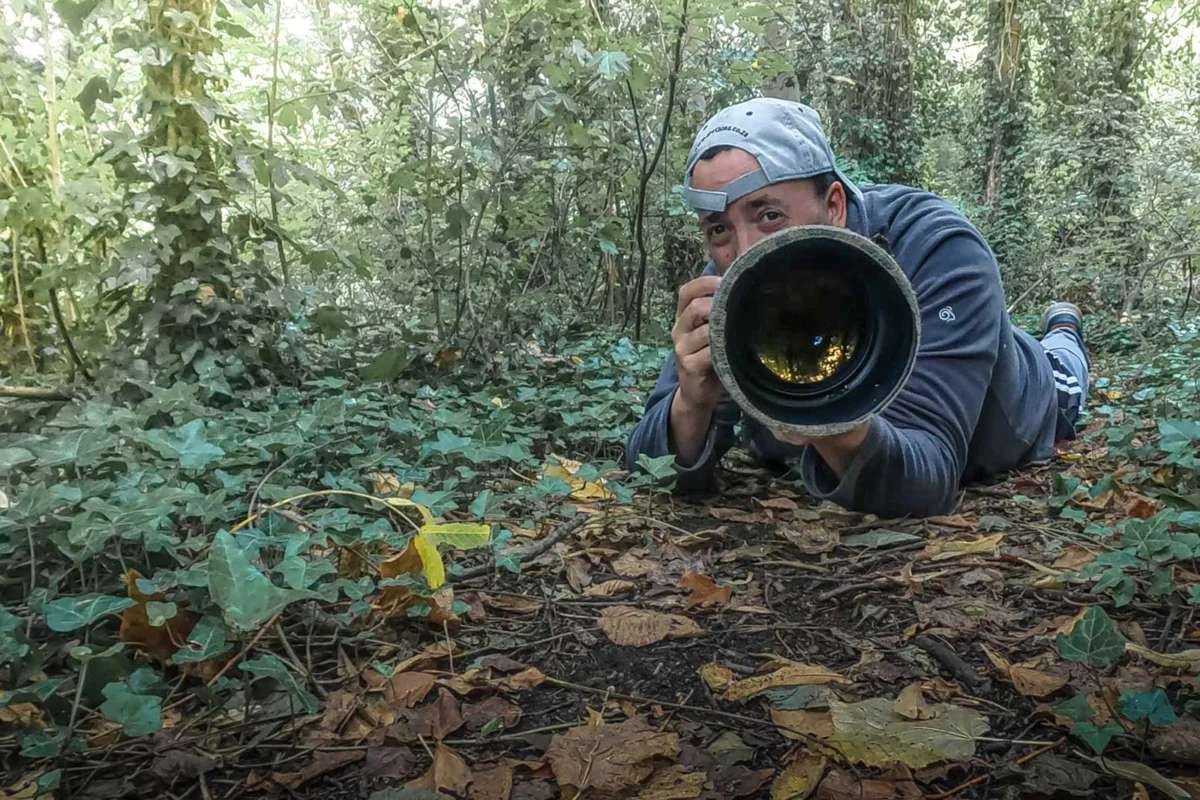
The strategic application and profound understanding of light represent one of the most critical foundational pillars in the discipline of photography, serving as the definitive factor that distinguishes merely good images from truly spectacular ones. This mastery transcends technical proficiency, delving into an artistic sensibility that shapes mood, reveals texture, and defines form across all photographic genres. From the ethereal glow of dawn painting a landscape to the intricate interplay of shadows on a forest floor, or the dramatic silhouette of wildlife against a setting sun, the effective manipulation of light is paramount to elevating photographic output to unprecedented artistic and communicative heights. This comprehensive guide explores the multifaceted role of lighting, offering insights and tutorials designed to empower photographers to harness this vital element across diverse natural environments.
The Foundational Role of Light in Photographic Expression
At its core, photography is the art of capturing light. Every image is a direct result of how light interacts with the subject, the scene, and ultimately, the camera’s sensor. The quality, direction, color, and intensity of light profoundly influence the viewer’s perception, dictating the mood, depth, and overall impact of a photograph. A deep understanding of these properties allows photographers to move beyond simply recording a scene to actively interpreting and shaping it, transforming raw visual information into compelling narratives. Studies in visual perception consistently demonstrate that images exhibiting well-managed light, characterized by appropriate contrast and tonal range, elicit stronger emotional responses and greater engagement from audiences. This fundamental principle underscores why mastering light is not merely a technical skill but an artistic imperative.

The Physics and Psychology of Light
Light, an electromagnetic wave, possesses inherent properties that photographers must comprehend. Quality of light refers to its hardness or softness. Hard light, typically from a small, direct source like the midday sun, creates sharp, well-defined shadows and high contrast, often conveying drama or intensity. Soft light, originating from a large or diffused source (e.g., an overcast sky, shade), produces gradual transitions between light and shadow, resulting in lower contrast and a more gentle, often ethereal, aesthetic. The direction of light relative to the subject profoundly impacts dimension and form. Frontal lighting flattens subjects, while side lighting emphasizes texture and depth. Backlighting creates dramatic silhouettes and luminous edges, separating the subject from the background. Top and bottom lighting can introduce unique, often theatrical, effects.
Color temperature, measured in Kelvin (K), describes the warmth or coolness of light. Early morning and late afternoon light, known as the "golden hour," typically falls between 2000K-3500K, casting warm, inviting hues. Midday sun can range from 5000K-6500K, appearing cooler and more neutral, while the "blue hour" after sunset or before sunrise can dip below 2000K, producing deep blue tones. Understanding these variations allows photographers to utilize natural light for specific atmospheric effects or to correct color imbalances through white balance settings. Finally, intensity of light directly relates to exposure, a critical component of the photographic process. Controlling intensity through aperture, shutter speed, and ISO, often in conjunction with external light sources or modifiers, ensures that the scene’s dynamic range is captured effectively, preventing blown-out highlights or crushed shadows.
A Brief Chronology of Light in Photography
The journey of mastering light has evolved alongside photography itself. Early photographic pioneers in the 19th century, such as William Henry Fox Talbot and Louis Daguerre, were entirely reliant on natural light, often necessitating long exposure times due to the low sensitivity of their photographic plates. The invention of flash powder in the late 1800s marked a significant turning point, allowing photographers to control light independent of ambient conditions, albeit with highly explosive and dangerous methods. The 20th century saw the development of safer flashbulbs, electronic flash (strobe) units, and continuous lighting solutions, which rapidly became indispensable tools in studio and documentary photography.

The digital age has ushered in a new era of light control. Modern camera sensors boast significantly improved low-light performance and wider dynamic ranges, reducing the absolute necessity for powerful external lights in many scenarios. LED lighting has revolutionized continuous light sources, offering portable, energy-efficient, and color-accurate options. Computational photography and AI-driven image processing further enhance a photographer’s ability to manipulate light post-capture, from recovering details in shadows to simulating complex lighting scenarios. This ongoing evolution underscores a constant quest for greater control and creative expression through light.
Lighting in Wildlife Photography: Unveiling the Wild’s True Colors
Capturing wildlife in its natural habitat presents unique challenges, making the understanding and application of light absolutely critical. Wildlife photographers often operate in dynamic and unpredictable environments, where subjects are rarely static and prime lighting conditions can be fleeting. To create images of wildlife that truly stand out, it’s imperative to understand how light falls, the qualities it possesses, and how to harness it effectively without disturbing the animals.
The "golden hour" remains a preferred time for wildlife photographers due to its soft, warm, and directional light, which adds dimension and a captivating glow to subjects. Backlighting, when used judiciously, can create stunning rim-lighting effects that outline the animal’s form, separating it beautifully from the background and adding a sense of drama. Conversely, direct midday sun can be harsh, leading to blown-out highlights and deep shadows that obscure detail. Wildlife photographers often seek open shade or cloudy days for softer, more even illumination that reveals intricate textures and colors. A key aspect is observing animal behavior; many species are most active during dawn and dusk, coinciding with optimal light. Experts like National Geographic photographer Paul Nicklen often emphasize patience and observation, stating, "The best light is often discovered, not created, in wildlife photography." Ethical considerations are also paramount; artificial light sources, especially powerful strobes, must be used with extreme caution to avoid startling or harming sensitive wildlife. Mastering these techniques allows photographers to capture not just an image, but the essence and personality of their wild subjects.

Lighting in Landscape Photography: Painting with the Sun
Understanding lighting in landscape photography goes beyond merely mastering exposure; it is about recognizing light as a primary compositional element. One of the most powerful skill sets a landscape photographer can possess is the ability to identify, plan for, and adapt to ever-changing lighting conditions. The success of a landscape photograph often hinges on the quality of light at the moment of capture, transforming an ordinary scene into an extraordinary one.
The "golden hour" is legendary among landscape photographers for its ability to infuse scenes with warmth, depth, and long, dramatic shadows that sculpt the terrain. Similarly, the "blue hour," the period just before sunrise or after sunset, offers a unique opportunity to capture tranquil, cool-toned images where artificial lights begin to glow, creating a striking contrast. Beyond these celebrated times, understanding how different weather conditions impact light is crucial. Overcast days provide a giant softbox, yielding diffused, even light perfect for capturing forests, waterfalls, or intimate details without harsh shadows. Stormy skies, conversely, can offer dramatic light, with shafts of sun piercing through dark clouds, creating breathtaking visual tension. Planning is essential; photographers frequently use apps to track sun position, moon phases, and tidal charts to anticipate optimal light for specific locations. Adapting to unexpected changes, like a sudden cloudburst or a clearing fog, is equally important, allowing for unique, fleeting moments to be immortalized. The ability to "read" the light and predict its behavior is what truly distinguishes a master landscape photographer.
Lighting in Underwater Photography: Illuminating the Deep Blue
Learning how to find, create, and use light underwater can be one of the most essential and simultaneously difficult skills to master, but it is one that will make your photography stand out from the crowd. The underwater environment presents a unique set of challenges due to the physics of light absorption and scattering. As light penetrates water, certain wavelengths are absorbed more quickly than others; red light disappears first, followed by orange, yellow, and green, leaving predominantly blue and green tones at greater depths. This phenomenon explains why underwater scenes often appear monochromatic without artificial illumination.

Consequently, underwater photographers must rely heavily on external light sources like strobes (underwater flashes) and video lights. The strategic placement of these lights is paramount to achieving natural-looking results and avoiding backscatter – light reflecting off particles in the water. For wide-angle scenes, dual strobes are often positioned wide and slightly behind the camera to illuminate the foreground while minimizing backscatter. For macro photography, smaller, more precise strobes or continuous LED lights are used to highlight intricate details and restore lost colors, often requiring diffusers to soften the light. Ambient light remains a factor, especially in shallow dives where it can be combined with artificial light to create balanced exposures. Whether photographing majestic ocean giants in sunlit shallows or exploring the cryptic life found deeper under the waves, understanding these principles and practicing light placement will help master lighting as part of an effective underwater photography workflow. Marine biologist and accomplished underwater photographer Dr. Sylvia Earle once remarked on the importance of seeing the true colors of the ocean, a vision made possible by careful lighting.
Lighting for Macro Photography: Revealing Hidden Worlds
Whether photographing amphibians, insects up close, or the intricate finer details found in nature, lighting remains a critical element in macro photography. The extreme magnification inherent in macro work amplifies every aspect of the scene, including light and shadow, making precise control essential. The challenges are distinct: the shallow depth of field at high magnifications requires careful attention to where light falls to ensure key details are in focus and well-illuminated.
Natural light can be incredibly effective in macro photography, especially soft, diffused light found in open shade or on overcast days, which provides even illumination without harsh shadows. However, due to the small scale of subjects and the need for greater control, artificial light sources are frequently employed. Ring flashes, which mount around the lens, provide even, shadowless illumination, ideal for revealing fine textures. Dedicated macro flashes, often paired with diffusers or small softboxes, allow for more directional control, creating subtle shadows that enhance three-dimensionality. Continuous LED panels can also be invaluable, providing a constant light source for precise focusing and composition adjustments. A common technique involves using diffusers to soften harsh light and reflectors to fill in shadows, ensuring a balanced exposure across the tiny subject. When working with focus stacking—a technique used to overcome the shallow depth of field by combining multiple images focused at different points—consistent lighting across all frames is absolutely critical for seamless integration in post-processing. These guides will help master lighting when photographing the macro world, transforming unseen details into captivating visual stories.

Expert Perspectives and Future Implications
The pervasive importance of light in photography is a consensus among leading professionals. Renowned landscape photographer Ansel Adams famously stated, "You don’t take a photograph, you make it." This sentiment implicitly highlights the active role of the photographer in interpreting and shaping light, rather than merely documenting it. Modern educators and institutions consistently rank lighting as a top priority in photographic curriculum, emphasizing both theoretical understanding and practical application. The rise of online tutorials and workshops specifically dedicated to lighting techniques underscores the continuous demand for mastery in this area.
The implications of mastering light extend beyond individual artistic achievement. In the commercial realm, well-lit images command higher market value across advertising, editorial, and product photography sectors. Companies recognize that superior lighting enhances product appeal, conveys professionalism, and ultimately drives engagement and sales. Artistically, light serves as a powerful storytelling tool, capable of evoking specific emotions, directing the viewer’s eye, and establishing narrative depth. The future of lighting in photography is dynamic, with ongoing technological advancements in smart lighting systems, computational photography that can simulate and manipulate light fields, and increasingly sophisticated AI tools that assist in optimizing lighting conditions both in-camera and in post-processing. However, despite technological evolution, the foundational artistic understanding of light remains an irreplaceable human skill.
In Conclusion
Whatever your subject—be it the grandeur of a mountain range, the fleeting moment of a bird in flight, the vibrant tapestry of a coral reef, or the intricate details of an insect—lighting is a crucial element to master for creating memorable and standout images. It is the language through which photographers communicate, shaping mood, defining form, and revealing the true essence of their subjects. The journey of mastering light is continuous, offering endless opportunities for creative exploration and technical refinement. Use the guides and principles outlined above to learn how to harness the transformative power of lighting in photography and elevate your work to the next level. We’d love to see how you use light – don’t forget to share your images with us!