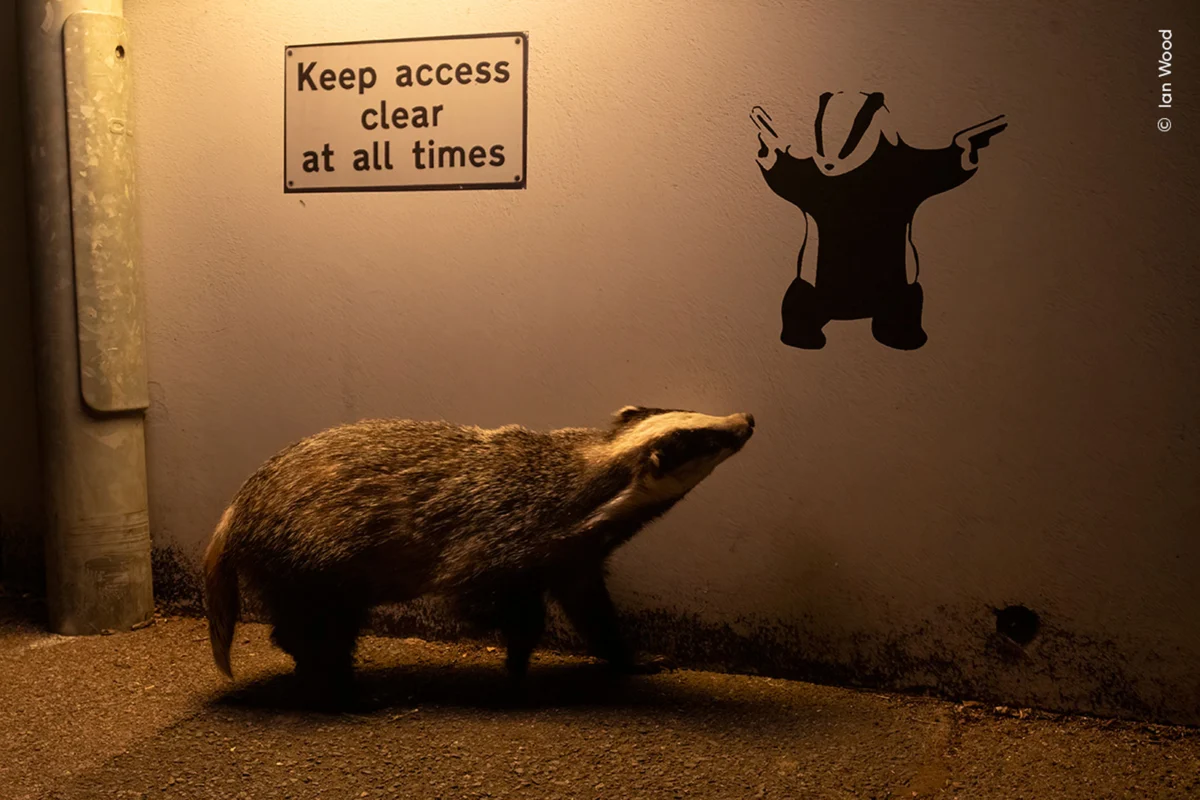
In a powerful testament to the intricate relationship between humanity and the natural world, British photographer Ian Wood’s captivating image, "No Access," has been crowned the winner of the tenth annual Wildlife Photographer of the Year People’s Choice Award 2024. The photograph, a perfectly timed capture of a Eurasian badger pausing beneath a piece of familiar graffiti in St Leonards-on-Sea, England, resonated deeply with a global audience, garnering widespread acclaim and sparking important conversations about urban wildlife and conservation challenges.
The winning image masterfully juxtaposes the wild with the urban. Under the soft glow of a lamppost, a solitary badger ambles along a pavement, its striped face momentarily turned upwards, seemingly contemplating the spray-painted message "No Access" on a nearby wall. This moment, frozen in time by Wood’s lens, speaks volumes about the encroachment of human environments on natural habitats and the resilience of wildlife adapting to these changing landscapes. The scene is both poignant and thought-provoking, inviting viewers to reflect on who truly has "access" to these shared spaces and the invisible boundaries that often define human-animal interactions.
The Genesis of a Winning Shot
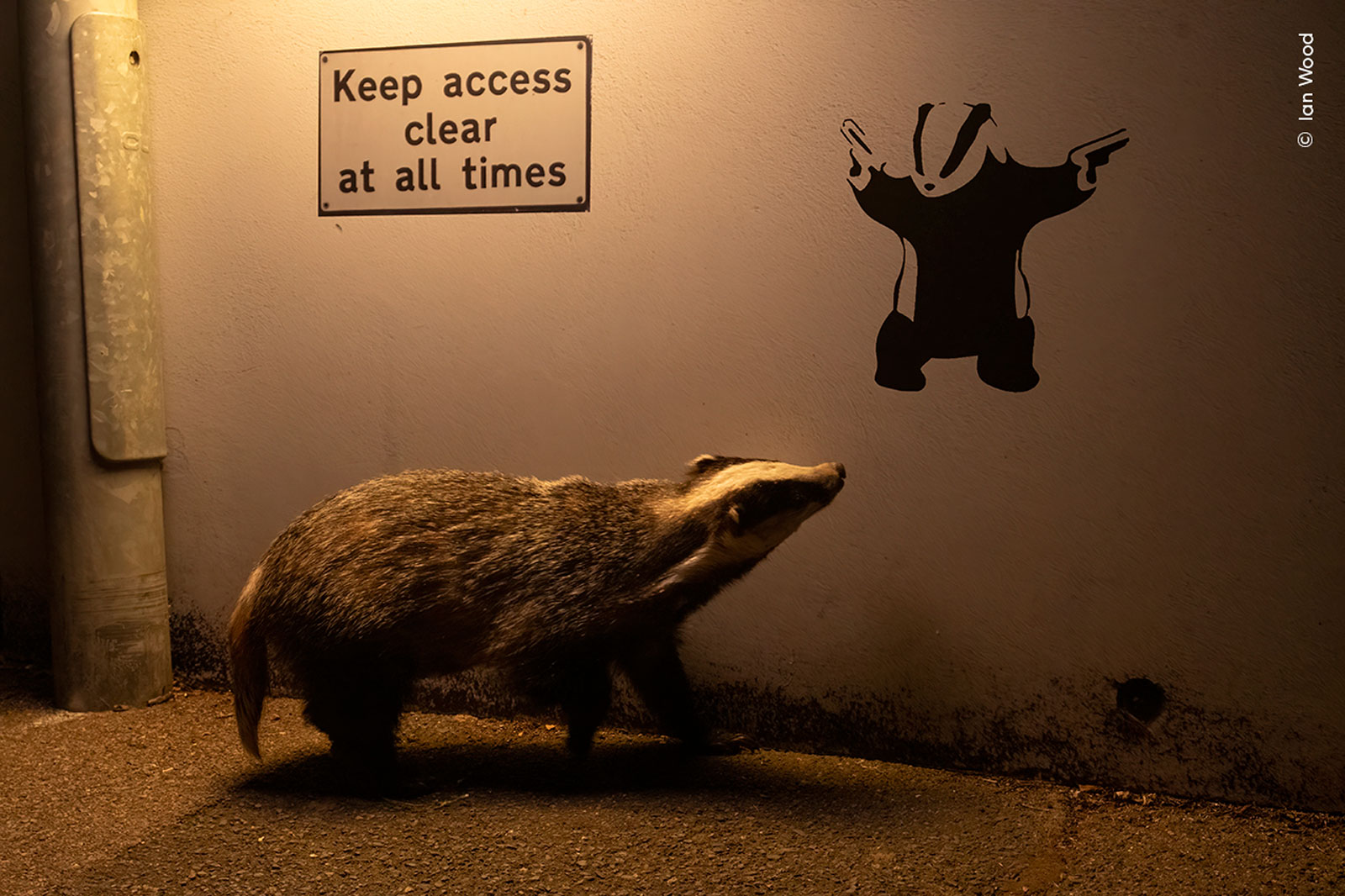
Ian Wood’s journey to capturing "No Access" began with keen observation and a dedication to understanding local wildlife. Residents in St Leonards-on-Sea had been leaving food scraps for foxes on pavements, an act of kindness that inadvertently attracted other nocturnal foragers. Wood noticed that badgers from a nearby sett were also making regular appearances, venturing into the residential area under the cover of darkness. This observation sparked an idea.
Having witnessed a badger traversing the very stretch of pavement beneath the now-famous graffiti late one night, Wood decided to immortalize the scene. He meticulously set up a small hide on the edge of the road, patiently waiting for the opportune moment. The challenge was immense: working in low light, relying solely on the ambient glow of a lamppost, and anticipating the unpredictable movements of a wild animal. His perseverance paid off, resulting in an image that is not only aesthetically striking but also rich in narrative and symbolic weight. The photograph exemplifies the dedication and often solitary effort involved in wildlife photography, where success hinges on a blend of technical skill, patience, and a deep understanding of animal behaviour.
A Record-Breaking Public Vote Underscores Global Engagement
The Wildlife Photographer of the Year People’s Choice Award stands as a unique democratic component of the prestigious Wildlife Photographer of the Year competition. For its tenth edition, the award saw an unprecedented surge in public participation, with over 76,000 wildlife photography and nature enthusiasts from around the world casting their votes for their favourite image. This record-breaking engagement highlights the growing global interest in wildlife conservation and the powerful role visual storytelling plays in fostering connection and advocacy.

The People’s Choice Award is distinct from the main competition, which is judged by an international panel of experts. While the main awards celebrate technical excellence, artistic merit, and compelling storytelling through the lens of professional judgment, the People’s Choice Award offers a platform for the public to voice their appreciation, connecting directly with images that stir their emotions or provoke thought. This democratic element ensures that the winning image truly resonates with a broad audience, reflecting popular sentiment and accessibility.
Dr. Douglas Gurr, Director of the Natural History Museum, which develops and produces the Wildlife Photographer of the Year competition, underscored the significance of Wood’s win. "Ian’s flawlessly timed image offers a unique glimpse of nature’s interaction with the human world, underscoring the importance of understanding urban wildlife," Dr. Gurr commented. He further added, "His exceptional photograph serves as a powerful reminder that local nature and wildlife, often just outside our homes, can inspire and captivate us." This statement reiterates the museum’s mission to foster a deeper appreciation for biodiversity, particularly in the often-overlooked urban environments that many people inhabit.
Beyond the Frame: The Darker Side of "No Access"
While the victory brought an "outpouring of badger love," as Ian Wood described it, he also used the platform to shed light on a critical and contentious issue affecting badger populations in England: the ongoing badger cull. "Finding out that it has won is truly humbling," Wood stated, "However, there is a darker side to this image."
Wood, who lives in rural Dorset and is actively engaged in re-wilding efforts to enhance wildlife habitats, expressed deep concern over the impact of the badger cull. The cull, primarily implemented by the UK government in an attempt to control Bovine Tuberculosis (bTB) in cattle, has been a source of significant controversy for years. Proponents argue it is a necessary measure to protect livestock and the livelihoods of farmers, while a coalition of conservationists, scientists, and animal welfare organizations contend that its efficacy is questionable, that it is inhumane, and that it decimates badger populations unnecessarily.
Scientific studies and independent reviews have presented conflicting evidence regarding the cull’s effectiveness, with many conservation groups advocating for alternative strategies such as enhanced cattle testing, vaccination programs for both cattle and badgers, and improved biosecurity on farms. The debate is complex, often pitting agricultural interests against wildlife protection, and has been characterized by passionate arguments on both sides.
"The badger cull – which is still ongoing – has decimated their numbers and I fear that unless the cull is stopped, we’ll only see badgers in urban settings in several parts of England," Wood warned. His statement suggests a grim potential future where badgers, driven from their traditional rural habitats by human intervention, are forced into closer proximity with urban populations, leading to increased human-wildlife conflict and further challenges for their survival. "My hope is for this image to raise awareness of the damaging effect of the badger cull and help push for change," Wood concluded, transforming his photographic triumph into a powerful plea for conservation and policy reform. The "No Access" graffiti takes on a profound, additional meaning in this context, symbolizing the denial of safe, natural habitats to these iconic British mammals.
A Glimpse at the Other Highly Commended Masterpieces
While "No Access" captured the top honour, four other extraordinary images were highly commended by wildlife lovers worldwide, showcasing the diverse beauty and compelling narratives found in nature photography. These images, selected from a shortlist of 25 nominees, underscore the exceptional talent and keen eye of photographers dedicated to documenting the natural world.
-
"Earth and Sky" by Francisco Negroni: This unforgettable capture from Chile presents a breathtaking spectacle. A double lenticular cloud, a rare and majestic atmospheric phenomenon, is dramatically illuminated at nightfall by the fiery lava emanating from the Villarrica volcano. The image is a testament to the raw power and awe-inspiring beauty of geological and atmospheric forces, rendered with stunning clarity and composition. Negroni’s photograph transports viewers to a landscape where earth and sky converge in a spectacular display of light and natural drama.
-
"Edge of Night" by Jess Findlay: An action shot of remarkable precision and atmospheric depth, Findlay’s image depicts a ghostly barn owl in the very act of exiting through the hayloft window of a derelict barn. The owl, a silent hunter of the night, appears almost ethereal against the encroaching darkness, embodying the stealth and grace of nocturnal predators. This photograph perfectly captures a fleeting moment, offering a glimpse into the secret lives of wildlife that often go unnoticed in the human-dominated world, particularly in abandoned structures that become havens for certain species.
-
"Whiteout" by Michel d’Oultremont: From the snowy landscapes of Belgium, d’Oultremont’s image portrays a stoat, a small but formidable predator, perfectly camouflaged against a pristine white backdrop. The stoat sits alert, observing its territory, its coat blending seamlessly with the environment. This photograph not only highlights the incredible adaptability of wildlife to harsh conditions but also the photographer’s skill in spotting and capturing such a well-hidden subject, emphasizing the delicate balance of life in extreme environments.

-
"Spiked" by David Northall: This image presents a stark and brutal, yet ultimately natural, encounter between a honey badger and a Cape porcupine. Northall’s interesting capture shows a bloodied but determined honey badger returning to finish off a Cape porcupine, which had valiantly defended itself earlier. The image is a powerful, unvarnished portrayal of the struggle for survival in the wild, a reminder of the inherent ferocity and resilience of animals in their natural state. It captures a moment of intense drama, illustrating the harsh realities of predator-prey relationships.
These four highly commended images, along with Ian Wood’s "No Access," were chosen from an initial pool of almost 60,000 images submitted for the sixtieth Wildlife Photographer of the Year competition. The rigorous selection process, involving both the Natural History Museum, London, and an international judging panel, ensures that only the most impactful and technically excellent photographs reach the final stages.
The Enduring Legacy of Wildlife Photographer of the Year
The Wildlife Photographer of the Year competition, developed and produced by the Natural History Museum, London, has an overarching mission: to shine a light on inspiring and impactful stories from the natural world and, in doing so, create advocates for our planet. For sixty years, this annual competition has served as a vital platform for both amateur and professional photographers of all ages from across the globe. It leverages photography’s unique emotive power to connect people with nature, transcending language and cultural barriers to foster a universal appreciation for biodiversity.

The competition plays a crucial role in raising awareness about environmental issues, celebrating the beauty of the natural world, and inspiring action towards its preservation. Each winning and highly commended image tells a story, often revealing behaviors, habitats, or challenges that might otherwise remain unseen. By showcasing the fragility and resilience of life on Earth, the competition encourages viewers to consider their own impact on the environment and to become more active participants in conservation efforts.
The five celebrated images – "No Access" and the four highly commended works – are currently on display both online and on interactive voting screens within the flagship Wildlife Photographer of the Year exhibition at the Natural History Museum, London. The exhibition will continue to captivate visitors until June 29, 2025, offering an extended opportunity for the public to engage with these powerful visual narratives.
As the natural world faces unprecedented challenges, from climate change and habitat loss to human-wildlife conflict, the role of wildlife photography becomes ever more critical. Images like "No Access" not only celebrate the beauty of individual species but also serve as potent calls to action, prompting reflection and debate on how humans can better coexist with and protect the planet’s precious biodiversity. The judging process for the sixty-first competition is already underway, with winners set to be announced at the next annual awards ceremony at the Natural History Museum, London, in October 2025, continuing a proud tradition of inspiring conservation through the art of photography.