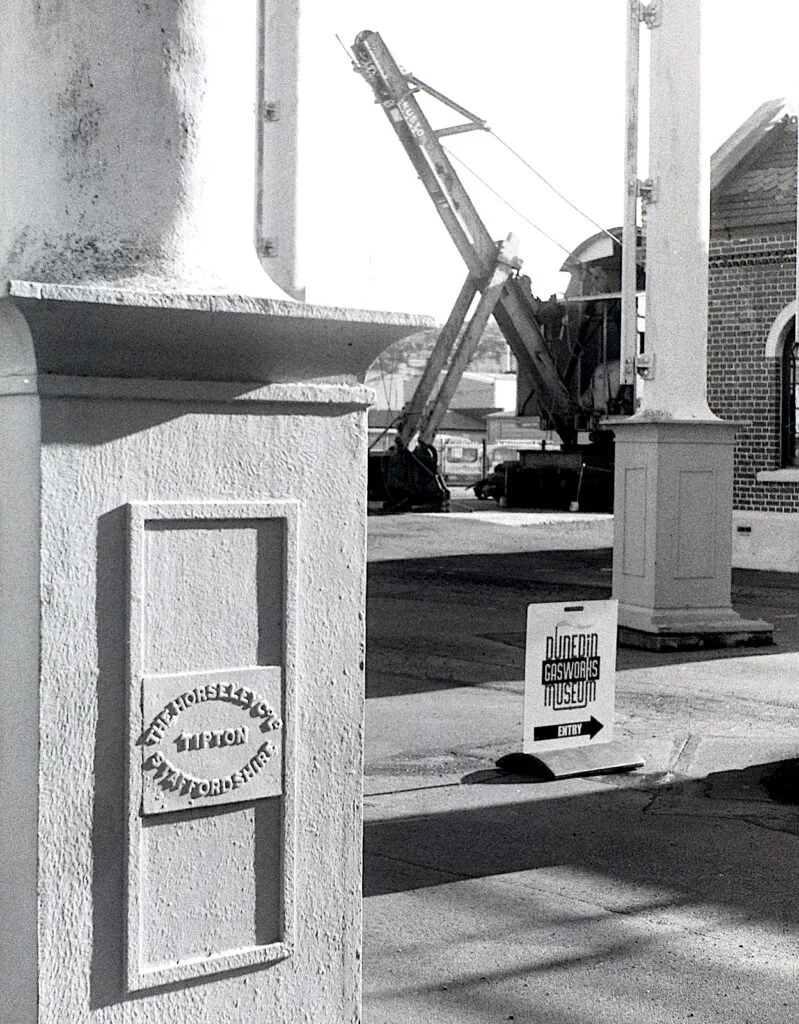
The intersection of mid-century photographic technology and Victorian-era industrial engineering provides a unique vantage point for examining the preservation of mechanical history. A recent technical survey conducted at the Dunedin Gasworks Museum in New Zealand utilized a combination of legacy equipment, including the Voigtländer Bessamatic and rare supplementary lenses manufactured by the Taron Camera Company, to document the site’s surviving machinery. This initiative highlights the enduring functionality of analog systems and the complex requirements of maintaining industrial heritage in an era dominated by digital automation.
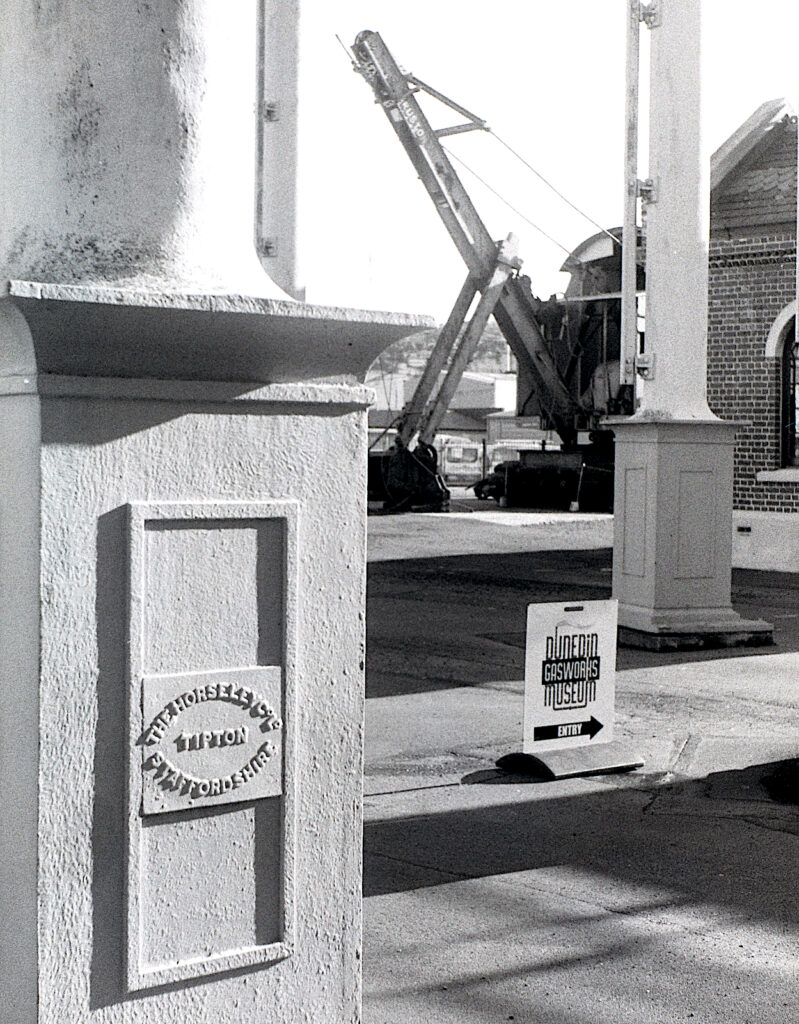
The Dunedin Gasworks Museum: A Bastion of Industrial Heritage
The Dunedin Gasworks Museum stands as a significant monument to the southern hemisphere’s industrial revolution. Established in 1863, the Dunedin Gas Light and Coke Company was the first gasworks in New Zealand, providing the essential infrastructure for urban lighting and heating during the city’s rapid expansion following the Otago gold rush. At its peak, the facility was a sprawling complex of retorts, condensers, and gasometers, transforming coal into gas through a process of destructive distillation.
The site transitioned from an active utility to a museum following its closure in 1987. Today, it is recognized by Heritage New Zealand as a Category 1 historic place, signifying its "special or outstanding historical or cultural heritage significance or value." The museum is currently operated by a dedicated cohort of volunteers who maintain the machinery in various states of operational readiness. A central feature of the museum is its reliance on steam power to drive the various pumps and exhausters required for gas production. However, recent preservation efforts have been complicated by regional geological requirements; the landmark chimney is currently undergoing essential earthquake proofing, a common necessity for heritage masonry in New Zealand’s seismic environment.
Technical Overview of the Photographic Equipment
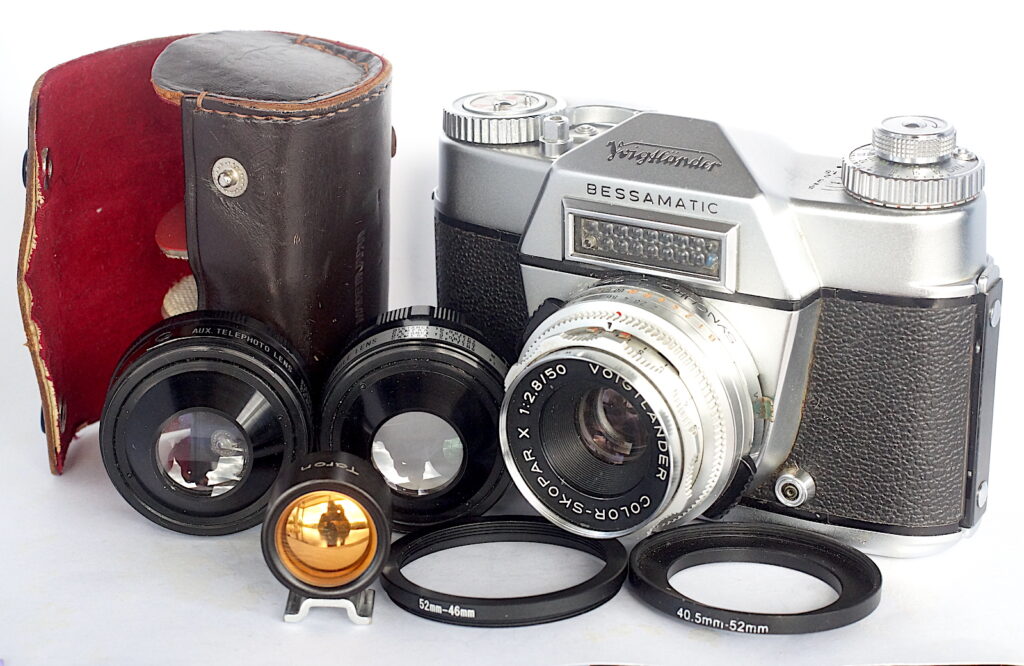
To capture the intricate textures of the gasworks’ cast-iron assemblies and brass fittings, the photographic expedition employed the Voigtländer Bessamatic, a classic 35mm leaf-shutter single-lens reflex (SLR) camera introduced in 1959. The Bessamatic is renowned for its robust construction and its integration of the Synchro-Compur shutter, which allows for flash synchronization at all speeds—a feat difficult for many contemporary focal-plane shutter cameras.
The primary optic used was the 50mm f/2.8 Color-Skopar X, a four-element Tessar-type lens celebrated for its sharpness and micro-contrast. However, the unique aspect of this documentation involved the adaptation of supplementary lenses originally designed for Taron cameras.
The Taron Camera Company and its Optical Legacy
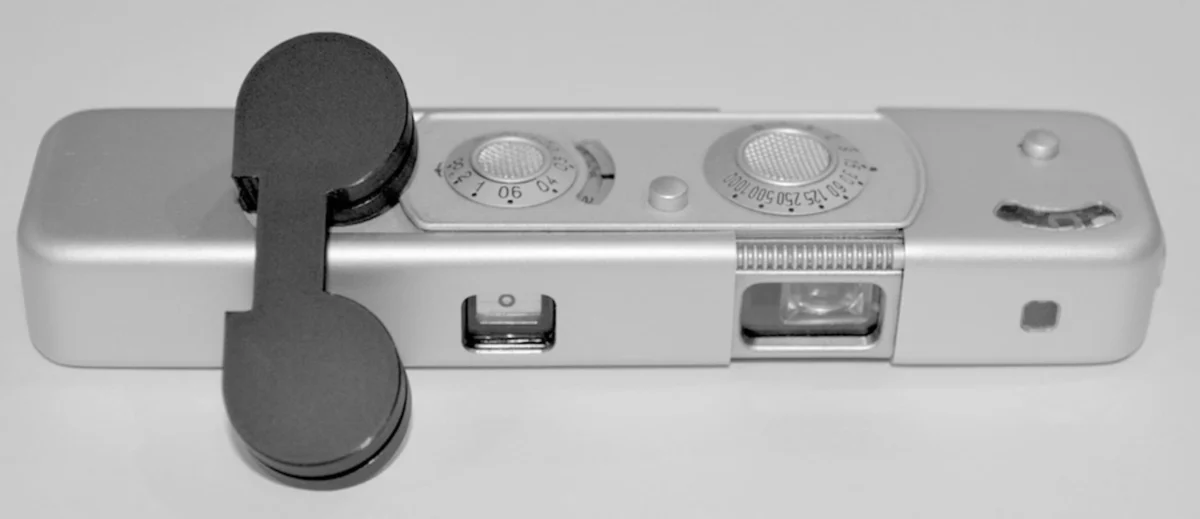
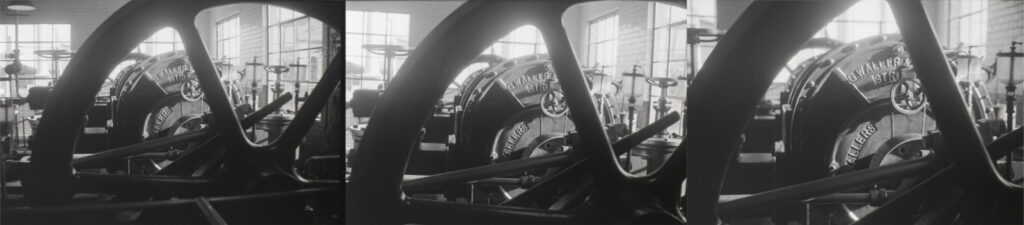
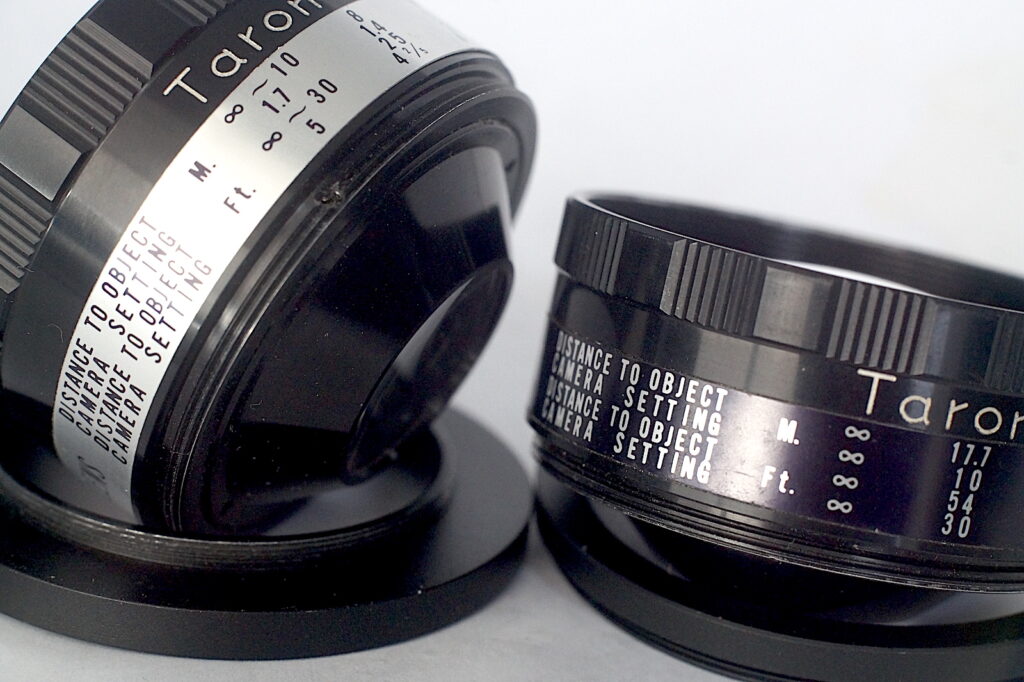
Taron, a relatively obscure Japanese manufacturer formerly known as Nippon Kōshaku, operated from the 1940s through the 1960s. While they produced several well-regarded rangefinder cameras, such as the Taron Eyemax and the Taron 35, they remained a niche player compared to giants like Canon or Nikon. Because many of their cameras featured fixed lenses, Taron produced high-quality "auxiliary" or "supplementary" lens sets.
These sets typically included wide-angle and telephoto converters that screwed into the front filter threads of the fixed prime lens. Unlike modern zoom lenses, these converters were afocal systems that altered the effective focal length of the primary lens without changing its physical aperture. The set utilized at the Dunedin Gasworks featured clear, seemingly uncoated glass and a specialized external viewfinder with suspended frames to assist rangefinder users in framing their shots—though the viewfinder was redundant when used on the through-the-lens (TTL) viewing system of the Bessamatic.
The Chronology of Adaptation and Execution
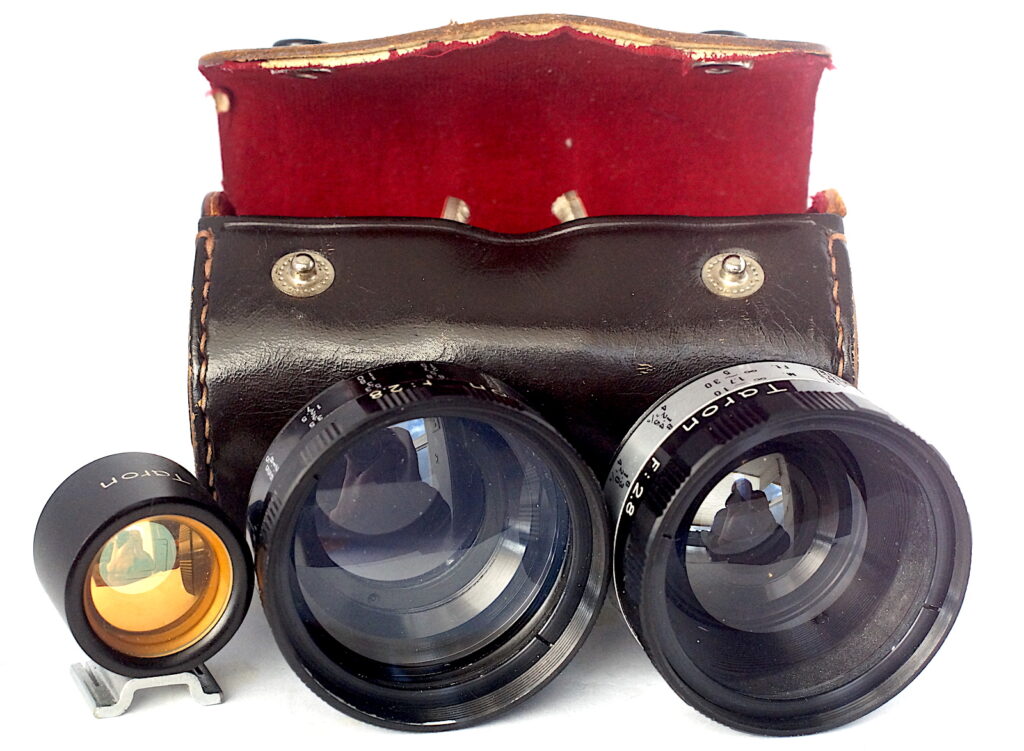
The process of marrying 1950s German precision with 1960s Japanese auxiliary optics required a specific mechanical bridge. The Bessamatic’s Color-Skopar X features a 40.5mm filter thread. To accommodate the Taron supplementaries, a series of step-up and step-down rings were employed. Specifically, a 40.5mm to 52mm step-up ring was combined with a 52mm to 46mm step-down ring, creating a stable mounting platform for the Taron units.
The choice of film was Ilford FP4 Plus, a traditional medium-speed black-and-white film known for its fine grain and wide exposure latitude. The film was later processed in Rodinal (Adonal) developer at a 1:50 dilution. This combination is a favorite among industrial photographers for its ability to enhance "acutance"—the perception of sharpness at the edges of mechanical details—while maintaining a classic aesthetic that complements the Victorian subject matter.
Documenting the Site Exhibits
During the visit, several key areas of the museum were documented:
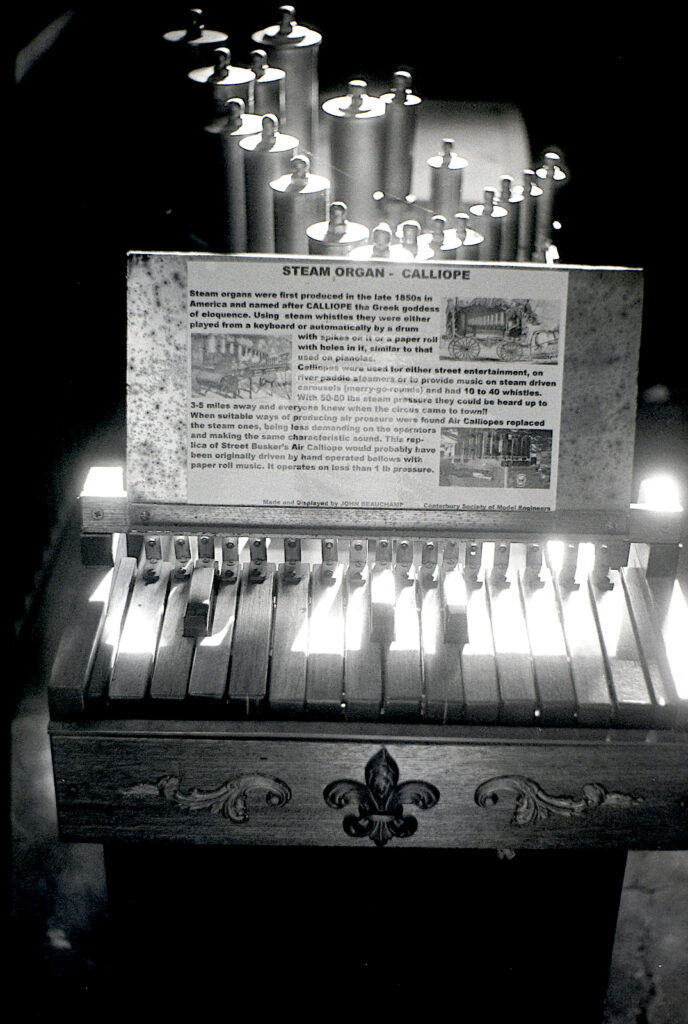
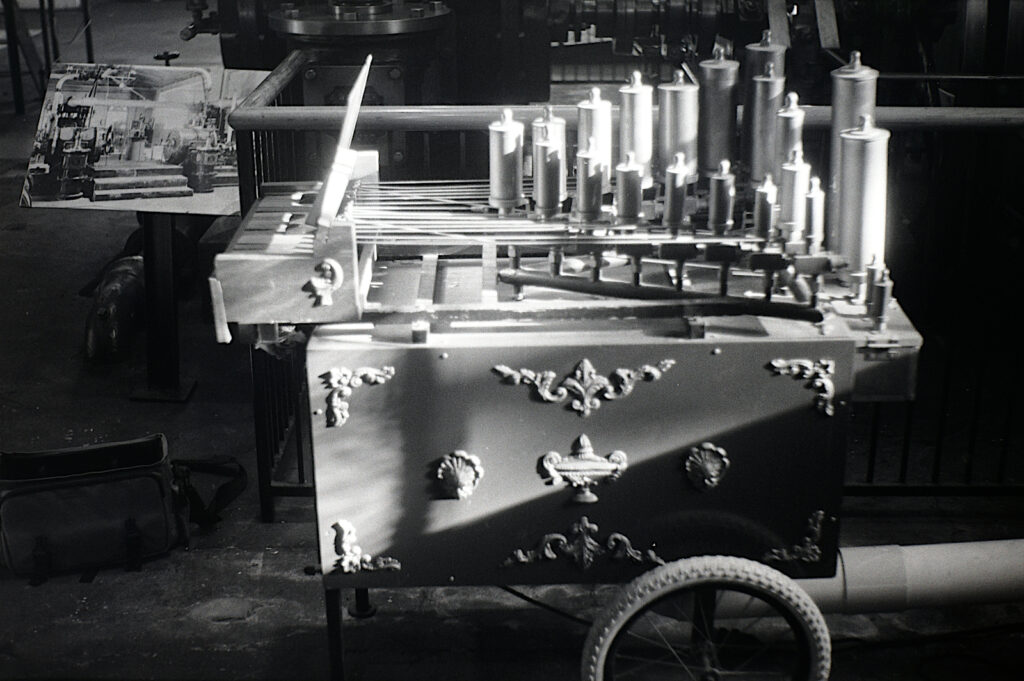
- The Calliope Steam Organ: A rare steam-powered musical instrument, the Calliope represents the more decorative and public-facing side of steam technology. The intricate pipework and valve systems provided an excellent test for the Taron telephoto attachment, which allowed for tight framing of the instrument’s decorative castings.
- The Gas Showroom Recreation: A curated space within the museum recreates a Victorian-era gas appliance showroom. Using the wide-angle supplementary lens, the photographer was able to capture the domestic context of gas technology, showing how the massive industrial scale of the gasworks translated into everyday household items like stoves and lamps.
- Heavy Machinery and Bearings: The heart of the museum contains massive, manually operated valves and gear-driven governors. These components, designed and manufactured long before the advent of computer-aided design (CAD), were documented to highlight the "basic physics" of the era. The telephoto attachment was again utilized here to isolate the complex detail of the castings and the assemblies required for accurate gas regulation.
Supporting Data: The Coal-to-Gas Conversion Process
The efficiency and complexity of the Dunedin Gasworks can be understood through the sheer volume of secondary products extracted from coal during the gasification process. While the primary goal was the production of town gas (a mixture of hydrogen, carbon monoxide, and methane), the facility was essentially a proto-petrochemical plant.
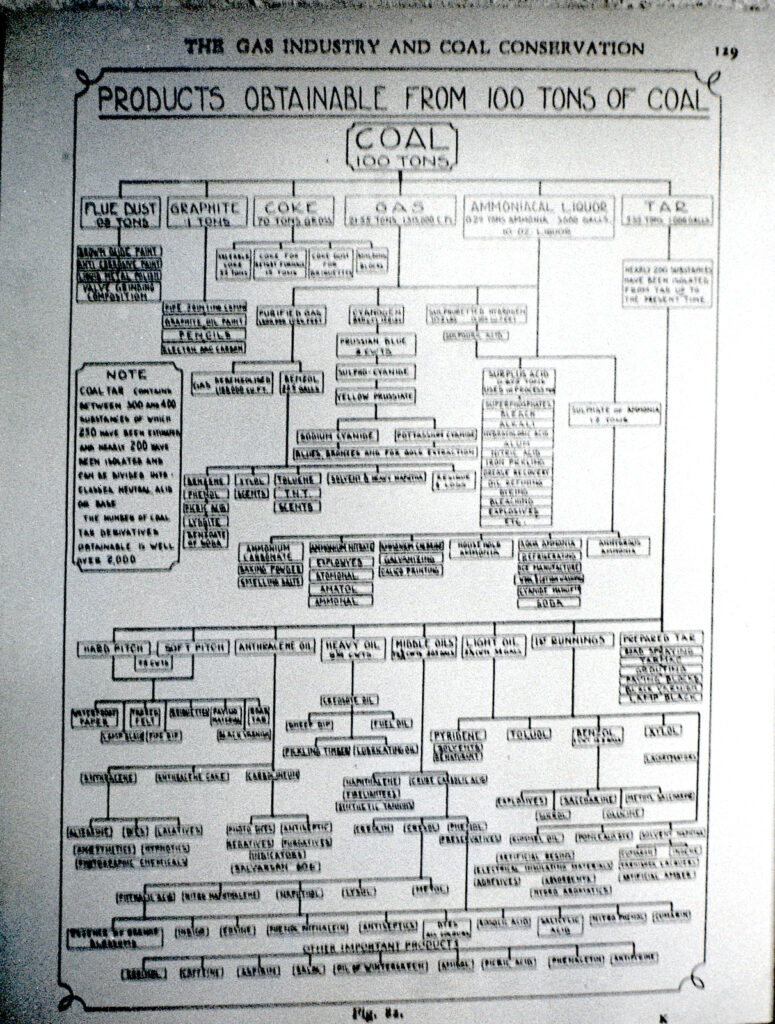
Supporting data from the museum’s archives indicates that for every ton of coal carbonized, the following by-products were typically recovered:
- Coke: 1,200 to 1,500 lbs (used as a smokeless fuel).
- Coal Tar: 8 to 12 gallons (essential for road surfacing and the chemical dye industry).
- Ammoniacal Liquor: 20 to 30 gallons (used in the production of fertilizers).
- Crude Benzole: 2 to 3 gallons (used as a motor fuel or solvent).
The manual nature of this extraction meant that the "control room" of a Victorian gasworks consisted not of screens and sensors, but of physical valves, pressure gauges, and the expert intuition of the operators.
Official Responses and Preservation Challenges
Museum representatives and volunteers have noted that the preservation of such a site is a race against time and environmental factors. The current earthquake proofing of the main chimney is a multi-stage engineering project that requires delicate balancing between modern safety standards and historical authenticity.
"We are essentially maintaining a living organism of iron and steam," noted one volunteer during the survey. "Every gear ratio and valve throw was calculated by hand over a century ago. Our job is to ensure that the physical manifestation of those calculations doesn’t succumb to corrosion or seismic activity."
The museum’s reliance on a volunteer workforce reflects a broader trend in global heritage preservation, where the specialized knowledge required to operate steam-driven machinery is being passed down to a new generation of enthusiasts. This "intangible heritage"—the skills and techniques of the operators—is considered as valuable as the physical buildings themselves.
Broader Impact and Implications
The use of vintage photographic equipment to document vintage industrial sites serves a dual purpose. First, it provides a stylistic consistency that helps the viewer engage with the historical period of the subject. Second, it serves as a practical demonstration of the longevity of mechanical systems.
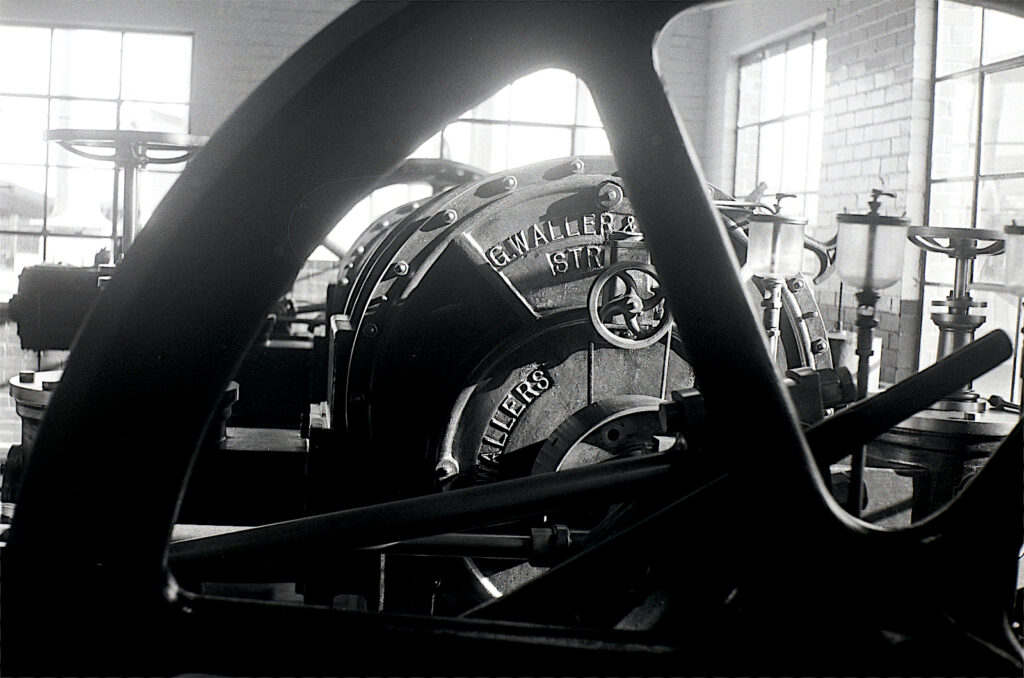
The Taron supplementary lenses, despite being designed for a different camera system and being over half a century old, performed admirably. While they may not meet the extreme edge-to-edge sharpness standards of modern aspherical optics, they did not noticeably degrade the performance of the Voigtländer’s Skopar lens. This suggests that the tolerances of mid-century mid-market optics were remarkably high, offering a level of sustainability that modern "disposable" digital accessories rarely match.
Furthermore, the Dunedin Gasworks Museum serves as a reminder of the transition from the visible, mechanical world of the 19th century to the invisible, electronic world of the 21st. In the gasworks, every process is externalized; the movement of gas is controlled by the visible turn of a wheel or the stroke of a steam piston. This transparency of function makes such museums invaluable educational tools for understanding the foundations of modern engineering.
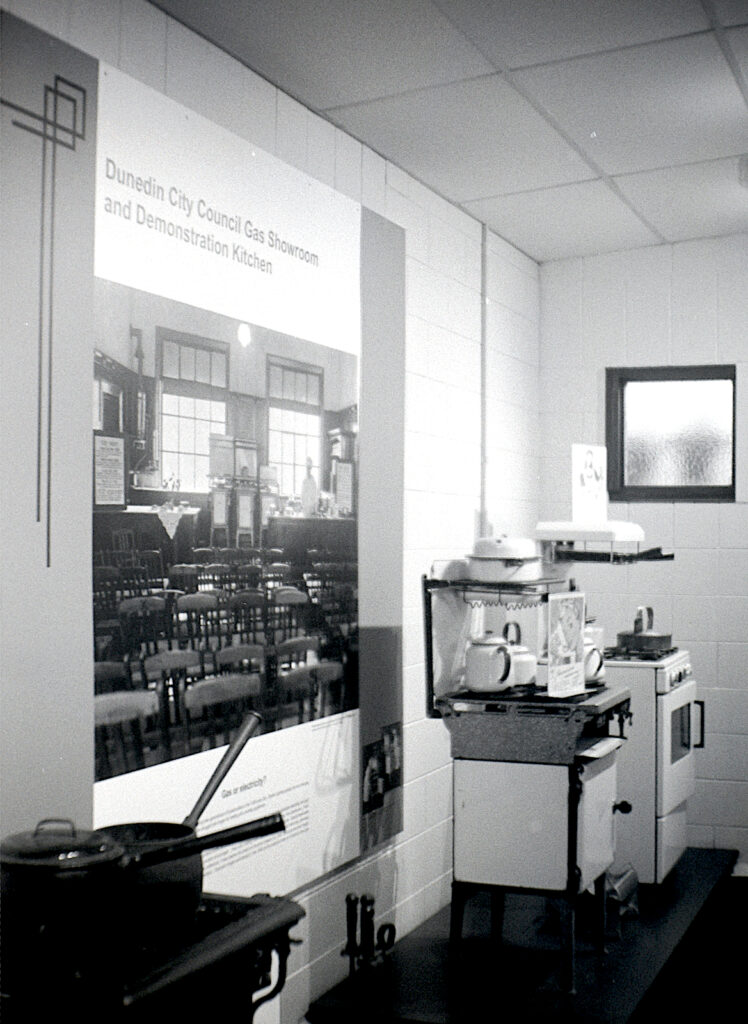
In conclusion, the marriage of analog photography and industrial archaeology at the Dunedin Gasworks is more than a nostalgic exercise. It is a technical validation of the craftsmanship of the past. As the museum continues its seismic upgrades and its volunteer-led maintenance, it remains a vital link to an era when human ingenuity was measured in iron, steam, and the precise grind of a manual gear. The resulting photographs, captured on FP4 Plus and developed in the time-tested chemistry of Rodinal, stand as a sharp, high-contrast testament to the enduring power of the mechanical age.