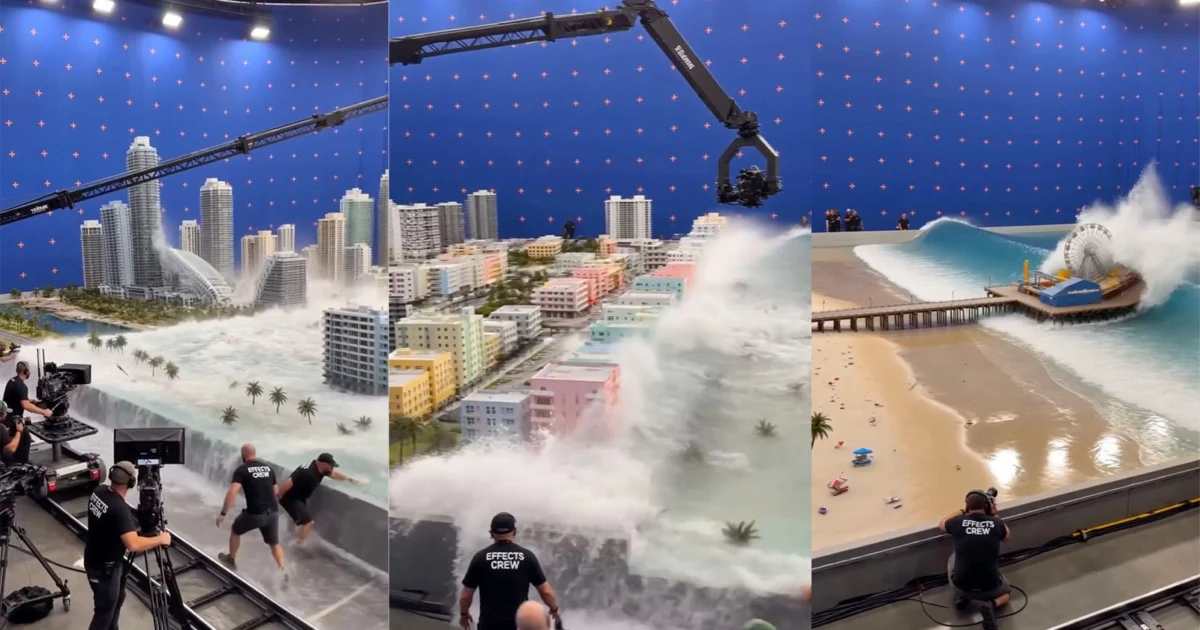
A groundbreaking AI-generated video depicting a miniature rendition of Miami being engulfed by a colossal tidal wave, framed as a "behind-the-scenes" production by an imaginary film crew, has achieved unprecedented virality on Instagram, accumulating nearly 700 million views within just two days of its publication. This astonishing reach has ignited a fervent global discussion, scrutinizing not only the rapid advancements in artificial intelligence video generation but also the opaque mechanisms of Meta’s algorithmic distribution, which critics argue is actively promoting potentially misleading synthetic content without adequate disclosure. The incident serves as a potent "wake-up call," as one expert described it, highlighting the escalating challenges platforms face in distinguishing authentic content from sophisticated AI creations and the profound implications for media literacy and public trust in the digital age.
The Anatomy of a Viral Phenomenon: "Wonderfulworldai"’s Miami Disaster
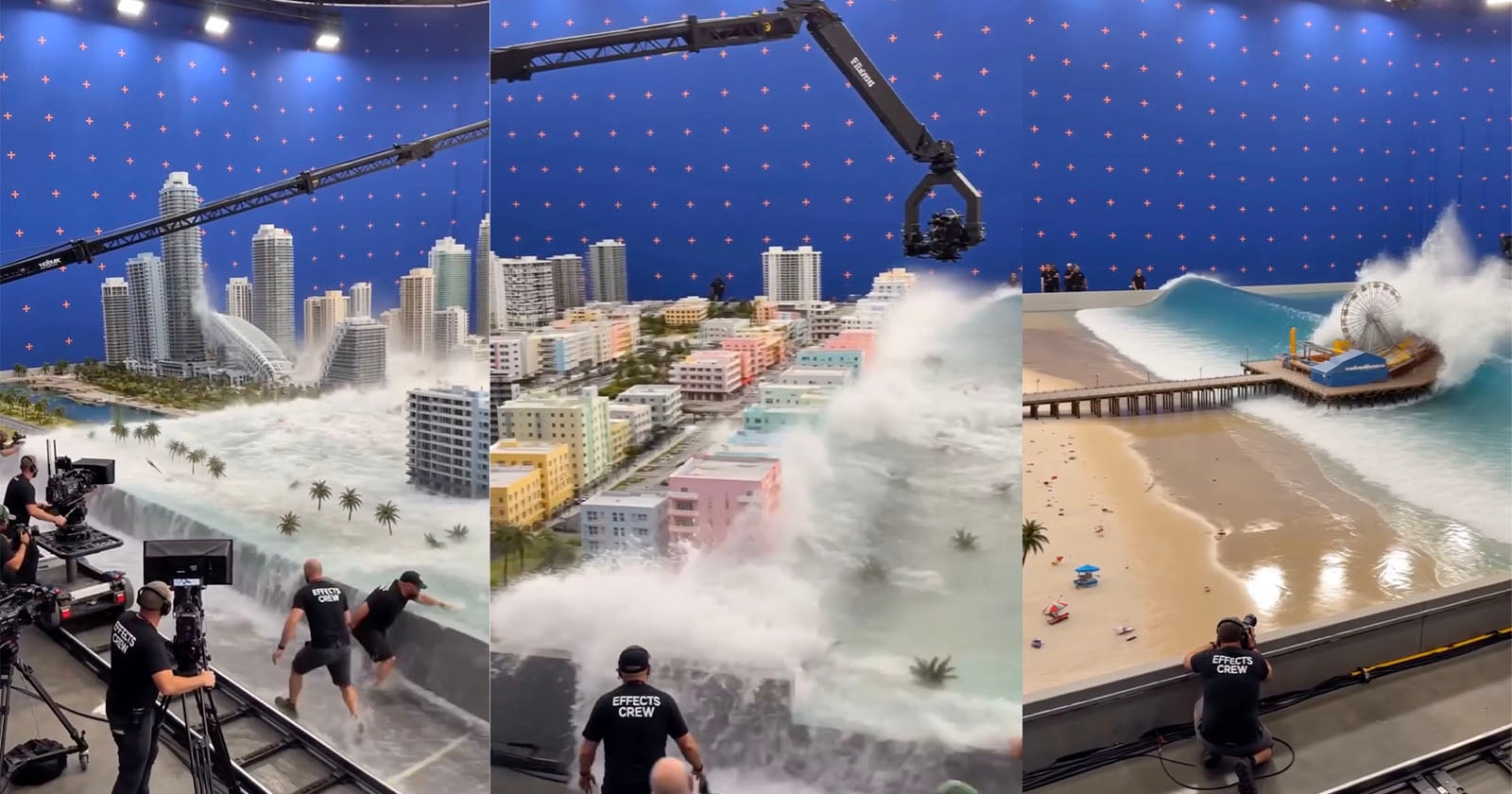
The video, shared by the Instagram account "wonderfulworldai," presents a meticulously crafted scene: a miniature cityscape of Miami, complete with intricate architectural details, is shown being overwhelmed by a massive, surging wave within what appears to be a large-scale practical effects tank. Crucially, the video incorporates a meta-narrative, featuring an imagined film crew meticulously capturing the disaster with professional-grade cameras and a crane, lending an initial air of verisimilitude to the spectacle. This stylistic choice cleverly mimics the aesthetics of real-world special effects productions, further blurring the lines between reality and simulation.
The accompanying caption played a pivotal role in the video’s controversial ascent to virality. It boldly stated, "No CGI. No compositing. Just a hand-built miniature Miami and a 40-foot wave tank. Months of work. One take." This declarative statement, designed to evoke awe and a sense of tangible craftsmanship, strategically omitted the AI origin until a later, more subtle acknowledgment. While the caption eventually conceded that it was an "AI video" and subtly indicated a sponsorship by the AI company Higgsfield, the primary impression conveyed to millions of initial viewers was one of genuine, practical filmmaking. Further complicating the matter, a small "AI info" label, intended for transparency, periodically appeared and disappeared from the upper left-hand corner of the video, rendering its disclosure inconsistent and easily overlooked by casual viewers scrolling through their feeds.
The sheer scale of the video’s engagement is staggering. With views eclipsing the hundreds of millions, it has not only surpassed the typical performance of real behind-the-scenes footage from major film productions but has also outperformed Instagram reels from some of the platform’s most prominent content creators, including the globally recognized influencer MrBeast, known for his elaborate stunts and massive audience. This unprecedented reach for an AI-generated piece of content, particularly one initially ambiguous about its origins, has prompted widespread concern among digital media analysts and content integrity advocates.
Meta’s Algorithmic Imperative: Engagement at What Cost?
The immediate and overwhelming virality of the "miniature Miami disaster" video has placed Instagram’s underlying algorithm squarely under the microscope. Platforms like Instagram, a subsidiary of Meta Platforms Inc., are designed to maximize user engagement, including likes, comments, shares, and watch time, as these metrics directly correlate with advertising revenue. Algorithms are constantly refined to identify and promote content most likely to capture and retain user attention. In this context, content that sparks strong emotional reactions, controversy, or even confusion often performs exceptionally well, as users are compelled to comment, debate, or share their disbelief.
Jeremy Carrasco, a prominent investigator specializing in synthetic content, articulated this concern sharply. He questioned the ethical implications of an algorithm that "rewards lying to viewers" and only hints at the AI origin once an AI sponsor is named. Carrasco’s critique extends to the fundamental principle of algorithmic design: "Is an algorithm rewarding confusion and angry comments going to keep working as improving AI videos can effectively game it better than any human can?" He termed the Miami video a "wake-up call," arguing that it starkly demonstrates how synthetic content is increasingly "winning the recommendation algorithms" by leveraging ambiguity and spectacle.
This incident is not isolated but rather indicative of a broader trend where algorithms, optimized for engagement, may inadvertently prioritize content that is sensational, emotionally charged, or even misleading, regardless of its factual basis or authenticity. The rapid evolution of AI video generation tools means that increasingly sophisticated synthetic content can be produced with relative ease, posing a significant challenge to platforms attempting to maintain content integrity while simultaneously fostering user interaction. The current algorithmic framework, some argue, is ill-equipped to handle the nuances of AI-generated content, especially when its creators intentionally obfuscate its synthetic nature.
The Broader Landscape of AI-Generated Content and Media Literacy
The "wonderfulworldai" video emerges within a rapidly accelerating landscape of artificial intelligence innovation, particularly in the realm of generative media. Tools like OpenAI’s Sora, Google’s Lumiere, RunwayML, Pika Labs, and the aforementioned Higgsfield are democratizing the creation of high-quality video content, previously only achievable with extensive budgets and specialized expertise. These platforms allow users to generate realistic, complex video sequences from simple text prompts, or even combine existing media with AI-driven transformations.
The increasing sophistication and accessibility of these tools present both immense creative opportunities and profound societal challenges. On one hand, they empower artists, filmmakers, and content creators to realize visions that were once prohibitively expensive or technically demanding. On the other hand, they exacerbate the problem of media literacy, making it progressively difficult for the average viewer to discern between genuine footage, cleverly edited material, and entirely synthetic creations. The concept of "synthetic realism" is no longer a futuristic speculation but a present-day reality, with AI models capable of generating faces, voices, and entire scenes that are virtually indistinguishable from their real-world counterparts.
This blurring of lines has significant implications for various sectors, from news and journalism, where the spread of deepfakes and AI-generated misinformation could erode public trust, to entertainment, where the value of authentic human performance might be challenged. The viral Miami video, despite its relatively innocuous subject matter (a fictional disaster), serves as a stark demonstration of how easily an AI creation can be mistaken for reality and how effectively it can capture collective attention, even when its true nature is ambiguous. The incident underscores the urgent need for enhanced media literacy education, equipping individuals with the critical thinking skills necessary to navigate an increasingly synthetic digital environment.
Meta’s Strategic Play: AI Investment and Public Perception
Meta Platforms Inc., the parent company of Instagram, has made colossal investments in artificial intelligence research and development. From its large language models like Llama to its metaverse ambitions and various AI assistants integrated across its platforms, Meta is unequivocally "all in" on AI technology. This strategic pivot is driven by the belief that AI will define the next era of digital interaction and innovation, and Meta aims to be at the forefront of this transformation. This aggressive pursuit of AI leadership, however, also places Meta in a precarious position regarding the ethical implications and public perception of AI-generated content on its vast platforms.
Adam Mosseri, the Head of Instagram, recently articulated the platform’s official stance on AI content during an appearance on Lenny’s Podcast. He stated, "I don’t think we should filter out AI content. I think we should let you know if it’s AI content or not." This statement reflects a policy preference for transparency and labeling over outright censorship or suppression of AI-generated media. The rationale often cited is to avoid stifling innovation and creative expression while still empowering users with the information needed to make informed judgments.
However, the "wonderfulworldai" video directly challenges the effectiveness of this stated policy. The small, intermittently visible "AI info" label, coupled with the misleading initial caption, falls far short of providing clear, consistent, and unequivocal disclosure. Critics argue that such minimal and easily overlooked labeling is tantamount to obfuscation, rather than genuine transparency, especially when juxtaposed against the aggressive algorithmic promotion of the content. If Meta genuinely intends to "let you know if it’s AI content," then the current implementation, as evidenced by this viral video, appears to be critically flawed.
Further complicating Meta’s public relations efforts around AI is a peculiar advertising campaign it recently launched. The ad, intended to convey an optimistic vision of AI, argued that artificial intelligence would not "make us less connected" or "leave us behind." Yet, the backing track chosen for this message was David Bowie’s iconic, apocalyptic song Five Years, which famously describes humanity facing its imminent end. This stark thematic dissonance between Meta’s hopeful message and the song’s grim narrative raised eyebrows and prompted questions about the company’s self-awareness or, perhaps, an unintentional subtext reflecting underlying anxieties about the very technology it champions. This incident, much like the Miami video, highlights the complex and often contradictory nature of Meta’s engagement with the public discourse surrounding AI.
Industry Reactions and Calls for Standards
The viral AI Miami video has catalyzed a renewed call for stricter standards and greater accountability from social media platforms regarding AI-generated content. Content creators, particularly those investing significant time and resources into original, authentic productions, express concern over the potential for AI-generated content to unfairly dominate algorithmic feeds. The fear is that the ease and low cost of producing AI content, especially if it’s algorithmically favored, could devalue human creativity and make it harder for genuine creators to gain visibility.
AI ethicists and digital media experts are increasingly advocating for clear, universal labeling standards for AI-generated content across all platforms. They propose that such labels should be prominent, permanent, and easily understandable, leaving no room for ambiguity. Furthermore, there are calls for platforms to invest in more robust AI detection technologies to identify synthetic media, particularly when creators attempt to intentionally conceal its origin. The debate also extends to potential regulatory frameworks, with governments worldwide grappling with how to legislate against the misuse of AI, especially in areas like deepfake pornography, electoral interference, and financial fraud. The current fragmented approach, where platforms set their own policies, is seen by many as insufficient to address the scale of the challenge.
The incident also underscores the critical role of organizations dedicated to fact-checking and media literacy. As AI-generated content becomes more sophisticated, these organizations will face an escalating workload in identifying and debunking synthetic misinformation. Collaboration between platforms, researchers, and civil society organizations will be essential to develop comprehensive strategies for combating the spread of misleading AI content while preserving the legitimate benefits of generative AI.
The Future of Content: A Blurring Line
The "wonderfulworldai" video is not merely an isolated viral sensation; it is a harbinger of the future of digital content. The trajectory of AI development suggests that the proliferation of sophisticated, indistinguishable-from-reality synthetic media will only accelerate. This future presents a profound duality: on one hand, it promises unprecedented creative liberation, allowing individuals and small teams to produce high-quality visual narratives that were once the exclusive domain of large studios. On the other hand, it introduces an existential challenge to the very concept of authenticity and truth in media.
Platforms like Instagram face an increasingly difficult balancing act. They must foster innovation and allow creators to leverage cutting-edge AI tools, while simultaneously safeguarding their users from deception and misinformation. The current model, which appears to prioritize engagement metrics above all else, seems ill-equipped for this new reality. A paradigm shift may be required, where content integrity and clear disclosure are not merely afterthoughts but foundational principles embedded in algorithmic design.
The ongoing debate about human versus synthetic creativity will also intensify. As AI models become capable of generating compelling narratives, artistic compositions, and even emotional performances, the unique value of human authorship and expression will be re-examined. Will audiences grow to prefer algorithmically optimized content, or will there always be an inherent value placed on creations born from human experience and intention? The Miami disaster video, with its blend of simulated reality and a meta-narrative of "human" production, encapsulates this very tension.
Conclusion: Navigating the New Digital Frontier
The astonishing virality of the AI-generated Miami disaster video serves as a stark and urgent reminder of the rapidly evolving digital landscape. It underscores the critical need for robust transparency mechanisms, greater platform accountability, and enhanced media literacy in an era increasingly defined by synthetic content. While artificial intelligence offers transformative potential for creativity and innovation, its unchecked integration into influential social media algorithms, particularly when coupled with ambiguous disclosure practices, poses significant risks to public trust, informed discourse, and the very fabric of shared reality. As we venture further into this new digital frontier, the collective responsibility of technology companies, policymakers, educators, and individual users will be paramount in ensuring that the benefits of AI are harnessed ethically, without sacrificing the fundamental principles of truth and authenticity. The "wake-up call" has been sounded; how the world responds will define the future of information itself.