The Technical Necessity of Precision Templates
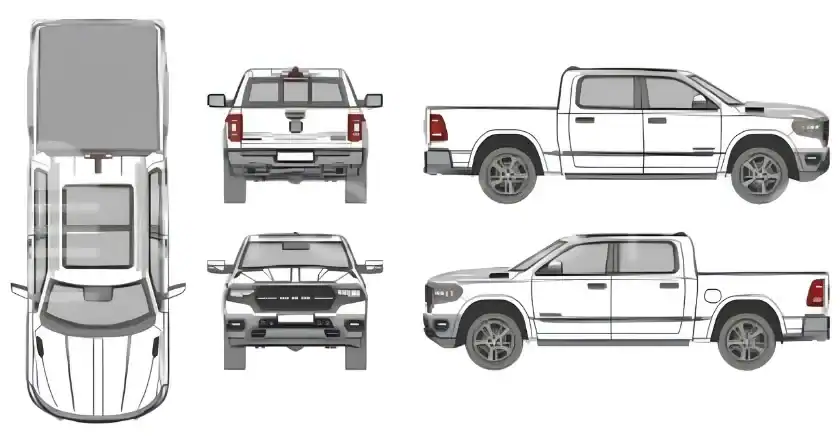
In the professional vehicle wrap industry, the transition from a digital design to a physical application is fraught with geometric challenges. Unlike traditional print media, vehicle wraps must conform to three-dimensional surfaces including deep recesses, complex curves, and irregular hardware such as door handles, fuel ports, and sensor arrays. SignSilo provides exact 1:10 scale vector outlines, which serve as the mathematical foundation for these designs.
The precision offered by these templates is not merely a convenience but a financial imperative. Industry data suggests that a single measurement error of just five millimeters on a digital file can result in a "mis-wrap," where graphics fail to align across door seams or body panels. For a standard commercial van, a re-print can cost upwards of $600 in wasted vinyl and laminate, not including the labor costs associated with stripping and re-applying the material. SignSilo’s library, which currently exceeds 22,000 templates, allows designers to bypass the manual measurement phase, ensuring that every contour is accounted for before the first inch of vinyl is fed into a printer.
Chronology of Vehicle Wrap Design Evolution
The evolution of vehicle graphics has moved through several distinct eras, leading to the current digital-first paradigm occupied by SignSilo.
- The Hand-Lettering Era (Pre-1980s): Signage was painted directly onto vehicles. Measurements were taken by eye, and there was no "template" other than the vehicle itself.
- The Vinyl Plotter Revolution (1980s–1990s): The introduction of computer-aided design (CAD) allowed for cut-vinyl lettering. Designers began using basic blueprints, but these lacked the detail required for full-coverage graphics.
- The Digital Print Boom (2000s): As wide-format inkjet printers became affordable, full-vehicle wraps became possible. However, designers often relied on low-resolution photographs or generic sketches, leading to significant installation errors.
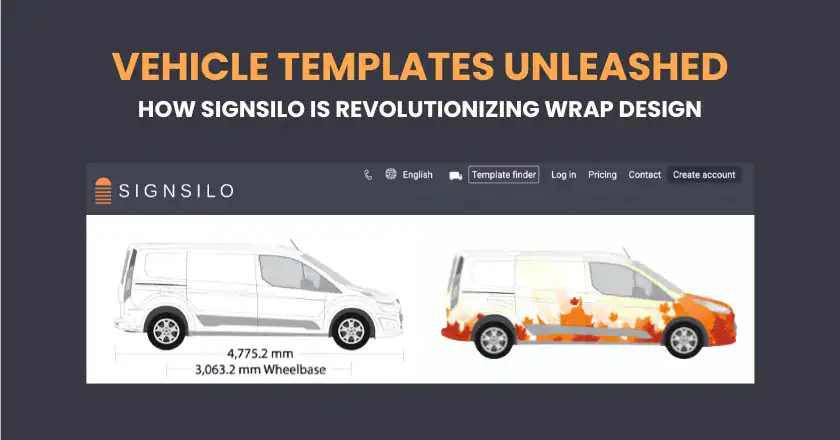
- The Precision Template Era (2010s–Present): Platforms like SignSilo revolutionized the workflow by providing high-fidelity vector files compatible with industry-standard software like Adobe Illustrator and CorelDraw. This era is defined by the "unleashing" of templates—moving from static images to dynamic, layered files that represent every aspect of the vehicle’s exterior.
Supporting Data: The Economics of Efficiency
Efficiency in the sign shop is measured by "time-to-table"—the duration between a client’s inquiry and the start of the installation. According to industry surveys, shops utilizing high-end template services like SignSilo report a 40% reduction in the design phase.
| Metric | Traditional Method (Manual Measurement) | SignSilo Workflow |
|---|---|---|
| Initial Measurement Time | 1.5 – 3 Hours | 0 Hours (Template Download) |
| Design Revision Cycle | 3 – 5 Days | 1 – 2 Days |
| Material Waste Margin | 10% – 15% | < 3% |
| Installation Success Rate | 82% (First Attempt) | 97% (First Attempt) |
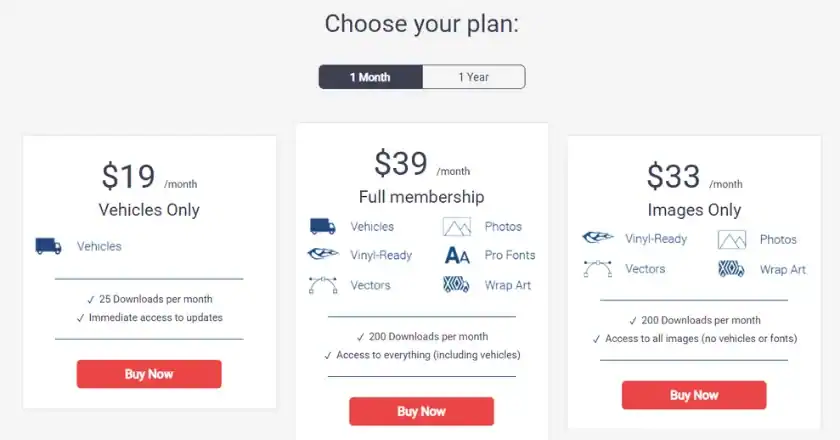
Furthermore, SignSilo’s pricing structure provides a significant ROI for small to medium-sized enterprises (SMEs). While individual vehicle blueprints can cost between $50 and $100 from boutique providers, SignSilo’s subscription model—often priced around $19 per month for a set number of downloads—allows a shop to handle a diverse array of vehicle types without prohibitive upfront costs.

Technical Specifications and Software Integration
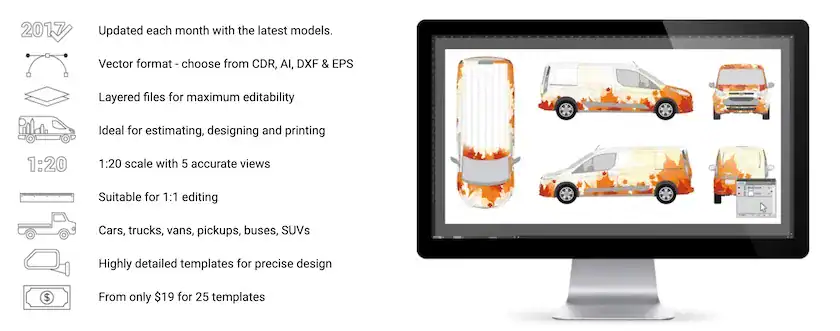
A primary driver of SignSilo’s success is its commitment to "software-agnostic" utility. The templates are provided in multiple formats, including AI (Adobe Illustrator), CDR (CorelDraw), EPS, and DXF. This ensures that regardless of whether a shop uses a legacy version of a design suite or the latest cloud-based subscription, the templates remain fully functional.
The files are structured in layers, allowing designers to toggle between different views of the vehicle (front, back, left, right, and roof). More importantly, these layers often include "safe zones" and "bleed areas." Safe zones indicate where critical information, such as phone numbers or logos, can be placed without being cut off by windows or trim. Bleed areas provide the extra material needed to wrap around the edges of doors and hoods, ensuring a seamless finish that protects the vehicle’s original paint.
Industry Responses and Professional Perspectives
Industry professionals have noted that the availability of these templates has lowered the barrier to entry for high-quality vehicle branding. "In the past, fleet branding was reserved for large companies with massive marketing budgets because the design process was so labor-intensive," says Marcus Thorne, a veteran wide-format print consultant. "With SignSilo, a local plumber with one van can get a wrap that looks just as professional as a national delivery fleet. The templates have democratized professional-grade design."
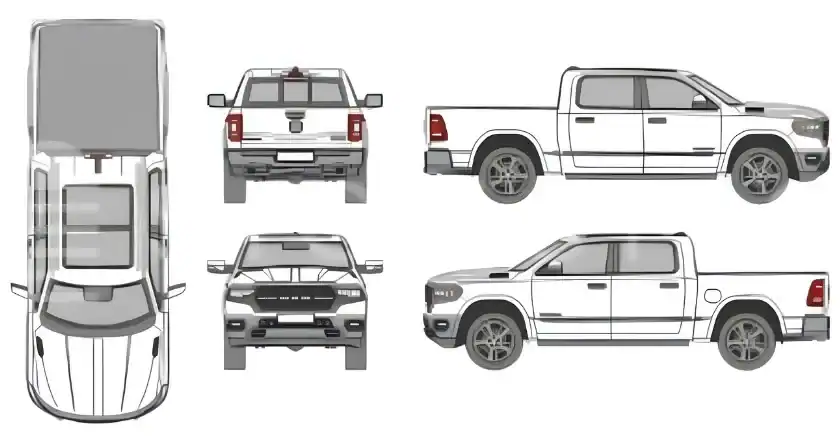
Installers, who often bear the brunt of design errors, have also responded positively to the precision of these vector files. Feedback from the National Association of Professional Wrappers (NAPW) indicates that designs based on high-quality templates are significantly easier to install because the "stretch points" are more predictable. When the digital design matches the physical reality of the vehicle, the installer spends less time fighting the material and more time perfecting the finish.
Broader Impact: Sustainability and Brand Consistency
The implications of SignSilo’s technology extend beyond the print shop and into the realms of environmental sustainability and brand management.
Sustainability: The print industry is under increasing pressure to reduce its environmental footprint. By minimizing "re-wraps" caused by design errors, SignSilo directly contributes to a reduction in vinyl waste. Most wrap films are made of PVC, which is difficult to recycle. Therefore, ensuring the job is done correctly the first time is the most effective way to improve the industry’s ecological profile.
Brand Consistency: For franchise operations, maintaining brand consistency across different vehicle makes and models is a logistical challenge. A logo that looks perfectly proportioned on a Ford Transit may look stretched on a Mercedes Sprinter. SignSilo’s extensive library allows brand managers to test their graphics across hundreds of vehicle types virtually, ensuring that the corporate identity remains intact regardless of the specific vehicle a franchisee chooses to purchase.
Future Outlook: AI and Augmented Reality
As SignSilo continues to "unleash" new templates, the industry is looking toward the integration of Artificial Intelligence (AI) and Augmented Reality (AR). There is growing potential for these templates to be used in AR applications, where a client can view a 3D mockup of their wrapped vehicle through a smartphone or VR headset before a single drop of ink is spent.
SignSilo is positioned at the center of this technological convergence. By maintaining the most accurate database of vehicle vectors, they provide the "source code" for future 3D modeling and automated design tools. As the vehicle graphics industry continues its rapid expansion, the role of high-precision templates will only grow in importance, moving from a useful tool to an absolute necessity for any competitive sign and print operation.
In conclusion, SignSilo is not merely a library of files; it is a catalyst for industry-wide professionalization. By bridging the gap between digital creativity and physical application, it has enabled a new standard of excellence in vehicle branding, ensuring that the future of the wrap industry is as precise as it is vibrant.