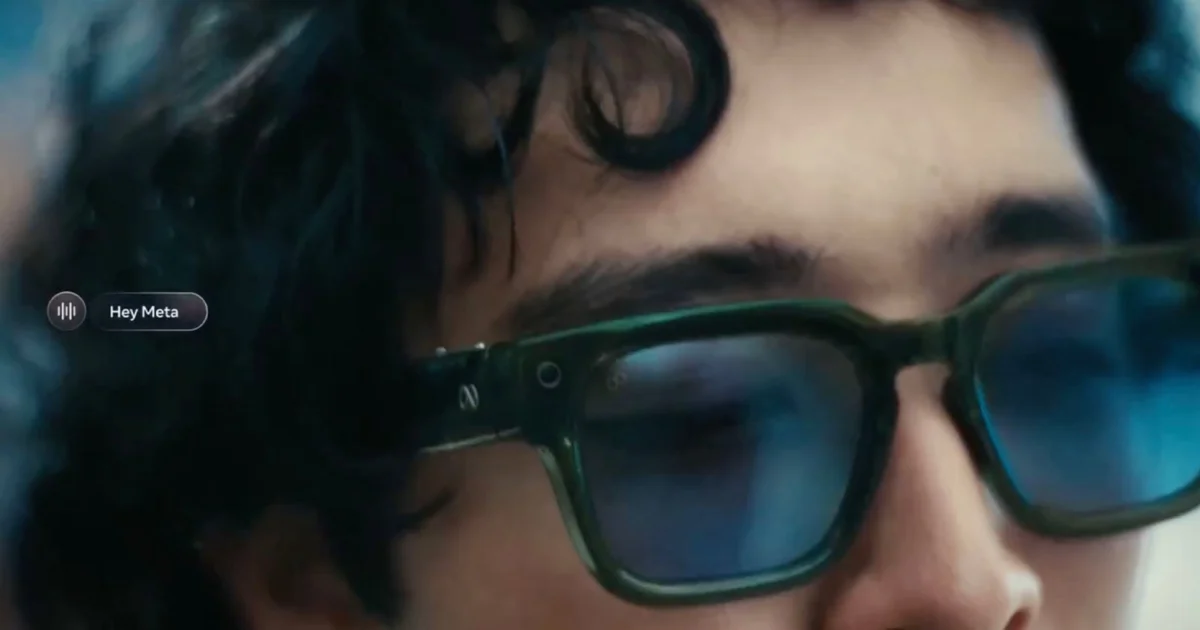
Meta is reportedly preparing to unveil a new iteration of its smart glasses, internally codenamed "Luna," that conspicuously omits a camera, a significant strategic pivot for the tech giant grappling with escalating privacy concerns surrounding its existing camera-equipped models. This development, first reported by The Information, suggests a recalibration of Meta’s approach to wearable technology, prioritizing discreet AI interaction over visual capture capabilities. The anticipated unveiling is slated for Meta Connect, the company’s annual developer conference, on September 23 and 24, with market availability potentially commencing as early as October. The Luna glasses are expected to launch in two distinct designs: the classic Clubmaster and the more contemporary Burbank style, aiming to appeal to a broader consumer base seeking integrated smart features without the perceived invasiveness of a camera.
The Genesis of Privacy Concerns: A Backdrop of Backlash
The decision to remove the camera from the forthcoming Luna model is not an isolated design choice but rather a direct response to a torrent of public criticism and operational challenges faced by Meta’s current generation of smart glasses, notably the Ray-Ban Stories. Launched in partnership with EssilorLuxottica, these glasses integrated a discreet camera and microphones, allowing users to capture photos and videos hands-free. While initially marketed as a convenient tool for content creators and everyday memory-making, the devices quickly became a flashpoint for privacy debates. The fundamental issue revolved around the potential for surreptitious recording, empowering "bad actors" to film individuals without their explicit consent, often leading to public embarrassment or unauthorized distribution of footage online.
The backlash manifested in tangible ways, with numerous public venues, particularly across the United Kingdom, implementing outright bans on Meta’s smart glasses. These venues, ranging from pubs and restaurants to cultural institutions, cited concerns over customer privacy and the difficulty in monitoring discreet recording devices. Similarly, nightclubs in bustling metropolitan areas like New York City issued stern warnings, threatening permanent bans for anyone caught using or possessing smart glasses on their premises. Such widespread prohibitions underscored a significant public trust deficit and highlighted the societal unease with wearable cameras, even those equipped with indicator lights.
Meta had attempted to mitigate these concerns through various software updates and design features. The Ray-Ban Stories, for instance, include a small LED light designed to illuminate when the camera is actively recording, serving as a visual cue for those in the vicinity. However, critics argued that this indicator was often too subtle or could be easily obscured, thereby failing to provide sufficient transparency. In a more recent, drastic measure to enforce compliance, Meta introduced software updates that effectively "bricked" — or rendered inoperable — thousands of smart glasses if the recording LED was detected as having been removed, damaged, or tampered with. This aggressive stance, while demonstrating Meta’s commitment to preventing misuse, also highlighted the inherent difficulties in regulating the ethical use of such technology once it is in the hands of consumers. Despite these efforts, the fundamental privacy implications of camera-equipped wearables continued to fuel public apprehension, creating an environment ripe for a re-evaluation of product strategy.
Meta’s Strategic Pivot: The Luna Vision and AI Integration
The reported development of Luna represents a significant strategic pivot for Meta, shifting the focus from visual capture to an audio-centric, AI-driven interaction model. By removing the camera, Meta aims to address the most prominent source of privacy apprehension, potentially repositioning its smart glasses as a more acceptable and less intrusive form of wearable technology. The Luna glasses are designed around a suite of six built-in microphones, strategically placed to optimize voice input and interaction. This microphone array will serve as the primary interface, enabling users to engage seamlessly with Meta AI and the company’s advanced Muse AI agent. These AI capabilities are envisioned to provide a range of functionalities, from answering queries and managing schedules to facilitating communication and offering real-time information, all through voice commands.
Complementing the robust microphone system, the Luna glasses will also incorporate speakers meticulously positioned to direct audio discreetly towards the wearer’s ears, ensuring privacy for conversations and content consumption without disturbing others nearby. A physical button located on the side of the temple arm is expected to provide quick, intuitive access to Meta AI, allowing for rapid invocation of its capabilities without needing to articulate a wake word. This combination of discreet audio input and output, coupled with a dedicated AI access button, underscores Meta’s intent to create a highly personalized and efficient hands-free computing experience.
Beyond the functional shift, the removal of the camera also brings significant design advantages. The bulky camera modules and associated electronics in previous models often necessitated thicker temple arms, making the smart glasses visibly distinct from conventional eyewear. With Luna, the absence of a camera allows for a more streamlined and aesthetically refined design, potentially featuring slimmer temple arms that more closely resemble traditional spectacles. This design refinement is crucial for enhancing user acceptance and making the devices less conspicuous, thereby reducing the psychological barrier for potential adopters who might be wary of wearing overtly "techy" glasses. The goal is to integrate technology so seamlessly into everyday objects that it becomes almost invisible, fulfilling a long-held vision for ambient computing. This design philosophy is critical for broadening the appeal of smart glasses beyond early adopters and into the mainstream consumer market, where fashion and discretion often weigh as heavily as functionality.
The Evolving Landscape of Wearable AI and Audio Privacy
While the removal of the camera from Luna addresses one set of significant privacy concerns, the reliance on an array of microphones introduces a new, albeit different, dimension of data capture and potential intrusion. In a world increasingly populated by voice-activated assistants and always-listening devices, the prospect of smart glasses that look indistinguishable from regular eyewear yet are constantly capable of capturing ambient audio raises fresh questions about privacy boundaries. The core issue shifts from "Are they filming me?" to "Are they listening to me, and for what purpose?"
The concern is amplified by precedents set by other wearable technologies. For instance, the discussion surrounding devices like the newly announced Apple Watch Series 12 highlights how even seemingly innocuous devices can continuously capture audio, often for features like health monitoring, voice commands, or environmental sound analysis. When such capabilities are embedded within an everyday accessory like glasses, which are worn directly on the face and positioned ideally for audio capture, the implications become more profound. Users and those around them may struggle to ascertain when the device is actively recording conversations, processing ambient sounds for AI commands, or merely in a passive listening state awaiting a wake word. This ambiguity could erode trust, much like the visible camera did for earlier models.
Meta’s use of its Meta AI and Muse AI agent within Luna means that captured audio will likely be processed, at least partially, in the cloud to facilitate sophisticated language understanding and response generation. While tech companies typically emphasize anonymization and strict data retention policies for such interactions, the sheer volume and sensitive nature of potential audio data – encompassing private conversations, personal interactions, and ambient environmental sounds – present inherent privacy challenges. Regulators and privacy advocates will undoubtedly scrutinize Meta’s data handling practices, consent mechanisms, and transparency regarding what audio data is collected, how it is stored, and for what duration. The ethical frameworks surrounding "always-on" microphones in personal devices are still nascent, and Luna could become a central case study in how these challenges are addressed. Furthermore, the potential for "hot mic" incidents, accidental recordings, or even malicious eavesdropping, albeit without visual evidence, remains a concern that Meta will need to proactively address through robust security measures, clear user controls, and transparent communication. The balance between enhanced AI utility and safeguarding individual privacy will be a delicate tightrope walk for Meta as Luna enters the market.
Looking Ahead: Project Phoenix and the Future of Augmented Reality
Beyond the immediate horizon of Luna, Meta’s long-term vision for wearable technology extends into the realm of true augmented reality (AR) glasses, epitomized by another project reportedly slated for a showcase at Meta Connect: "Phoenix." Unlike Luna’s focus on discreet audio AI, Project Phoenix represents Meta’s ambitious leap into visual overlay and immersive digital experiences. These future AR glasses are designed to display virtual workspaces, project movie screens onto real-world environments, or overlay digital information onto a user’s field of view, fundamentally blending the digital and physical worlds.
The Phoenix glasses are not expected to be commercially available until 2027, marking them as a more distant future product compared to Luna. This timeline underscores the significant technological hurdles still to be overcome in developing lightweight, powerful, and aesthetically pleasing AR eyewear that can deliver a compelling user experience. Meta has previously showcased early demonstrations of its AR capabilities, illustrating concepts like holographic interactions, digital avatars appearing in physical spaces, and contextual information overlays. Project Phoenix is expected to build upon these foundational efforts, aiming to deliver a more refined and functional AR platform.
The distinction between Luna and Phoenix is crucial for understanding Meta’s multi-pronged strategy in the wearable tech space. Luna appears to be an immediate, pragmatic step to address existing market resistance and establish a foothold for discreet AI-powered wearables, focusing on what is achievable and acceptable now. Phoenix, conversely, represents the aspirational future, a long-term investment in cutting-edge AR technology that Meta believes will eventually redefine human-computer interaction and usher in the metaverse vision. The staggered release strategy allows Meta to iterate and gain user feedback on simpler smart glasses while concurrently pouring resources into the more complex, transformative AR platform. The success of Luna could pave the way for broader acceptance of wearables, making the eventual transition to more advanced AR glasses like Phoenix a smoother journey for consumers. However, the privacy and ethical considerations surrounding AR, with its ability to manipulate and augment visual reality, will be exponentially more complex than those posed by either camera-equipped or microphone-only smart glasses, necessitating proactive dialogue and robust safeguards.
Market Reception, Broader Impact, and Ethical Considerations
The introduction of camera-free smart glasses like Luna carries significant implications for Meta’s market position, the broader wearable technology industry, and societal norms around digital interaction. For Meta, Luna represents a tactical retreat from a contentious feature to secure a strategic advance in the burgeoning AI wearables market. By removing the camera, Meta aims to shed the negative public perception associated with surreptitious recording and rebuild trust with consumers and regulatory bodies. This move could potentially unlock new market segments, appealing to individuals who desire hands-free AI assistance but are unwilling to compromise on personal or others’ visual privacy. The success of Luna will serve as a crucial test of whether the public is ready to embrace "always-on" audio AI in such a discreet form factor.
From an industry perspective, Luna could catalyze a broader trend towards specialized smart wearables. Rather than attempting to integrate every possible feature into a single device, manufacturers might opt for more focused products tailored to specific user needs and privacy comfort levels. This could lead to a diversification of the smart glasses market, with some models prioritizing visual capture (for specific professional or hobbyist uses), others focusing on AR, and a new category emerging for discreet AI assistance. The competition in this space is intensifying, with tech giants like Apple, Google, and Amazon all investing heavily in various forms of wearable tech, from smart watches to rumored AR devices. Meta’s ability to carve out a distinct niche with Luna could be vital for its long-term relevance.
However, the ethical considerations surrounding audio-centric wearables remain profound. While the absence of a camera might alleviate fears of visual recording, the continuous collection and processing of audio data raise new questions about data sovereignty, algorithmic bias, and the potential for surveillance. Regulators worldwide are increasingly scrutinizing how tech companies handle personal data, and smart glasses, even without cameras, will likely face intense examination. Policies around explicit consent for audio recording, clear data anonymization protocols, and transparent use policies will be critical for fostering consumer trust. Furthermore, the psychological impact of living in an environment where discreet audio recording devices are commonplace needs to be considered. Will it alter social interactions, making people more guarded in public spaces? These are questions that will evolve as devices like Luna become more integrated into daily life.
Ultimately, Meta’s Luna project signals a maturing understanding of the complex interplay between technological innovation, user experience, and societal acceptance. By demonstrating a willingness to adapt its product strategy in response to public sentiment and privacy concerns, Meta aims to navigate the delicate balance required to usher in the next generation of pervasive computing. The success or failure of Luna will not only determine the trajectory of Meta’s wearable ambitions but also offer invaluable insights into the evolving social contract between technology companies and the individuals they seek to connect.