The Evolution of the Vehicle Wrap Industry
To understand the significance of a platform like SignSilo, one must consider the trajectory of the vehicle wrap market. Once reserved for basic vinyl lettering or high-end custom paint jobs, vehicle graphics have evolved into a multi-billion-dollar global industry. Market analysts project the automotive wrap film market to continue its upward trajectory, driven by the increasing use of vehicles as mobile billboards.
In the early days of the industry, sign makers often had to manually measure vehicles or rely on rudimentary line drawings that lacked the precision required for complex full-body wraps. The margin for error was significant; a mistake of just a few centimeters in a design could lead to wasted materials, costing shops hundreds of dollars in high-performance vinyl and hours of labor. The introduction of digital vehicle templates revolutionized this process, and SignSilo has positioned itself at the forefront of this digital transformation by offering high-precision, scale-accurate files for thousands of vehicle models.
Core Assets: Precision Vehicle Templates
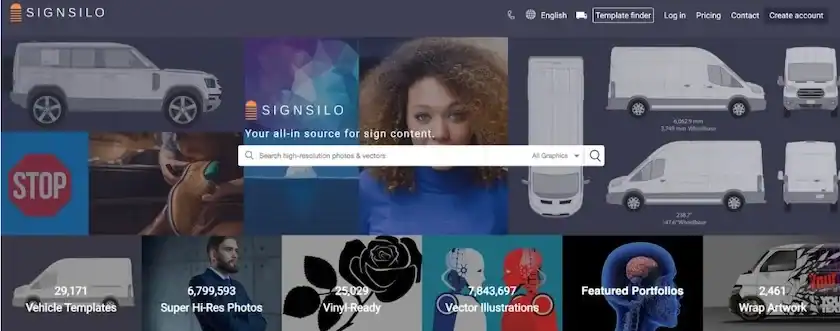
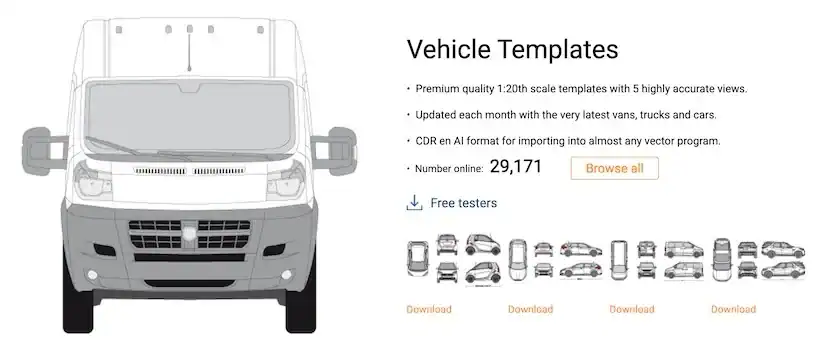
The cornerstone of SignSilo’s utility is its extensive library of vehicle templates. These are not merely illustrations; they are technical blueprints designed specifically for the wrap industry. Covering an expansive range of vehicles—including passenger cars, commercial vans, heavy-duty trucks, trailers, buses, and even specialized machinery—these templates allow designers to create layouts with surgical precision.
These templates provide multiple views (front, back, left, right, and roof), ensuring that graphics align perfectly across seams, door handles, and complex curves. For a professional wrap shop, the ability to download a template for a 2024 Ford Transit or a specific model of a refrigerated trailer within seconds is a massive operational advantage. This accessibility eliminates the need for physical vehicle measurement sessions, allowing the design phase to begin even before the vehicle arrives at the shop.
Ready-to-Use Wrap Designs and Creative Inspiration
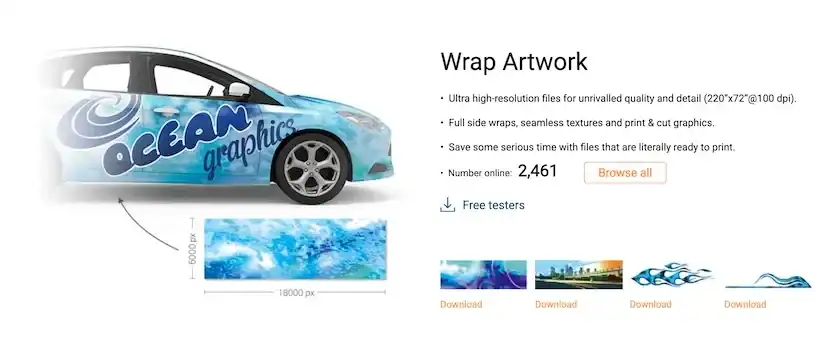
Beyond the technical templates, SignSilo addresses the creative bottlenecks often faced by smaller sign shops. Not every business has a full-time creative director capable of generating complex, high-impact wrap designs from scratch. SignSilo fills this gap by offering a curated selection of ready-to-use wrap designs and artwork concepts.

These designs serve two primary purposes. First, they act as a starting point for customization, allowing designers to tweak colors, logos, and text to fit a specific client’s brand. Second, they provide a professional visual aid for sales presentations. When a client can see a high-quality rendering of what their fleet could look like, the closing rate for premium wrap projects increases significantly. These assets include everything from aggressive geometric patterns for sports cars to clean, professional layouts for service industry fleets.
The Role of Specialized Typography in Transit Advertising
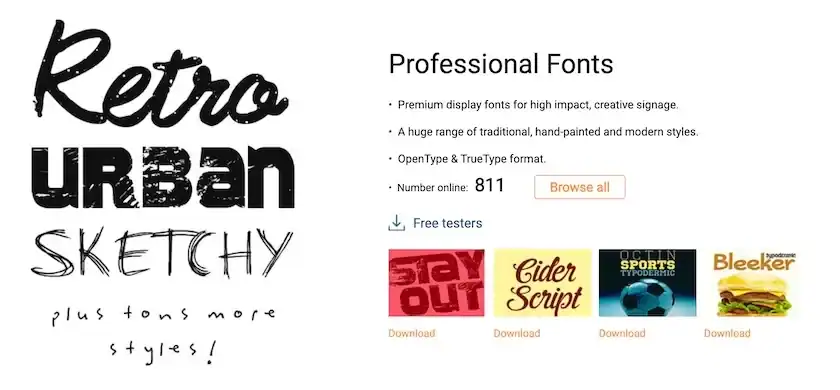
Typography on a moving vehicle presents a unique set of challenges compared to static signage or print media. A vehicle wrap must be legible at high speeds and from varying distances. SignSilo’s library includes premium fonts specifically selected for their performance in branding and signage applications.
Professional sign makers understand that a "cool" font is useless if it cannot be read from 50 feet away in traffic. The platform provides access to bold, high-contrast, and well-spaced typefaces that are optimized for the "glance-time" associated with transit advertising. By providing these fonts in a centralized location, SignSilo ensures that designers have the tools to create not just beautiful wraps, but effective marketing tools for their clients.

High-Resolution Photography and Stock Assets
In addition to vector-based templates and fonts, the modern wrap industry relies heavily on high-resolution photography. Whether it is for creating "picture-perfect" wraps featuring food, landscapes, or industrial equipment, or for creating professional marketing mockups for a shop’s portfolio, the quality of the image is paramount.
SignSilo provides a vast library of high-resolution stock photos and vector graphics that are licensed for commercial use. This is particularly important for print service providers who must ensure that the images they use will not pixelate when enlarged to cover the side of a 53-foot trailer. The integration of these assets into a single subscription model prevents designers from having to jump between various stock photo sites, which often lack the specific automotive or industrial imagery required for this niche.
Economic Impact and Operational Efficiency
The economic argument for a centralized resource like SignSilo is rooted in the reduction of "non-billable" hours. In the sign industry, time spent searching for a specific vehicle model, troubleshooting a low-quality logo, or finding a matching font is time that cannot be billed to the client.
By consolidating these resources, SignSilo offers a clear Return on Investment (ROI). For a monthly fee that is often less than the cost of a single yard of premium wrap film, a shop gains access to tools that can save dozens of hours per month.
Pricing Structure and Market Accessibility
SignSilo has implemented a tiered membership model designed to be accessible to various business sizes:
- Vehicle Only ($19/month): Aimed at specialized wrap studios that only require technical templates.
- Images Only ($33/month): Designed for content creators and web designers within the print industry.
- Full Membership ($39/month): The most popular option for full-service sign and print shops, providing all-access to templates, photos, vectors, and fonts.
This competitive pricing is a strategic move that allows small, independent sign makers to compete with large-scale graphics franchises by giving them access to the same high-quality assets.
Chronology of the Digital Signage Resource Shift
The development of platforms like SignSilo reflects a broader timeline of technological shifts in the industry:
- 1980s-1990s: The rise of vinyl plotters and basic CAD software. Templates were rare and often hand-drawn.
- 2000s: The advent of wide-format digital printing. The need for high-resolution images and accurate digital templates became critical.
- 2010s: The industry saw a fragmentation of resources, with designers forced to subscribe to multiple different services for photos, templates, and fonts.
- 2020s: The "Platform Era." Resources like SignSilo consolidate these needs into a single, AI-enhanced, searchable database, reflecting the industry’s need for speed and integrated workflows.
Industry Implications and Analysis
The professionalization of the wrap industry through platforms like SignSilo has several long-term implications. First, it raises the "floor" of design quality across the industry. When even a small-town shop has access to world-class templates and fonts, the overall standard of vehicle advertising improves.
Second, it facilitates the growth of fleet branding. Large corporations with hundreds of vehicles across different regions require absolute consistency. Using standardized templates from a reliable source like SignSilo ensures that a wrap designed in New York will fit a vehicle being wrapped in California with identical precision.
Finally, there is a significant legal and compliance benefit. By using a licensed resource, sign shops protect themselves and their clients from copyright infringement issues related to fonts and imagery. In an era of increased intellectual property enforcement, this "safe harbor" of licensed content is an essential business protection.
Broader Impact on Mobile Advertising
The effectiveness of vehicle wraps as a marketing medium is well-documented. Data from the Outdoor Advertising Association of America (OAAA) suggests that a single vehicle wrap can generate between 30,000 and 70,000 impressions per day, depending on the area and distance traveled. The cost-per-thousand impressions (CPM) for vehicle wraps is consistently lower than that of television, radio, or even traditional billboards.
SignSilo acts as the "engine room" for this advertising medium. By providing the technical and creative assets necessary to produce these wraps efficiently, the platform indirectly supports the broader ecosystem of small businesses that rely on vehicle branding to find new customers.
Conclusion
SignSilo represents a specialized evolution in the digital asset market, moving away from general-purpose stock sites toward a niche-specific, high-utility model. By combining precision vehicle templates, ready-to-use wrap artwork, professional typography, and high-resolution imagery into a single, affordable subscription, it addresses the unique pain points of the sign and wrap industry. As the demand for mobile advertising continues to grow and vehicle designs become increasingly complex, the role of such centralized, professional resources will only become more vital for businesses looking to maintain a competitive edge in a fast-paced, visual-centric market.