The Economic Impact of Mobile Advertising
The rise of the vehicle wrap industry is supported by significant data regarding consumer behavior and advertising reach. According to the Outdoor Advertising Association of America (OAAA), a single vehicle wrap can generate between 30,000 and 70,000 impressions per day, depending on the region and the distance traveled. Unlike stationary billboards, which are limited to a fixed location, wrapped vehicles penetrate various demographics and geographic areas.
From a cost-per-thousand (CPM) perspective, vehicle wraps are remarkably efficient. While a prime-time television spot or a full-page magazine ad may cost tens of thousands of dollars for limited exposure, a high-quality vehicle wrap typically costs between $2,500 and $5,000 and can last up to seven years. This longevity results in a CPM of mere cents, making it a preferred choice for small businesses and national franchises alike. However, this economic efficiency is only realized if the wrap is designed and installed with absolute precision. A misaligned logo or a phone number severed by a door handle not only looks unprofessional but can actively damage a brand’s reputation.
The Technical Challenge: Designing in a 3D World
Designing for a vehicle is fundamentally different from designing for print or web. A vehicle is a collection of compound curves, recessed areas, and functional obstructions such as door handles, fuel doors, hinges, and sensor arrays. Professional designers must account for these elements during the earliest stages of the creative process.
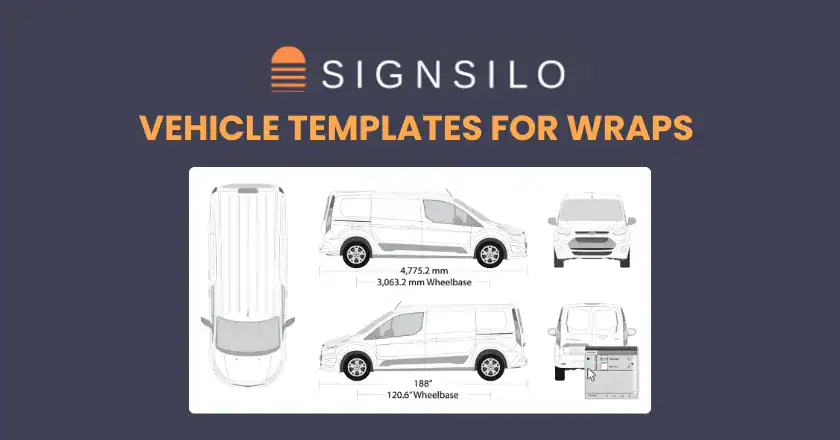
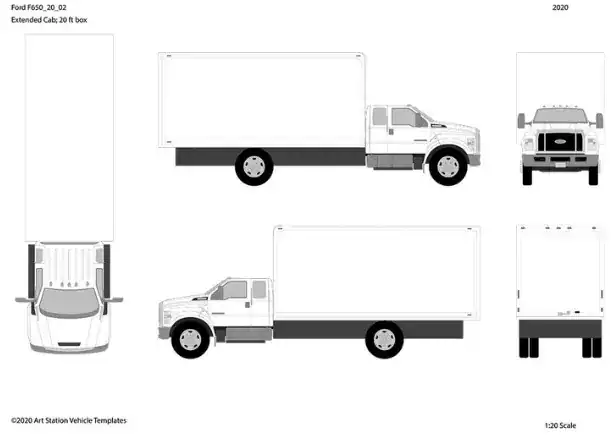
Vehicle wrap templates address this challenge by providing a vector-based, scaled representation of a specific vehicle’s make, model, and year. These templates are typically created at a 1:20 or 1:30 scale, allowing designers to work within the memory constraints of standard design software like Adobe Illustrator or CorelDRAW while maintaining the mathematical precision required for large-format printing. By using these blueprints, designers can identify "safety zones"—areas where text and critical imagery will not be interrupted by seams or hardware—and "bleed areas," which provide the extra material necessary for installers to wrap around edges and into deep recesses.
SignSilo: A Centralized Resource for the Sign Industry
In response to the increasing complexity of the market, SignSilo has established itself as a comprehensive resource specifically tailored to the needs of sign shops and wrap professionals. One of the primary challenges facing modern print studios is "subscription fatigue," where businesses must manage multiple accounts for stock photography, vector illustrations, and technical templates. SignSilo addresses this by consolidating these assets into a single, specialized platform.

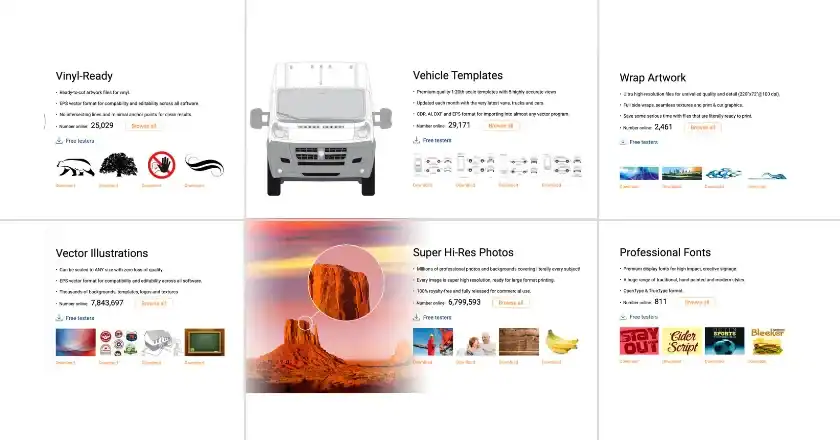
The SignSilo library is extensive, currently hosting over 24,000 vehicle templates. This database covers a vast range of vehicles, from the latest consumer SUVs and luxury sedans to specialized commercial vans, heavy-duty trucks, and even emergency vehicles. Each template package typically includes five distinct views:
- Driver Side: A profile view for primary branding and contact information.
- Passenger Side: An mirrored profile view, often adjusted for sliding doors or fuel ports.
- Front View: Essential for hood graphics and "rearview mirror" branding.
- Rear View: A high-visibility area for phone numbers, websites, and call-to-action messaging.
- Top View: Critical for roof graphics on vehicles that will be viewed from office buildings or for continuity on hoods and trunks.
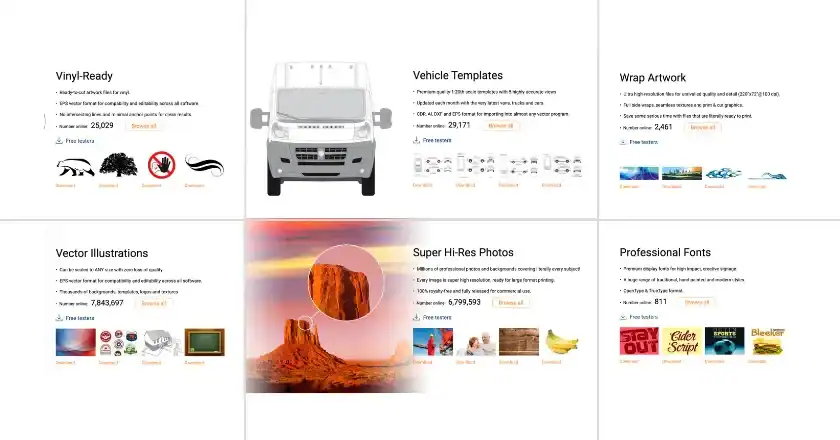
Beyond templates, the platform provides access to over 1.5 million stock vectors and 10 million high-resolution photos. This integration is vital for the workflow of a busy sign shop, as it allows a designer to source a vehicle blueprint, a background texture, and a high-quality lifestyle image all from one location, ensuring legal licensing and technical compatibility across the board.
Precision and the Bottom Line: A Market Analysis
The financial implications of using high-quality templates cannot be overstated. In the professional wrap industry, material costs are high. Premium cast vinyl, such as those produced by 3M or Avery Dennison, can cost hundreds of dollars per roll. If a wrap is printed based on an inaccurate measurement or a generic template, the resulting graphics may not align with the physical vehicle.

Industry analysis suggests that a single "re-do" on a full-vehicle wrap can cost a sign shop upwards of $1,500 in wasted material and labor hours. Furthermore, installation delays can lead to client dissatisfaction and the loss of future contracts. By utilizing precise templates like those offered by SignSilo, shops can minimize waste and ensure a "right-first-time" output.
Evolution of the Vehicle Wrap Workflow
The process of creating a professional wrap has evolved significantly over the last two decades.
- The Manual Era (Pre-1990s): Most vehicle graphics were hand-painted or consisted of simple, plotter-cut vinyl lettering. Measurements were taken manually with tape measures, a process prone to human error.
- The Digital Transition (2000s): The advent of wide-format inkjet printers allowed for full-color photographic wraps. This created an immediate need for digital templates, though early versions often lacked the detail of modern CAD-based designs.
- The Precision Era (Present): Modern templates are now delivered in highly compatible formats such as AI, CDR, DXF, and EPS. This allows for seamless integration into the RIP (Raster Image Processor) software used to drive high-end printers. Designers can now show clients realistic 2D mockups that accurately represent how the final product will look on their specific vehicle.
Strategic Pricing and Accessibility
SignSilo’s pricing structure reflects a shift in the industry toward scalable, cloud-based services. By offering tiers such as the "Small" and "Professional" memberships, the platform caters to both boutique design firms and high-volume commercial print houses.
- The Small Membership: At $149 per year, this tier provides 200 downloads, making it a cost-effective entry point for businesses that handle occasional wrap projects.
- The Professional Membership: At $349 per year, this tier increases the download limit to 500, designed for dedicated wrap studios that require a constant stream of new templates and design assets.
This "all-in-one" pricing model is increasingly becoming the industry standard, as it provides predictable overhead costs for business owners while ensuring their design teams have the tools necessary to compete with larger agencies.
Broader Implications for the Sign Industry
The availability of high-precision templates has lowered the barrier to entry for professional-grade vehicle branding. This democratization of design tools has led to a more vibrant and creative marketplace. However, it also places a higher premium on technical knowledge. While a template provides the foundation, the designer must still understand how to manipulate the 2D art to account for the "stretch and pull" of vinyl during the heat-application process.
Looking forward, the industry is seeing a move toward 3D modeling and augmented reality (AR) previews. While 2D vector templates remain the gold standard for print production due to their mathematical accuracy, the integration of these templates into 3D environments allows clients to "walk around" their virtual vehicle before a single inch of vinyl is printed. SignSilo and similar platforms are positioned at the center of this technological intersection, providing the raw data necessary for these advanced visualizations.
Conclusion
Vehicle wraps continue to be a cornerstone of the modern marketing mix, offering unparalleled visibility and durability. As vehicles become more complex in their design, the reliance on professional-grade templates will only increase. Resources like SignSilo provide the necessary infrastructure for sign makers to execute these projects with confidence. By combining technical accuracy with a vast library of creative assets, these platforms ensure that the "moving billboards" on our roads today are not just advertisements, but precision-engineered works of commercial art. For the professional wrap installer, the template is more than just a drawing; it is a safeguard against error and the fundamental blueprint for success in a high-stakes, high-reward industry.