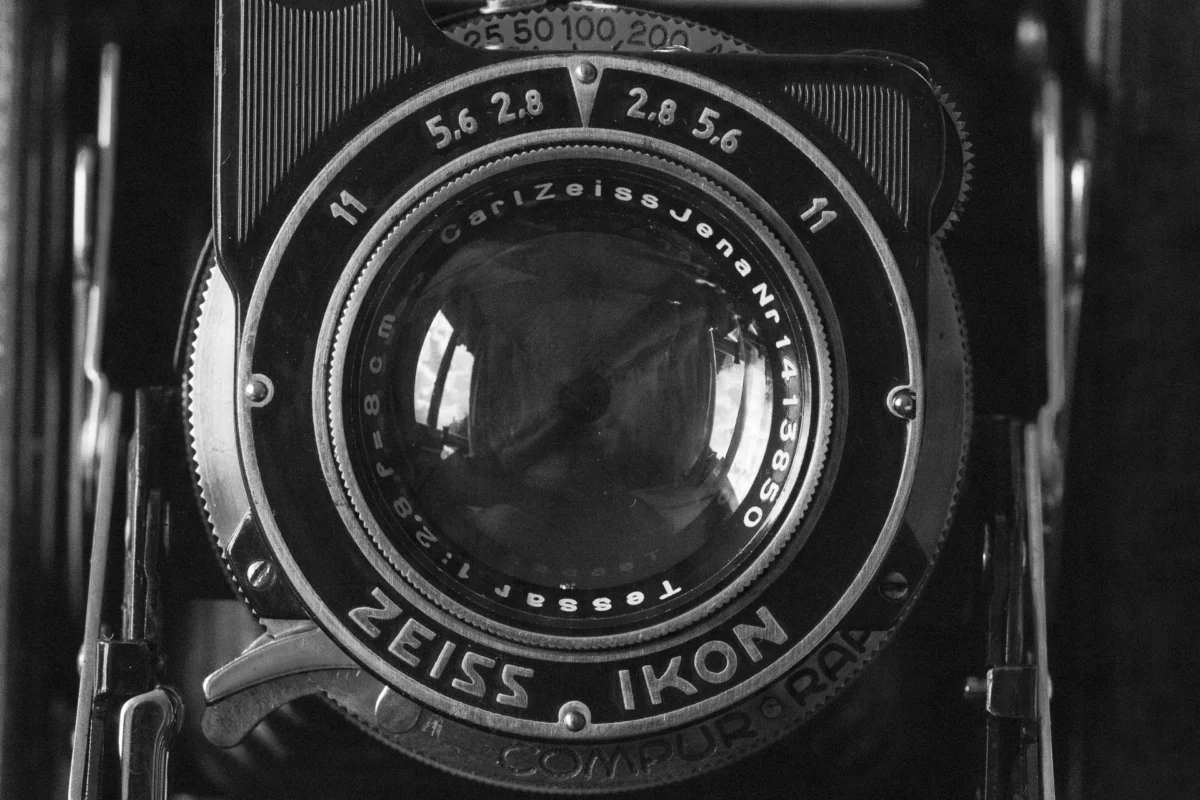
In a recent field evaluation conducted in Machynlleth, Powys, technical researchers and analog photography enthusiasts explored the unique aesthetic and chemical properties of Film Washi F, a repurposed medical X-ray film. The study utilized a vintage Zeiss Ikon Super-Ikonta 530/16, a medium format folding camera renowned for its precision optics, to determine the viability of fluorographic film for contemporary architectural and landscape photography. The results provided a comprehensive look at how orthochromatic emulsions—originally designed for mass medical diagnostics—interact with natural light and historical subject matter in a rural Welsh setting.
Technical Composition and Origins of Film Washi F
Film Washi F is a specialized photographic material produced by Film Washi, a boutique film manufacturer based in Saint-Nazaire, France. Known for "reclaiming" industrial and medical films for creative use, the company’s "F" variant is a fluorographic film. Historically, this specific emulsion was engineered for mass lung disease diagnosis via X-ray screening. Because its primary industrial purpose was to capture the output of a phosphor screen rather than direct sunlight, its chemical composition differs significantly from traditional panchromatic consumer films.
The film is characterized by its orthochromatic nature, meaning it is sensitive to the blue and green end of the light spectrum but remains "blind" to red light. Furthermore, the film is manufactured without an anti-halation layer. In standard photography, an anti-halation layer is a dark coating on the back of the film base that absorbs light that has passed through the emulsion, preventing it from reflecting back and creating "halos" or "glow" around bright highlights. The absence of this layer in Film Washi F results in a distinct diffusion effect, where light bleeds into the surrounding grain, creating a dreamlike or ethereal aesthetic.
Equipment Profile: The Super-Ikonta 530/16
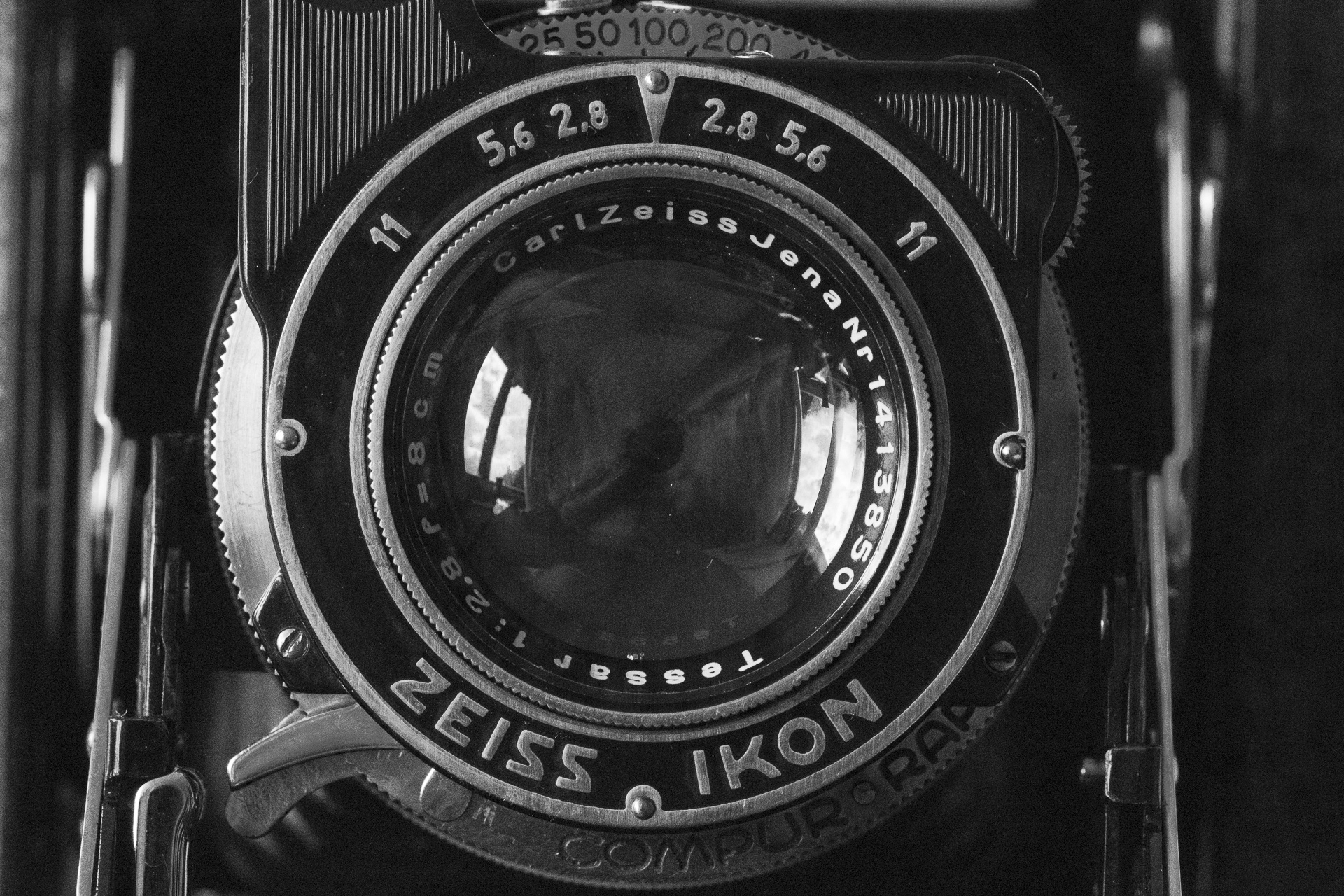
The choice of the Super-Ikonta 530/16 for this evaluation was significant. Manufactured by Zeiss Ikon in the 1930s, the 530/16 is a 6×6 cm square format folding camera. It features a coupled rangefinder and a high-quality Tessar lens, which provides the sharpness necessary to test the resolving power of the Washi F emulsion.
Using a camera from the mid-20th century presents specific mechanical challenges, including manual film winding and the need for external light metering. However, for the purposes of testing a high-diffusion film, the contrast provided by the Tessar lens served as an ideal baseline. The square format also forced a specific compositional rigor, which highlighted the film’s rendering of spatial depth and textural detail in the Machynlleth townscape.
Chronology of the Field Test in Machynlleth
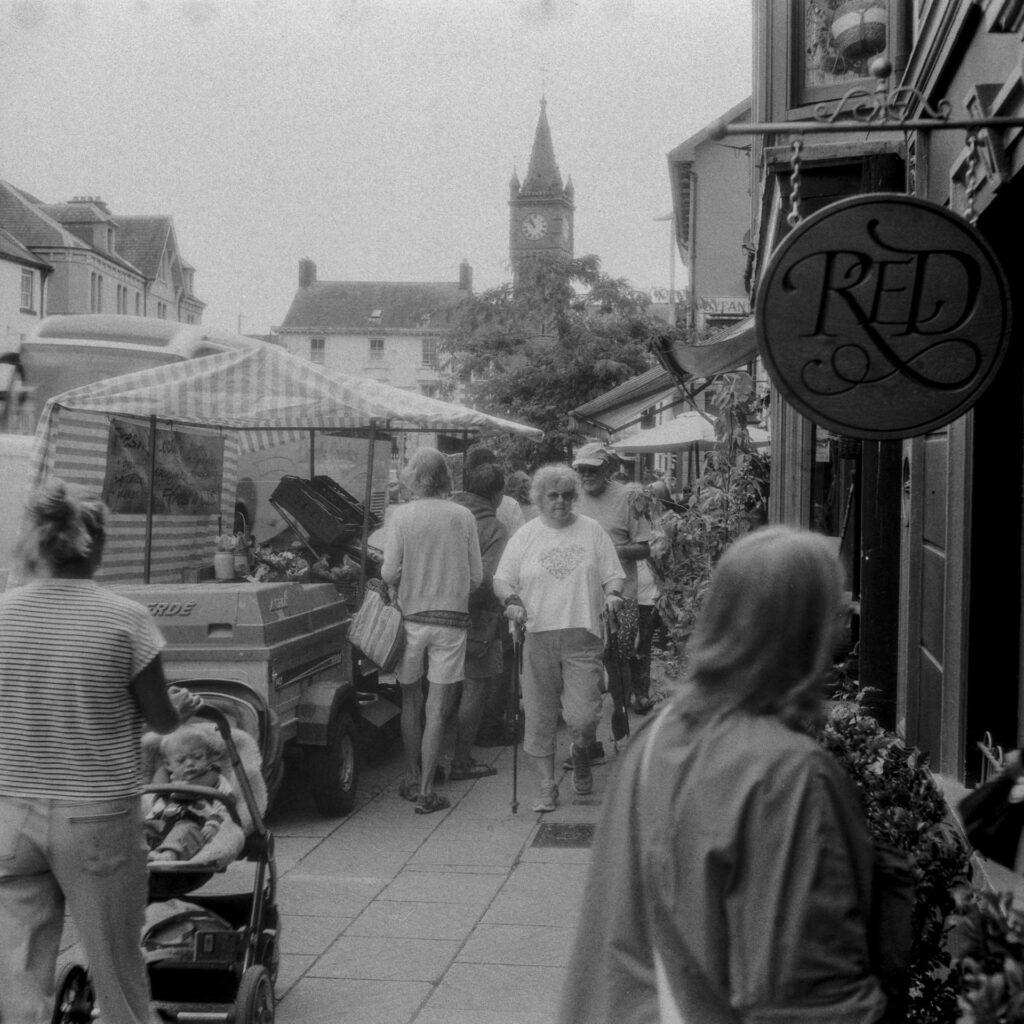
The testing took place during a single day in Machynlleth, a historic market town in Mid Wales. To ensure a thorough data set, the photographer executed a series of eleven distinct exposures, each designed to test a different variable of the film’s performance.
- Morning Market Observation: The first series of shots focused on the high-contrast environment of the town’s market day. This tested the film’s ability to handle moving subjects and varied lighting under the shadows of market stalls.
- Architectural Detail at the Clock Tower: The mid-day testing focused on the town’s landmark clock tower. This provided data on how the orthochromatic emulsion rendered red-toned masonry and the bright floral displays (pelargoniums) at the tower’s base.
- Portraiture and Busking: A candid shot of a local busker, Cornelius, allowed for an assessment of skin tones and the rendering of wooden instruments.
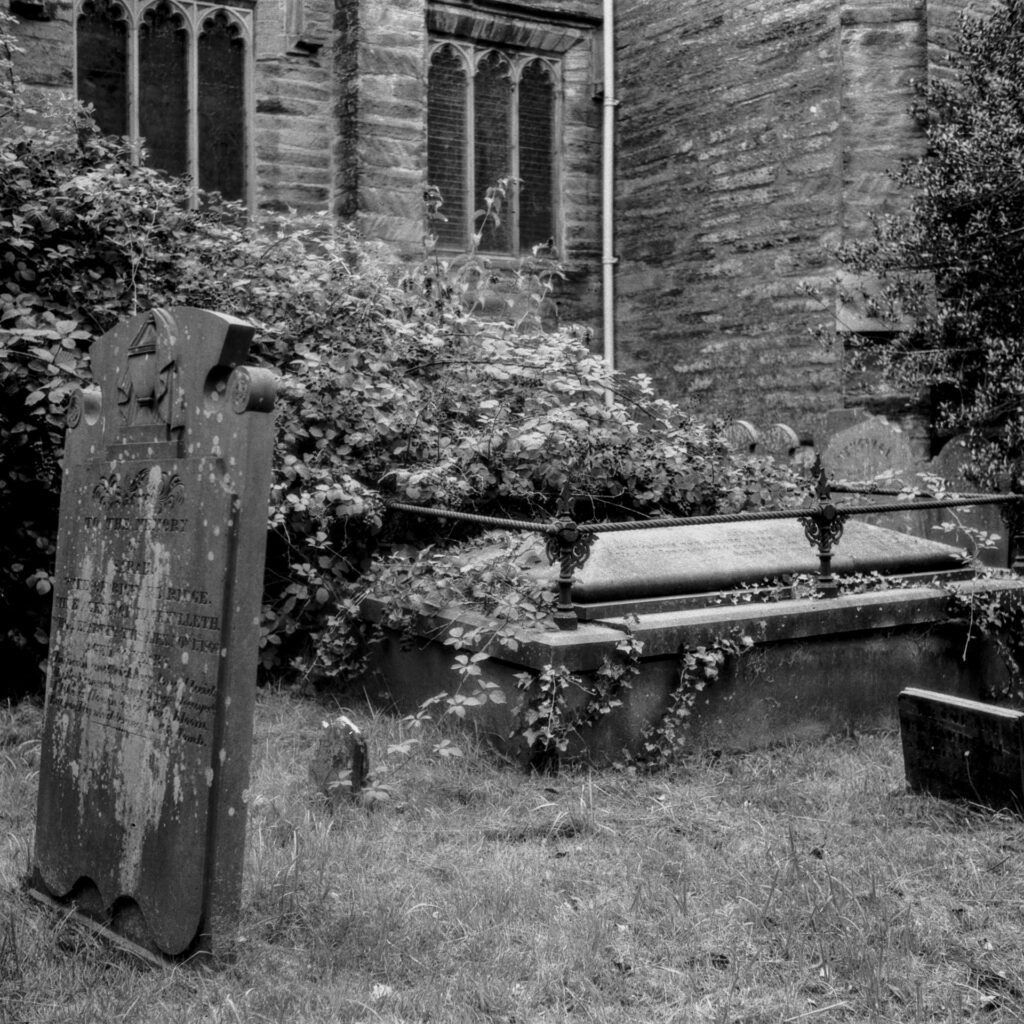
- Churchyard Landscapes: The afternoon moved toward the local churchyard, where the high concentration of green foliage provided a critical test for the film’s orthochromatic sensitivity, which typically darkens greens more aggressively than panchromatic films.
- Riverside and Infrastructure: The final exposures were taken at the Dyfi Bridge. These shots were designed to evaluate the film’s ability to resolve fine details, such as distant power lines and the textured surfaces of stone and water.
Chemical Processing and Laboratory Results
Following the field test, the film was developed using Fomadon R09 (a modern iteration of the classic Rodinal formula). The chosen dilution was 1+25, with a development time of 9 minutes at 20°C. Rodinal is an acutance-enhancing developer, often favored for its ability to produce sharp edges and distinct grain—a necessary counterbalance to the inherent diffusion of the Washi F emulsion.
The resulting negatives revealed several key performance indicators:
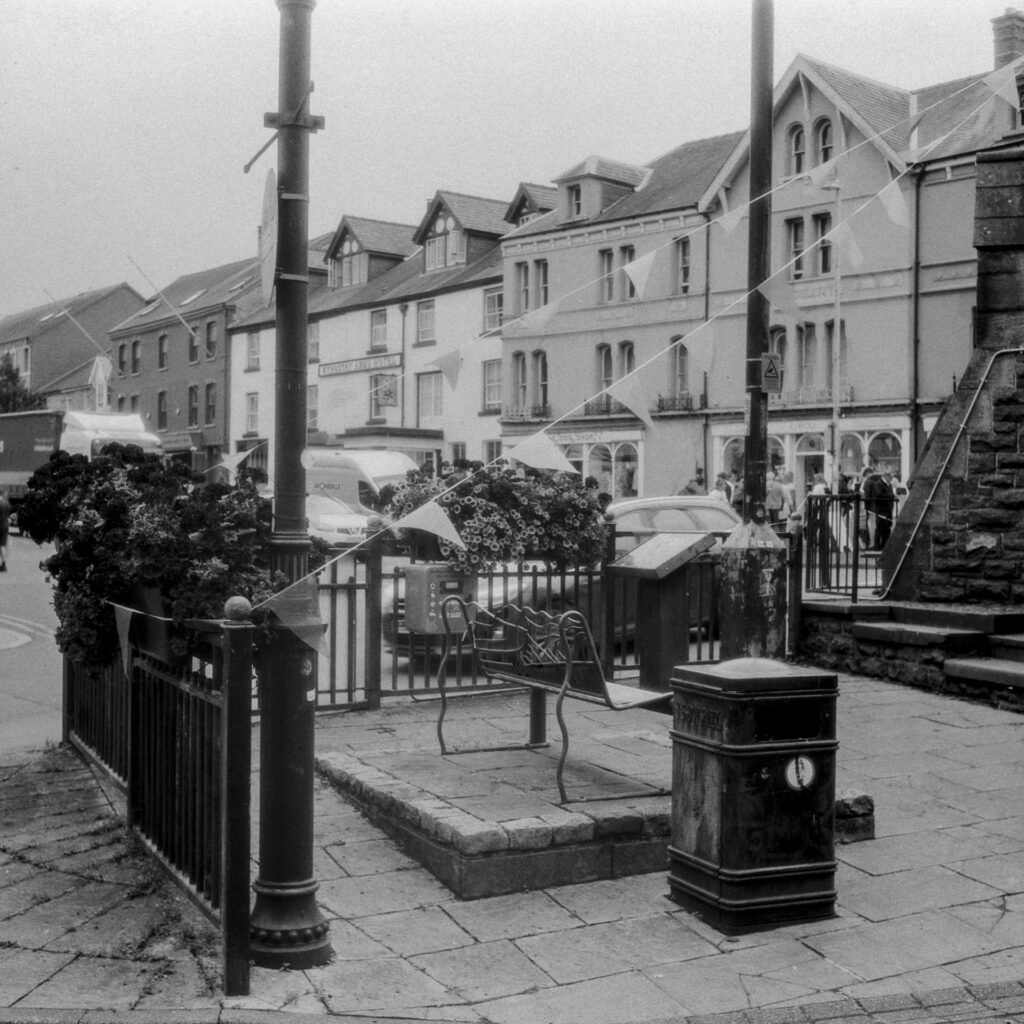
- Sharpness: Despite the lack of an anti-halation layer, the film maintained a high degree of edge sharpness, particularly when paired with the Zeiss optics.
- Grain Structure: The grain was found to be "obvious but fine." Unlike some high-speed films where grain can obscure detail, the grain in Washi F appeared organic and structurally sound.
- Diffusion: The "glow" effect was present but controlled. Analysis suggests that while the diffusion is aesthetically pleasing in the 120 (medium) format, it might become overwhelming or "muddy" if used in the smaller 35mm format.
- Spectral Sensitivity: As expected, the red flowers at the clock tower were rendered as near-black, a hallmark of orthochromatic film. Interestingly, a Royal Mail van—typically a bright "Post Office Red"—was rendered as a medium grey, suggesting that the film’s spectral cutoff or the specific lighting conditions at the time allowed for some tonal separation in the red-orange range.
Comparative Market Analysis
The performance of Film Washi F invites comparison with other prominent orthochromatic films currently on the market, such as Ilford Ortho Plus and Rollei Ortho 25.
Ilford Ortho Plus is widely considered the industry standard for modern orthochromatic photography. It features a sophisticated anti-halation backing and a very fine grain, making it suitable for high-detail landscape work where a "clean" look is desired. In contrast, Rollei Ortho 25 is noted for its extremely high contrast and ultra-fine grain, though some users find its rendering of textures to be somewhat harsh.
Film Washi F occupies a unique niche between these two. It offers more character than the Ilford variant due to its medical-grade origins and lack of halation control, yet it provides a more pleasing grain structure and better sharpness than the Rollei 25. The primary drawback identified during the test was the film’s availability; as a boutique product, its supply chain is less stable than that of major manufacturers.

Broader Implications for the Analog Photography Industry
The successful use of Film Washi F in 2026 underscores a broader trend in the analog photography industry: the move toward "experimental sustainability." As the cost of traditional silver halide films continues to rise, the repurposing of industrial, medical, and aerial films has become a vital sub-sector of the market.
This experiment demonstrates that medical-grade films are not merely "lo-fi" novelties but are capable of producing professional-grade results when handled with technical precision. The use of a 90-year-old camera to process film originally intended for 21st-century medical diagnostics represents a fascinating intersection of photographic eras.
Furthermore, the results suggest that there is a growing demand for films that offer a "built-in" aesthetic. In an era dominated by clean, clinical digital sensors, the organic diffusion and skewed spectral sensitivity of Washi F provide a tactile quality that is difficult to replicate accurately through post-processing software.
Conclusion and Future Outlook
The field test in Machynlleth concluded that Film Washi F is a robust and capable medium for photographers looking to step outside the constraints of panchromatic film. While its orthochromatic nature requires a different approach to visualizing color and contrast, the rewards are found in its unique rendering of light and its sharp, yet diffused, image quality.
For the architectural photographer, the film offers a way to emphasize the "mass" of stone structures by darkening the sky and foliage. For the artist, the lack of an anti-halation layer provides a tool for manipulating light in a way that feels both nostalgic and contemporary. As boutique manufacturers like Film Washi continue to innovate by looking backward at industrial history, the landscape of analog photography remains diverse and technically rich. The Super-Ikonta 530/16, despite its age, proved to be an exemplary tool for this modern experiment, bridging the gap between the precision of the past and the experimental chemistry of the present.