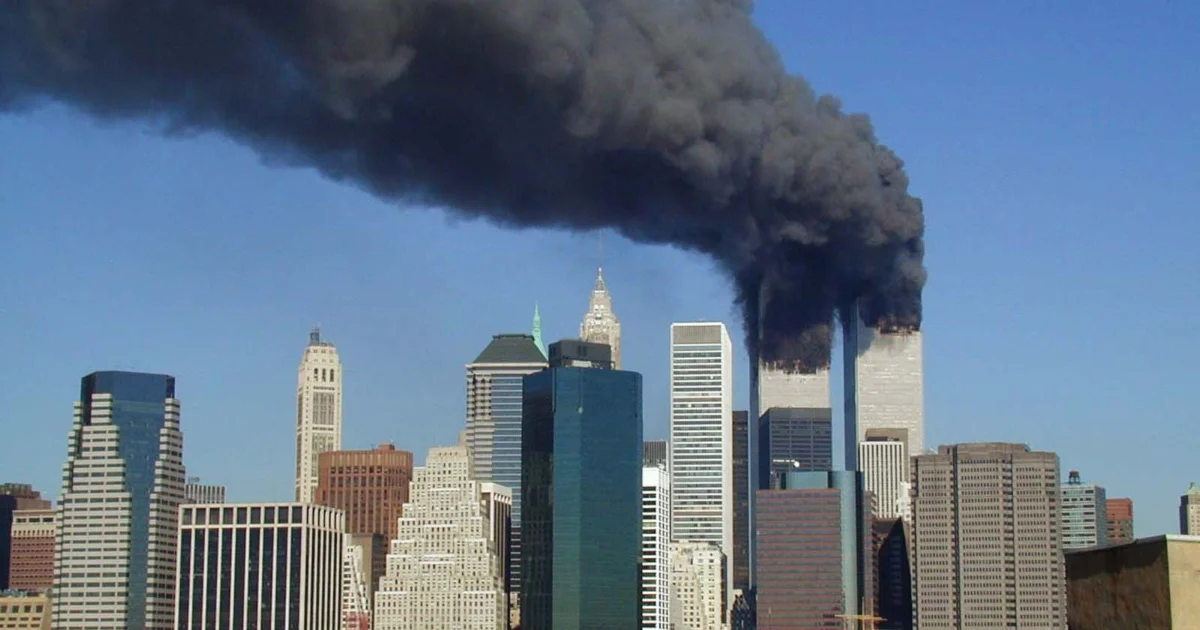
Twenty-five years ago today, the United States endured the largest terrorist attack in world history, an event that fundamentally reshaped global politics, national security, and the very fabric of American society. On September 11, 2001, nearly 3,000 lives were extinguished in a coordinated assault, and countless more were injured. The human cost, tragically, continues to accrue as survivors and first responders succumb to a litany of illnesses and diseases directly related to exposure at the attack sites. This devastating day remains etched into the global consciousness, widely recognized as arguably the "most photographed event in history," a testament to both the immediate visual shockwaves it generated and the enduring power of images to capture and preserve moments of profound human experience.
The Day the World Changed: A Chronology of Terror
The morning of September 11, 2001, began like any other Tuesday for millions, but by 8:46 AM Eastern Time, an unprecedented act of terror had commenced. Nineteen al-Qaeda operatives, acting under the direction of Osama bin Laden, launched a meticulously planned hijacking effort across the East Coast. Their targets were symbolic bastions of American power and prosperity: the World Trade Center’s Twin Towers in Manhattan, New York City; the Pentagon in Arlington, Virginia; and, believed to be the U.S. Capitol or the White House, a fourth target that was thwarted by the heroic resistance of passengers aboard United Airlines Flight 93.
The attacks unfolded with horrifying speed and precision. At 8:46 AM, American Airlines Flight 11, originating from Boston, crashed into the North Tower of the World Trade Center, instantly transforming the iconic skyscraper into a fiery inferno. Initial reports were confused, with many believing it to be a tragic accident. However, just seventeen minutes later, at 9:03 AM, United Airlines Flight 175, also from Boston, struck the South Tower, confirming to a horrified nation and world that this was no accident but a deliberate act of war. The impact was broadcast live to millions, irrevocably altering the public’s understanding of the unfolding crisis.
As Manhattan reeled, another catastrophe struck at 9:37 AM. American Airlines Flight 77, having departed from Dulles International Airport near Washington, D.C., was deliberately flown into the western side of the Pentagon, the headquarters of the U.S. Department of Defense. A massive section of the building collapsed, claiming 125 lives within the Pentagon and all 64 people aboard the aircraft.
The final act of the coordinated attack occurred in the skies over rural Shanksville, Pennsylvania. United Airlines Flight 93, en route from Newark to San Francisco, was hijacked at approximately 9:28 AM. Passengers and crew, having learned of the other attacks through phone calls, bravely fought back against the terrorists. Their courageous struggle led to the plane crashing into a field at 10:03 AM, preventing it from reaching its intended target, which intelligence later suggested was either the U.S. Capitol Building or the White House. All 40 passengers and crew, and the four hijackers, perished, but their sacrifice saved countless more lives.
In New York City, the structural integrity of the Twin Towers, never designed to withstand the immense heat generated by burning jet fuel, began to fail. At 9:59 AM, the South Tower collapsed, sending a colossal cloud of dust and debris through Lower Manhattan. Less than half an hour later, at 10:28 AM, the North Tower followed suit. The collapses were catastrophic, destroying surrounding buildings, trapping thousands, and creating a scene of unimaginable devastation. The scale of destruction and loss of life was unprecedented on American soil. In total, 2,753 people died in New York City, including 343 firefighters and paramedics, 23 NYPD officers, and 37 Port Authority police officers. At the Pentagon, 184 lives were lost, and 40 perished in Pennsylvania. These numbers do not account for the thousands more who have since fallen ill or died from 9/11-related conditions, a grim testament to the enduring health crisis stemming from the toxic debris.
The Visual Record: Photography at a Historical Juncture
The September 11 attacks occurred at a pivotal, almost liminal, moment in the history of photography and media. While often referred to as the "most photographed event," the means of documentation and dissemination were vastly different from what they would become just a few years later. Smartphones, with their ubiquitous, high-resolution cameras and instant sharing capabilities, were still years away from mass adoption. This meant that the vast majority of ordinary citizens did not have a camera readily available to capture unfolding events.
Digital cameras, though existing, were nascent technology. In September 2001, most professional newsrooms and photojournalists were still largely reliant on film, a medium that required meticulous handling, processing, and scanning before images could be seen or transmitted. The concept of video streaming, now commonplace for breaking news, was practically nonexistent. This technological landscape profoundly influenced how 9/11 was documented and how its images were distributed. It created a unique dependence on professional photojournalists and a handful of early adopters of digital photography, whose efforts ensured a comprehensive visual record. The immediate explosions, the towers’ collapse, and the extensive, months-long rescue and cleanup efforts that followed attracted photographers from New York City and across the globe, all racing to capture defining images of a world in upheaval.
For millennia, human history has been punctuated by atrocities, wars, and disasters. For a fraction of that time, cameras and photographers have possessed the unique power to freeze time, bearing witness to these events and preserving the human experience in its most extreme forms. Whether documenting joyous family milestones, capturing the beauty of nature, or creating profound art, photography’s ability to preserve is its greatest strength. However, when faced with the task of photographing violence, war, disaster, and terrorist attacks, the camera’s role becomes more complex, often blurring the lines between a gift and a curse. It offers an invaluable historical record, yet also presents profound ethical dilemmas.
Photojournalists on the Front Lines: Bearing Witness
For photojournalists, the ultimate mission is to capture history as it happens, not out of voyeurism or exploitation, but to bear witness for humanity itself. September 11, 2001, stands as perhaps the strongest example of this commitment in the 21st century. There were, indeed, an immense number of witnesses, but it was the professional photographers who, often at great personal risk, ensured that the visual story of 9/11 would be told with clarity and impact.
Yoni Brook, who was just a 19-year-old New York University student having interned at The Washington Post‘s photo department the preceding summer, recalls his experience to The Post: "I feel grateful that I was able to contribute to the visual record of the day. In my career today as a documentary filmmaker, I often revisit the lessons from this period. I think about how to document tragedy with proximity and sensitivity. How to share reality, even when it’s horrible, while keeping the humanity of the people caught in the middle of it." His words highlight the delicate balance photojournalists strive to maintain, even amidst chaos.
At the Pentagon, Post photographer Michael Lutzky described a profound sense of helplessness. "I may have stood in that same spot for five hours. It was a helpless feeling. There was nothing I could easily see or access. Nothing I could contribute and little to report on. But I knew that I needed to remain. Just in case something happened. Just in case I am the only one still close enough to witness." His steadfast presence, despite the immediate lack of clear action, underscores the photojournalist’s dedication to being present for the critical moment. He continues, "What stays with me, when I choose to let it surface, is the mass helplessness."
Juana Arias, another Post photographer covering the Pentagon attack, brought a different perspective, having documented conflict zones globally. "I could see and feel the fear and pain of the people around me, and I tried to capture that in my images. I had covered wars, disasters and terrible events in Central America and all over the world before that day. I had seen its consequences and documented its victims. However, after each of those assignments, I always came back home to a safe place. This time was different." The realization that the horror had come home, to American soil, was a deeply unsettling experience for many.
In New York, Getty photojournalist Spencer Platt, watching the North Tower burn from his Brooklyn apartment, captured the iconic moment United Airlines Flight 175 crashed into the South Tower at 9:03 AM ET. He recalls thinking, "This is history, this is history." His immediate instinct, like many of his peers, was to get closer. Getty photographer Mario Tama recounted similar urges: "At this point, some other photographers and I began attempting to get to the base of the towers; as photojournalists, we are trained to get as close as possible. The NYPD likely saved a lot of lives that day, including my own, by blocking us from getting closer in that area." This desire for proximity, a core tenet of photojournalism, often places photographers in direct danger.
Platt’s experience that day was a constant negotiation between his professional duty and his personal identity as a New Yorker. "I think I shifted throughout the day from being a civilian witness to a photojournalist and back to simply being a witness. We had no physical or mental preparation for the event, unlike many of the hard news stories we cover. In the end, I, along with so many other New Yorkers, was simply there, living, breathing, and experiencing one of the saddest and most visually dramatic days in American history. To put a journalist cap on and somehow suppress the civilian, father, husband, and American in you is an impossible task. Some were able to do it better than others." This internal struggle reflects the immense emotional toll of documenting such a catastrophic event in one’s own community.
The Ultimate Sacrifice: Bill Biggart’s Final Images

The personal cost for many photographers on September 11 was immense. Some who documented the events in Manhattan are no longer alive, their experiences lost to history. For photojournalist Bill Biggart, the cost was the ultimate one: he died at the scene, camera in hand.
Biggart was walking his wife, Wendy Doremus, and their family dog through Union Square when American Airlines Flight 11 struck the North Tower. Driven by an unwavering journalistic instinct, he rushed home, grabbed three cameras – two film, one early digital – and ran 20 blocks towards the World Trade Center. At this early stage, the full scope of the attack was not yet clear; many initially thought it was an accident. When Doremus heard the news and frantically called her husband, Biggart, ever the professional, reassured her he was okay, reporting that he was with firefighters and observing the scene. Minutes after that call, the South Tower collapsed. Bill Biggart, at 54 years old, was killed in the collapse.
His body was recovered four days later, identified by his press pass and camera equipment. Miraculously, 154 of his film photos were recovered from his camera, thanks to the help of his friend and fellow photographer, Chip East. These images offer a chilling, minute-by-minute chronicle of the towers’ final moments, ending with frames taken just as the second tower began to fall. "Getting the camera back was almost more emotionally devastating than getting Bill’s body back. That was his life, his soul in his images," Doremus recalls, highlighting the profound connection between a photographer and their work. Biggart’s final photos have since been added to the permanent collection at the Imperial War Museum in London, a powerful testament to his courage and dedication. "Bill was courageous and fearless in his efforts to get the story. And he used to say, ‘If you have fear, then you can’t do this kind of work’," Doremus shares, encapsulating the spirit of a journalist who truly believed in the mission of bearing witness.
The Ethical Dilemma: Richard Drew’s "Falling Man"
Among the myriad images captured on 9/11, Associated Press photographer Richard Drew took one of the most haunting and controversial: a photograph of a still-unidentified man falling headfirst from the World Trade Center. The image, widely published in the immediate aftermath, quickly ignited a fierce debate about the ethics of photography, the public’s right to know, and the boundaries of depicting human suffering.
Drew, a Pulitzer Prize-winning photographer with a long career documenting brutal events – he was famously close to Robert F. Kennedy when he was assassinated in 1968 – approached 9/11 with the same professional resolve. He recounts to USA Today that upon arriving at the scene, he couldn’t see the people jumping from the towers, but he could hear them. Raising his camera, he zoomed his lens to 200mm and began shooting, instinctively documenting the unimaginable. In one of these rapid-fire images was "the falling man." "We’re seeing him in the last moments of his life," Drew explains.
The photo hit the wire later that day, sparking immediate outrage from some who deemed it grotesque and exploitative. Critics argued it invaded the victim’s privacy and glorified a horrific death. Proponents, including many journalists, countered that it was a stark, undeniable record of the day’s terror, a necessary truth that conveyed the unimaginable desperation faced by those trapped in the burning towers. The backlash was so intense that the photo largely vanished from public view, leading Drew’s colleagues to describe it as "the most famous photo nobody has seen."
Twenty-five years later, the debate surrounding "The Falling Man" persists, pushing against the very edges of photography’s value and ethical responsibilities. Drew himself has spoken candidly about the profound impact of that day. "It messed me up pretty bad," he admitted five years ago, adding, "I still take note of every plane I hear flying overhead, wondering if it’s friend or foe." Despite the controversy, Drew maintains his professional rationale: "People ask how I could cold-bloodedly photograph someone dying. I never saw it that way. I made a photographic record of someone living the last moments of his life. And every time I look at it, I see him alive." His perspective underscores the photojournalist’s often misunderstood role: to document, not to judge or censor, the reality they encounter, however brutal.
A View from Above: Frank Culbertson’s Unique Perspective
While photojournalists on the ground faced unimaginable horrors, one American had a uniquely detached yet profoundly impactful view of the attacks. NASA shared a letter from Expedition Three Commander Frank L. Culbertson, the only American aboard the International Space Station on September 11, 2001. From an altitude of approximately 250 miles, Culbertson captured images of the smoke plume rising from Manhattan, a surreal and distant witness to the unfolding catastrophe.
"The world changed today. What I say or do is very minor compared to the significance of what happened to our country today when it was attacked," Culbertson wrote on September 12, 2001. The stark contrast between his mission of peaceful exploration and the destruction below deeply affected him. "It’s horrible to see smoke pouring from wounds in your own country from such a fantastic vantage point. The dichotomy of being on a spacecraft dedicated to improving life on the earth and watching life being destroyed by such willful, terrible acts is jolting to the psyche, no matter who you are. And the knowledge that everything will be different than when we launched by the time we land is a little disconcerting," he continued on September 13, 2001. His words offer a poignant reminder that even from the detachment of space, the human impact of 9/11 resonated profoundly.
The Enduring Cost and the Power of Images
It is an impossible task to share stories from every photographer who documented the September 11 terrorist attacks and their aftermath. The accounts above represent just a fraction of the experiences from a quarter-century ago. Photojournalists are driven by an unyielding imperative to document important moments as they happen, often facing immense risk and danger.
The cost extends far beyond the immediate peril. Photojournalists who documented the 9/11 attacks were, in many cases, forever changed. The constant exposure to human suffering, pain, and tragedy takes a severe emotional and psychological toll, leading to conditions like PTSD, depression, and moral injury. These hidden scars are a testament to the price paid by those who bear witness to humanity’s darkest moments. For those fortunate enough to pick up a camera for enjoyment or relatively safe work, it is nearly impossible to imagine what it’s like to be behind the viewfinder, lens pointed directly at death and destruction. Yet, collectively, society has decided that someone must do it, someone must pay that price to ensure that such pivotal moments are not forgotten.
On September 11, 2001, many courageous photographers paid a very heavy price for their dedication. And 2,977 people, including photographer Bill Biggart, paid the ultimate price. The long-term health implications continue to impact thousands more, a grim, ongoing legacy of the attacks.
Nothing can ever bring back those who were lost, nor erase the pain of those who survived. However, the powerful images captured by these dedicated photojournalists help to keep their stories alive, to preserve the narrative of a nation’s resilience, and to ensure that the memory of September 11, 2001, remains a potent lesson for future generations. These photographs serve not only as a historical record but also as a catalyst for reflection on the profound human capacity for both terror and heroism, grief and unwavering hope.
Broader Implications and Lasting Legacy
The 9/11 attacks triggered a cascade of geopolitical and domestic policy changes that continue to shape the world. The "War on Terror," declared by President George W. Bush, led to invasions of Afghanistan and Iraq, fundamentally altering U.S. foreign policy and international relations. Domestically, the creation of the Department of Homeland Security and the Transportation Security Administration (TSA), alongside the passage of the Patriot Act, dramatically expanded government surveillance powers and reshaped civil liberties in the name of national security. Airport security protocols, once relatively lax, became stringent and ubiquitous.
Globally, the attacks elicited an outpouring of sympathy and solidarity for the United States, momentarily uniting nations against a common enemy. However, the subsequent military responses also generated controversy and division. The economic impact was immediate and severe, with financial markets closing for days and long-term costs associated with war, security, and reconstruction efforts.
Beyond the political and economic shifts, 9/11 left an indelible mark on the collective psyche. It fostered a heightened sense of vulnerability, alongside a powerful surge of national unity and resolve. The images of that day, from the burning towers to the resolute faces of first responders and grieving civilians, played a crucial role in shaping public understanding, memory, and emotional response. In an increasingly visual age, the photographs of 9/11 stand as enduring monuments to loss, resilience, and the relentless human drive to document history, even when that history is agonizing to behold. They are not merely records of the past but continue to inform our present and influence our future understanding of global threats and the enduring strength of the human spirit.