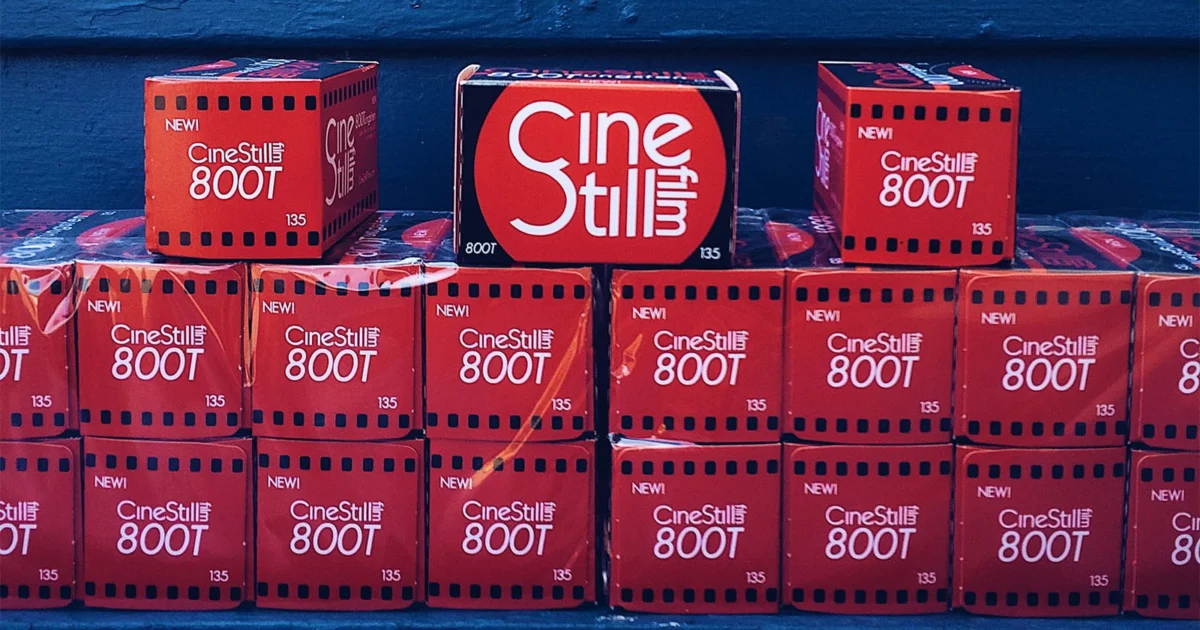
The realm of analog photography has seen a remarkable resurgence, with film stocks like Cinestill 800T leading the charge in offering distinctive aesthetic qualities to a new generation of photographers. Often considered the flagship product in Cinestill’s offerings, 800T has carved out a unique niche, primarily due to its origins as a motion picture film and its innovative adaptation for still photographers. This detailed exploration delves into the technical genesis, historical context, market impact, and defining characteristics of Cinestill 800T, providing a comprehensive overview of its significance in contemporary film photography.

The Genesis: From Motion Picture to Still Photography Staple
Cinestill 800T began its life not in the still photography darkroom but on the bustling sets of Hollywood and independent cinema as Kodak Vision3 5219 motion picture film, more commonly known as Vision3 500T. This highly regarded film stock has been a staple for cinematographers for decades, celebrated for its exceptional latitude, fine grain structure, and accurate color rendition, particularly under tungsten lighting conditions. Vision3 500T is a tungsten-balanced color negative emulsion, designed to produce neutral colors when exposed to artificial light sources with a color temperature around 3200 Kelvin, characteristic of studio tungsten lamps. Its ability to capture a wide dynamic range, preserving detail in both extreme highlights and deep shadows, made it a favorite for demanding cinematic productions.
The practice of adapting motion picture film for 35mm still cameras is far from new. Historically, cinematographers would often shoot short lengths of motion picture stock in still cameras. These test rolls, rapidly processed, served as crucial previews for lighting setups and exposure decisions before committing larger, more expensive rolls to their cinema cameras. This very methodology played a role in the standardization and widespread adoption of the 35mm format over a century ago. In more recent decades, still photographers, drawn by the superior image quality and unique visual characteristics of motion picture emulsions, would acquire leftover or unused ends of film rolls, bulk loading them into cassettes for personal use. This grassroots movement was driven by the understanding that motion picture films often incorporated the latest advancements in film emulsion technology, frequently surpassing the visual styles and technical qualities of readily available still photography films.

However, two significant challenges consistently hindered the widespread adoption of motion picture film in still photography. Overcoming these hurdles became Cinestill’s defining achievement with 800T.
Overcoming Technical Barriers: The Remjet Conundrum
The primary technical barrier lay in the unique construction of motion picture film: the presence of a remjet backing layer. This specialized, carbon-based coating on the back of the film served multiple critical functions in cinematic applications. It acted as a lubricant, facilitating smooth, high-speed travel through complex motion picture cameras. It provided anti-static properties, preventing dust attraction and static discharge artifacts. Crucially, it functioned as an anti-halation layer, absorbing light that passed through the emulsion, preventing it from reflecting off the camera’s pressure plate and scattering back through the film to cause unwanted "halation" or glow around bright light sources.

The ECN-2 chemical process, specifically designed for color motion picture film, incorporates a dedicated pre-bath step to safely and efficiently remove this remjet layer before the color development stages. In stark contrast, the C-41 process, the standard for developing color negative still film, lacks any such remjet removal step. Attempting to process motion picture film with its remjet layer intact through C-41 chemistry would lead to catastrophic consequences: the carbon particles would contaminate and ruin the entire processing machine’s chemistry, potentially damage the film itself, and negatively impact any other films being processed concurrently. This resulted in a costly, frustrating, and often messy experience for labs and photographers alike.
The second significant challenge revolved around processing logistics. While dedicated motion picture labs could handle ECN-2 processing, most required minimum film lengths far exceeding a standard 36-exposure 35mm roll. Photographers were often forced to splice their short rolls together or accumulate a batch over time, leading to prolonged waiting periods, increased costs, and inherent risks to the irreplaceable images captured.

The Cinestill Innovation: A Solution for the Modern Analog Photographer
Enter Brandon and Brian Wright, the entrepreneurial brothers behind Cinestill. Driven by their personal passion for shooting motion picture stock and a determination to democratize its unique aesthetic, they embarked on a mission to resolve these processing dilemmas. Their groundbreaking innovation, which began beta testing in 2012, involved specially treating rolls of Vision3 500T to remove the remjet backing prior to exposure. This pre-treated film was then carefully re-spooled into new 35mm cassettes, ready for distribution and, crucially, for development in the widely accessible C-41 process.
The initial release of Cinestill 800T was met with overwhelming enthusiasm, experiencing an almost overnight ascent in popularity within the analog photography community. Photographers quickly embraced the film for its cinematic qualities and the newfound convenience of C-41 compatibility. While early iterations did present some minor "wrinkles to iron out," such as occasional contamination effects or the film’s pronounced susceptibility to static discharge (manifesting as distinctive red lightning bolts across images), these were largely accepted as part of the film’s unique character. The demand spurred further development, and following a successful Indiegogo crowdfunding campaign, Cinestill expanded its offering to include 120 medium format rolls, catering to an even broader spectrum of film photographers. The company’s foresight in addressing the remjet issue fundamentally transformed how motion picture film could be integrated into the still photography workflow, making a once niche and cumbersome practice accessible to the mainstream.

Defining Qualities and Aesthetic Appeal of Cinestill 800T
Beyond its innovative processing solution, Cinestill 800T is celebrated for a suite of distinct visual qualities that make it a truly unique emulsion in the contemporary film market.
The Tungsten Balance: Mastering Low Light and Night Photography
Cinestill 800T’s most defining characteristic is its inherent tungsten color balance. As a motion picture film designed for controlled studio environments, it is calibrated to render natural, accurate colors when exposed under incandescent or other tungsten-balanced lights, which typically operate at a warm color temperature of around 2400-3200 Kelvin. This is significantly warmer and more yellow than the traditional "white" of daylight, which is around 5000-5500 Kelvin. Standard daylight-balanced films, when exposed under tungsten lighting, typically yield a heavy, often uncorrectable yellow-orange cast. While color-correcting filters (like an 80A or 80B) can be used with daylight film, these filters reduce light transmission, effectively slowing down the film’s effective ISO. Cinestill 800T, by contrast, provides a high-speed, 800 ISO solution for achieving neutral colors directly under such artificial illumination.

This feature, combined with its high sensitivity, has cemented 800T’s reputation as an exceptional film for low-light and nighttime photography. Even with the ongoing conversion of many city streetlights to cooler LED sources, tungsten lighting remains prevalent in many urban and indoor environments. The film’s ability to normalize these warm light sources while retaining detail in challenging lighting conditions makes it invaluable for street photography, portraits, and architectural shots after dusk.
Daylight Use and Creative Interpretation: Embracing the Blue Hue
The flip side of its tungsten balance is Cinestill 800T’s behavior under daylight conditions. Without a warming filter (such as an 85 or 81 series), the film will naturally produce a cold, bluish color cast when exposed to daylight’s higher color temperature. While some photographers opt for warming filters to achieve more neutral tones, a growing number have consciously embraced this inherent blue palette as a distinct creative feature. This unfiltered, cool aesthetic can impart a unique mood and cinematic quality to daytime scenes, setting Cinestill 800T images apart.

For those aiming for more neutral colors during the day without filters, significant correction can be applied during printing or scanning. However, to achieve optimal results and richer, warmer tones, it is often recommended to overexpose the film by one stop, rating it at ISO 400. This additional exposure latitude provides more robust color information, allowing for greater flexibility in post-processing to correct the blue cast and achieve a more balanced color rendition.
Exceptional Latitude and Smooth Tonal Range
Inheriting the superior emulsion technology from its Kodak Vision3 lineage, Cinestill 800T boasts incredible exposure latitude. This versatility makes it remarkably forgiving, capable of retaining extensive detail in both deep shadows and bright highlights. It excels in high-contrast situations, delivering a soft, smooth, and expansive tonal range that can rival or even surpass films like Kodak Portra in certain aspects. This characteristic is particularly beneficial when shooting in harsh light, where other films might struggle to maintain detail across the entire dynamic range.

Photographers frequently report successful results when pushing the film, rating it as high as ISO 1000 without any compensatory push development, due to its inherent ability to hold shadow detail. For those seeking even greater sensitivity, 800T can be rated at ISO 3200, provided it receives a three-stop push during development. This flexibility in exposure and development allows for remarkable adaptability to diverse lighting scenarios, making it a highly versatile tool for creative expression. The delicate tonality, a hallmark of Cinestill, provides ample room for manipulation during scanning and post-processing, offering photographers immense creative control over the final image.
Fine Grain Performance
Despite its high speed, Cinestill 800T exhibits a remarkably fine grain structure. While grain is an inherent characteristic of all film, 800T manages to keep it unobtrusive, especially when compared to other high-speed color negative films. This fine grain is a direct benefit of its motion picture heritage, as Vision3 films are engineered for high resolution and minimal grain, even when projected onto large screens. The effect is even more pronounced when shooting in medium format (120), where the larger negative area further minimizes visible grain, contributing to a smooth, almost digital-like appearance while retaining the organic quality of film.

The Signature Red Halation Effect
Perhaps the most visually distinctive quality of Cinestill 800T is its characteristic red halation, a unique glow or halo that appears around bright light sources or areas of strong backlighting. This effect is a direct consequence of the remjet layer’s removal. As previously noted, the remjet typically acts as an anti-halation layer. Without it, light that passes through the film emulsion can reflect off the camera’s pressure plate and scatter back, creating this distinctive red aura.
While some might mistakenly perceive halation as a flaw, it is universally embraced by Cinestill users as a unique artistic feature. This red glow cannot be replicated by any other C-41 color film (with the exception of Cinestill 50D, which shares the same remjet-less characteristic). It lends a dreamlike, ethereal, and undeniably cinematic quality to images, particularly evident in night scenes with streetlights, neon signs, or car headlights. Photographers strategically incorporate this effect into their compositions, using it to emphasize light sources, create mood, and infuse their images with a signature aesthetic that is instantly recognizable as Cinestill. This deliberate artistic utilization underscores the film’s position as a tool for distinctive visual storytelling.

Market Impact and Enduring Popularity
Cinestill 800T has not merely introduced a new film stock; it has significantly influenced the contemporary analog photography landscape. Its arrival coincided with a broader revival of interest in film, providing a technically sophisticated and aesthetically unique option that appealed to both seasoned enthusiasts and newcomers. By solving the remjet problem, Cinestill removed a major barrier to entry for those curious about the "cinematic look," fostering a deeper connection between still and motion picture aesthetics.
The film’s availability in both 35mm and 120 formats further solidified its appeal, catering to photographers using a wide array of cameras, from compact point-and-shoots to professional medium format systems. Despite occasional supply chain challenges, including periods of limited availability due to the complexities of sourcing base film from Kodak, Cinestill 800T has maintained its status as a highly sought-after product. Its consistent popularity underscores its unique value proposition: a high-speed, tungsten-balanced, C-41 processable film with unparalleled latitude, fine grain, and a signature halation effect.

Conclusion
Cinestill 800T represents a triumph of innovation and a testament to the enduring appeal of analog aesthetics. By transforming a specialized motion picture emulsion into an accessible still photography film, the Wright brothers created a product that not only met a latent demand but also inspired a new wave of creativity. Its distinct color palette, impressive dynamic range, fine grain, and iconic red halation provide photographers with a powerful tool for capturing images with a unique and unmistakable character. Whether used for its intended purpose under tungsten lights, creatively embraced for its cool daylight cast, or exploited for its cinematic glow, Cinestill 800T stands as a testament to the vitality and evolving artistry of film photography in the 21st century. It encourages experimentation and offers a "distinct flavor" that continues to enrich the diverse world of photographic emulsions.