Instagram has commenced the gradual rollout of a transformative update, enabling users to reorder photos and videos within carousel posts even after they have been published. This long-awaited functionality addresses a persistent demand from both professional photographers and casual users, marking a significant evolution in the platform’s content management capabilities. The introduction of this feature is poised to reshape content strategy, offering unprecedented flexibility in visual storytelling and post-publication optimization.
The Long-Awaited Feature Arrives
Prior to this update, the sequence of media within an Instagram carousel post was immutable once published. Creators faced a frustrating dilemma: any desire to adjust the order of images or videos necessitated the complete deletion of the post and its subsequent re-upload. This drastic measure carried substantial drawbacks, primarily the irreversible loss of accumulated engagement metrics, including likes, comments, and shares. Such a punitive process often discouraged creators from making minor adjustments, even when they felt a different order might enhance the narrative or improve the post’s impact. The new functionality directly resolves this critical limitation, empowering users with dynamic control over their published content.
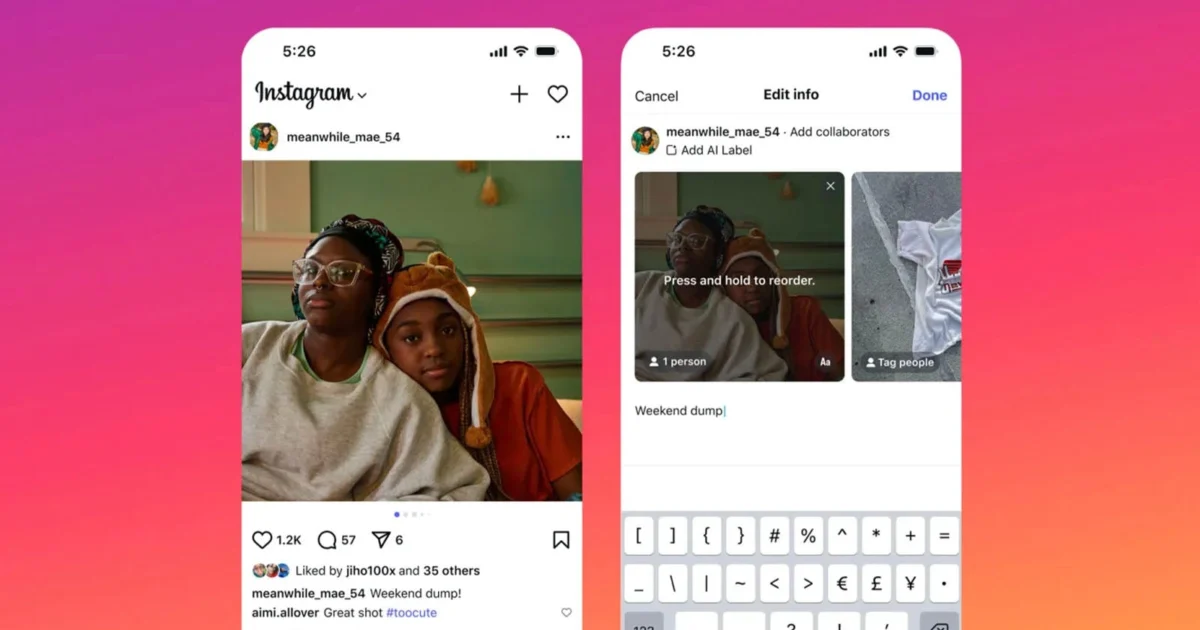
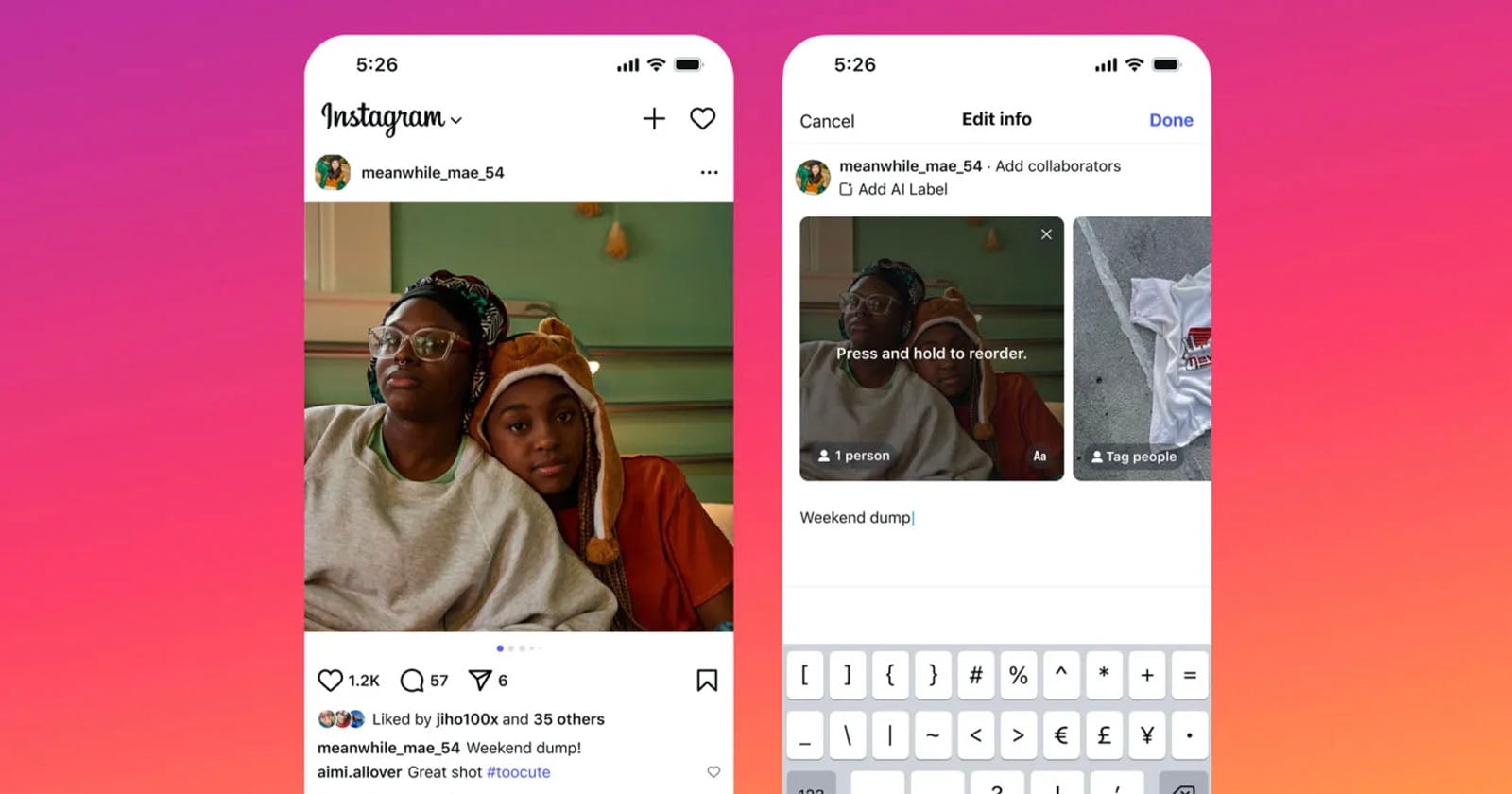
The mechanism for reordering is intuitive and aligns with Instagram’s user-friendly interface design. Users can now access an already published carousel post, select the familiar "Edit" option, and then long-press on individual images or videos. This action activates a drag-and-drop interface, allowing for seamless repositioning of content within the carousel. Once the desired sequence is established, the changes can be saved instantly. Crucially, this process preserves all existing engagement data, ensuring that the valuable social capital accumulated on the post remains intact. This aspect alone represents a monumental shift, removing the disincentive that previously hindered post-publication refinement.
"You have the flexibility to change the order of your carousel content at any time, ensuring your post always reflects your creative vision," Instagram stated in an official communication regarding the update. This statement underscores the platform’s commitment to empowering creators with greater autonomy over their digital portfolios and narratives.
User Demand and Developer Response: A Chronology of Requests
The demand for carousel reordering has been a consistent refrain across user forums, social media discussions, and creator feedback channels for several years. Since the introduction of carousel posts, which allow users to share up to 10 photos and videos in a single swipeable post, the inability to adjust the order post-publication quickly emerged as a major pain point. Content creators, particularly photographers who often meticulously curate visual narratives, found this restriction particularly limiting. A slight misjudgment in sequencing could derail the intended flow of a story or diminish the impact of a key image, with no easy recourse.
The iterative development of Instagram’s carousel format itself provides context for this latest update. Initially launched in 2017, carousel posts quickly gained popularity for their versatility in telling more comprehensive stories than single-image posts. Over the years, Instagram has progressively enhanced this format. In August 2024, the platform increased the maximum number of slides allowed in a carousel, expanding creative possibilities. A subsequent update in October 2025 further broadened creative freedom by permitting users to include a mix of horizontal and vertical photos within the same carousel, eliminating previous aspect ratio constraints. These preceding updates demonstrated Instagram’s recognition of the carousel’s importance and its willingness to evolve the feature based on user behavior and creative needs. The reordering capability is a logical, albeit delayed, extension of this evolutionary trajectory, addressing a core usability issue that persisted through these earlier enhancements. The long period between the initial introduction of carousels and this reordering feature highlights the technical complexities involved in implementing such a change while maintaining data integrity and user experience across a massive global platform.
Official Confirmation and Gradual Rollout
The update was officially confirmed by Instagram through its dedicated "Creators" account, a hub for news and tips aimed at the platform’s extensive community of content producers. Adam Mosseri, Head of Instagram, also publicly acknowledged the rollout, further solidifying the feature’s official status and significance. This level of official communication underscores the importance Instagram places on this particular update, recognizing its impact on a substantial portion of its user base.
As is common with major feature deployments on large-scale social media platforms, the rollout is being conducted gradually. This phased approach allows Instagram to monitor performance, identify and address any unforeseen bugs, and ensure a stable user experience before making the feature universally available. While some users may have immediate access, others might experience a slight delay before the update appears on their accounts. Early testing and anecdotal reports suggest that there is no inherent limit to the number of times a user can reorder content within a published carousel, offering continuous flexibility for refinement.
Enhancing Creative Control and Professional Presentation
For photographers, artists, and visual storytellers, this update carries profound implications. Instagram frequently serves as a primary portfolio and exhibition space for their work. The initial image displayed in a carousel post is also the one that appears on a user’s profile grid. This "cover image" is critical for attracting attention and conveying the essence of a series. Previously, if a photographer realized a different image would better serve as the cover or if the narrative flow of a multi-image story could be improved, their only option was to delete and re-upload. This meant sacrificing likes, comments, and the organic reach a post might have already garnered.
With the new reordering capability, photographers can now experiment with different lead images and content sequences without penalty. This allows for a dynamic approach to curation, enabling them to optimize their profile grid and ensure each post tells its story in the most compelling way possible. For instance, a landscape photographer might initially post a wide-angle shot as the lead, but later decide a more intimate detail shot better captures the mood, or vice-versa. A wedding photographer could adjust the sequence to better highlight different moments of the day, even after initial publication. This level of post-publication refinement elevates Instagram from a static sharing platform to a more adaptable and professional presentation tool.
Carousel Posts: A Deep Dive into Engagement Metrics
The significance of this reordering feature is amplified by the proven efficacy of carousel posts in generating higher user engagement. Numerous studies and analyses have consistently highlighted the superior performance of carousels compared to single-image posts.
A 2024 study conducted by Metricool, a prominent social media analytics firm, found that carousel posts consistently tend to generate higher engagement rates than single-image posts. While the exact percentage varies depending on the industry and audience, the trend is clear: multi-image formats encourage more interaction. Separate findings from Buffer, a well-known social media management platform, further corroborated this, indicating that carousels can produce approximately 12% more engagement on average.
Several factors contribute to the elevated engagement of carousel posts:
- Increased Dwell Time: Users spend more time interacting with carousels as they swipe through multiple slides. This extended interaction signals greater interest to Instagram’s algorithm, potentially boosting the post’s reach.
- Storytelling Potential: Carousels allow creators to weave more complex narratives, present before-and-after comparisons, offer step-by-step guides, or showcase multiple facets of a subject. This narrative depth is inherently more engaging than a single static image.
- Diverse Content Presentation: The ability to combine photos and videos within a single post caters to different consumption preferences and allows for a richer multimedia experience.
- Interactive Element: The act of swiping itself is a form of micro-interaction that keeps users engaged.
- Educational Value: Many brands and educators leverage carousels to deliver bite-sized information or tutorials, making them highly valuable and shareable.
By enabling post-publication reordering, Instagram is providing creators with a powerful tool to further optimize these already high-performing posts. Creators can now fine-tune the narrative flow, experiment with different visual hooks, and strategically place their most impactful content to maximize audience interaction. This could lead to an even greater increase in engagement metrics for carousel posts, benefiting creators, businesses, and Instagram itself by keeping users on the platform longer.
Navigating the Nuances: Current Limitations and Future Possibilities
While the reordering feature is a welcome addition, it is important to acknowledge its current limitations. The primary restriction is that users cannot add new images or videos to an existing carousel post. Any desire to incorporate additional content still necessitates the creation of an entirely new post. This limitation suggests that Instagram’s backend architecture for carousel content might treat the initial set of uploaded media as a fixed collection, with reordering being an adjustment of presentation rather than content expansion.
Furthermore, initial observations suggest that the feature may primarily apply to newly uploaded carousels. Some older posts might still be restricted to the previous functionality, which only allowed for the deletion of existing slides rather than their rearrangement. This distinction could be due to database migration challenges or the way older post data is structured. Users are advised to test the feature on various posts to understand its full applicability to their existing content library.
Looking ahead, it is plausible that Instagram may consider further enhancements to the carousel format. The ability to add new slides post-publication would be a logical next step, offering even greater flexibility for ongoing projects or evolving stories. Integration with more advanced editing tools within the carousel interface, or even features that allow for A/B testing of different carousel orders, could provide sophisticated optimization capabilities for professional marketers and content strategists.
Broader Impact on Content Strategy
The ability to reorder carousel posts will undoubtedly influence content strategy across the platform. For individual creators, it means less pressure to get the sequence "perfect" on the first try. They can now iterate and refine their visual stories based on initial audience feedback or a fresh perspective. This fosters a more agile and less stressful content creation process.
For businesses and marketers, the implications are even more significant. Brands often use carousels to showcase product lines, announce events, or tell their brand story. The new feature allows them to:
- Optimize Product Showcases: Present best-selling items first, or rearrange based on seasonal promotions.
- Refine Campaign Narratives: Adjust the storytelling arc of a campaign based on real-time performance data.
- Enhance Educational Content: Ensure tutorials or informational carousels have the clearest, most logical flow.
- Improve A/B Testing: While not a direct A/B testing tool, the ability to change order without losing data enables manual experimentation with different sequences to see what resonates best with the audience over time.
- Maintain Brand Consistency: Easily correct minor sequencing errors that might detract from a brand’s meticulously crafted aesthetic.
This flexibility can lead to more effective content that drives higher engagement, ultimately contributing to better brand awareness, customer loyalty, and even sales conversions on the platform.
Instagram’s Evolving Platform: A Strategic Move in a Competitive Landscape
Instagram operates within a highly competitive social media ecosystem. Platforms like TikTok, YouTube Shorts, and even X (formerly Twitter) are constantly innovating to capture and retain user attention. In this environment, responding to user feedback and continuously enhancing core features is paramount. The introduction of carousel reordering demonstrates Instagram’s commitment to its creator community and its understanding of their needs.
By providing tools that empower creators to produce higher-quality, more engaging content, Instagram strengthens its position as a preferred platform for visual storytelling and community building. This not only helps retain existing users but also attracts new ones who are seeking sophisticated content creation and management capabilities. The focus on enhancing existing popular features, rather than solely introducing new ones, signals a maturity in Instagram’s product development strategy, prioritizing refinement and user experience.
In conclusion, Instagram’s rollout of the carousel post reordering feature represents a significant enhancement to its platform. It empowers creators with greater control, fosters more dynamic visual storytelling, and provides tangible benefits for engagement. While certain limitations remain, this update is a clear indicator of Instagram’s responsiveness to user demand and its ongoing efforts to solidify its position as a leading platform for visual content creators worldwide. The flexibility it offers is expected to be widely embraced, allowing for more polished, impactful, and strategically optimized content across the vast Instagram landscape.