In an era dominated by digital precision and automated efficiency, modern lens makers leverage sophisticated computer simulations, advanced digital modeling, and cutting-edge glass-making and molding techniques. The output of these highly optimized processes is lenses renowned for their impeccable sharpness, optical consistency, and often clinical perfection. However, a profound appreciation for the craftsmanship of yesteryear persists, especially when examining the legacy of optical giants like Nikon. A captivating documentary from 1966, produced by Nikon (then Nippon Kogaku Kogyo) and Tokyo Cinema, offers an invaluable glimpse into a profoundly different and decidedly more artisanal era of lens manufacturing, revealing the meticulous human touch that defined optical excellence six decades ago.
This award-winning documentary, titled "The Eye of Science," which garnered the 1967 Japan Industrial Film Contest Encouragement Award, serves as a poignant historical record. Reported by Digital Camera Life, the film showcases a world where the creation of a high-performance optical instrument was as much an art as it was a science. The 60 years that have elapsed since its production have witnessed a paradigm shift in optical and camera manufacturing. Yet, one fundamental principle remains constant: the heart of any lens lies in its precisely designed and meticulously crafted glass elements. While the methods have evolved dramatically, the core pursuit of optical purity endures, even if the proportion of hand-shaped glass elements diminishes with each passing year.
A Glimpse into the Past: Nikon’s Manufacturing in 1966
To fully appreciate the transformation, one must first understand the landscape of optical manufacturing in the mid-20th century. By 1966, Nikon was already a globally recognized name, particularly among professional photographers, largely thanks to the groundbreaking success of its Nikon F SLR camera, introduced in 1959. The Nikon F system had quickly established itself as a benchmark for reliability and optical performance, becoming the preferred choice for photojournalists covering major global events, including the Vietnam War and the burgeoning space race. This reputation was built on a foundation of rigorous, in-house manufacturing processes, a stark contrast to the often outsourced and globally distributed supply chains of today.
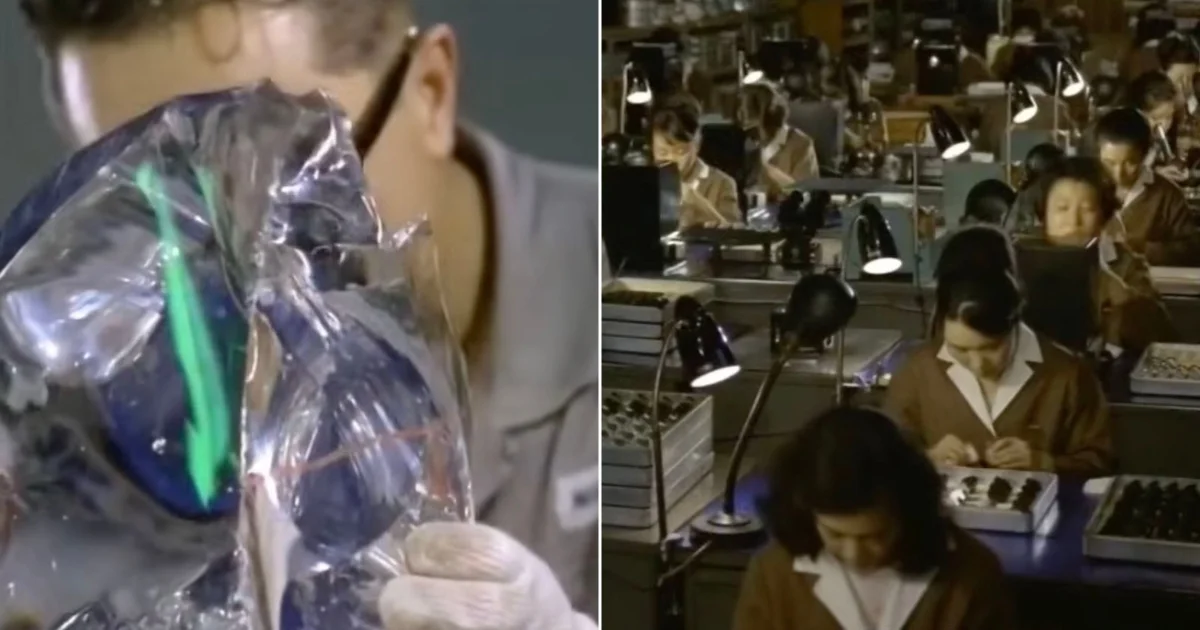
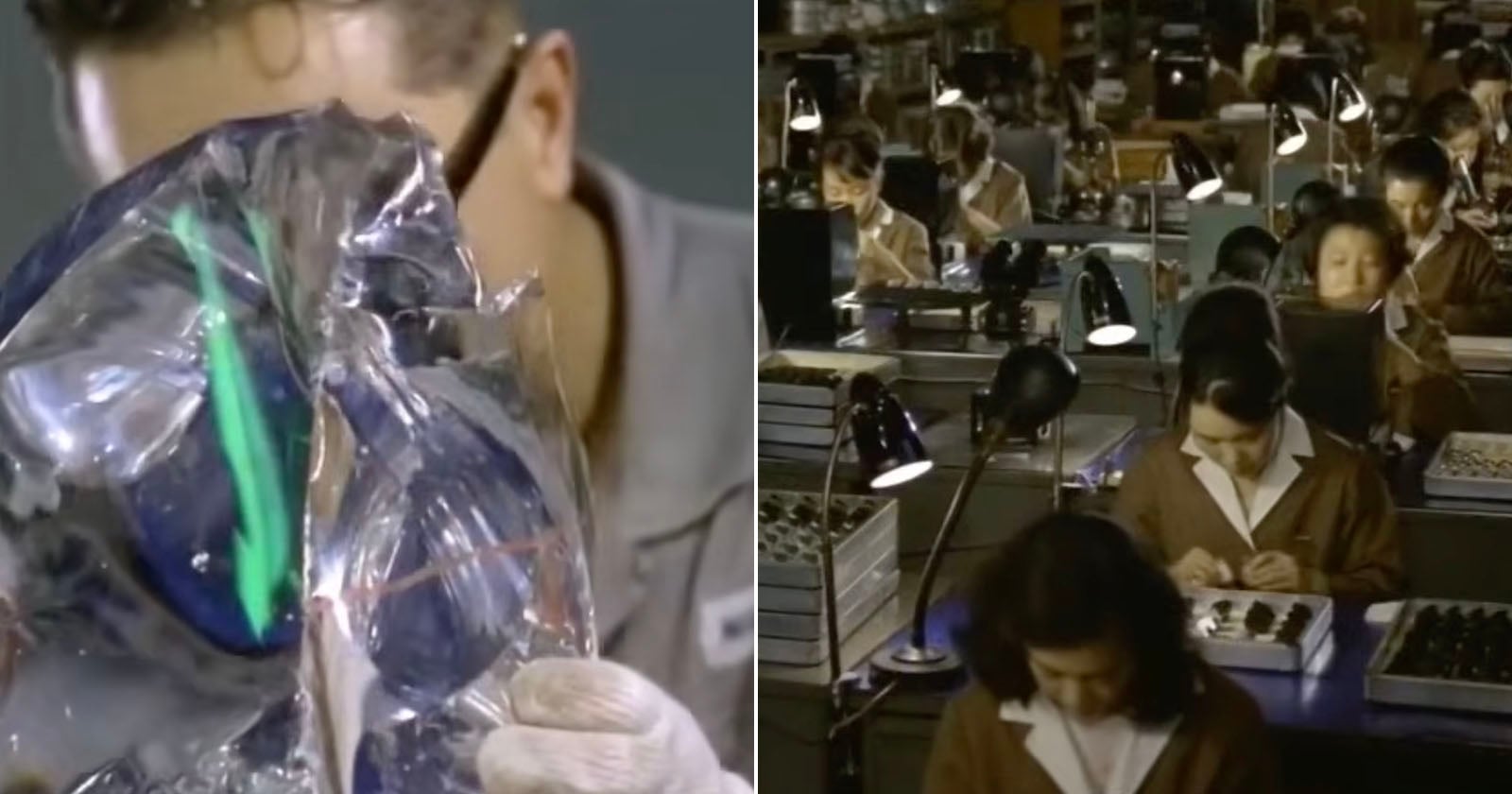
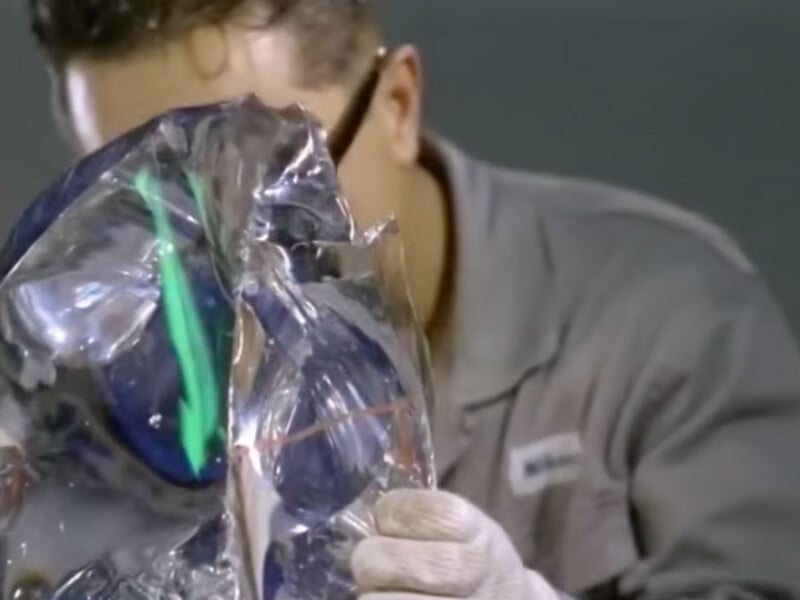
The 1966 documentary meticulously illustrates this vertical integration, starting from the very genesis of the optical glass itself. Nikon engineers were depicted initiating the process by melting high-quality silica sand, a primary component, combined with over a dozen other carefully selected materials within super-heated crucibles. These additional ingredients—which would have included various metal oxides like lead oxide (for high refractive index), boron oxide (for thermal stability), barium oxide, and lanthanum oxide (for achieving specific refractive and dispersion characteristics)—were critical in formulating distinct types of optical glass, each with unique properties vital for correcting aberrations and enhancing image quality. The ability to produce its own optical glass in-house provided Nikon with unparalleled control over the fundamental building blocks of its lenses, a strategic advantage that fewer manufacturers maintain today.
Once the molten glass had cooled and solidified into immense, raw blocks, skilled workers would then meticulously break off precisely sized chunks. These glass pieces were subsequently re-heated to a malleable state and formed using powerful presses, shaping them closer to their final lens element geometries. This initial shaping, however, was merely the precursor to the most labor-intensive and skill-dependent phase: hand-polishing and finishing.
The Art of Hand-Polishing: Precision by Human Touch

The documentary vividly captures artisans, often working in focused silence, meticulously polishing each glass element by hand. This was not a crude or approximate process; it demanded extraordinary dexterity and an unwavering commitment to precision. The goal was to achieve surface accuracy down to just a couple of micrometers – an astounding feat considering a human hair typically measures between 50 to 100 micrometers in diameter. To put this into perspective, achieving such tolerances by hand meant manipulating the glass with an accuracy equivalent to one-thousandth of a millimeter, relying on tactile feedback, visual inspection, and finely abrasive slurries. This level of craftsmanship ensured that light passed through the lens elements with minimal distortion, a testament to the human eye and hand’s capacity for exacting detail. Quality control in this era often involved visual inspection under specialized lighting, alongside mechanical measurements and early forms of interferometry to detect surface irregularities.
Following the painstaking creation of individual glass elements, the next critical step was the assembly of these components into a complete lens barrel. This task, too, demanded the utmost precision. Each element had to be seated perfectly, aligned along a common optical axis, and secured without inducing stress that could deform the glass or misalign the system. Even a virtually imperceptible error during assembly could utterly ruin the image quality, introducing softness, coma, or astigmatism. The film shows rows of workers, many of whom were women, diligently assembling these intricate mechanisms, highlighting the highly specialized and gendered division of labor common in precision manufacturing at the time.
Beyond Lenses: The Complexity of 1960s Camera Bodies
While the documentary’s primary focus was lens technology, it also offered rare behind-the-scenes footage of camera body manufacturing. Viewers could observe Nikon engineers meticulously assembling Nikon F and Nikon F Photomic T cameras. These mechanical marvels, far from the integrated circuit boards of modern digital cameras, were intricate ecosystems of over 1,000 individual parts. Springs, gears, levers, shutters, mirror boxes, and film transport mechanisms had to be precisely machined, fitted, and calibrated to function harmoniously. The longevity of these cameras is legendary; many examples from that era still survive today, cherished and actively used by analog-loving photographers. This stands in stark contrast to the planned obsolescence and rapid technological turnover of modern digital cameras, where software dependency, battery degradation, and proprietary interfaces often limit a camera’s practical lifespan to a mere fraction of its mechanical predecessors. It is indeed hard to imagine digital cameras manufactured in 2026 being regularly used by enthusiasts in 2086.
The Modern Paradigm: Digital Design and Automated Perfection
Fast-forward six decades, and the landscape of lens manufacturing is almost unrecognizable. Today’s lens makers begin their journey with advanced optical design software like ZEMAX or Code V, where complex lens formulas involving dozens of elements and specialized glass types are simulated digitally. Computer-aided design (CAD) and computer-aided manufacturing (CAM) systems guide every step, from the initial raw material to the final assembly.
Modern optical glass is often produced in highly controlled environments, with new compositions constantly being developed to achieve specific refractive indices and dispersion characteristics, such as extra-low dispersion (ED) glass or fluorite elements to combat chromatic aberration. Aspherical elements, which simplify lens designs and improve performance, are now routinely mass-produced through precision molding or CNC grinding, a process that was exceptionally difficult and expensive to achieve in the 1960s.
The shaping and polishing of lens elements are predominantly handled by multi-axis CNC machines, capable of achieving nanometer-level precision and repeatability far exceeding what human hands can consistently deliver. Anti-reflective coatings, often multi-layered and tuned to specific wavelengths, are applied in vacuum chambers, dramatically reducing flare and improving light transmission – an advancement that significantly differentiates modern optics from their vintage counterparts. Assembly lines are increasingly automated, employing robotic arms for precise placement and laser alignment systems to ensure perfect optical centering. This shift towards automation and digital control has resulted in lenses that are not only incredibly sharp and consistent but also often lighter, faster, and more capable of handling demanding photographic scenarios, particularly with high-resolution digital sensors.

The Enduring Appeal of Vintage Glass: Character Over Clinicality
Despite the undeniable advancements in modern lens design and manufacturing, the vintage glass from eras like Nikon’s 1966 period holds a unique and enduring appeal. Many photographers, and especially cinematographers, actively seek out these classic 60-year-old Nikon lenses. The reasons are multifaceted and deeply rooted in artistic expression.
While modern lenses strive for clinical perfection – eliminating aberrations, distortion, and flare to produce an image that is optically "flawless" – vintage lenses often possess a distinctive "character." This character manifests in various ways: a slightly softer rendering wide open, a unique way of transitioning from sharp focus to pleasing bokeh, and, perhaps most notably, a "dynamic and interesting flare." Modern lens coatings and designs are meticulously engineered to suppress flare, which can be seen as an imperfection. However, for many creatives, the natural, often vibrant lens flares produced by vintage optics add a cinematic quality, an organic touch that modern, sterile images sometimes lack. This intentional embrace of "imperfection" can transform a technical flaw into a powerful artistic tool, making a vintage lens the "perfect choice" for a specific aesthetic vision.
Furthermore, the mechanical construction of these older lenses speaks to a different philosophy of engineering. Built with robust metal barrels, precise helicoids, and tactile aperture rings, they offer a haptic experience that digital-era lenses often forgo. The durability of these all-metal constructions means that, with proper care, they continue to function reliably decades after their manufacture, often proving more resilient to physical wear and tear than their plastic-bodied, electronically-driven successors.

Implications and Legacy
The enduring relevance of "The Eye of Science" and the vintage lenses it showcases underscores several key implications. Firstly, it highlights the continuous evolution of precision manufacturing. The journey from hand-craftsmanship to computer-controlled automation is a testament to human ingenuity in striving for ever-greater accuracy and efficiency. Secondly, it illuminates the subjective nature of photographic aesthetics. While technical perfection is a measurable goal, artistic preference often gravitates towards qualities that transcend mere sharpness or absence of aberration. The "character" of vintage lenses reminds us that there is more to an image than just its technical fidelity.
Finally, Nikon’s commitment to in-house manufacturing, as depicted in the 1966 film, speaks volumes about its brand identity and legacy. It built a reputation on meticulous quality control and engineering excellence from the ground up. This foundation of robust, artisanal production continues to influence how the brand is perceived, even as its current manufacturing processes are thoroughly modern. The film serves not just as a historical document but as a powerful narrative about the origins of a legendary brand’s commitment to quality, a commitment that, in different forms, continues to define its offerings today. The dialogue between past and present in optical manufacturing reveals that while technology constantly advances, the appreciation for enduring craftsmanship and unique aesthetic qualities remains timeless.