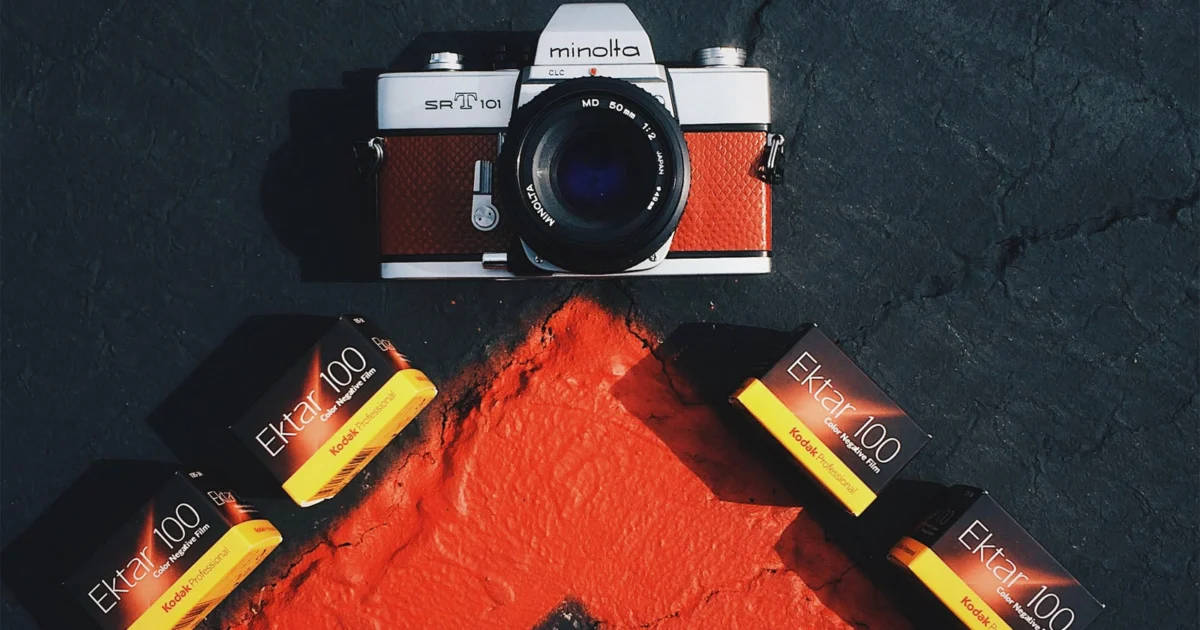
This week, the spotlight for Film Friday shines brightly on one of the undeniable heavy hitters in the analog photography world: Kodak Ektar 100. Standing shoulder-to-shoulder with the esteemed Portra series, Ektar 100 has cemented its position as one of the most popular and widely utilized color films available on the market today. Its reputation is built upon a trifecta of distinctive characteristics: exceptionally fine grain, intensely vivid color saturation, and a signature poppy contrast that sets it apart from its contemporaries. This article delves into the rich history and technical prowess that define Ektar 100, exploring its evolution, its specific applications, and its significant role within the broader landscape of modern film photography.
A Name Forged in Optics: The Ektar Lens Legacy
Before the "Ektar" designation adorned rolls of film, it represented the pinnacle of optical engineering for Eastman Kodak. The genesis of the Ektar name dates back to the 1930s, a period when Kodak sought to distinguish its highest-quality, professional-grade lenses. The moniker itself was a clever fusion, combining "Eastman Kodak" with "TessAR," paying homage to the renowned Tessar lens design, which was known for its sharpness and relatively simple construction. This naming strategy immediately communicated a commitment to superior optical performance.
Throughout the mid-20th century, Ektar lenses became synonymous with precision and clarity. They were featured on a diverse array of Kodak cameras, from popular consumer models like the Bantam and Retina series to high-end large format cameras used by professional photographers. The presence of an "Ektar" lens signaled that the camera was equipped with the best optical technology Eastman Kodak had to offer at the time. This tradition of excellence continued for several decades, with the Ektar lens line remaining a benchmark of quality well into the 1960s, leaving an indelible mark on photographic history before the name transitioned to a new medium.
The First Film Incarnation: 1989-1997
The Ektar name resurfaced in the realm of film in 1989, marking a significant shift in its application. This new line of films aimed to deliver professional-level results with a distinct aesthetic. Many seasoned film photographers vividly recall these original Ektar films, which included various ISO sensitivities such as Ektar 25, Ektar 125, and Ektar 1000. Each offered specific characteristics, but the overall branding emphasized sharpness and color fidelity.
Ektar 25, in particular, was lauded for its incredibly fine grain and exceptional sharpness, making it a favorite for landscape and architectural photography where intricate detail was paramount. Ektar 1000, on the other hand, pushed the boundaries of speed for professional color negative film at the time, offering photographers greater flexibility in challenging low-light conditions, albeit with a more pronounced grain structure. Despite their individual strengths and a dedicated following, this initial line of Ektar films ultimately proved to be a transitional product. The market for professional film was evolving, and by 1997, Kodak made the decision to discontinue the entire Ektar film line, leaving a void that would not be filled for over a decade. The reasons for this discontinuation were multifaceted, likely including shifts in consumer demand, manufacturing complexities, and Kodak’s ongoing efforts to streamline its extensive film portfolio.
The Grand Return: Ektar 100’s 2008 Reintroduction
The analog photography community experienced a wave of excitement and anticipation in September 2008 when Kodak officially announced the triumphant return of Ektar to its film line, this time exclusively as Ektar 100. This reintroduction was strategically timed, coinciding with a burgeoning renewed interest in film photography and a desire for new, high-performance color negative options. Initially, Ektar 100 was released solely in the popular 135 (35mm) format, catering to the vast number of photographers utilizing standard SLR and rangefinder cameras. However, recognizing the immense demand from professional and enthusiast communities, Kodak swiftly expanded its offerings. Within a short period, Ektar 100 became available in 120 (medium format), 4×5, and 8×10 sheet film formats, solidifying its position as a versatile option across various photographic disciplines.
Kodak’s marketing for the new Ektar 100 was assertive and confident, claiming it possessed the finest grain of any color negative film on the market—a bold assertion that many in the industry found to be remarkably accurate upon testing. Beyond its fine grain, the company heavily promoted its vivid color saturation and punchy contrast, positioning it as a direct competitor to the rich, vibrant hues previously associated with Fuji Velvia slide film, a reversal film known for its intense color rendition. This was a critical move, as Velvia often required a more complex workflow due to its slide film nature. Furthermore, the re-release of Ektar 100 was presented as a viable alternative for photographers grappling with the impending discontinuation of Kodachrome, another iconic Kodak slide film known for its unique color palette and archival stability. The hype surrounding Ektar 100’s return was substantial, and over the ensuing years, its performance has consistently justified the initial enthusiasm, securing its place as a modern classic.
Unrivaled Fine Grain and Exceptional Sharpness
One of Ektar 100’s most celebrated attributes is its remarkably fine grain. In an era where digital photography often aims for absolute smoothness, Ektar 100 offers an analog solution for photographers seeking images with minimal textural interference. While many photographers appreciate the character and texture that film grain imparts, there are specific situations and aesthetic preferences where a smooth, virtually grainless image is desired. This is particularly true when creating large format prints or making significant enlargements, where coarse grain can become distracting.

Kodak achieved this impressive granularity through advanced emulsion technology, including their patented T-Grain (tabular grain) emulsion, which allows for more efficient light capture and a flatter, more uniform grain structure compared to traditional silver halide crystals. The result is a film that, even under significant magnification, exhibits an astonishing lack of visible grain. Staff members at Blue Moon Camera and Machine, for instance, recounted difficulties in discerning the film’s grain for focusing purposes even when camera scanning 4×5 Ektar 100 sheets at maximum zoom magnification. This anecdotal evidence underscores the film’s exceptional smoothness.
The fine grain characteristic of Ektar 100 goes hand-in-hand with its outstanding sharpness. A finer grain structure allows for greater detail resolution, as less image information is obscured by the random distribution of silver halides. Consequently, Ektar 100 is an exceedingly sharp film, capable of capturing intricate details with remarkable clarity. When shot in medium format or larger formats like 4×5, the combination of fine grain and sharpness enables photographers to produce massive prints that retain an extraordinary amount of detail, appearing crisp and clean without the distracting presence of visible grain. This makes Ektar 100 an ideal choice for genres such as landscape, architectural, and fine art photography, where high resolution and pristine image quality are paramount.
The Power of Punchy Color: Saturation and Contrast
Beyond its grain structure, the color rendition of Kodak Ektar 100 is arguably its most distinctive and beloved feature. It is renowned for delivering bright, intensely saturated colors and a lively, poppy contrast that invigorates images. This vibrant aesthetic provides a compelling contrast to the more subdued and often pastel tones characteristic of the Kodak Portra film series, which is typically favored for portraiture due to its flattering skin tones.

Landscape photographers, in particular, frequently gravitate towards Ektar 100 for its ability to render natural scenes with breathtaking vibrancy. The film excels at capturing the rich greens of foliage, the deep blues of skies and water, and the warm, fiery hues of sunsets and autumn leaves. Its high saturation makes colors "pop" off the print, lending images a dynamic and impactful presence. In recent years, with the increasing scarcity and fluctuating availability of Fuji Velvia 50, a slide film historically revered for its unparalleled color saturation, Kodak Ektar 100 has emerged as the premier color negative alternative for photographers aiming to achieve similarly vivid and punchy analog images. Its ability to produce such intense colors in a C-41 processable negative film offers significant workflow advantages over slide film, making it a more accessible choice for many. The film’s robust contrast further enhances this vibrancy, providing clear separation between tones and adding depth to the photographic composition.
Navigating Skin Tones: A Nuanced Application
While Ektar 100’s vivid saturation is a major asset for many photographic applications, it introduces a unique challenge when it comes to rendering human skin tones. The film’s aggressive color profile can sometimes make skin appear overly saturated or even ruddy, emphasizing reds and oranges in a way that might not always be flattering for portraits. This characteristic is a primary reason why many portrait photographers opt for the Portra series, which is specifically engineered to render skin tones with a softer, more natural, and aesthetically pleasing palette.
However, to label Ektar 100 as entirely unsuitable for portraiture would be an oversimplification. Its use in portraits requires a more nuanced approach and a careful consideration of the desired outcome. Photographers can strategically employ Ektar 100 when its heightened saturation would actually serve as a benefit rather than a drawback. For instance, in environmental portraiture, where the subject is integrated into a colorful backdrop, Ektar 100 can make the entire scene come alive, enhancing the vibrancy of the surroundings while still keeping the subject in focus. If a subject has particularly bright or striking features, such as vibrant hair colors, piercing blue eyes, or bold makeup, Ektar 100 can amplify these elements, making them stand out with remarkable intensity.

Furthermore, some photographers might intentionally choose Ektar 100 for artistic portraits where an exaggerated or stylized color rendition of skin tones is desired. Understanding the film’s tendencies allows photographers to either avoid it for traditional, natural-looking portraits or embrace its unique color signature for more expressive and bold imagery. Careful lighting and post-processing (during scanning or printing) can also help mitigate some of the less desirable effects on skin, offering further control over the final image.
Embracing Slowness: Pinhole, Long Exposure, and Reciprocity
Beyond its renowned color and grain, Ektar 100 offers another significant advantage: its relatively low film speed. At ISO 100, it stands as one of the slower color film options on the market, a characteristic that opens up a distinct set of creative possibilities for photographers. While film speed is often correlated with grain structure (slower films typically have finer grain), it also profoundly influences the types of images that can be created, particularly regarding exposure duration.
For pinhole photographers, Ektar 100 is an exceptional choice. Pinhole cameras, by their very nature, operate with extremely small apertures (often f/150 or smaller), necessitating very long exposure times, typically ranging from several seconds to many minutes, even in bright sunlight. Since achieving instantaneous exposures with a pinhole camera is practically impossible, embracing the long exposure nature of the medium is key. A slow film like Ektar 100 helps to extend these exposure times further, making it easier to achieve the desired motion blur effects or serene, empty landscapes that are hallmarks of pinhole photography.

Similarly, photographers who utilize Neutral Density (ND) filters to achieve extended exposures in bright conditions benefit greatly from Ektar 100. Whether capturing silky smooth water, streaking clouds, or vanishing crowds in urban settings, starting with a slower film speed means less powerful ND filters are required, or even longer exposures can be achieved with existing filters.
The market for slow-speed color film options is surprisingly limited. While Fuji Velvia 50 is available in medium format, it is a slide film with its own unique challenges, including notorious reciprocity failure that can introduce a green color shift after just a few seconds of exposure. Kodak Portra 160 is a viable option, being only 2/3rds of a stop faster, but it offers a different color aesthetic. Other options like CatLABS Color 100 (Kodak Aerocolor IV re-spools) exist but often face supply inconsistencies. In the 35mm format, Kodak Pro Image 100 (also known as Kodacolor 100 in some markets) and certain Lomography 100 ISO films offer alternatives, but Ektar 100 remains a consistent, high-quality choice across multiple formats.
Regarding reciprocity failure, Ektar 100 performs commendably. Kodak’s official data sheet for the film suggests that no reciprocity correction is necessary for exposures up to 1 second. Even for exposures extending beyond that, the correction remains minimal up to approximately 10 seconds. For significantly longer exposures, such as 30 seconds, an additional stop of exposure is recommended, meaning a metered 30-second exposure should ideally be extended to about one minute. This relatively forgiving reciprocity characteristic makes Ektar 100 a more predictable and user-friendly film for long exposure work compared to many other options.

Ektar in the Modern Analog Landscape: Market Position and Competition
In the vibrant but niche world of analog photography, Kodak Ektar 100 occupies a crucial and distinct position. Its combination of fine grain, vivid saturation, and manageable reciprocity failure makes it a go-to film for specific photographic applications and aesthetic preferences. It doesn’t aim to be a universal film but rather excels in its defined niche.
Ektar’s primary competition often comes from other Kodak offerings, particularly the Portra family (Portra 160, 400, 800). While both are C-41 processable color negative films, they cater to fundamentally different visual styles. Portra films are renowned for their softer contrast, muted color palette, and exceptional handling of skin tones, making them ideal for portraiture, fashion, and documentary work where naturalistic representation is key. Ektar 100, conversely, leans into boldness and vibrancy, appealing to landscape, architectural, and still life photographers who desire impactful, saturated colors and intricate detail.
Beyond Kodak’s internal competition, Ektar 100 stands as a modern alternative to slide films like Fuji Velvia 50, particularly given Velvia’s fluctuating availability and the inherent complexities of E-6 processing versus the more common C-41. While Velvia’s unique rendition cannot be perfectly replicated by any negative film, Ektar 100 comes closest in terms of color intensity and contrast within the color negative realm, making it a pragmatic choice for many.

The film’s availability across 35mm, 120, 4×5, and 8×10 formats further solidifies its market presence, ensuring that photographers working with various camera systems can leverage its unique qualities. This broad format support is critical in a market where many specialty films are restricted to fewer options. As the analog photography resurgence continues, fueled by a desire for tactile experiences and distinctive aesthetics, films like Ektar 100 play a vital role in sustaining the ecosystem, offering specialized tools that differentiate film from its digital counterparts. Its consistent quality and unique visual signature contribute significantly to the diversity and richness of choices available to the modern film photographer.
Conclusion: Its Enduring Appeal and Future
Kodak Ektar 100 is more than just another film; it is a meticulously engineered emulsion that has carved out a unique and indispensable niche in the analog photography landscape. From its historical roots as a designation for Kodak’s premier lenses to its modern incarnation as a beloved film stock, the Ektar name has consistently represented excellence and distinctiveness. Its reintroduction in 2008 was a pivotal moment, providing film photographers with a powerful tool capable of delivering images characterized by unparalleled fine grain, exceptional sharpness, and intensely vivid color saturation.
For photographers seeking to capture the world with punchy, vibrant hues, especially in landscape and architectural genres, Ektar 100 is an almost automatic choice. Its ability to render detail with such clarity makes it ideal for large format prints, while its low ISO makes it a champion for long exposures and pinhole photography, opening up creative avenues that slower films uniquely enable. While its strong color saturation may require careful consideration for traditional portraiture, its distinctive look can also be harnessed for artistic effect in certain contexts.

The ongoing appeal of Ektar 100 is a testament to its consistent quality and its ability to deliver results that are both technically impressive and aesthetically compelling. It serves as a vital counterbalance to the softer, more subdued tones of films like Portra, ensuring that film photographers have a diverse palette of options at their disposal. As the fall colors approach, many photographers will undoubtedly stock up on Ektar 100, knowing it will brilliantly capture the fiery landscapes of autumn. Its presence in a photographer’s bag is a statement of intent—a desire to create images that are bold, detailed, and infused with the unmistakable magic of analog color. It is a film that truly shines, and its continued availability is a boon for the entire film photography community.
This story is brought to you by Blue Moon Camera and Machine in Portland, OR. Blue Moon offers film, development services, printing, and even an ever-rotating line of film cameras and lenses. PetaPixel Members receive 10% off all lab services with Blue Moon.
Image credits: All photos are individually credited and provided courtesy of Blue Moon Camera and Machine.

Affiliate Disclosure: PetaPixel articles may include affiliate links; we may earn a commission if you buy through one.