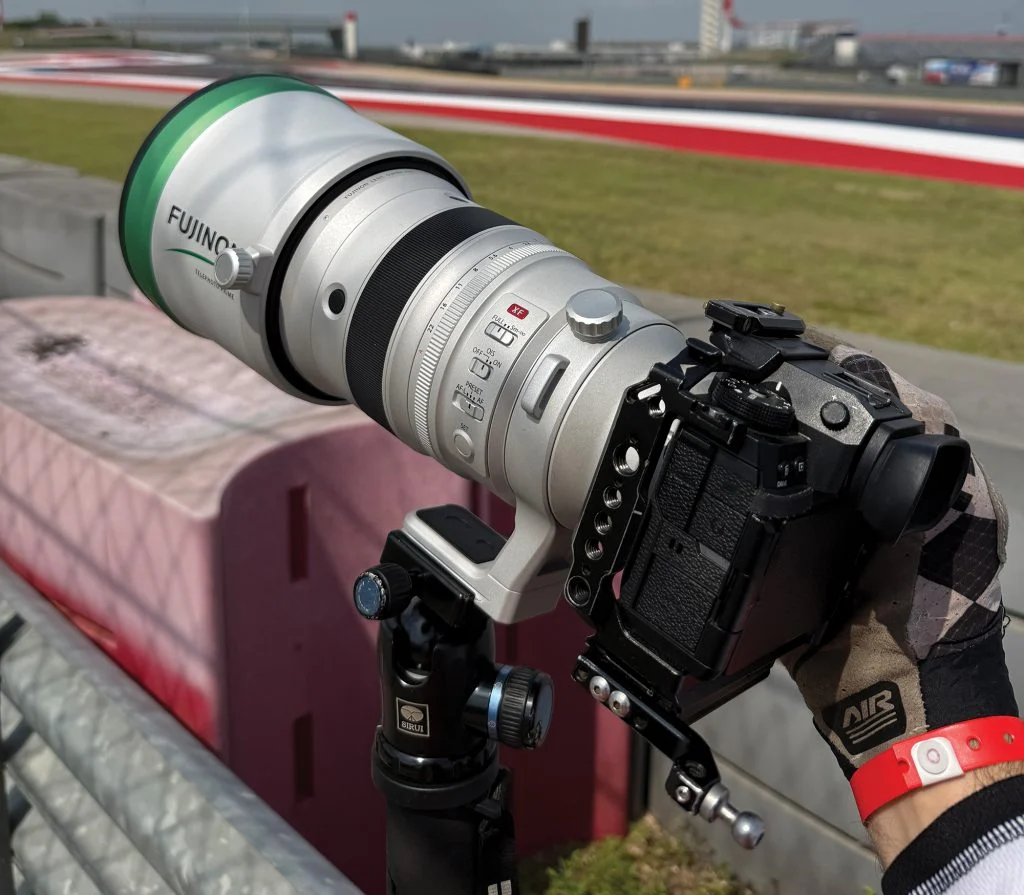
For professional photographers specializing in the high-octane world of motorsport, the demands on equipment are relentless. Speed, precision, and unwavering reliability are paramount, often pushing gear to its absolute limits under rapidly changing conditions. Over the past four years, as the professional focus has increasingly shifted towards motorsport, the need for specialized long lenses capable of delivering exceptional performance has become more acute. While versatile zoom lenses like the Fujifilm XF100-400mm f/4.5-5.6 have long served as indispensable workhorses for trackside coverage, a new benchmark for uncompromising image quality and speed in the Fujifilm X-system has emerged: the Fujifilm XF200mm f/2 OIS WR. This prime lens, often described as an "absolute beast," represents a significant commitment to optical excellence and has rapidly solidified its position as a favorite among professionals seeking to capture the definitive moments of racing with unparalleled clarity and artistic depth.
The Evolution of Motorsport Photography and Mirrorless Dominance
The landscape of professional sports photography has undergone a transformative shift with the advent and maturation of mirrorless camera systems. Where DSLRs once reigned supreme, mirrorless bodies now offer compelling advantages in terms of autofocus speed, silent shooting capabilities, and advanced subject tracking, all within increasingly compact and lightweight designs. This evolution is particularly beneficial in motorsport, a genre characterized by subjects moving at triple-digit speeds, demanding lightning-fast autofocus acquisition and sustained tracking. Fujifilm, with its X-system, has been a significant player in this transition, steadily building a robust ecosystem of high-performance cameras and lenses. The X-H2S, in particular, represents a pinnacle of this development, featuring a stacked-sensor design optimized for speed, which, when paired with a lens of the XF200mm f/2’s caliber, unlocks previously unattainable levels of performance for X-series users.
Unveiling the XF200mm f/2: A Masterpiece of Optical Engineering
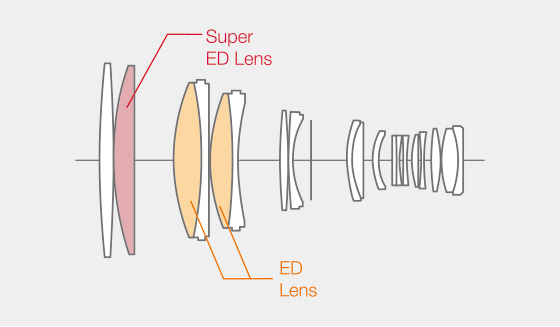
The Fujifilm XF200mm f/2 R LM OIS WR makes an immediate and undeniable statement with its sheer presence and meticulous engineering. This lens is not merely a tool; it is a declaration of Fujifilm’s intent to compete at the highest echelons of professional photography.
Technical Specifications and Design Philosophy:
At its core, the XF200mm f/2 delivers an angle of view equivalent to approximately 305mm on a full-frame system, providing significant reach for isolating subjects on sprawling race tracks. Its maximum aperture of f/2 is a standout feature, allowing for exceptional light gathering capabilities and the creation of beautifully shallow depth of field, even in challenging lighting conditions. The lens comes bundled with the XF 1.4x TC WR teleconverter, which seamlessly extends the effective focal length to roughly 427mm (full-frame equivalent), with a minimal drop in maximum aperture to f/2.8. Crucially, the integration of this teleconverter is designed to have no noticeable impact on the lens’s exemplary optical performance or its rapid autofocus capabilities, a testament to Fujifilm’s sophisticated optical design.
Physically, the XF200mm f/2 embodies robustness and thoughtful functionality. Its full-metal construction ensures durability, capable of withstanding the rigors of professional use. A distinctive matte silver coating, a first for a Fujinon lens, serves a practical purpose beyond aesthetics: it significantly minimizes heat absorption, mitigating the risk of thermal expansion that could degrade image quality during prolonged shooting sessions under direct sunlight – a common scenario at outdoor motorsport events like those held at the Circuit of the Americas (COTA).
Advanced Optical and Mechanical Systems:
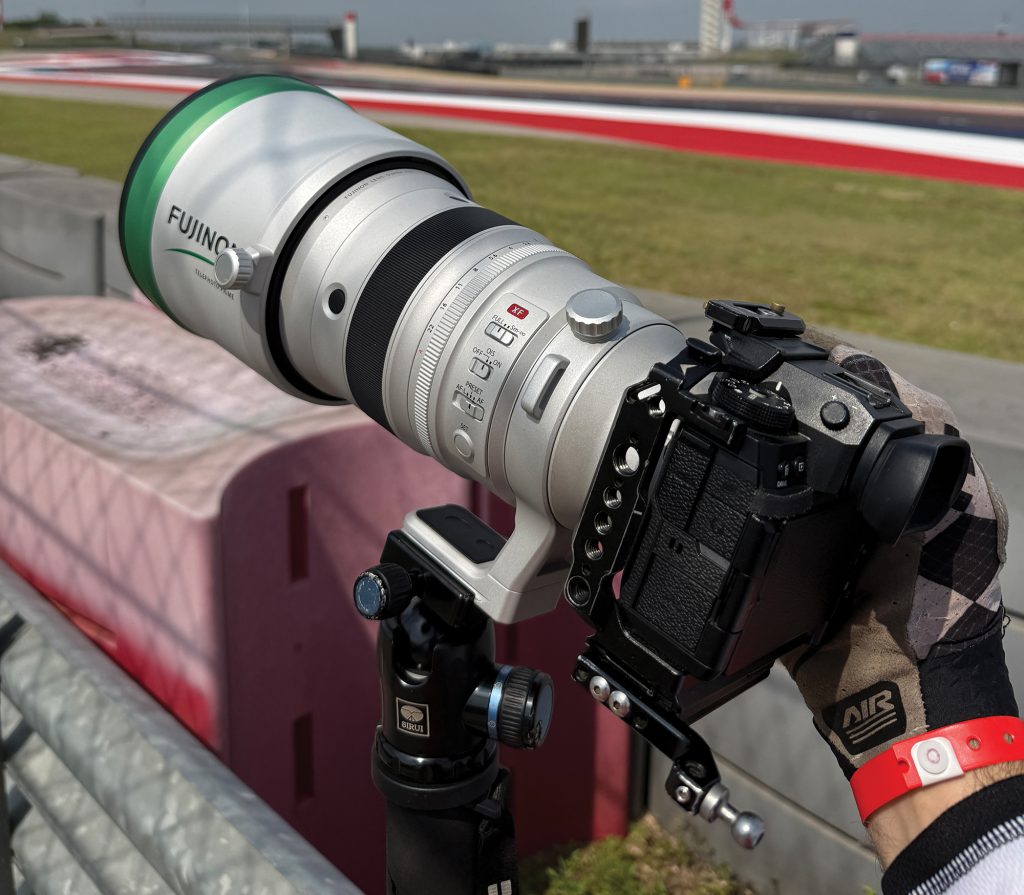
The lens’s internal architecture is a testament to a no-compromise design philosophy. It comprises 19 elements in 14 groups, including one Super ED (Extra-low Dispersion) element and two ED elements. This sophisticated arrangement is specifically engineered to suppress chromatic aberration, ensuring images are rendered with exceptional color fidelity and sharpness across the entire frame. The lens is fully weather-sealed, providing critical protection against dust and moisture, while its fluorine-coated front element actively repels water, dirt, and smudges, simplifying maintenance in dynamic environments.
Autofocus is driven by a twin linear motor system, a technology chosen for its ability to deliver both blistering speed and near-silent operation – essential for tracking fast-moving vehicles without drawing attention or interfering with delicate sound recording setups. The integrated optical image stabilization (OIS) system, rated at an impressive five stops, provides substantial assistance when shooting handheld, allowing photographers to maintain sharp images even at slower shutter speeds or in less-than-ideal stability conditions. Furthermore, the lens features nine rounded aperture blades, producing a smooth, circular bokeh that beautifully isolates subjects from their backgrounds. A one-third EV step aperture ring offers precise exposure control, and the integrated rotating tripod collar, complete with strap attachment points, underscores its professional-grade intent and ergonomic design for extended use.
Performance on the Track: Synergy with the Fujifilm X-H2S
In the demanding environment of a race track, the Fujifilm XF200mm f/2 truly shines, particularly when paired with the X-H2S camera body. This combination is frequently lauded as the most remarkable lens-and-body pairing within the Fujifilm X Series, offering a level of performance that feels almost effortless, even when confronting subjects traveling at speeds exceeding 200 mph.

Unmatched Speed and Precision:
The X-H2S, with its advanced stacked-layer 26.1MP X-Trans CMOS 5 HS sensor and X-Processor 5, delivers exceptional processing power, enabling a continuous shooting rate of up to 40 frames per second with electronic shutter and full autofocus/autoexposure tracking. This rapid capture capability, combined with the XF200mm f/2’s swift and precise twin linear motor autofocus, results in a system where autofocus acquisition and consistency are remarkably reliable. For motorsport photographers, where a split-second can mean the difference between capturing an iconic shot and missing the action entirely, this level of speed and precision is non-negotiable.
Comparative testing has shown a noticeable difference in autofocus acquisition and consistency when the XF200mm f/2 is used with the X-H2S versus the X-H2. While the X-H2, with its high-resolution 40.2MP X-Trans CMOS 5 HR sensor, delivers outstanding image quality, its autofocus performance, while excellent, does not quite match the sheer speed and predictive tracking capabilities of the X-H2S, especially with fast-moving and unpredictable subjects. This subtle yet significant distinction underscores the X-H2S’s optimized architecture for high-speed action photography, making it the preferred choice for maximizing the XF200mm f/2’s potential in motorsport.
Mastering the Beast: Field Experience and Ergonomics
Working with a dedicated long prime lens like the XF200mm f/2 requires an initial period of acclimation. Unlike versatile zoom lenses, a prime demands a more disciplined approach to composition and vantage point selection. Photographers often spend time identifying optimal shooting positions and adjusting to the fixed focal length. However, once this rhythm is established, the experience becomes profoundly rewarding.

Exceptional Image Quality and Bokeh:
The XF200mm f/2 is celebrated for its ability to produce images with exceptional subject-to-background separation. When shot wide open at f/2, the bokeh is described as rich, creamy, and beautifully circular, creating a visually stunning aesthetic that makes subjects pop with remarkable three-dimensional quality. Simultaneously, the subject remains critically sharp, a hallmark of high-end prime optics. This combination of exquisite bokeh and razor-sharp focus allows photographers to craft images with a distinct artistic flair, setting them apart from those captured with more conventional lenses. The visual impact, often eliciting audible reactions from photographers reviewing their shots, is a testament to the lens’s unparalleled optical rendering.
Thoughtful Ergonomics and Practical Features:
Several design details contribute to the lens’s excellent usability in the field. The programmable autofocus buttons on the barrel are genuinely useful, offering an additional stable point of interaction, particularly when shooting handheld or needing quick access to specific focus modes. The lens hood is another noteworthy feature: large, rigid, and securely fastened with a pressure screw, it provides robust protection against flare and accidental impact. Many professional motorsport photographers adopt a technique of cupping the edge of the hood, especially when working with a monopod, to provide additional stability and control. The integrated rotating tripod collar ensures smooth transitions between horizontal and vertical orientations without needing to re-mount the camera, a small but critical detail for dynamic shooting.
Practical Considerations and Investment
While the XF200mm f/2 offers unparalleled performance, its professional-grade nature comes with certain practical considerations, primarily related to its size, weight, and the necessary financial investment.
Weight and Stability:
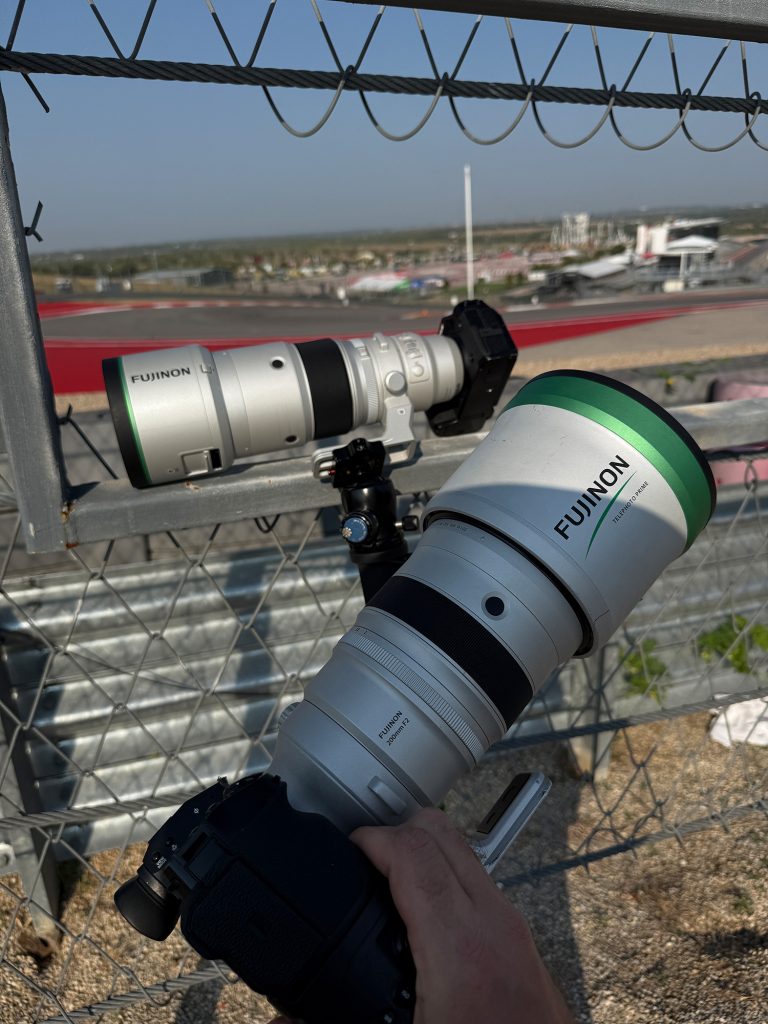
Weighing approximately 2,265 grams (about 5 pounds), the XF200mm f/2 is a substantial piece of equipment. While manageable for short periods of handheld shooting, a monopod quickly becomes a welcome and often necessary companion during long shooting days. Extended periods of handheld work, especially combined with the demanding technique of speed panning, can lead to significant physical strain. Photographers must consider their physical endurance and workflow, with many opting for monopod support to maintain stability and reduce fatigue, ensuring consistent sharpness throughout an event.
Accessory Investment:
Another practical consideration is the size of the massive front element, which necessitates dedicated 105mm filters. Given that the lens itself retails for around $6,000 new, the cost of acquiring a comprehensive filter kit represents a non-trivial additional investment. Professional photographers often build a specialized kit including:
- UV filter: For constant physical protection of the front element.
- Circular polarizer (CPL): Essential for managing reflections and enhancing color saturation in bright trackside conditions.
- Variable neutral density (VND) filter: Crucial for allowing wide-open shooting at f/2 in intense daylight, enabling the desired shallow depth of field and creamy bokeh without overexposing the image.
These accessories, while adding to the overall cost, are vital for unlocking the lens’s full creative potential in various lighting scenarios.

Strategic Placement in the Professional Kit and Broader Implications
The Fujifilm XF200mm f/2 is not typically a photographer’s first lens purchase, nor is it the most flexible in terms of focal length versatility. Instead, it occupies a specialized and highly valued niche within a professional’s kit. It becomes the third essential lens, the one reached for when conditions demand its unique attributes.
Complementary to Versatile Zooms:
For scenarios requiring flexibility, such as navigating the paddock or capturing a wider range of trackside action, versatile zoom lenses like the Fujifilm XF50-140mm f/2.8 or the XF100-400mm f/4.5-5.6 continue to perform the heavy lifting. These zooms offer the adaptability needed for dynamic and unpredictable situations. However, when the light drops, when background separation is paramount, and when absolute clarity and sharpness are the top priorities, the XF200mm f/2 emerges as the undisputed heavyweight champion. It provides a distinct "flavor" to images, an unparalleled aesthetic quality that cannot be replicated by other lenses in the Fujifilm lineup. This unique rendering is often referred to as an "umami lens" – providing a depth and richness that elevates the photographic outcome.
Implications for Fujifilm and the X-System:
The existence and performance of the XF200mm f/2, especially when paired with the X-H2S, send a clear message to the professional photography market: Fujifilm’s X-system is not just for enthusiasts or those seeking compact setups. It is a formidable platform capable of meeting and exceeding the rigorous demands of professional sports and wildlife photography. This lens validates Fujifilm’s commitment to building a comprehensive and competitive professional ecosystem, challenging the long-held dominance of full-frame systems in these specialized genres. It demonstrates that APS-C can deliver world-class image quality and performance, particularly when paired with such optically advanced glass.

Conclusion: An Indispensable Investment for the Dedicated Professional
While no photographer "needs" a lens of this specific caliber for every assignment, for those deeply committed to motorsport photography within the Fujifilm X-system, the XF200mm f/2 transforms from a luxury into an indispensable tool. Its ability to deliver stunning clarity, exquisite bokeh, and robust performance in challenging conditions provides a competitive edge and unlocks new creative possibilities. The initial acclimation, the weight considerations, and the significant investment are readily justified by the unparalleled results it produces. For professional Fujifilm shooters in motorsport, the XF200mm f/2 represents the pinnacle of what the system can offer, a lens that, once integrated into the workflow, becomes an irreplaceable asset. Its distinctive optical signature and uncompromising performance make it a lens that photographers, having experienced its capabilities, would be loath to part with, cementing its status as a true trackside love letter.