Lensrentals, a prominent industry player known primarily for its extensive equipment rental services, has released its annual data detailing the most common customer purchases in the photography and videography sectors for 2025. This latest report complements their earlier findings on rental popularity, offering a crucial dual perspective on market dynamics, consumer preferences, and the evolving landscape of professional and enthusiast gear acquisition. While rentals illuminate short-term project needs and exploratory interests, purchase data provides insight into long-term investments and essential toolkit components for creators.
The Dual Lens of Market Insight: Rentals Versus Purchases
Lensrentals operates on a unique model, with its core business centered around equipment rentals. However, a significant aspect of its service includes the "Keeper program," which allows customers to purchase rented gear, often with a full refund of their rental cost. This program transforms a rental experience into a potential acquisition, providing invaluable data on what users not only want to try but ultimately commit to owning. The distinction between rental and purchase patterns is critical for understanding market demand; while high-value, specialized items might frequently be rented for specific projects, purchases often reflect foundational necessities, complementary accessories, or reliable workhorse equipment. The 2025 purchase data, therefore, offers a deeper look into the stable, enduring elements of a creator’s kit.
Essential Acquisitions Dominate: A Look at the Top 20 Purchases
An analysis of the top 20 most-purchased items from Lensrentals’ inventory in 2025 reveals a clear emphasis on foundational and complementary products. Storage media, batteries, and protective filters consistently rank high, underscoring their universal necessity across all levels of photographic and videographic production.
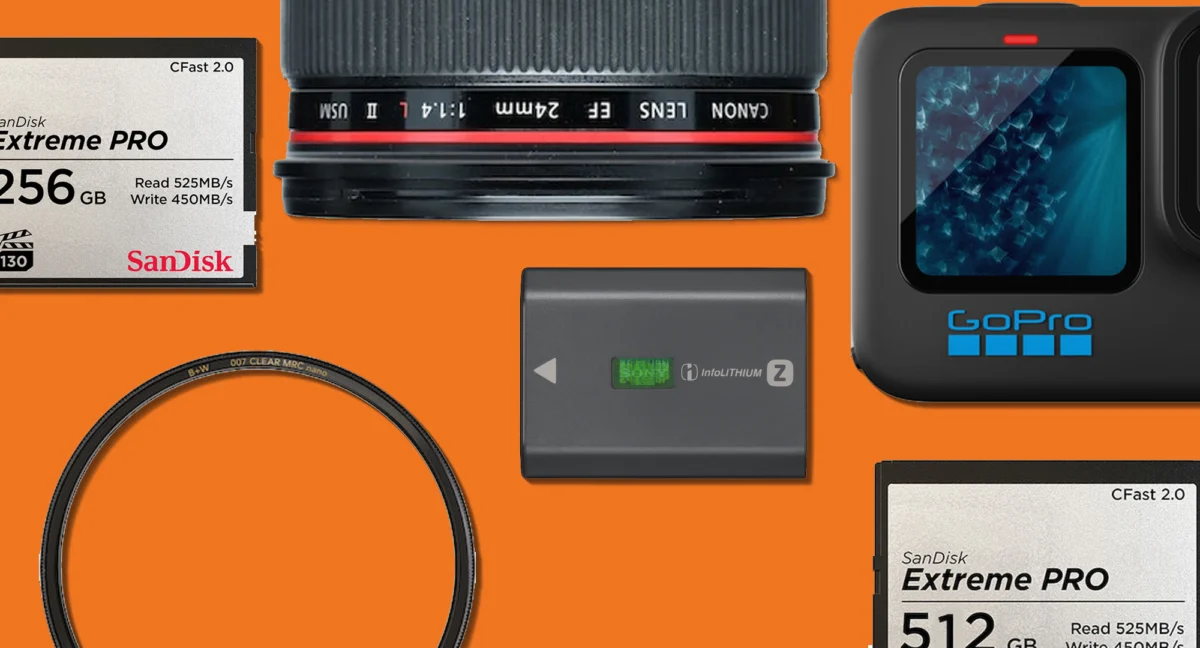
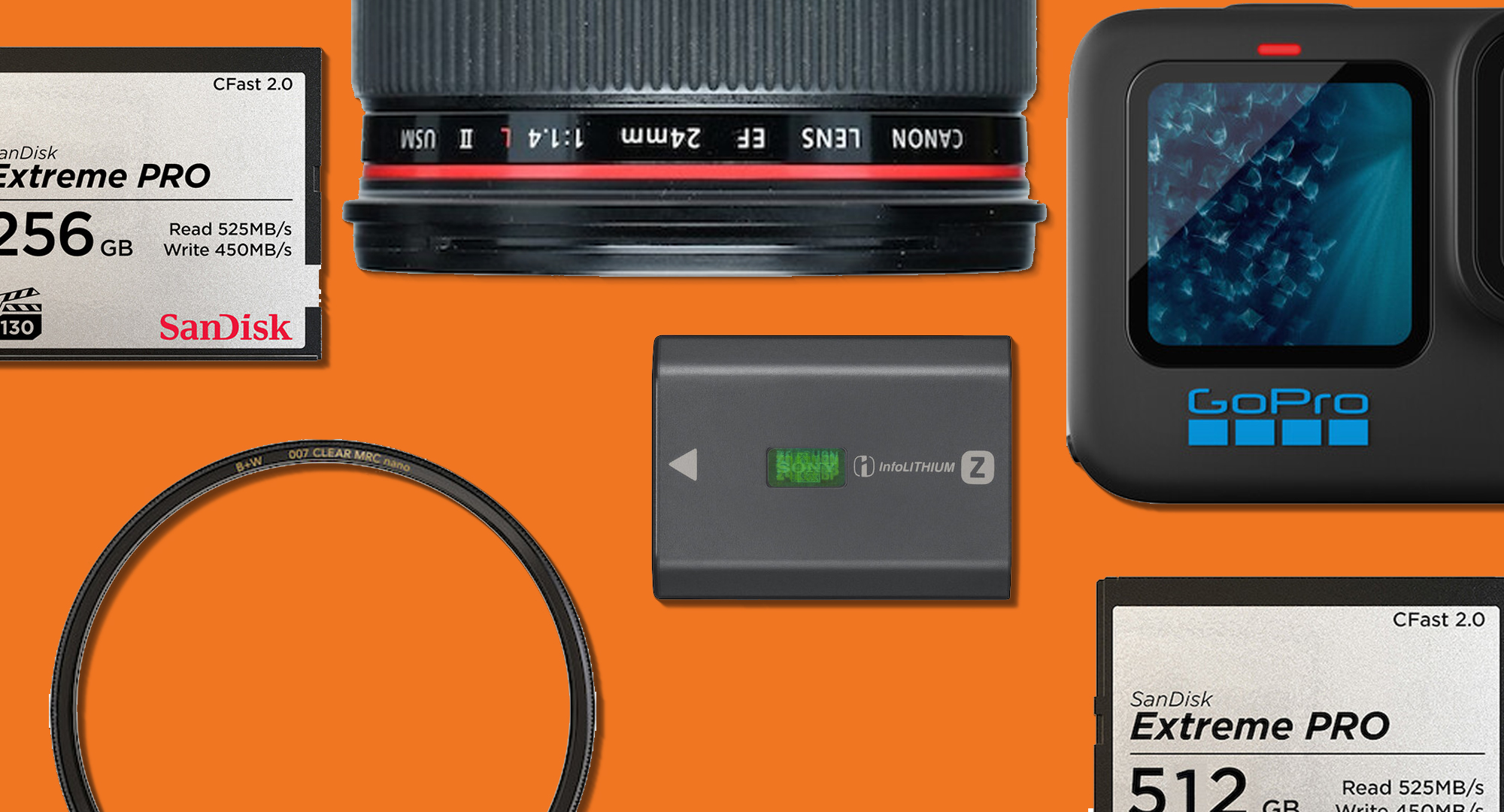
Leading the list is the SanDisk 256GB Extreme PRO 525MB/s CFast 2.0 card, indicating a strong demand for reliable, high-speed storage, particularly for videographers working with demanding codecs and resolutions. This is further reinforced by the presence of the SanDisk 512GB Extreme PRO 525MB/s CFast 2.0 at number eight, suggesting that professionals prioritize ample and fast storage to avoid workflow bottlenecks. The proliferation of 4K, 6K, and even 8K video capture, coupled with high-megapixel still photography, makes advanced memory cards an indispensable investment rather than a temporary rental.
Batteries also feature prominently, highlighting their status as consumables that professionals prefer to own rather than rent. The Sony NP-FZ100 Battery (ranked 4th) and Sony NP-FW50 Battery (ranked 5th) cater to Sony’s vast mirrorless camera user base, while the Canon LP-E6 Battery (ranked 10th) remains a staple for Canon DSLR and mirrorless users. The inclusion of GoPro AABAT-001 Battery (16th) and the GoPro Dual Battery Charger with Battery (17th) further illustrates the importance of extended power for action camera users, often operating in remote or unpredictable environments where charging opportunities are limited. Specialized power solutions like the Hawk-Woods DV-F590 L-Series Battery (9th) and Anton Bauer Dionic XT90 V-Mount Battery (19th) signify the steady demand for robust, professional-grade power for cinema cameras and high-end video rigs.
Protective filters, specifically the B+W XS-Pro Clear MRC-Nano 007 Filter in 72mm (11th), 77mm (3rd), and 82mm (6th) sizes, are another recurring theme. These filters are not creative tools but essential safeguards for expensive lenses, preventing scratches and dust while maintaining optical clarity. Their high purchase rate suggests that photographers and videographers understand the value of protecting their primary optical investments from daily wear and tear.
High-Value Gear: Strategic Purchases
Beyond accessories, several high-value lenses and cameras made the top purchases list. The Canon EF 24-70mm f/2.8L II secured the seventh spot, confirming its enduring status as a versatile workhorse lens. Despite Canon’s increasing focus on its RF mirrorless mount, the EF version continues to offer exceptional optical quality and reliability at what is now a more attractive price point for many users, especially those still invested in EF-mount DSLR bodies or adapting to mirrorless. Similarly, the Canon 70-200mm f/2.8L IS III (13th), Canon RF 28-70mm f/2L (14th), Canon 35mm f/1.4L II (15th), and Canon RF 70-200mm f/2.8L IS (20th) highlight Canon’s continued dominance in the lens market, with both legacy EF and newer RF optics being significant investments for professionals. The RF 28-70mm f/2L, in particular, represents a premium investment for mirrorless users seeking unparalleled low-light performance and bokeh.
Action cameras also find a place, with the GoPro HERO11 Black (12th) being a notable purchase. This indicates that while larger camera systems are often rented, the rugged, portable nature of a GoPro makes it a preferred personal acquisition for many, ideal for capturing unique perspectives or supplementary footage.
Lastly, the inclusion of the DJI RS 2 Gimbal Stabilizer (18th) underscores the growing importance of camera stabilization in modern videography. As creators increasingly produce dynamic, cinematic content, reliable gimbals become an essential part of their toolkit, enabling smooth, professional-looking footage.
Brand Market Share: Canon Maintains Lead, Sony Declines, DJI Rises
The brand purchase market share for 2025, measured by revenue, reveals both continuity and shifts within the industry. Canon solidified its position as the top brand, commanding 23.55% of the market share, a slight increase from 22.99% in 2024. This enduring leadership aligns with Canon’s historical dominance in both professional photography and videography, supported by a vast ecosystem of cameras and lenses.
In contrast, Sony experienced a notable decline, dropping from 21.60% in 2024 to 16.60% in 2025. This 5% decrease warrants closer examination. While Sony remains a strong innovator in mirrorless technology, this data suggests a potential plateau in outright purchases through Lensrentals’ platform, possibly due to a combination of factors such as market saturation among early adopters, increased competition, or consumers opting for newer Sony models as rentals before committing to purchase. Industry analysts might infer that while Sony’s technology is highly sought after for rentals, the long-term purchase decision might be influenced by factors like price point, ecosystem lock-in, or the perceived resale value of alternative brands.
Perhaps the most striking development is the ascent of DJI to the third position, with a 9.95% market share. This is a significant achievement, surpassing traditional camera manufacturers like Nikon (4.90%) and Fujifilm (3.24%). DJI’s strong performance can be attributed to its diverse product portfolio, including popular drones, gimbals, and action cameras. The inclusion of the DJI RS 2 Gimbal in the top purchases list directly supports this trend. The company’s focus on integrated, user-friendly solutions for content creation resonates strongly with a broad customer base, from hobbyists to professional videographers seeking efficient and reliable tools for dynamic shooting. This rise signals a broader industry trend where specialized tools for video capture and stabilization are becoming as critical as the cameras themselves.
Other brands show marginal gains and losses. Nikon saw a modest increase from 4.69% to 4.90%, suggesting a stable but slower growth in outright purchases compared to its main rivals. Brands like Blackmagic (rising from 2.58% to 3.43%), Leica (from 2.39% to 3.25%), and Fuji (from 2.80% to 3.24%) show consistent, albeit smaller, upward trends, indicating niche but loyal customer bases and growing appreciation for their specialized offerings. The significant jump for Teradek from 0.92% to 2.83% is particularly noteworthy, reflecting the increasing professional reliance on robust wireless video transmission systems on set, a trend further explored in the new product purchases.
Innovation on the Horizon: Top New Products Purchased in 2025
The data on top new products purchased in 2025 offers a glimpse into emerging trends and technological advancements gaining traction among professionals. This list predominantly features accessories, lighting, and specialized production tools, rather than core camera bodies, which are more often considered long-term investments or high-value rentals for specific projects.
The Teradek 6G V Antenna for Bolt 6 and Bolt 4K takes the top spot, reinforcing the earlier observation about Teradek’s overall market share growth. Its predecessor, the Teradek Wireless Antenna for Bolt 500/1000, was the second most popular purchase overall. This consistent demand for high-performance wireless transmission components highlights a critical evolution in film and video production: the imperative for fast, reliable, and low-latency wireless monitoring and data transfer on set. As production workflows become more agile and collaborative, wireless solutions are no longer luxuries but necessities, allowing directors, cinematographers, and clients to monitor footage remotely and efficiently.
Lighting solutions from Aputure feature prominently, with the amaran T2C RGB LED 2-foot Tube Light (2nd) and the amaran COB 200x S Bi-Color LED Monolight (3rd) leading the charge. Aputure has carved out a significant market segment by offering powerful, versatile, and relatively affordable LED lighting solutions. The popularity of these products signals a continued shift towards compact, energy-efficient, and color-tunable lighting, essential for both studio and on-location shoots. The inclusion of the Aputure Light Box 45×45 (14th) and the Aputure STORM 1200x Tunable White LED Monolight (17th) further cements Aputure’s influence, showcasing demand for both smaller, portable modifiers and high-output professional fixtures.
Other noteworthy new product purchases include essential grip and support equipment: the Manfrotto 290 Xtra Tripod/MH804 Head Kit (7th) and specialized items like the ARRI MAP-2 Adapter Plate for ALEXA Mini (8th). These indicate a continuous need for sturdy, reliable support systems and specialized rigging for professional camera setups. The presence of the Deity V-MIC D3 Pro Microphone (15th) also underscores the increasing recognition among creators that high-quality audio is as crucial as high-quality visuals, driving purchases of dedicated sound recording equipment.
Broader Market Implications and Future Outlook
The 2025 purchase data from Lensrentals provides several key insights into the broader photography and videography market. Firstly, it reaffirms the enduring value of foundational accessories. Memory cards, batteries, and protective filters are not exciting innovations, but they are non-negotiable components of any serious creator’s toolkit, and users prefer to own these consumables rather than rent them. This suggests a stable, consistent market for high-quality, reliable ancillary gear.
Secondly, Canon’s persistent dominance in purchases, despite the dynamic shifts in camera technology, speaks to the brand’s legacy, extensive lens ecosystem, and the perceived long-term value of its offerings, particularly its professional-grade L-series lenses. The fact that older EF-mount lenses continue to be purchased in significant numbers suggests that many professionals are still leveraging these optics, either on existing DSLR bodies or adapted to mirrorless systems, indicating a slower transition for some segments of the market.
Thirdly, the rise of specialized tools and brands like DJI and Teradek highlights a crucial evolution in content creation. As workflows become more complex and demand for dynamic, high-quality video increases, solutions for stabilization, wireless transmission, and versatile lighting are becoming integral, often outpacing the growth of traditional camera body purchases. This signals a market where integrated systems and workflow-enhancing accessories are gaining significant traction, reflecting the multifaceted demands placed on modern creators.
Finally, the data hints at a strategic purchasing behavior among professionals. High-value camera bodies and specialized lenses might be rented for project-specific needs, allowing creators to access a wider range of tools without the massive upfront investment. However, when it comes to long-term ownership, the preference shifts towards essential accessories, reliable workhorse lenses, and specialized tools that enhance overall production efficiency and quality. This hybrid approach to gear acquisition – renting for flexibility and purchasing for staples – is likely to continue shaping the industry in the years to come.
As the photography and videography industries continue their rapid evolution, reports like these serve as invaluable benchmarks, guiding manufacturers, retailers, and creators alike in understanding current trends and anticipating future needs. The emphasis on robust accessories, trusted brands, and cutting-edge workflow solutions paints a clear picture of a dynamic market driven by both practical necessity and technological advancement.