The much-anticipated Google Pixel 11 Pro Fold has officially launched at a price point of $1,899, positioning itself in the premium foldable smartphone segment. While Google continues to brand its smartphone lineup under the "Pixel" moniker, a name historically associated with camera innovation, the 11 Pro Fold’s release in 2026 appears to mark a strategic shift. The device is being heralded for its deep integration of Gemini AI and advanced software capabilities, yet it faces significant scrutiny for what many reviewers describe as an iterative hardware design and a camera system that, despite some improvements, largely relies on existing technology. This approach places the Pixel 11 Pro Fold in a curious "holding pattern," according to industry observers, where its appeal is driven less by cutting-edge physical attributes and more by its computational intelligence.
Design and Build: Familiar Form, Evolving Market Dynamics
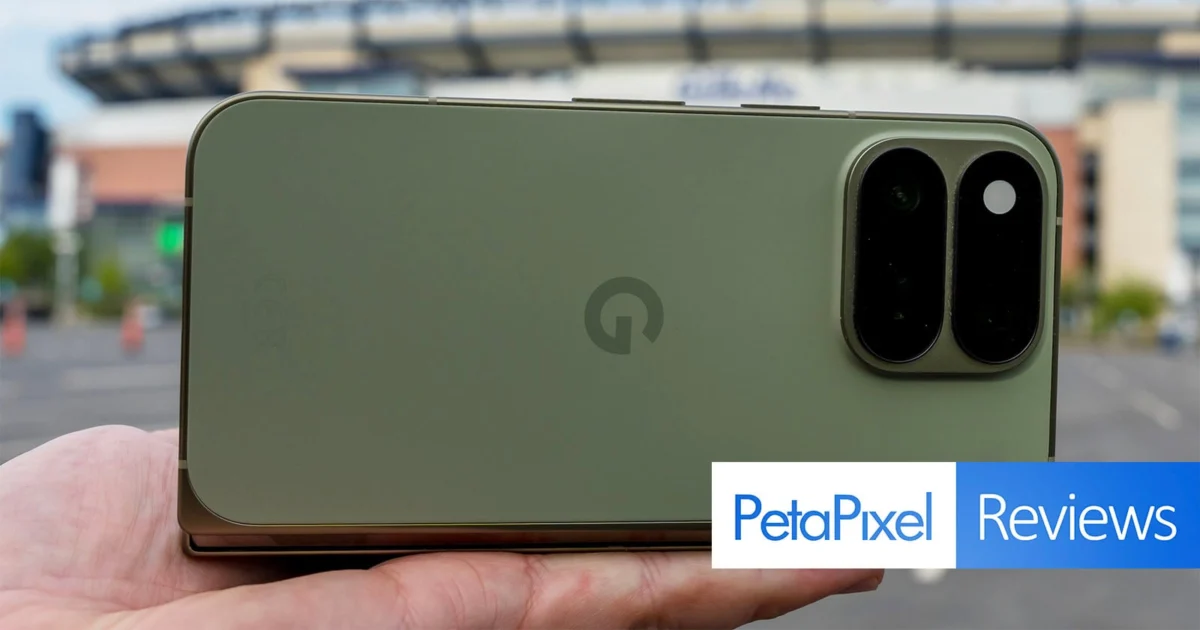
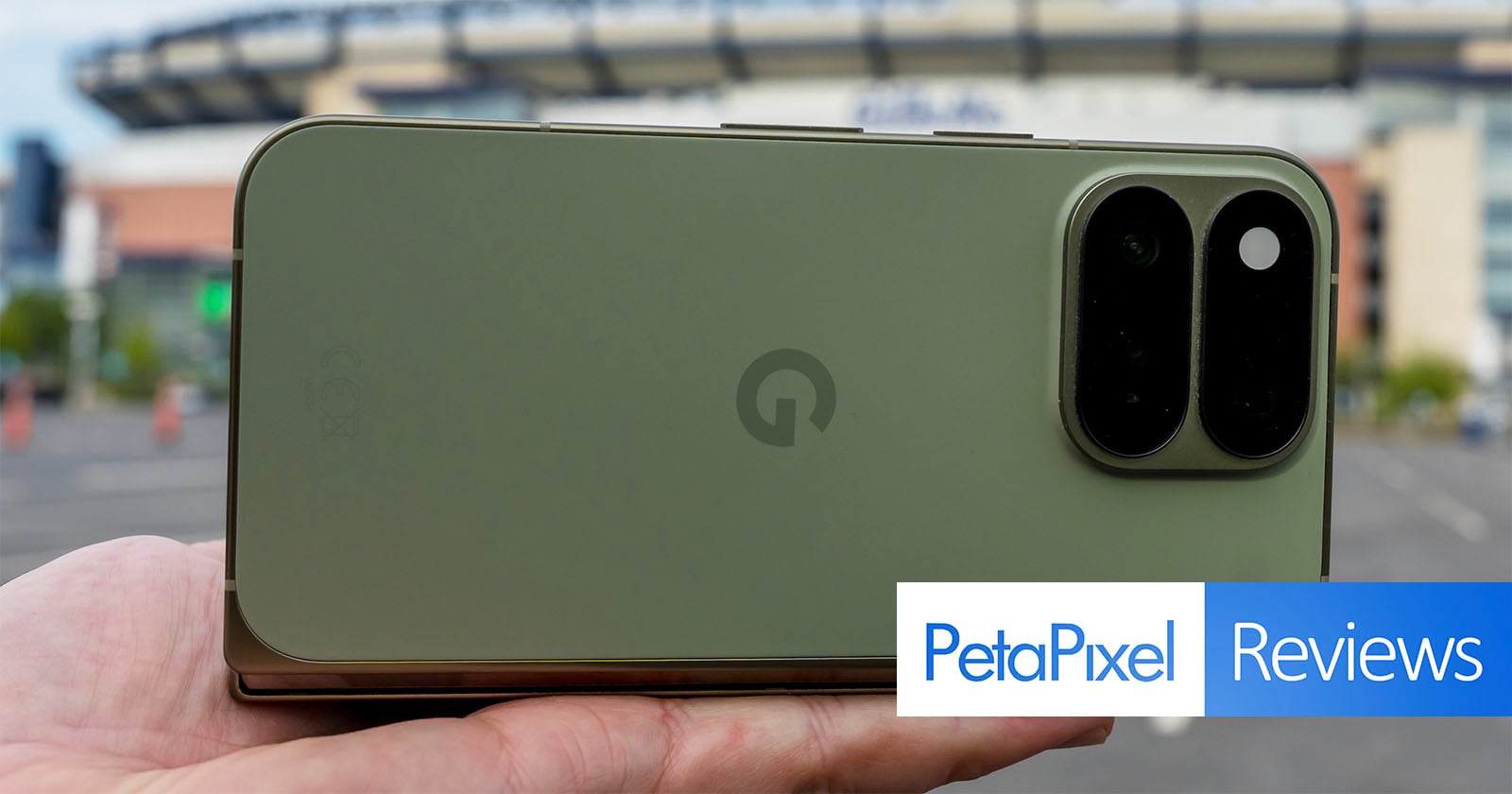
Upon initial inspection, the Google Pixel 11 Pro Fold presents a design that bears a striking resemblance to its immediate predecessor. While subtle adjustments in thickness and weight have been noted, the overarching form factor remains largely consistent with the previous year’s model. This design philosophy stands in stark contrast to a rapidly evolving foldable market, where competitors are actively pursuing thinner, lighter, and more robust designs without compromising performance.
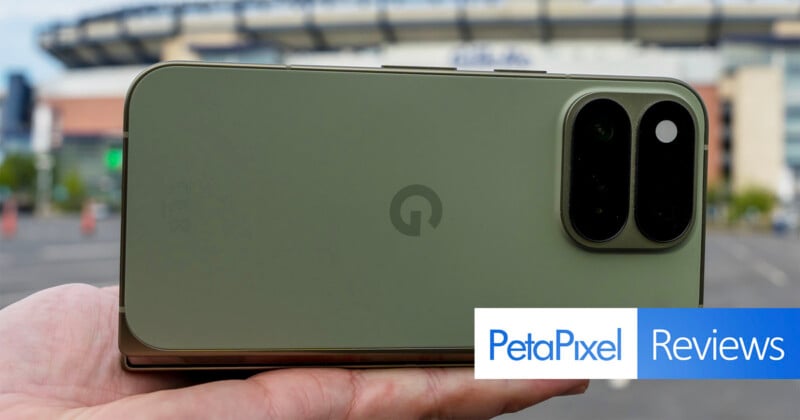
Google’s decision to maintain a familiar aesthetic raises questions about its priorities in the competitive foldable arena. While radical redesigns are not always a prerequisite for success, the industry trend in 2026 has seen significant advancements in form factor optimization. For instance, the Samsung Galaxy Z Fold 8 has embraced a more compact, "passport-sized" profile, though it is acknowledged to feature more pedestrian camera capabilities. In contrast, the Samsung Fold 8 Ultra and the Motorola Razr Fold (2026) have adopted longer frames, indicating a diversified approach to foldable ergonomics. The Pixel 11 Pro Fold, with its distinctly thicker profile when folded, occupies a middle ground, neither as svelte as some rivals nor as overtly focused on a specific niche.
A notable strength in the Pixel 11 Pro Fold’s physical construction is its enhanced durability. The device boasts an IP68 rating for dust and water resistance, a significant advantage over many North American competitors, primarily Samsung and Motorola, which have historically lagged in this area for their foldable offerings. This robust protection offers a tangible benefit to users seeking a more resilient device. However, this achievement is tempered by the fact that several Chinese brands, such as the Honor Magic V6, have already achieved comparable or superior ingress protection (e.g., IP68 and IP69) within noticeably thinner and lighter bodies, often integrating larger batteries and more advanced image sensors.
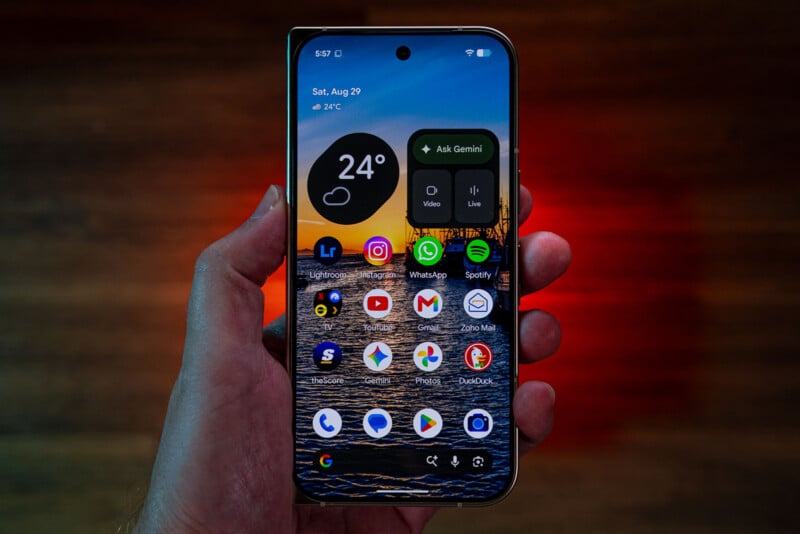
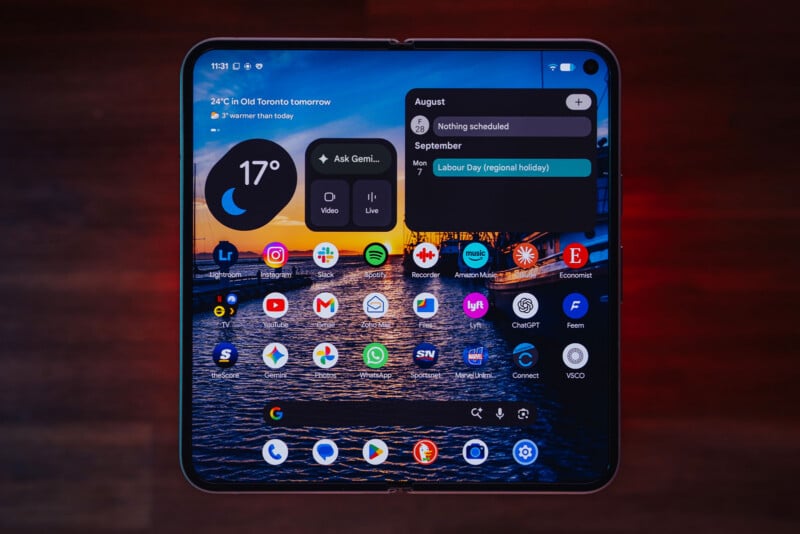
The Pixel 11 Pro Fold features an 8-inch OLED inner display (2152 x 2076 pixels) and a 6.5-inch OLED cover screen (2342 x 1080 pixels), both panels largely carried over from the previous generation. While the aspect ratio of the cover screen is 19.5:9, giving the inner screen a near 1:1 proportion when unfolded, competitors like the Galaxy Fold 8 Ultra and Razr Fold offer wider 21:9 aspect ratios on their cover displays. This choice by Google influences the user experience, particularly in how content is viewed and how the device feels in hand.
A unique hardware integration that distinguishes the Pixel 11 Pro Fold is the inclusion of Qi2 magnetic coils, colloquially known as MagSafe. Google introduced this feature as "Pixelsnap" with the Pixel 10 series, allowing for seamless attachment of various accessories, from charging pads to photographic aids. This built-in magnetic support is a significant differentiator, as most other Android manufacturers offering MagSafe compatibility do so through cases rather than direct device integration, and its presence on a foldable device is unprecedented in the current market.
Camera System: Software Innovation Amidst Hardware Plateau
The camera system of the Pixel 11 Pro Fold reflects Google’s continued reliance on computational photography, with hardware updates appearing conservative. The primary wide lens has received the most significant upgrade, now featuring a 48-megapixel sensor (24mm equivalent) with a larger Type 1/1.3 image sensor and an f/1.7 aperture, complemented by Optical Image Stabilization (OIS). Google asserts that this enhancement specifically targets improved low-light performance. This marks the second consecutive generation where Google has increased the size of the main camera sensor in its Pixel Fold line, signaling a focused, albeit singular, effort to bolster core imaging capabilities.
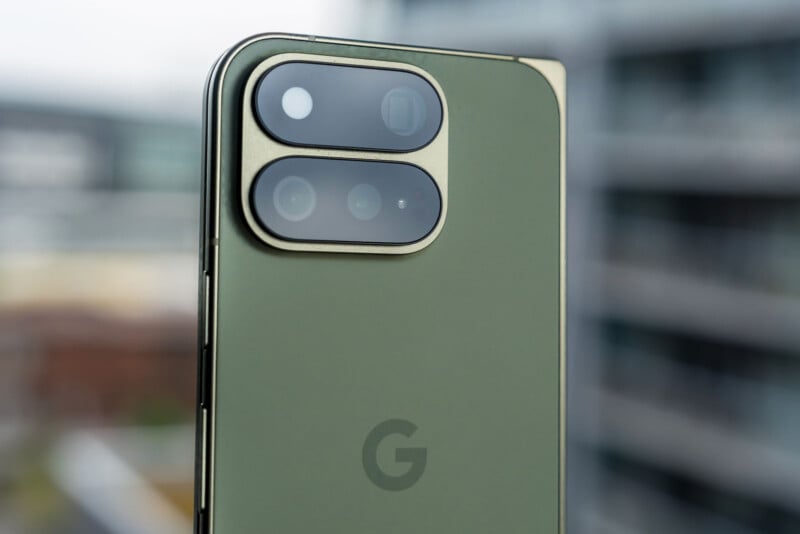
However, this focus on the main sensor does not extend to the rest of the camera array. The 10.8-megapixel telephoto lens, offering 5x optical zoom (112mm equivalent), retains a Type 1/3.2 sensor with an f/3.1 aperture and OIS. Similarly, the 10.5-megapixel ultra-wide lens (13mm equivalent) utilizes a Type 1/3.4 sensor with an f/2.2 aperture and autofocus, mirroring its predecessor’s specifications. The two front-facing cameras also remain unchanged, each featuring a 10-megapixel sensor. This selective hardware upgrade strategy suggests that Google is banking heavily on its software algorithms to compensate for the aging hardware in the secondary lenses.
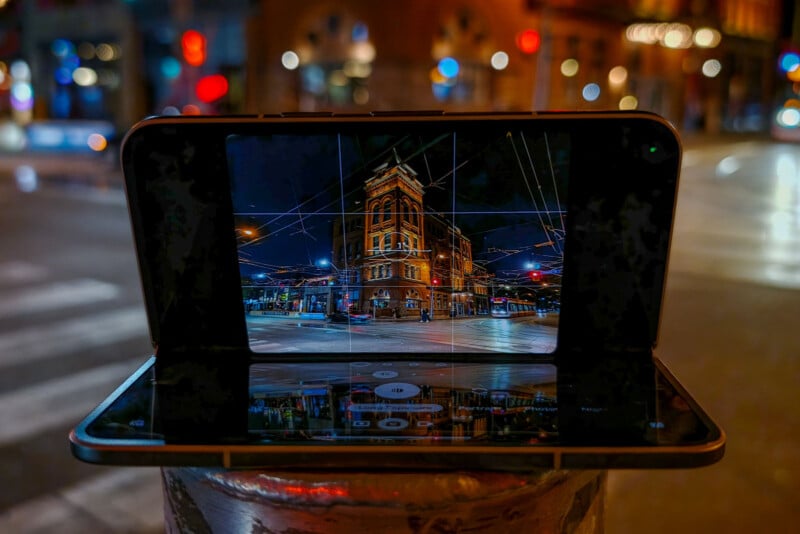
In terms of user experience, a persistent and somewhat frustrating issue from previous Pixel Fold generations remains: when the device is unfolded and tilted for photography, the live camera preview is exclusively displayed on the top half of the screen. The inability to switch this view to the lower half complicates framing and composition, particularly for low-angle shots, hindering creative photographic approaches that the foldable form factor could otherwise enable.
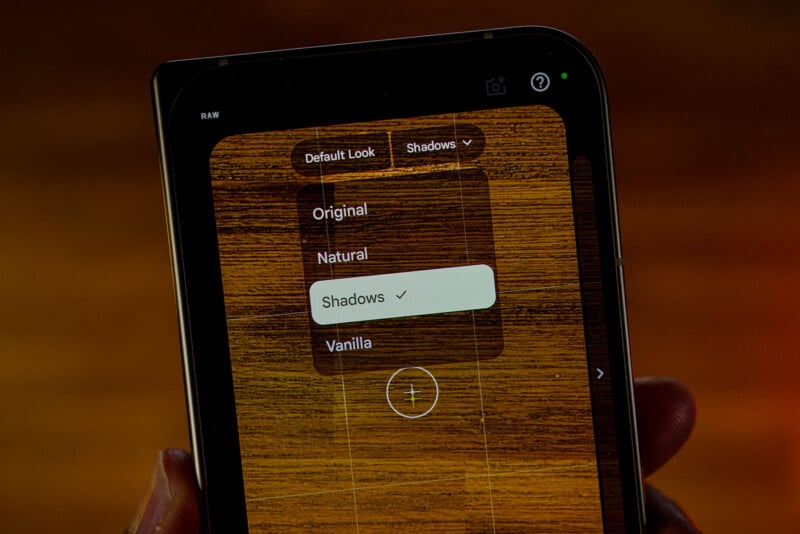
Google has introduced several new software features aimed at enhancing the photographic experience. The most significant of these is "Camera Looks," a new setting within the camera app that allows users to select from seven distinct filters or styles: Editorial, Velvet, Classic, Digi, Black Tie (the sole monochrome option), and Minimal. These styles are further customizable through a suite of sliders, providing a degree of creative control previously unseen in Pixel cameras. Alongside these styles, a drop-down menu offers four distinct image processing options: Original (Google’s untouched computational pipeline), Natural (reduced computation for more authentic tones), Shadows (enhanced contrast for dramatic effect), and Vanilla (a warmer, film-like color temperature). This granular control over image processing represents a substantial departure from Google’s traditionally "point-and-shoot" computational approach.
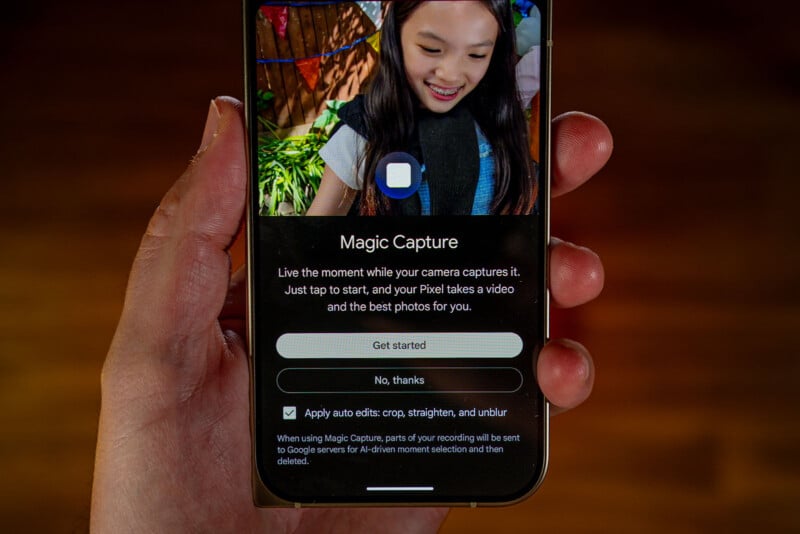
Another notable addition is "Magic Capture," a dedicated mode leveraging AI to "freeze" action by selectively extracting frames from a short video clip. Unlike traditional motion photos, Magic Capture can be used when shooting 50-megapixel JPEG or RAW images, though the final output is capped at 10.8 megapixels. A key limitation is its incompatibility with the ultra-wide camera and its tendency to override manual exposure settings, relying instead on the phone’s automated exposure triangle. Critically, the AI autonomously selects what it deems the "best" moments, leaving the user without direct control over frame selection. Given that Pixel phones, even with manual settings, do not support burst shooting, Magic Capture serves as Google’s attempt to address fast-action photography, though its "beta" feel and inconsistent performance, particularly with subject speed and proximity, suggest further refinement is needed.
A minor, yet intriguing, hardware-software integration is "HiLight," a feature that moves the LED flash to the opposite side of the camera module and allows it to illuminate in different colors. This functionality is not for photographic purposes but rather for notifications. When the phone is placed face down, HiLight can glow in custom colors for incoming calls from key contacts, reminiscent of vintage BlackBerry notification LEDs, or when summoning Gemini.
Image Quality Analysis: A Tale of Two Cameras

The Pixel 11 Pro Fold’s image quality presents a mixed bag, largely influenced by Google’s hardware choices and software optimizations. The larger Type 1/1.3 main sensor does contribute to improved light gathering, yielding better low-light performance compared to previous models. However, the improvement is often incremental, failing to represent a significant leap forward in a market increasingly defined by advanced sensor technology. Google’s persistent reliance on its computational photography engine, while powerful, reaches its limits when paired with aging hardware. This is particularly evident in the noticeable disparity in quality between the main camera and the telephoto and ultra-wide lenses, especially under challenging conditions.
On a positive note, the main camera demonstrates enhanced color accuracy and dynamic range. Night shots, while generally improved, can occasionally exhibit an over-aggressive approach to detail recovery in darker areas and an unnecessary saturation boost. These are not universal occurrences but are frequent enough to be observed by discerning users.

The "Camera Looks" feature emerges as the most visually impactful change to the Pixel’s imaging capabilities. While not without their imperfections, these filters offer a novel avenue for creative expression on a Pixel device. "Editorial" mode, for instance, adds a dynamic and dramatic flair to images, even those of mundane subjects. Conversely, a combination of "Minimum" and "Natural" processing can evoke a more classic, pre-computational smartphone photography aesthetic. This newfound control over Google’s image processing pipeline is a promising development, and its refinement in future updates could further solidify its appeal. These "Looks" are exclusive to the Pixel 11 Pro line, underscoring their role as a key differentiator for the latest generation.
The "Magic Capture" feature, however, struggles to consistently deliver on its promise. Its "beta" state is evident in its hit-or-miss performance, particularly when attempting to freeze fast-moving subjects. The efficacy of the feature is highly dependent on the speed of the subject and its proximity to the camera, with Google’s AI making the final determination of the "best" frames. This contrasts with action modes on competitor phones, especially those from Chinese manufacturers, which often employ sophisticated bracketing and software optimization techniques for more reliable action freezing. The absence of effective face or subject detection for consistent performance suggests that either the underlying Tensor G6 chipset requires more processing power, or the AI algorithms need further training.
Video Capabilities: Creator-Focused, Lacking "Pro" Features
Video recording capabilities on the Pixel 11 Pro Fold remain largely consistent on paper but show practical improvements. The device supports 4K recording at 24, 30, or 60 frames per second across all rear cameras, demonstrating enhanced low-light quality and overall stabilization. "Video Boost," Google’s computational video enhancement feature, is present, though its automated nature limits direct user control, often necessitating post-production edits.
Despite its "Pro" designation, the Pixel 11 Pro Fold’s video features do not cater to professional videographers. It notably lacks advanced functionalities such as Log recording, full manual controls, or 4K at 120fps, features increasingly common in high-end smartphones. Instead, Google has focused on a "Creator mode" tailored for social media content producers, particularly those active on platforms like TikTok and Instagram. This mode includes practical tools such as a social media grid overlay, speech enhancement, and an integrated teleprompter. The teleprompter’s ability to function across both the cover and main screens, with a live view of the rear camera and creator settings on the front display, is a thoughtful addition. The Pixelsnap (MagSafe) integration further facilitates content creation by enabling easy magnetic mounting for stable shots.
Market Positioning and Broader Implications

The Google Pixel 11 Pro Fold’s debut in 2026 elicits a sense of déjà vu, with many reviewers noting that its design and feature set feel more akin to a 2024 device. This sentiment highlights a perceived slowdown in Google’s foldable innovation, particularly when juxtaposed against the rapid advancements seen in the broader global market. While North America has historically seen a more gradual evolution in foldable technology, the current landscape of 2026 is characterized by a wider array of innovative designs and capabilities, many of which are not being spearheaded by Google.
Competitors are actively pushing boundaries in terms of device thinness, battery longevity, camera performance, and multitasking functionalities. In contrast, the Pixel 11 Pro Fold appears to be taking a more measured, almost conservative, approach. Google’s strength undeniably lies in its software prowess and AI capabilities, deeply integrated through Gemini and new camera features like Camera Looks. However, this reliance on software differentiation, while brilliant in flashes, may be coming at the expense of cutting-edge hardware development in its foldable line. This suggests a strategic decision by Google to position its foldables as an extension of its AI ecosystem rather than as a primary driver of mobile hardware innovation, potentially treating the foldable segment as ancillary to its broader product portfolio.

The device benefits from Google’s commitment to seven years of Android and security updates, offering a significant long-term value proposition that is hard to predict in its full scope. However, for current owners of the Pixel 10 Pro Fold, the upgrade justification hinges almost entirely on the slightly improved main camera sensor and the new "Camera Looks" feature, making the $1,899 starting price a considerable investment for what amounts to an iterative update on the imaging front. For users transitioning from much older Pixel devices, the Pixel 11 Pro Fold will undoubtedly feel like a substantial upgrade, benefiting from years of Google’s software refinements and AI integrations.
Alternatives in the 2026 Foldable Landscape

For consumers considering a foldable in 2026, several compelling alternatives exist, each with distinct strengths:
- Samsung Galaxy Z Fold 8: Offers a unique "passport-shaped" design for enhanced portability but is noted for its more basic camera system, appealing to users prioritizing form factor over photographic prowess.
- Samsung Galaxy Z Fold 8 Ultra: Represents Samsung’s more serious foray into high-end foldable imaging, significantly narrowing the camera performance gap with traditional slab phones.
- Motorola Razr Fold (2026): Presents an intriguing alternative to Google’s offering, distinguished by its robust camera performance, innovative design, and superior battery life.
- Oppo Find N6 and Honor Magic V6: These Chinese brands continue to drive significant innovation in the foldable space, often surpassing competitors with thinner designs, larger batteries, advanced image sensors, and superior ingress protection ratings, making them strong choices from an imaging perspective, especially for global consumers.
In conclusion, the Google Pixel 11 Pro Fold stands as a testament to Google’s AI and software capabilities, offering a smart, intuitive daily experience. Yet, its conservative hardware evolution and iterative design in a rapidly advancing market raise questions about its long-term competitiveness. While "Camera Looks" and Gemini integration offer flashes of brilliance, the device’s overall trajectory suggests a strategic pivot towards software differentiation rather than leading with groundbreaking hardware innovation in the foldable segment.