The profound beauty of the Earth offers reserves of strength that endure as long as life lasts. This sentiment, echoed by conservationist Rachel Carson, resonates deeply with Paul Nicklen, a photographer whose life’s work has been dedicated to capturing the raw, untamed spirit of our planet’s wildlife. Nicklen’s journey, which began in the stark, vast landscapes of Saskatchewan and led to the remote Arctic, fundamentally reshaped his perspective on the world and the invaluable connection humans can forge with the natural realm. This profound shift, cultivated through years of observation and photographic documentation, culminated in an extraordinary encounter off the coast of Dominica with sperm whales, creatures often misunderstood yet possessing a remarkable capacity for gentle interaction.
From Heartland Roots to Arctic Adventures
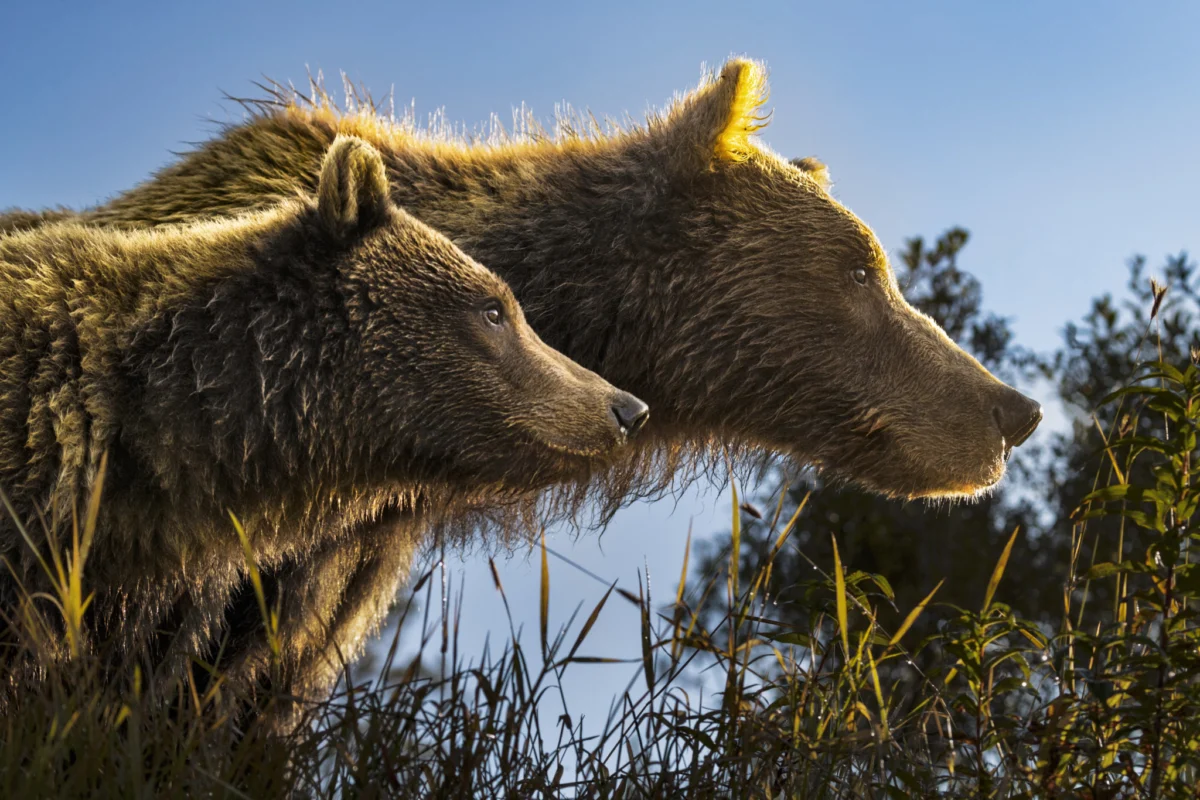
Nicklen’s early life in Saskatchewan, shaped by a family heritage rooted in farming, instilled in him a robust work ethic. However, this foundation was soon to be challenged by a bold family decision: a move to the remote Arctic. This transition, while demanding a relinquishment of familiar comforts such as easy access to family and the predictable rhythms of temperate seasons, proved to be a transformative experience. The allure of the unknown and the promise of a life more intimately connected to nature far outweighed what was left behind. It was in this starkly beautiful environment, amidst iconic Arctic fauna like wolves and polar bears, that Nicklen’s lifelong fascination with the wild was ignited.
A Lens on the Wild: Documenting Earth’s Biodiversity
As Nicklen evolved into a photographer, his camera became his primary tool for bridging the gap between humanity and the animal kingdom. His portfolio boasts an impressive array of subjects, from the majestic presence of wolves and penguins to the sleek power of sharks and the elusive grace of spirit bears. This dedication to documenting biodiversity underscores his belief that "there is no greater privilege than living each day on a planet overflowing with more species and beauty than we could ever fully grasp." Among these encounters, his experiences with whales, the "true giants of Earth," stand out as particularly profound gifts, offering a unique window into the complex lives of these marine behemoths.
Demystifying the Giants: Sperm Whales and the Myth of the Monster
Creatures like orcas and sperm whales, much like the Arctic wildlife Nicklen grew up with, often evoke a primal mix of fear and awe in human observers. Their immense size and position as apex predators in the ocean’s ecosystem contribute to an aura of formidable power. However, a closer examination of scientific records reveals a surprising lack of definitive instances where orcas or sperm whales have intentionally caused human fatalities. Nicklen’s own extensive fieldwork has consistently demonstrated a different reality – one of intelligence, curiosity, and a surprisingly gentle disposition that often lies hidden beneath layers of myth and misconception, particularly surrounding sperm whales.
The pervasive narrative surrounding sperm whales has been significantly influenced by literature and folklore, most notably Herman Melville’s iconic novel Moby Dick. Captain Ahab’s relentless pursuit of the white whale, a symbol of nature’s untamed power and inscrutable will, has cemented a powerful, albeit often inaccurate, image of these creatures in the public consciousness. This fictional portrayal, while a literary masterpiece, has contributed to a broader perception of sperm whales as formidable and potentially dangerous entities.
An Encounter in Dominica: The Curious Calf
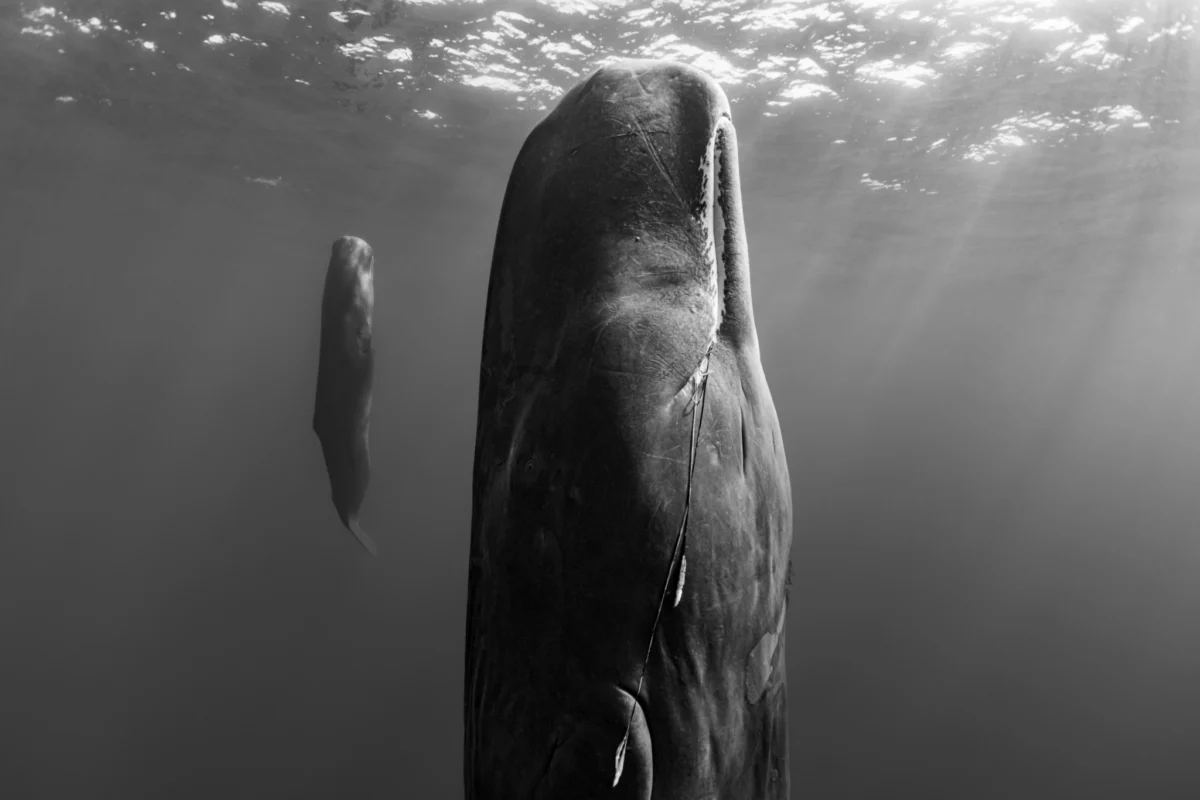
One of Nicklen’s most cherished and eye-opening experiences occurred off the coast of Dominica, where he had the opportunity to free-dive with a pod of sperm whales. Sperm whales typically spend the majority of their lives in the deep ocean, surfacing only to breathe and rest, often in a vertical posture with their heads pointed towards the surface. During this particular dive, Nicklen was able to approach a group of these magnificent animals as they rested in the water column.
The matriarch and the rest of the pod appeared to be aware of and comfortable with his presence, a testament to the respect and patience Nicklen brings to his wildlife photography. However, as he ascended to catch his breath, his attention was drawn to a much younger member of the group. This calf, affectionately nicknamed "Ariel" by local residents, had evidently grown restless during the pod’s resting period.
In a moment that defied the perceived danger associated with such a large animal, Ariel, a juvenile sperm whale measuring approximately 20 feet in length, made a direct approach towards Nicklen. Despite his years of experience with unpredictable wildlife, the sheer speed and proximity of the young whale presented a moment of heightened awareness. Bracing himself, Nicklen observed as Ariel, whose mouth was thankfully toothless, gently nudged his camera housing with her gums. This interaction, characterized by a playful curiosity rather than aggression, was reminiscent of an "overgrown toddler" engaging with a new toy. Far from the vengeful sea monster of literary legend, Ariel embodied a "bubbly, curious, and surprisingly gentle" spirit.

This interaction serves as a powerful counterpoint to the often-dramatic portrayals of marine life. It highlights the intelligence and individuality of these animals, suggesting that their behavior is often dictated by curiosity and social dynamics rather than inherent aggression. The incident also underscores the importance of responsible wildlife observation, emphasizing the need for a calm and respectful approach to minimize disturbance and allow for natural behaviors to unfold.
The Enduring Gift of Nature
Reflecting on his life’s trajectory, Nicklen recognizes that his early years spent observing Arctic wildlife laid the groundwork for a deeper connection with Earth’s most extraordinary creatures, including Ariel and her pod. The more time individuals spend immersed in natural environments, the more the world reveals its wonders and offers unparalleled experiences. In an era increasingly dominated by the conveniences and distractions of modern society, nature offers something far more profound: authentic connection.
This connection, forged through shared moments of observation and respect, transcends material possessions and ephemeral comforts. It speaks to a fundamental human need to belong to something larger than ourselves, to be a part of the intricate web of life that sustains our planet. The lessons learned from the wild, from the stoic resilience of Arctic predators to the playful innocence of a young whale, are invaluable. They teach us about adaptation, interdependence, and the profound beauty that exists when we allow ourselves to be truly present in the natural world.
Implications for Conservation and Human Understanding
The encounter with Ariel and the broader context of Nicklen’s photographic work carry significant implications for wildlife conservation and our collective understanding of the natural world. By challenging long-held myths and showcasing the gentle intelligence of animals like sperm whales, Nicklen’s images and narratives contribute to a more nuanced and empathetic appreciation of marine life.
Supporting Data and Scientific Context:
Sperm whales ( Physeter macrocephalus) are the largest toothed whales and possess the largest brains of any known animal. Their complex social structures, characterized by distinct matrilineal groups, and their deep diving capabilities for foraging on giant squid highlight their remarkable evolutionary adaptations. Studies on sperm whale vocalizations have revealed intricate communication patterns, suggesting a sophisticated level of social interaction and cognitive ability. Despite their formidable appearance, recorded instances of aggression towards humans are exceptionally rare, often occurring in defensive situations or when the animals are provoked or injured.
Chronology of Understanding:
For centuries, human interaction with large marine mammals has been characterized by a mixture of fear, exploitation, and nascent scientific curiosity. Early encounters were largely driven by commercial whaling, which led to significant population declines for many whale species. Scientific research, particularly in the latter half of the 20th century and into the 21st century, has progressively shifted the understanding of whale behavior from one of simple instinct to complex social and cognitive processes. Photographers and filmmakers like Paul Nicklen play a crucial role in this ongoing process of re-education by providing compelling visual evidence of these animals’ true nature.
Broader Impact and Implications:
The ability to observe and document animals like sperm whales in their natural habitat without causing undue stress or harm is a testament to advancements in both photography technology and ethical wildlife interaction protocols. Nicklen’s work serves as a powerful advocacy tool, fostering a greater sense of stewardship for marine ecosystems. The emotional resonance of his photographs and personal anecdotes can inspire a generation to advocate for conservation efforts, support marine protected areas, and make more conscious choices that minimize human impact on ocean health. The implication is clear: by fostering a deeper understanding and appreciation for the wild, we strengthen our resolve to protect it.
In conclusion, Paul Nicklen’s journey from the vast plains of Saskatchewan to the depths of the ocean, punctuated by transformative encounters with Earth’s most magnificent creatures, underscores a fundamental truth: the greatest gifts in life are often found not in material accumulation, but in the profound connections we forge with the natural world. His work reminds us that by looking beyond fear and myth, and by embracing curiosity and respect, we can unlock a deeper understanding of our planet and our place within it, a realization that is, indeed, the greatest gift of all.