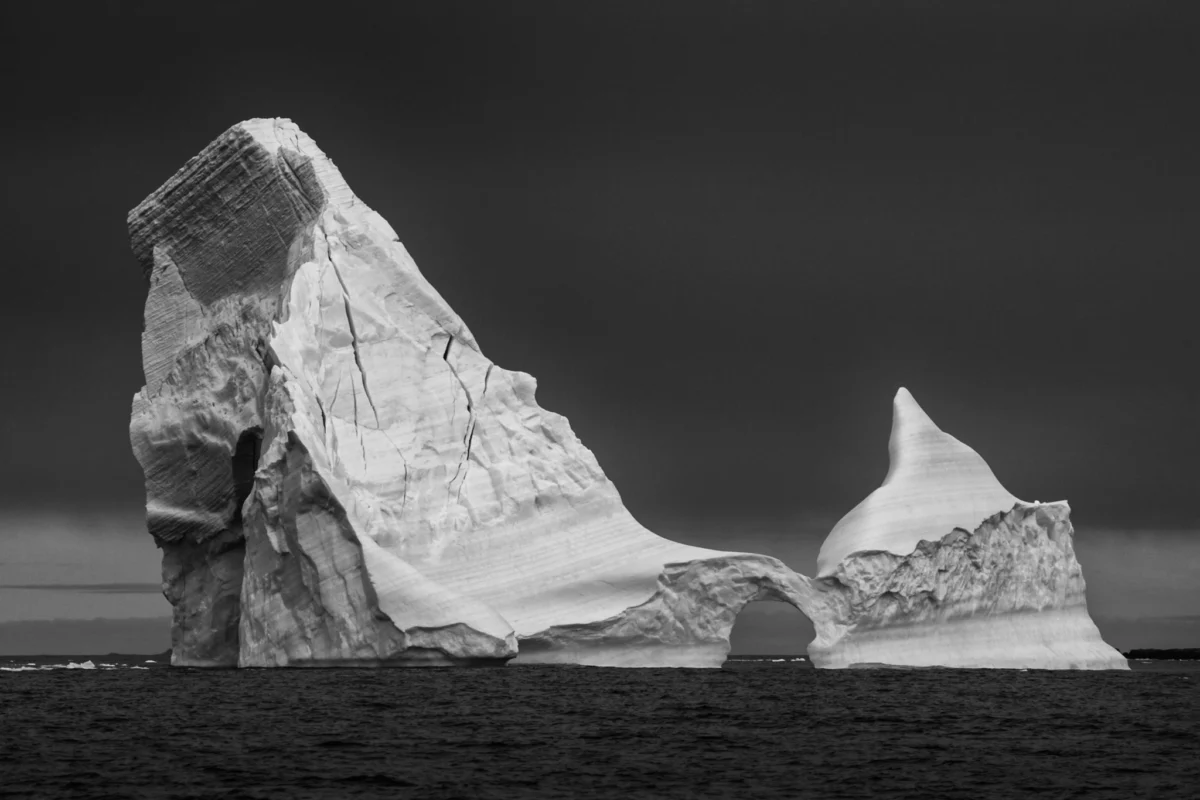
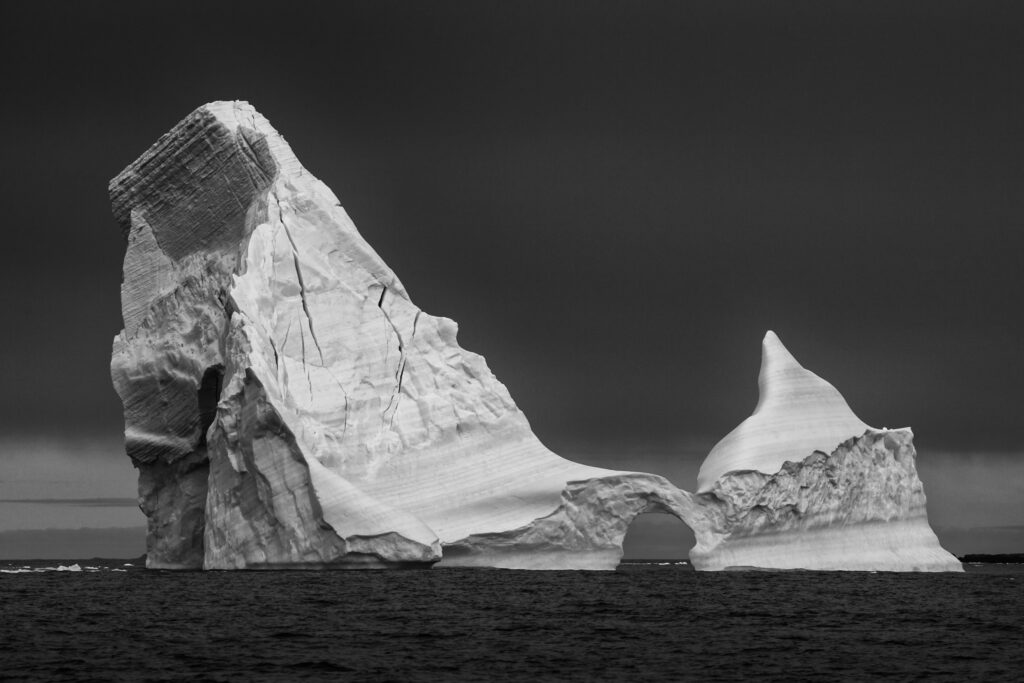
A land of ice is a realm of constant transformation, with new patterns and structures emerging through the clash of natural forces. During one of my earlier expeditions to the remote shores of the last continent, I observed a particularly delicate ice arch and diligently adjusted my camera. After finally settling on a composition, framing the delicate arch between two towering spires of ice, a rumble echoed across the water. Within seconds, the entire structure gave way and plunged into the sea, crackling like thunder and generating a cascade of waves. One of the most spectacular displays of nature’s artistry, carved by tumultuous seas, long winters, and raging winds, vanished before my eyes. This fleeting moment, captured and shared with the world, serves as a potent metaphor for the profound and accelerating changes occurring in Earth’s polar regions.
For those who have followed my photographic journey, my deep fascination with the planet’s polar regions is likely evident. This profound connection to icy landscapes, both in the far north and south, began in my childhood. At the tender age of four, my family relocated to Baffin Island, a formative experience that introduced me to the world through the ever-shifting lens of ice. This immersion fostered a sense of intimacy with the vast, untamed wilderness that surrounded me, even in my relative isolation.
Childhood Roots in the Arctic
My upbringing on Baffin Island was unique, as our household was one of the few non-Inuit families in the community. These early years were defined by navigating a frozen realm, guided by the wisdom of Inuit elders. I learned invaluable skills: tracking animals across snow-covered terrain, discerning safe ice from treacherous expanses, and enduring the extreme cold. These experiences, deeply ingrained from childhood, ultimately shaped my professional path as a National Geographic photographer. My life’s trajectory has been irrevocably influenced by the elemental power of ice and the profound warmth of Inuit culture, making the Arctic and Antarctic regions perennial subjects of my work.
The act of photographing ice offers boundless creative potential. The interplay of light as it bends, refracts, and scatters through frozen crystals creates intricate patterns and textures that are constantly evolving. Even when revisiting the same iceberg from a consistent vantage point, each photograph captures a unique iteration of its form. However, these dynamic conditions also present significant challenges. An overcast sky, for instance, can mute details, transforming a majestic iceberg into a featureless mass against a somber horizon. Despite these environmental constraints, I find a unique sense of freedom within the icy kingdoms of our planet. They compel exploration of unconventional creative avenues, often resulting in more compelling imagery and richer narratives behind each frame.
The Ephemeral Beauty of Ice Formations
The ephemeral nature of ice formations underscores the urgency of their documentation. Consider the dramatic collapse of an ice arch observed during an expedition to Antarctica. The arch, a testament to the forces of erosion and freezing, stood precariously between towering ice spires. As I meticulously framed the shot, a deep rumble reverberated across the water. In a matter of seconds, the entire structure succumbed to gravity, crashing into the sea with a sound like thunder. This spectacular display of natural artistry, sculpted by the relentless forces of waves, prolonged winters, and powerful winds, dissolved before my eyes. Such moments, though awe-inspiring, highlight the impermanence of these frozen landscapes.
The photograph titled "The Last Stand," featured here, captures a similar instance of delicate beauty succumbing to natural forces. The image depicts a fragile ice arch, a testament to Antarctica’s captivating yet vulnerable environment. The hurried effort to photograph this formation before its inevitable plunge into the ocean encapsulates the photographer’s race against time to document these disappearing wonders.
"Ice Waterfall": A Symbol of a Vanishing Arctic
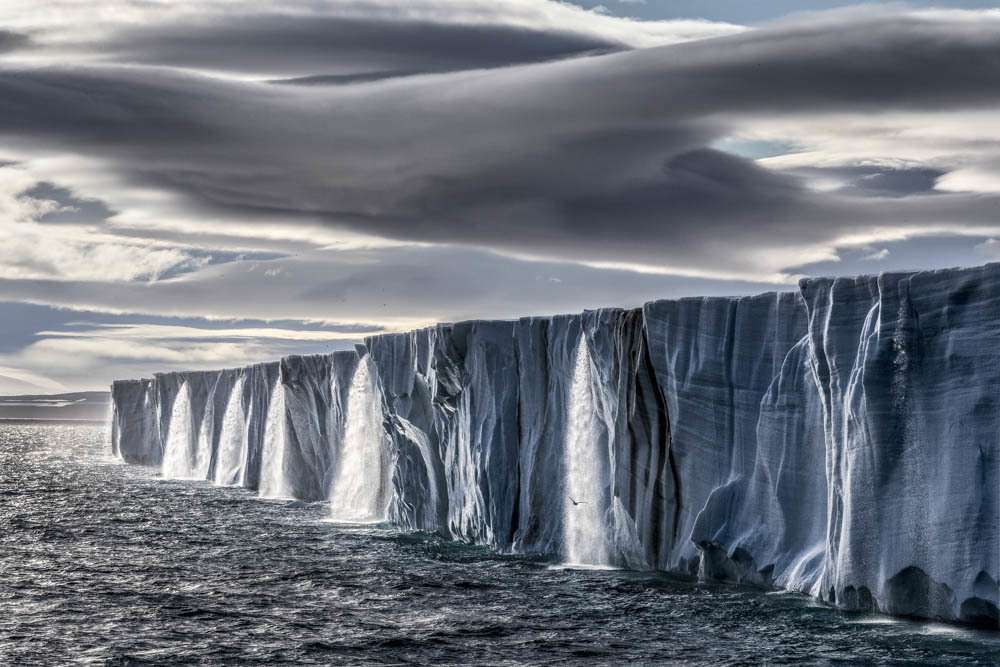
The photograph "Ice Waterfall," prominently displayed, embodies the confluence of art, storytelling, and conservation. This image, adorning homes worldwide, features dark clouds, cascading ice falls, and the expansive Nordaustlandet ice cap. It vividly narrates the story of a rapidly vanishing Arctic. "Ice Waterfall" has become an advocate for polar regions, recognized and utilized by prominent figures such as Al Gore. Its significance was amplified when it served as the gatefold opening spread in National Geographic’s "Cool It" issue in 2015. Furthermore, it graced the cover of Pearl Jam’s album "Gigaton," underscoring its broad cultural resonance. Regardless of its display—whether on a small screen or as a grand 60-by-90-inch art print in a gallery—the photograph’s impact remains undiminished. It stands as a timeless piece carrying an urgent message about the critical state of our polar environments.
The Fragile Ecosystems of the Poles
My early life experiences instilled a profound understanding of the hidden vitality within polar regions, even amidst the harshness of winter. Beneath the snow and the frozen seas thrives a complex web of life. Animals such as seals, polar bears, and various seabird species have not only adapted to the capricious and unforgiving nature of their environment but are intrinsically dependent on its rhythms for survival. Their life cycles—raising young, hunting for sustenance, and finding mates—are inextricably linked to the ebb and flow of ice. In their evolutionary journey, the most challenging aspects of their habitat have paradoxically become the foundation of their resilience and survival.
This deep interdependence, however, renders polar ecosystems exceptionally fragile. The accelerating decline of Arctic and Antarctic sea ice directly jeopardizes the future of some of Earth’s most iconic species. Scientific reports from organizations like the Intergovernmental Panel on Climate Change (IPCC) have consistently highlighted the disproportionate impact of global warming on polar regions. For instance, the IPCC’s Sixth Assessment Report (2021-2023) projects significant sea-level rise due to melting ice sheets and glaciers, with the Arctic warming at a rate two to three times faster than the global average. This rapid warming directly affects sea ice extent, thickness, and duration, impacting the habitats and prey availability for polar wildlife. Data from the National Snow and Ice Data Center (NSIDC) consistently shows a downward trend in Arctic sea ice extent, particularly during the summer months, reaching record lows in recent decades.
Witnessing Environmental Transformation
Over the decades, I have personally witnessed the Arctic, my childhood home and a place where I first felt a true sense of belonging, undergo profound transformations. This firsthand observation reinforces the scientific data and underscores the pressing need for action. The changing landscape is not merely an aesthetic concern; it represents a fundamental alteration of ecosystems that support unique biodiversity and play a critical role in regulating global climate patterns.
The Imperative for Conservation Action
The implications of polar ice melt extend far beyond the immediate polar regions. Melting glaciers and ice sheets contribute significantly to global sea-level rise, threatening coastal communities and ecosystems worldwide. The Arctic, often referred to as Earth’s thermostat, plays a crucial role in regulating global temperatures through the albedo effect, where reflective ice surfaces bounce solar radiation back into space. As ice diminishes, darker ocean water absorbs more heat, accelerating warming in a dangerous feedback loop. Changes in polar ice also influence ocean currents, potentially impacting weather patterns across continents.
While the challenges are immense and the signs of change are stark, a sense of hope persists. Despite the escalating pressures of a warming world, there remains a tangible possibility to alter our course and safeguard our fellow wildlife. This endeavor is significantly amplified by the support of individuals who, like myself, share a deep reverence for the natural world. Collective action, informed by scientific understanding and driven by a shared commitment to conservation, is paramount.
This shared responsibility extends to supporting organizations dedicated to polar research and conservation. Initiatives focused on reducing greenhouse gas emissions, promoting sustainable practices, and advocating for protective policies are crucial. The scientific community continues to monitor these changes, providing vital data that informs conservation strategies and policy decisions. For example, the work of organizations like the World Wildlife Fund (WWF) and the Natural Resources Defense Council (NRDC) highlights specific threats to polar bear populations due to habitat loss and advocates for policy changes to mitigate these risks.
The stories captured through my lens are not merely aesthetic representations of natural beauty; they are urgent dispatches from the front lines of climate change. They aim to foster a deeper connection between humanity and these vital, yet vulnerable, ecosystems. By sharing these images and the narratives behind them, the hope is to inspire a greater appreciation for the delicate balance of polar environments and galvanize a collective will to protect them for future generations. The challenges are undeniable, but the potential for positive change, driven by informed action and a shared sense of stewardship, remains a powerful motivator.
We are in this together, and we will solve this together.
With gratitude and hope for a better future,
Paul Nicklen