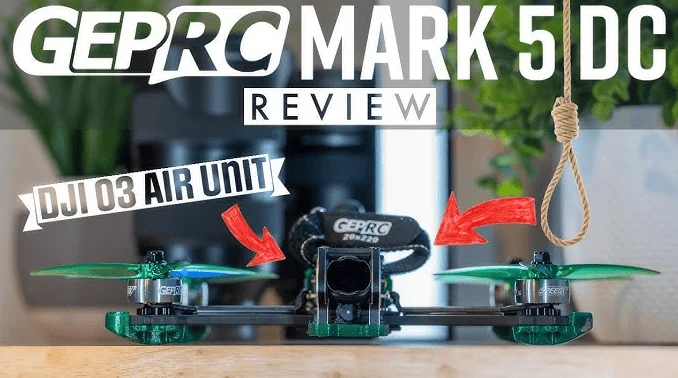
The GEPRC MARK5 DC HD O3 FPV represents a significant milestone in the evolution of First-Person View (FPV) technology, merging professional-grade aerial cinematography with the high-intensity performance requirements of freestyle piloting. Developed by GEPRC, a long-standing innovator in the drone industry, this specific model is engineered to leverage the full capabilities of the DJI O3 Air Unit. As the FPV market shifts increasingly toward high-definition digital transmission, the MARK5 DC (DeadCat) configuration has emerged as a preferred platform for creators who demand unobstructed visual fields and robust flight dynamics. This analysis explores the technical architecture, historical development, and broader industry implications of the GEPRC MARK5 series within the contemporary unmanned aerial vehicle (UAV) landscape.
The Evolution of the MARK Series and the DeadCat Configuration
The journey to the MARK5 DC HD O3 began with the earlier iterations of the MARK series, which originally focused on pure freestyle performance using "True X" or "Squashed X" frame geometries. However, as the demand for cinematic FPV grew—driven by the need to capture high-resolution footage for social media and professional film production—the limitations of traditional frames became apparent. In standard geometries, the drone’s propellers often appear in the corners of the camera’s field of view (FOV), requiring significant cropping in post-production.
To address this, GEPRC introduced the "DeadCat" (DC) geometry. By pushing the front arms further apart and slightly backward, the design ensures that the propellers remain completely out of the camera’s sight, even when using ultra-wide lenses. The transition from the MARK4 to the MARK5 marked a significant leap in structural integrity, incorporating high-strength T700 carbon fiber and specialized CNC-machined aluminum alloy components to protect the sensitive internal electronics.
Technical Specifications and Propulsion Systems
The performance of the GEPRC MARK5 DC HD O3 is predicated on a carefully balanced power-to-weight ratio. At the heart of its propulsion system are the SPEEDX2 2107.5-1960KV motors. These motors are specifically optimized for 6S LiPo battery configurations, providing the high torque necessary for rapid recovery from dives and aggressive acrobatic maneuvers.
Supporting the motors is a sophisticated electronics stack. The drone utilizes the GEP-F722-45A AIO (All-in-One) or a dedicated stack featuring the Span F722 HD flight controller and a 45A–50A BLHeli_32 ESC. This combination allows for precise motor timing, bi-directional DShot communication, and high-frequency filtering, which results in the "locked-in" flight feel that professional pilots require. The use of an F7 processor ensures that the flight controller can handle complex PID loops and Gyro filtering without hitting CPU bottlenecks, even when running the latest versions of Betaflight firmware.
Integration of the DJI O3 Air Unit
The defining feature of this model is the integration of the DJI O3 Air Unit. This system has revolutionized the FPV industry by providing a 1/1.7-inch CMOS sensor capable of recording 4K video at 60 frames per second (fps). For many pilots, this eliminates the need to carry a heavy external "action camera" like a GoPro, thereby reducing the overall takeoff weight and extending flight times.
The O3 Air Unit also features a 155-degree ultra-wide FOV and DJI’s proprietary RockSteady and HorizonSteady stabilization technologies. To accommodate this unit, GEPRC designed a unique camera mount that includes vibration-dampening materials. This is critical because the high-frequency vibrations generated by FPV motors can cause "jello" effects in high-definition footage. Furthermore, the MARK5 includes an integrated cooling system for the O3 unit, which is known to generate significant heat during stationary periods or long flights.
Structural Integrity and Maintenance Features
Durability is a primary concern for FPV pilots, as the nature of freestyle flight involves a high risk of collisions. The MARK5 frame is constructed from 5mm thick carbon fiber arms, which are replaceable in the event of a catastrophic failure. The use of 7075-T6 aluminum alloy for the camera cage provides a "roll cage" effect, shielding the expensive DJI O3 camera from direct impacts.
From a maintenance perspective, the MARK5 is designed for accessibility. The "sandwich" structure of the frame allows pilots to access the flight controller and ESC by removing a few screws, facilitating quick repairs in the field. This modularity is a key selling point for professional videographers who cannot afford extended downtime during a shoot.
Chronology of Market Release and Industry Reception
The GEPRC MARK5 DC HD O3 was released following the late 2022 debut of the DJI O3 Air Unit. While other manufacturers rushed to retrofit existing frames, GEPRC’s approach was to refine the MARK5 chassis specifically for the O3’s dimensions and thermal requirements.
Upon its release, the drone received positive feedback from the global FPV community. Industry analysts noted that the MARK5 successfully bridged the gap between "Bind-and-Fly" (BNF) convenience and custom-built performance. Statements from professional FPV pilots often highlight the drone’s "tune" out of the box. GEPRC’s engineers pre-configure the software settings, ensuring that the drone flies smoothly without the need for extensive user calibration—a feature that has made it highly accessible to pilots transitioning from DJI’s consumer drones (like the DJI FPV or Avata) to the more powerful "manual" FPV world.
Operational Performance and Battery Management
To achieve the advertised performance, the GEPRC MARK5 requires high-discharge 6S LiPo batteries, typically ranging from 1300mAh to 1550mAh. In a standard freestyle flight, this provides approximately 4 to 6 minutes of air time. For cinematic missions involving smoother throttle management, flight times can extend to nearly 8 minutes.
The drone’s weight, which sits at approximately 400 grams without a battery, places it in a category that offers enough mass to resist wind interference while remaining light enough to feel agile. The inclusion of high-quality HQProp Ethix S5 or similar 5-inch propellers further enhances the grip the drone has on the air, allowing for precise tracking during high-speed chases, such as following drifting cars or mountain biking athletes.
Comparative Analysis in the 5-Inch Category
When compared to its primary competitors, such as the iFlight Nazgul Evoque or the Lumenier QAV-S, the GEPRC MARK5 DC HD O3 distinguishes itself through its aesthetic refinement and specific thermal management for the O3 unit. While the Nazgul series is often praised for its "tucked-in" wiring and LED aesthetics, the MARK5 is frequently cited as having a more robust frame design for pure freestyle abuse.
Furthermore, the "DeadCat" version of the MARK5 is specifically optimized for cinema, whereas many competitors still prioritize the "Squashed X" configuration. For users whose primary goal is high-end content creation, the unobstructed view of the MARK5 DC offers a distinct advantage that minimizes the need for digital cropping, thereby preserving the maximum possible resolution of the 4K sensor.
Implications for Professional Cinematography
The rise of drones like the GEPRC MARK5 has fundamentally changed the landscape of professional videography. Previously, capturing high-speed, close-proximity aerial footage required expensive heavy-lift drones or risky maneuvers with traditional helicopters. The MARK5 allows a single operator to capture Hollywood-level "fly-through" shots at a fraction of the cost.
The ability to record in D-Cinelike (10-bit) color profiles directly on the O3 Air Unit means that footage from the MARK5 can be seamlessly color-graded to match footage from professional cinema cameras like the ARRI Alexa or RED V-Raptor. This interoperability has made the MARK5 a staple in the gear bags of FPV pilots working in the commercial and film industries.
Safety and Regulatory Considerations
As a high-performance 5-inch drone, the GEPRC MARK5 falls under specific regulatory categories in many jurisdictions, such as the FAA’s Part 107 in the United States or EASA regulations in Europe. Due to its weight and speed (capable of exceeding 100 mph), it requires responsible operation and, in many cases, Remote ID compliance. GEPRC has responded to these needs by providing mounting points and internal space for Remote ID modules, ensuring that professional pilots can remain compliant with evolving aviation laws.
Future Outlook and Conclusion
The GEPRC MARK5 DC HD O3 FPV stands as a testament to the rapid maturation of the FPV industry. It is no longer a niche hobby dominated by DIY enthusiasts building from scratch; it is now a sophisticated tool for digital expression. By integrating the highest tier of digital transmission technology with a time-tested, rugged frame design, GEPRC has set a benchmark for what a modern 5-inch drone should achieve.
As battery technology improves and flight controllers become even more intelligent, the MARK5 platform will likely serve as the foundation for future iterations that may include AI-assisted obstacle avoidance or even longer-range transmission capabilities. For now, it remains a premier choice for those seeking the perfect intersection of freestyle power and cinematic elegance, proving that in the world of FPV, the quality of the flight is just as important as the quality of the footage.