The profound connection between humanity and the natural world is a sentiment beautifully articulated by Rachel Carson, who stated, "Those who contemplate the beauty of the earth find reserves of strength that will endure as long as life lasts." This sentiment resonates deeply with the journey of renowned wildlife photographer Paul Nicklen, whose life has been a testament to the transformative power of embracing the wild. Nicklen’s narrative, tracing his upbringing in the remote Arctic to his profound encounters with the ocean’s giants, offers a compelling exploration of how stepping away from conventional comforts can unlock unparalleled enrichment and a deeper understanding of our planet.
Born into families rooted in the agricultural heartland of Saskatchewan, Nicklen’s parents possessed the characteristic unyielding work ethic integral to Canada’s rural identity. Their decision to relocate their young family to the stark, remote beauty of the Arctic was, by all accounts, an undertaking of significant magnitude. This transition necessitated a deliberate divestment from certain familiar comforts: the easy accessibility of extended family, the gentle embrace of mild summer evenings, and the predictable rhythm of the temperate seasons. Yet, this deliberate exchange of the known for the unknown proved to be a catalyst for an unforeseen bounty. The benefits derived from a life lived in closer proximity to nature, Nicklen asserts, far surpassed anything they had left behind.
From Prairie Roots to Polar Horizons: The Genesis of a Nature Photographer
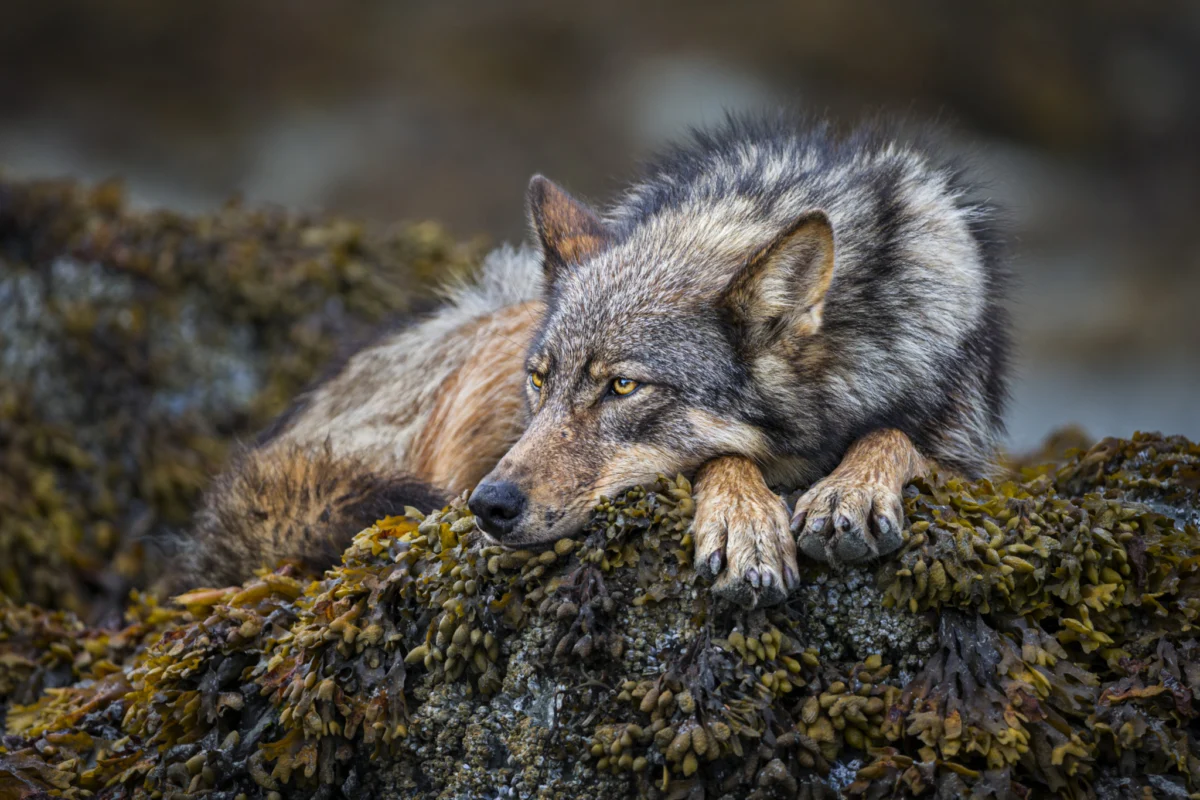
The formative years spent in the Arctic landscape laid the groundwork for Nicklen’s lifelong passion for the natural world. It was here, amidst the stark beauty and resilient wildlife, that his appreciation for the untamed began to blossom. This early immersion fostered a deep respect for the intricate ecosystems and the survival strategies of the creatures that inhabit them. The harsh, yet awe-inspiring, environment of the Arctic, home to iconic species like wolves and polar bears, instilled a profound understanding of nature’s raw power and delicate balance. These early experiences were not merely observational; they were formative, shaping Nicklen’s worldview and igniting a desire to capture and share the essence of wildness with a broader audience.
The Lens as a Gateway: Documenting Earth’s Biodiversity
As Nicklen transitioned into a career as a photographer, his camera became an indispensable tool, a conduit through which he could forge even closer connections with the planet’s diverse inhabitants. His portfolio reads like a comprehensive atlas of the wild: the haunting gaze of wolves, the determined waddle of penguins, the stealthy presence of lynx, the formidable power of sharks, and the ethereal grace of spirit bears. His dedication to capturing these subjects underscores a fundamental belief: that the greatest privilege one can experience is to live on a planet teeming with an almost incomprehensible diversity of species and an inexhaustible wellspring of beauty. This perspective challenges a anthropocentric view, placing humanity within a grander, interconnected tapestry of life.
Giants of the Deep: Encounters with Whales
Among the myriad of wildlife encounters that have defined Nicklen’s career, his experiences with whales, the true titans of Earth, stand out as particularly profound gifts. These majestic marine mammals, much like the Arctic fauna of his youth, evoke a primal mixture of awe and trepidation in the human psyche. Despite their immense size and their apex predator status within the ocean’s intricate food webs, there exists no definitive documented record of orcas or sperm whales ever causing a fatal human incident. Nicklen’s personal encounters, in fact, consistently reveal a gentle intelligence and a capacity for peaceful interaction, aspects often obscured by pervasive myths and widespread misconceptions.
Sperm Whales: Beyond the Myth of Moby Dick
Sperm whales, in particular, have long been subjects of fascination and fear, their image often shaped by the dramatic narratives of fiction, folklore, and legend. The iconic tale of Captain Ahab’s obsessive pursuit of the white whale in Herman Melville’s "Moby Dick" has undeniably contributed to a perception of these creatures as formidable, even vengeful, beings. However, Nicklen’s experiences challenge this deeply ingrained narrative, presenting a far more nuanced and affectionate portrayal.

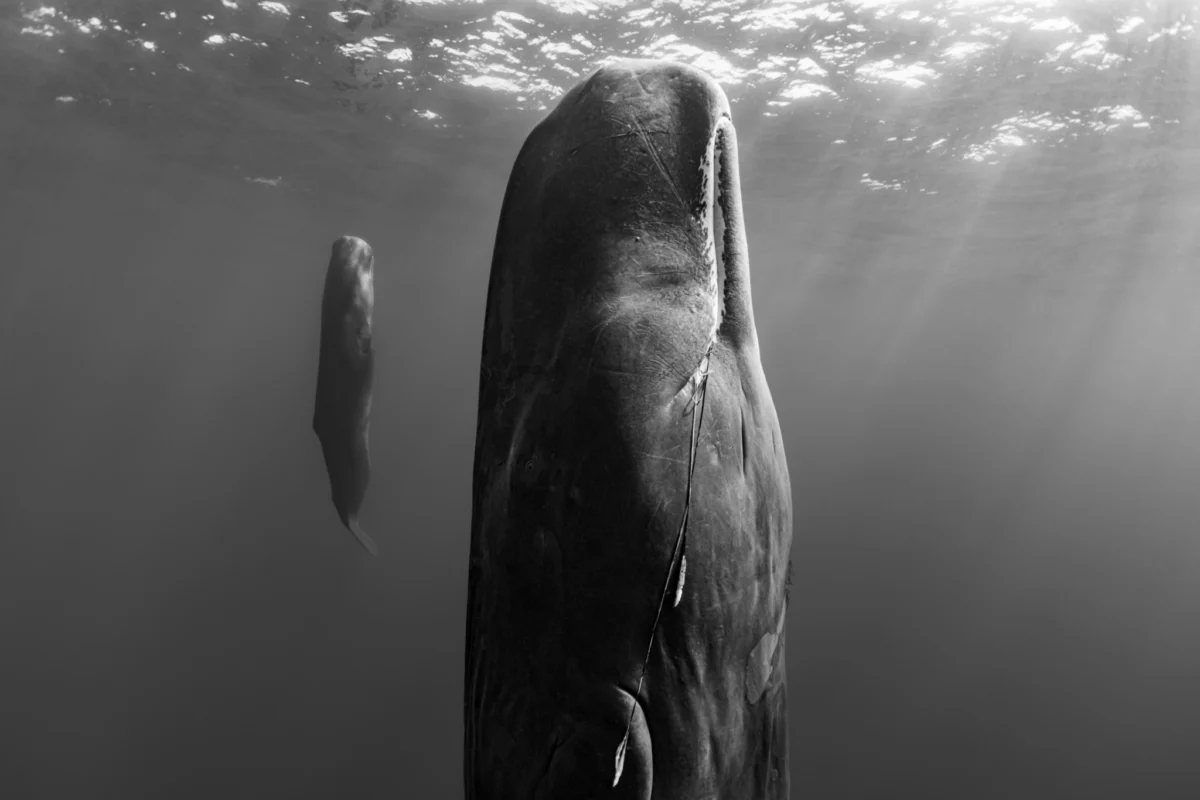
One such pivotal encounter occurred off the coast of Dominica, an island nation in the Lesser Antilles of the Caribbean. Here, Nicklen had the opportunity to free-dive with a pod of sperm whales, an experience he describes as one of the most wholesome and eye-opening of his life. Utilizing only a snorkel, he was able to approach the group as they engaged in their characteristic resting behavior. Sperm whales, known for their deep-diving capabilities, spend the majority of their time beneath the surface, only ascending to breathe and rest. During these periods of recuperation, they often suspend themselves vertically in the water column, their massive heads pointed towards the sky, a posture that Nicklen found both serene and humbling.
Ariel’s Embrace: An Unforeseen Encounter
The photographic session was progressing smoothly, with the matriarch of the pod and her companions exhibiting a clear awareness and comfortable acceptance of Nicklen’s presence. It was during a brief ascent to replenish his air that a sudden, unexpected development occurred. The youngest member of the group, a calf affectionately nicknamed "Ariel" by the local community, diverted from its mother and made a direct, swift approach towards Nicklen.
Suddenly, the photographer found himself face-to-face with a juvenile sperm whale, estimated to be approximately 20 feet in length, charging at considerable speed. Nicklen instinctively braced himself, anticipating an interaction, perhaps even a bump. To his surprise, Ariel opened her mouth, which, being a calf, was thankfully toothless, and proceeded to "gum" his camera housing with a playful, almost toddler-like enthusiasm. This disarming display of curiosity and gentleness, so contrary to the fearsome image often associated with these leviathans, was a profound moment for Nicklen. His years of experience working with large, unpredictable wildlife allowed him to remain calm and gradually retreat, creating space for the young whale to explore without alarm. Far from the monstrous embodiment of oceanic fury that haunted Captain Ahab, Ariel presented herself as a bubbly, inquisitive, and remarkably gentle creature.
This encounter, captured in a striking photograph, shows Ariel emitting a playful stream of bubbles as she barrels past Nicklen. The image serves as a visual testament to the peaceful nature of these magnificent animals and the importance of direct experience in dispelling ingrained fears and misconceptions.
The Enduring Gifts of Nature: Connection and Resilience
Reflecting on his life’s trajectory, Nicklen recognizes that those early years, spent navigating the Arctic landscape and observing its wild inhabitants, provided him with an invaluable foundation. This immersion fostered a profound and intimate connection with Earth’s most untamed creatures, a connection that extended to his later encounters with the ocean’s gentle giants like Ariel and her pod. The overarching message is clear: the more time individuals spend immersed in the natural world, the more readily the world reveals its wonders and offers new experiences.
In a world increasingly dominated by the rapid pace of modern life and its manufactured comforts, nature offers a different, more fundamental form of richness. It provides not mere luxury or convenience, but a genuine, deep-seated connection to something larger than ourselves. This connection, Nicklen argues, is the most profound gift of all. It is a gift that fosters resilience, cultivates empathy, and reminds us of our intrinsic place within the intricate web of life. The strength derived from contemplating the beauty of the earth, as Carson eloquently put it, is indeed a reserve that can sustain us throughout our lives, a testament to the enduring power and wisdom of the natural world.
The implications of Nicklen’s observations extend beyond personal reflection. In an era of escalating environmental challenges, fostering a deeper connection with nature is not merely an aesthetic pursuit but a critical imperative for conservation. When people experience the wonder and beauty of wildlife firsthand, they are more likely to become advocates for its protection. The disarming gentleness of a young sperm whale, the stoic resilience of an Arctic fox, or the majestic flight of an eagle, when witnessed directly, can ignite a powerful sense of responsibility and a commitment to preserving these invaluable ecosystems for future generations. The photographic evidence and personal narratives shared by individuals like Nicklen serve as vital tools in this ongoing effort, bridging the gap between abstract environmental concerns and tangible, emotional engagement.
The journey from the prairies of Saskatchewan to the icy expanses of the Arctic, and then to the vibrant blue depths of the ocean, underscores a universal truth: that by stepping away from the familiar and embracing the wild, we open ourselves to a world of unparalleled discovery and profound connection. This is the enduring legacy of Paul Nicklen’s work, a visual and narrative testament to the irreplaceable value of nature in enriching the human experience.