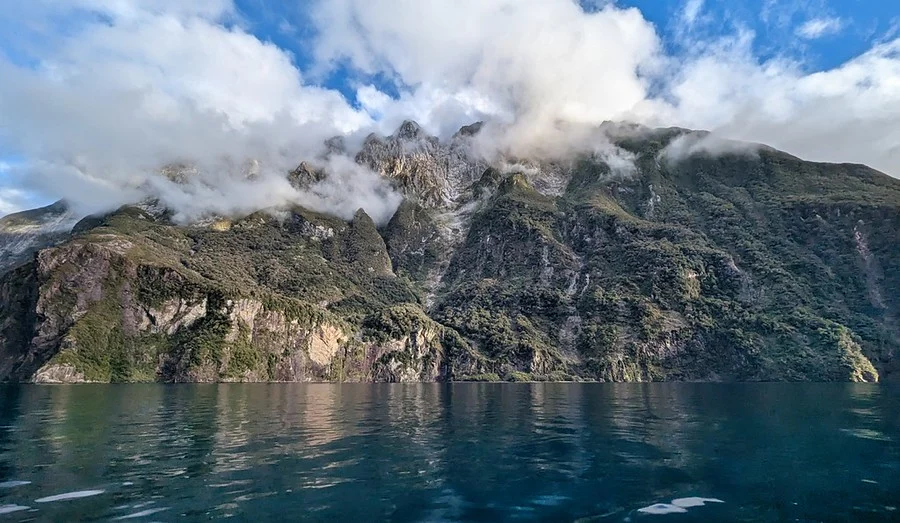
The dramatic spectacle of Milford Sound, also known by its Māori name Piopiotahi, greets visitors from the ocean’s embrace with a breathtaking panorama, an image captured with striking clarity that beckons travelers into its majestic depths. This particular view, presented as a "Daily Photo," serves as a potent reminder of the unparalleled natural beauty that defines this iconic New Zealand fiord. While the provided snippet focuses on the visual aspect of entering the fiord, a deeper examination reveals a rich tapestry of geological history, ecological significance, and the human endeavors that have shaped its accessibility and appreciation.
The Geological Genesis of Milford Sound
Milford Sound’s awe-inspiring grandeur is not a recent phenomenon; it is the product of millions of years of relentless geological processes. Formed during the Pleistocene epoch, approximately 20,000 to 10,000 years ago, the fiord is a testament to the erosive power of glaciers. As colossal ice sheets carved their way through the ancient mountains of the Fiordland National Park, they sculpted the dramatic U-shaped valleys characteristic of fiords. The sheer cliffs, often plunging thousands of feet into the dark, inky waters, are the exposed flanks of these glaciated valleys. The depth of Milford Sound, reaching up to 530 meters (1,740 feet), is a direct consequence of this glacial excavation. The rock walls themselves are primarily composed of metamorphic rocks, including granite and schist, which have been subjected to immense pressure and heat over geological time.
The constant flow of water, from rainfall and snowmelt originating in the surrounding rainforests, further sculpts the fiord. Waterfalls, some of the most spectacular in the world, cascade down these sheer rock faces. Stirling Falls and Bowen Falls are particularly renowned, with Stirling Falls dropping an impressive 155 meters (509 feet) in a single plunge. These waterfalls are not static features; their volume and intensity fluctuate with the seasons and rainfall, adding a dynamic element to the fiord’s already captivating scenery. The water within the fiord itself is a unique blend of freshwater from these rivers and waterfalls and the salty ocean water. This creates a distinct stratified layer, with a layer of brackish water on top of denser, saltier ocean water. This stratification influences the marine life found within the fiord, creating a habitat unlike any other.
Ecological Significance and Biodiversity
Beyond its geological marvels, Milford Sound is a thriving ecosystem teeming with diverse flora and fauna. The surrounding Fiordland National Park, a UNESCO World Heritage Site, is one of the most extensive temperate rainforests in the world. The high rainfall, averaging around 6,800 millimeters (268 inches) annually, supports an incredibly lush environment. Towering trees such as rimu, kahikatea, and beech, draped in mosses, lichens, and ferns, cloak the steep slopes.
The marine life within Milford Sound is equally remarkable. The unique water stratification creates an environment where deep-sea black coral can thrive at relatively shallow depths, a phenomenon rarely observed elsewhere. This attracts a variety of marine species, including seals, dolphins (both bottlenose and dusky), and the majestic whales that occasionally transit through the area. The fiord is also a crucial breeding ground and feeding area for the endemic Fiordland crested penguin, a charismatic species known for its distinctive yellow crest. Birdlife is abundant, with native species like the kea (alpine parrot), tūī, and bellbird frequently observed. The isolation of Fiordland has also contributed to the survival of several endemic species, making it a vital sanctuary for New Zealand’s unique natural heritage.
Historical and Cultural Context
The history of human interaction with Milford Sound is intertwined with the indigenous Māori people and later European explorers. The Māori have inhabited the Fiordland region for centuries, with oral traditions and archaeological evidence pointing to a deep and enduring connection with the land and sea. Piopiotahi, as it is known to Māori, holds significant cultural and spiritual importance. Legends speak of Tūtepuna, a legendary ancestor who carved out the fiords with his canoe. The name Piopiotahi is believed to refer to a rare bird that was once found in the area. For Māori, the fiord was a source of food, a travel route, and a place of spiritual significance.
European exploration of Milford Sound began in the late 18th century. French explorer Jean-Michel Huon de Kermadec sighted the entrance in 1793, but it was British explorer Captain Johnத்தகைய, who charted the fiord in 1809 and named it Milford Haven, after his birthplace. The name was later changed to Milford Sound by surveyor John Shortland. The early European presence was largely driven by sealing and whaling activities. However, it was the publication of an article by explorer and writer Alfred Domett in 1870, describing the fiord as "the Eighth Wonder of the World," that truly ignited public imagination and paved the way for its recognition as a major tourist destination.
The Journey of Accessibility
The journey into Milford Sound, as depicted in the photograph, has historically been a challenging but rewarding endeavor. For centuries, travel was primarily by sea. However, the development of land-based access has transformed the visitor experience. The Milford Road, a 121-kilometer (75-mile) scenic route from Te Anau, is an engineering feat in itself. Construction began in the early 20th century, facing formidable terrain, dense rainforest, and challenging weather conditions. The road traverses the heart of Fiordland National Park, offering glimpses of breathtaking landscapes, including ancient forests, glacial valleys, and alpine tarns.
A significant milestone in the road’s development was the construction of the Homer Tunnel. This 1.2-kilometer (0.75-mile) single-lane tunnel, completed in 1953, pierces through the Darrans Range, drastically reducing travel time and opening up direct access to the fiord from the western side. The tunnel’s construction was a testament to human perseverance, with workers battling harsh conditions and geological challenges. Today, the Milford Road is a major tourist artery, with thousands of visitors making the pilgrimage each year. The journey itself is often considered as spectacular as the destination, with numerous viewpoints and short walks along the way.
Tourism and Conservation Efforts
Milford Sound is New Zealand’s most famous tourist destination, attracting over a million visitors annually. The primary mode of experiencing the fiord is through boat cruises, which navigate the length of the sound, allowing visitors to witness the towering cliffs, cascading waterfalls, and abundant wildlife up close. Kayaking and scenic flights also offer alternative perspectives. The tourism industry in Milford Sound is a significant economic driver for the region, supporting local businesses and employment.
However, the immense popularity of Milford Sound also presents considerable conservation challenges. The fragile ecosystem is vulnerable to the impacts of increased human activity. Organizations like the Department of Conservation (DOC), New Zealand’s national parks authority, play a crucial role in managing visitor numbers, maintaining infrastructure, and implementing conservation strategies. Efforts focus on protecting native biodiversity, managing waste, and minimizing the environmental footprint of tourism operations. Sustainable tourism practices are increasingly being promoted, encouraging visitors to be mindful of their impact and to adhere to guidelines that preserve the fiord’s pristine beauty for future generations. The delicate balance between providing access for appreciation and ensuring the long-term preservation of this natural wonder remains a constant and vital consideration.
The Enduring Allure of Piopiotahi
The image of entering Milford Sound encapsulates the raw, untamed beauty that has captivated explorers, artists, and travelers for centuries. It is a gateway to a realm sculpted by ice and water, a sanctuary of unique biodiversity, and a place imbued with deep cultural significance. The ongoing efforts to balance access with conservation highlight the global recognition of Milford Sound as an irreplaceable natural treasure. As visitors continue to be drawn to its dramatic embrace, the enduring allure of Piopiotahi lies not just in its visual spectacle, but in its profound testament to the powerful forces of nature and the rich tapestry of life it sustains. The "Daily Photo" serves as a potent reminder of this magnificence, inviting contemplation on the geological epochs that shaped it and the ongoing commitment required to protect its unparalleled splendor.