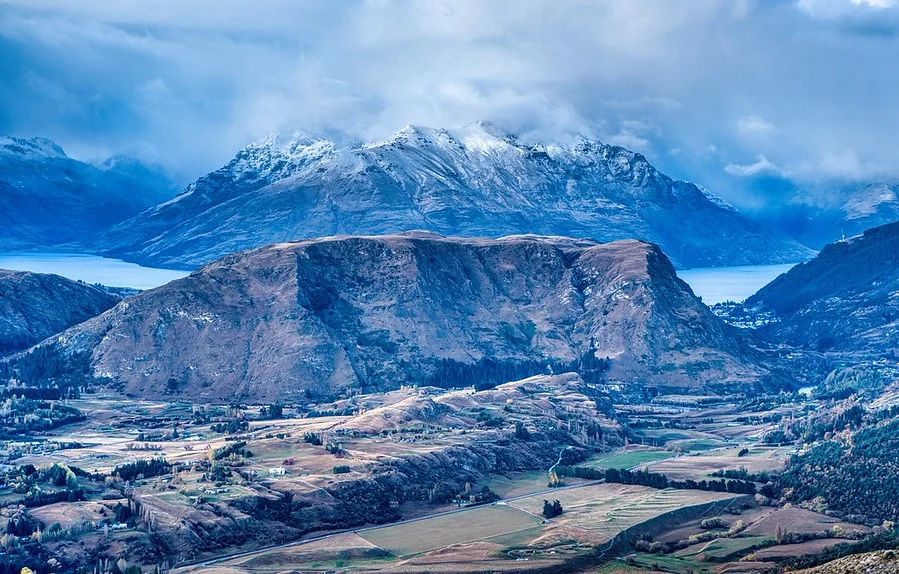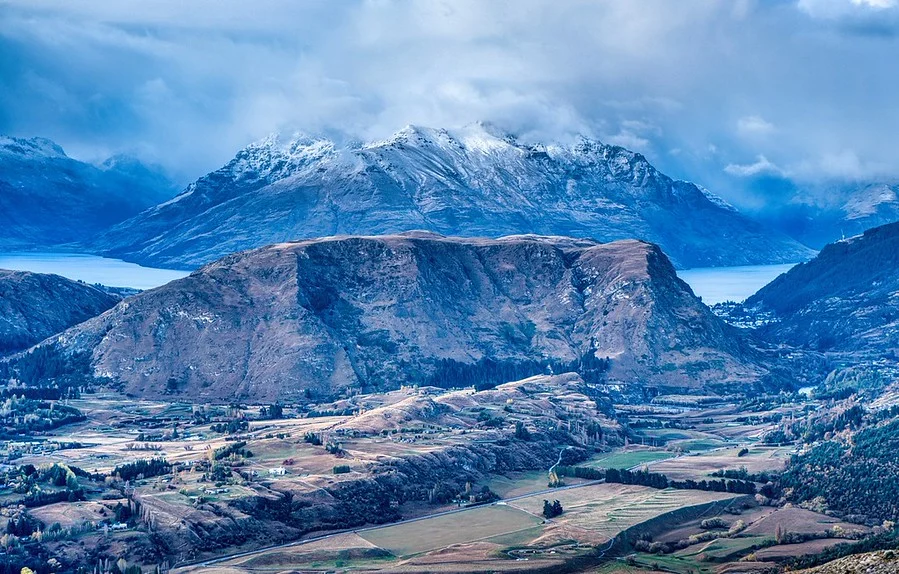
The photograph, titled "Mountain Layers," captures a familiar vista, showcasing a series of mountain ranges receding into the distance. The accompanying description notes that the image was taken in a location experiencing a reverse season, implying a transition from winter towards spring. This suggests that any remaining snow cover on the peaks is likely to dissipate soon, marking a significant seasonal shift. The image itself, provided by Stuck in Customs, features a panoramic view, emphasizing the depth and stratification of the mountainous terrain. While the specific geographic location is not explicitly stated, the visual narrative points to a region where snowmelt is a key indicator of the changing seasons.
The Significance of Seasonal Transitions in Mountainous Regions
The visual narrative presented in "Mountain Layers" transcends a simple aesthetic appreciation of natural beauty. It serves as a potent reminder of the cyclical nature of ecosystems, particularly in high-altitude environments. Mountain ranges, characterized by their dramatic topography and often harsh climatic conditions, are particularly sensitive to seasonal shifts. The presence and subsequent disappearance of snow are not merely visual cues but critical hydrological and ecological events.
Historically, snowpack in mountainous regions has been a vital source of freshwater for downstream communities and ecosystems. The slow melt of accumulated snow over spring and summer provides a consistent water supply for agriculture, hydroelectric power generation, and natural habitats. Therefore, the timing and volume of snowmelt have direct and far-reaching implications for human societies and biodiversity. Changes in snowpack dynamics, whether due to altered precipitation patterns or rising global temperatures, can lead to significant disruptions.
In many parts of the world, particularly in arid and semi-arid regions that rely heavily on mountain snowmelt, the reduction in snow cover can exacerbate water scarcity. This has been a growing concern for decades, with scientific studies consistently highlighting the vulnerability of these water sources. For instance, research published by the Intergovernmental Panel on Climate Change (IPCC) has repeatedly emphasized the impact of warming temperatures on glacier and snowpack retreat, predicting increased risks of drought and water stress in regions dependent on these natural reservoirs.
Decoding the Visual Narrative: Depth, Light, and Atmosphere
The photograph itself, "Mountain Layers," offers a compelling visual study of atmospheric perspective and geological formation. The layering of the mountain ranges suggests a significant geological history, with each successive ridge representing a distinct geological epoch or a phase of erosion and uplift. The way the light interacts with these layers is crucial to the image’s impact. Sunlight, diffused by atmospheric particles, often creates a gradient of visibility, with distant peaks appearing fainter and bluer due to Rayleigh scattering. This phenomenon, known as atmospheric perspective, is a fundamental principle in landscape art and photography, allowing the viewer to perceive depth and distance.
The implied transition to spring further enriches the interpretation. As winter recedes, the stark whites and grays of snow-covered landscapes begin to yield to the subtler hues of awakening vegetation. Even if the photograph captures the tail end of winter, the anticipation of spring imbues the scene with a sense of renewal and potential. The absence of explicit human elements in the photograph directs the viewer’s attention to the raw power and enduring presence of the natural world.
Data and Context: Snowpack Trends and Climate Change
To contextualize the image’s narrative of impending spring and disappearing snow, it is essential to consider broader data on snowpack trends. Numerous scientific studies have documented a general decline in snowpack extent and duration in many mountainous regions globally over the past several decades. This trend is largely attributed to rising global temperatures, a direct consequence of anthropogenic climate change.
For example, the U.S. Geological Survey (USGS) has reported significant reductions in snowpack in the western United States, particularly at lower elevations. Their data indicates earlier snowmelt and a decrease in the total water equivalent stored in snowpack. Similar trends have been observed in the Alps, the Himalayas, and other major mountain ranges. These changes have profound implications for water resource management, agricultural planning, and the health of alpine ecosystems.
The phrase "reverse season land" used in the description is particularly intriguing. It suggests a location in the Southern Hemisphere, where seasons are opposite to those in the Northern Hemisphere. Countries like Australia, New Zealand, Argentina, and Chile all possess significant mountain ranges that experience seasonal snow cover. For these regions, the current period, likely corresponding to late winter or early spring, is a critical time for observing the transition and its associated environmental changes.
Broader Implications: Water Security and Ecosystem Resilience
The visual representation of receding snowpack, as suggested by the "Mountain Layers" photograph, carries significant implications for water security. Regions that depend on snowmelt for their water supply face increasing challenges as snowpack diminishes. This can lead to reduced water availability for cities, agriculture, and industry. Farmers may experience crop failures, and municipalities might face water restrictions.
Furthermore, the impact extends to ecosystems. Alpine flora and fauna are adapted to specific temperature and moisture regimes associated with snow cover. Earlier snowmelt can disrupt plant blooming cycles, affecting pollinators and herbivores. Changes in water availability can also impact the health of rivers and lakes, affecting aquatic life.
The resilience of these ecosystems and the human communities that depend on them is increasingly being tested. Adaptation strategies, such as improving water-use efficiency, developing drought-resistant crops, and investing in water storage infrastructure, are becoming more critical. Understanding and monitoring snowpack dynamics, as visually represented in such photographs, is therefore not just an aesthetic pursuit but a vital component of environmental stewardship and resource management.
The Role of Photography in Environmental Awareness
Photographs like "Mountain Layers" play a crucial role in raising public awareness about environmental issues. While the image may be appreciated for its aesthetic qualities, it also serves as a tangible representation of environmental change. By capturing a specific moment in time and a particular landscape, it provides a visual anchor for understanding broader scientific data and trends.
The ability of photography to evoke emotion and connect viewers to distant landscapes is a powerful tool for advocacy and education. Images of melting glaciers, parched landscapes, or, as in this case, mountains signaling the end of snow season, can prompt reflection and discussion about our relationship with the environment and the consequences of our actions. The widespread sharing of such images on platforms like social media can amplify their impact, reaching a global audience and fostering a collective sense of responsibility.
The inclusion of details like the "Photo Information" section, even if currently devoid of specific exif data, points to the potential for further scientific or artistic analysis. Metadata such as aperture, shutter speed, ISO, and focal length, if available, can offer insights into the photographer’s technique and the conditions under which the image was captured. This level of detail, when combined with the visual content, can contribute to a richer understanding of the photograph and its context.
Conclusion: A Snapshot of Environmental Transition
In essence, "Mountain Layers" offers more than just a scenic view. It presents a visual narrative of a natural process – the transition from winter to spring in a mountainous region. This transition, particularly the melting of snow, is a bellwether for broader environmental changes driven by climate change. The image, therefore, serves as a potent reminder of the interconnectedness of our planet’s systems and the tangible effects of global warming on landscapes and water resources. As the snow recedes from these majestic peaks, it signals a shift that resonates far beyond the immediate visual spectacle, impacting ecosystems, economies, and the lives of millions. The ongoing monitoring and understanding of these seasonal changes, amplified by evocative imagery, are crucial for navigating the challenges of a changing climate.