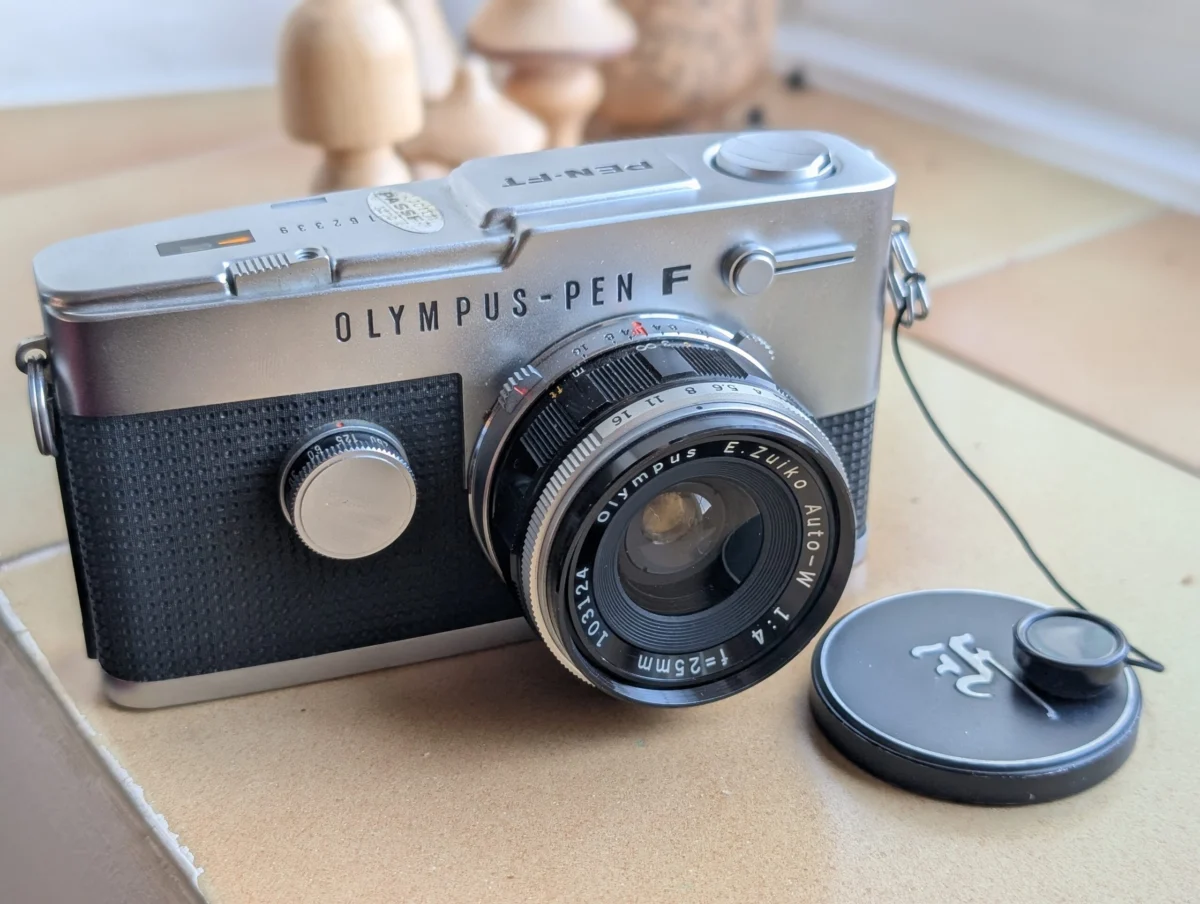
The global resurgence of analog photography has brought renewed scrutiny to the mechanical reliability and economic viability of vintage camera systems, particularly those that offer a reprieve from the escalating costs of 35mm film. Among the most sought-after tools for enthusiasts is the Olympus Pen F series, a line of half-frame single-lens reflex (SLR) cameras that represents a pinnacle of 1960s Japanese optical engineering. Recent market observations and user case studies highlight a complex landscape for collectors: while the Pen F system offers unparalleled design and the efficiency of 72 exposures on a standard 36-exposure roll, the aging mechanical components of these intricate machines present significant hurdles for modern users.
The Architectural Legacy of the Pen F System
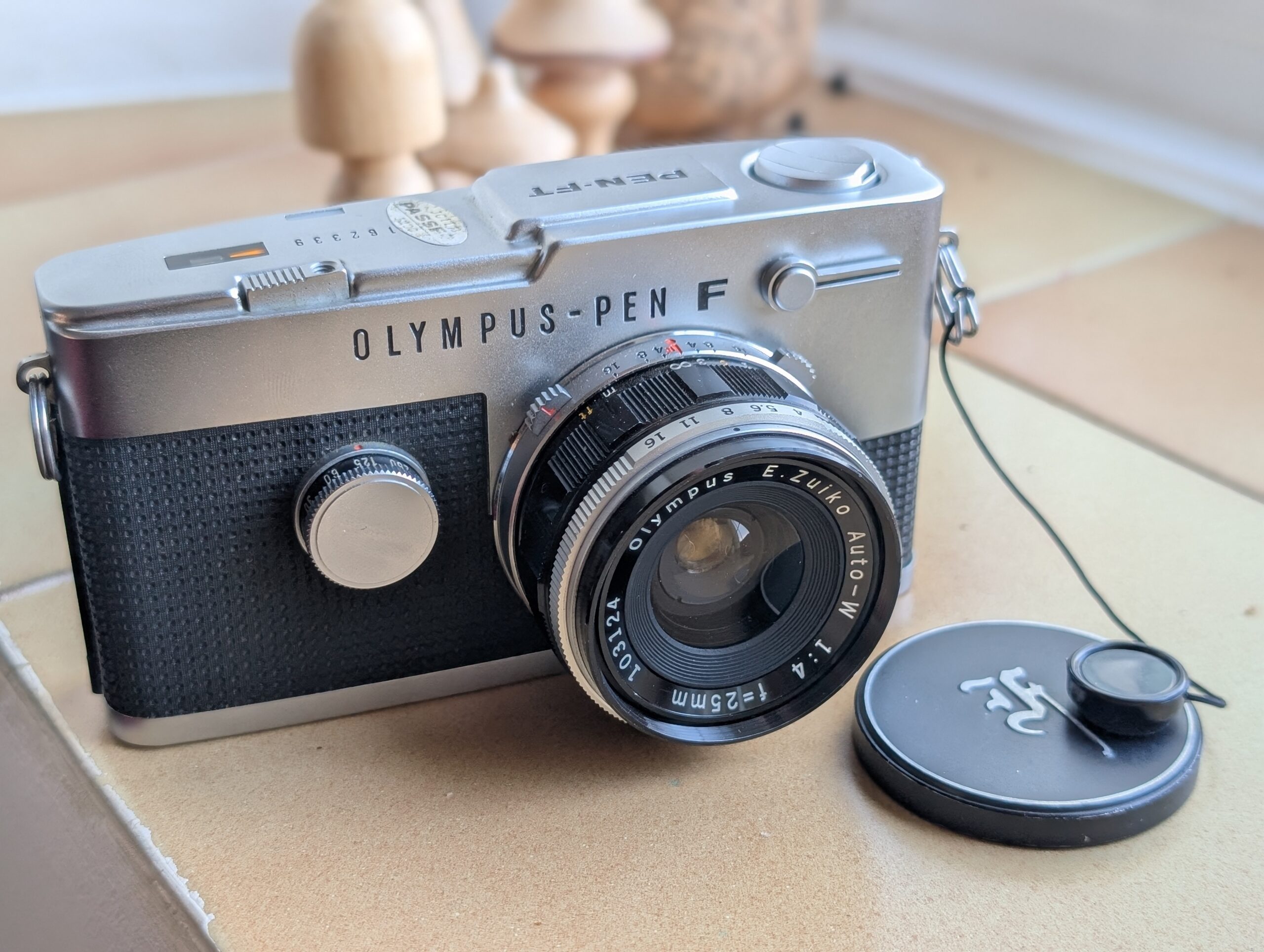
Introduced in 1963, the Olympus Pen F was the brainchild of legendary designer Yoshihisa Maitani. It remains the world’s only system of half-frame SLRs with interchangeable lenses. The technical specifications of the camera were revolutionary for the period and remain unique today. Unlike traditional SLRs that utilize a pentaprism—resulting in the characteristic "hump" on the top of the camera—the Pen F employs a porro-prism finder and a side-swinging mirror. This allowed for a flat-topped, compact silhouette that more closely resembled a rangefinder than a traditional SLR.
The system’s most distinctive feature is its rotary titanium shutter. This circular shutter allows for flash synchronization at all speeds up to 1/500th of a second, a feat that many contemporary full-frame SLRs of the 1960s could not achieve. The Pen F lineup eventually expanded into three distinct models: the original "Gothic" F (noted for the stylized letter engraved on the front), the Pen FT (which introduced an internal through-the-lens light meter), and the Pen FV (a later iteration that removed the light meter in favor of a brighter viewfinder).
The Economics of Half-Frame Photography in the 2020s
The primary driver for the current interest in the Pen F system is the economic pressure of film procurement and processing. As of 2024, the price of premium 35mm film stocks from manufacturers like Kodak and Ilford has seen a steady year-over-year increase. By utilizing a half-frame format—where each image occupies an 18x24mm area rather than the standard 24x36mm—photographers can effectively double their shot count.
However, the entry cost for a functional Pen F remains high. Market data from online auction platforms and specialized vintage dealers indicates that a well-maintained Pen F or FT body with a standard 38mm f/1.8 lens typically commands prices between £150 and £300, depending on condition and provenance. When accounting for international shipping and import duties, as seen in transactions involving Japanese exporters, the total investment often exceeds £220. This premium price point places the Pen F in direct competition with high-end full-frame vintage SLRs like the Nikon FM2 or the Canon F-1, necessitating a high degree of mechanical confidence that is not always guaranteed.
A Chronology of Mechanical Attrition: A Case Study
The volatility of the vintage camera market is best illustrated by the procurement process recently documented by a collector seeking a reliable Pen F unit. This chronology highlights the systemic risks inherent in purchasing 60-year-old precision instruments.
Phase One: The International Acquisition
The initial attempt to secure a "Gothic" Pen F involved an eBay transaction with a high-rated Japanese seller. Despite video evidence of the camera’s functionality, the unit developed critical failures shortly after arrival. After approximately 80 dry-fire cycles—a standard practice for testing the shutter and film transport of a new acquisition—the wind-on lever and the mirror mechanism began to stick. The failure rate of roughly 10% indicated that the internal lubricants had likely degraded or that the tension springs were nearing the end of their operational life. This resulted in a full return and refund, highlighting the importance of buyer protection in international vintage sales.
Phase Two: The Specialist Failure
A second attempt was made through a domestic UK film specialist. This unit, despite being vetted by a professional shop, suffered a catastrophic failure of the titanium shutter curtain after only 20 frames. The shutter became stuck 50% closed, a condition the shop’s technician declared "unfixable" due to a lack of specific spare parts. This underscores a growing crisis in the analog community: the dwindling supply of donor parts for specialized systems like the Pen F.
Phase Three: The FT Compromise and Success
The cycle concluded with the acquisition of a Pen FT from an Olympus specialist. While the FT model is sometimes criticized for having a slightly dimmer viewfinder due to the semi-silvered mirror required for the light meter, the inclusion of a three-month warranty provided the necessary security for the buyer. This unit passed a rigorous 160-shot dry-fire test before being loaded with film, eventually proving the mechanical viability of the third iteration.
Technical Performance and Image Quality Analysis
The Pen F system utilizes a crop factor of 1.4x relative to full-frame 35mm. Consequently, the 25mm Zuiko wide-angle lens functions as the equivalent of a 38mm lens on a standard camera. This perspective is widely favored for street and documentary photography.
In a recent field test conducted across South Devon, UK, the Pen FT was paired with Ilford Delta 100, a film stock known for its fine grain and high sharpness. The results, processed in Pyro 510 developer and digitized using a modern 26-megapixel digital sensor with a macro lens, revealed that the half-frame format remains highly competitive in terms of resolution.
Field Test Locations and Observations:
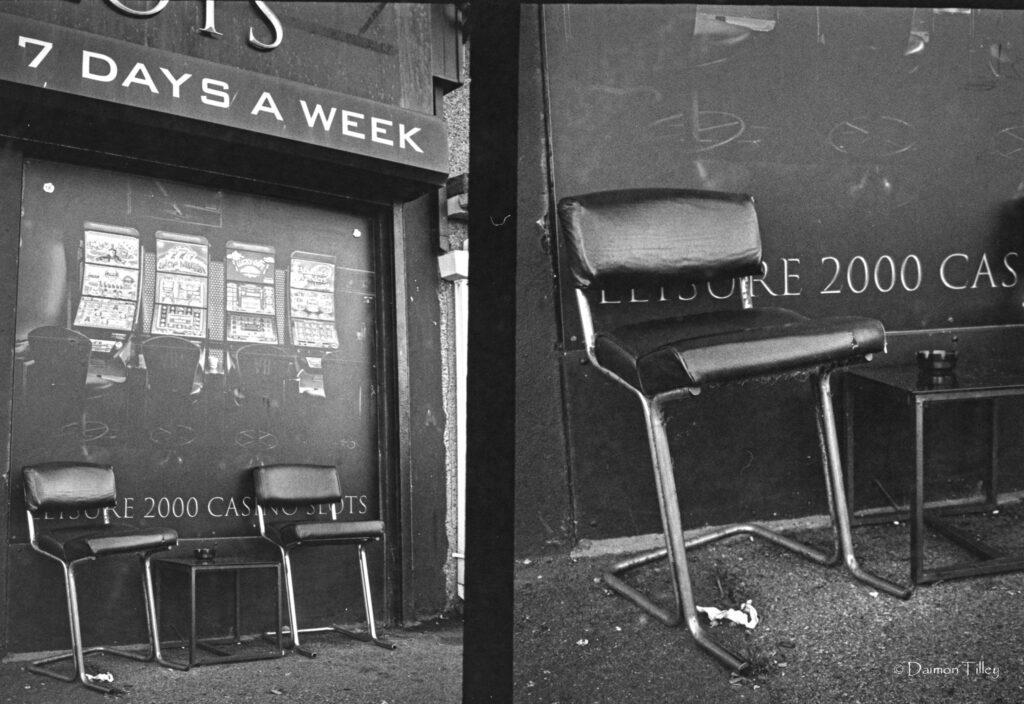
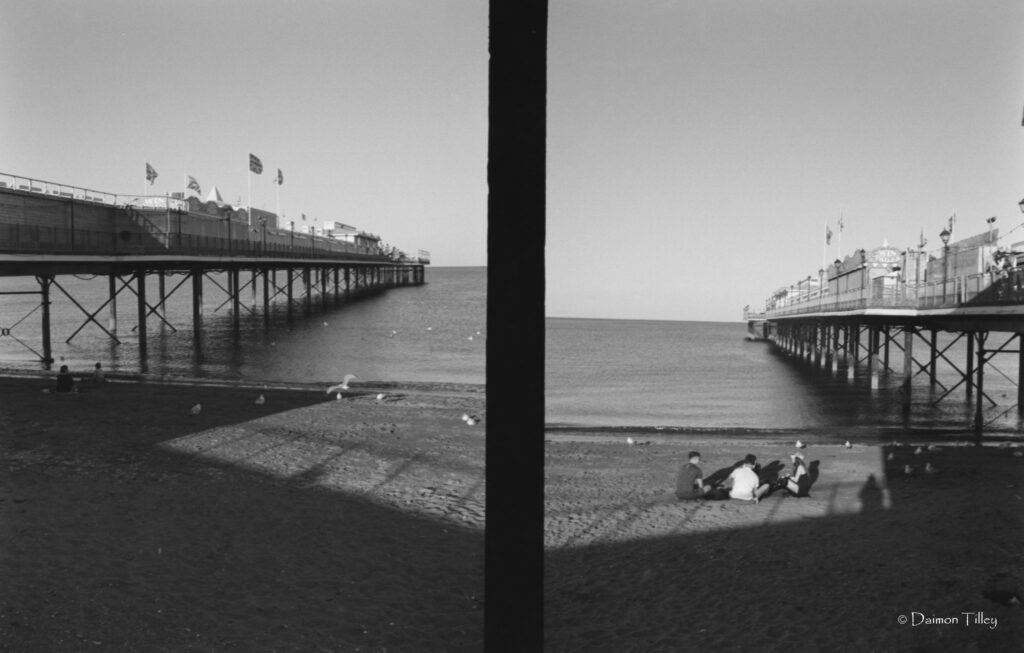
- Paignton Pier and Amusement Arcades: The camera’s ability to capture high-contrast seaside environments was tested. The Zuiko optics maintained edge-to-edge sharpness, though the half-frame grain was more pronounced than it would be on a full-frame negative.
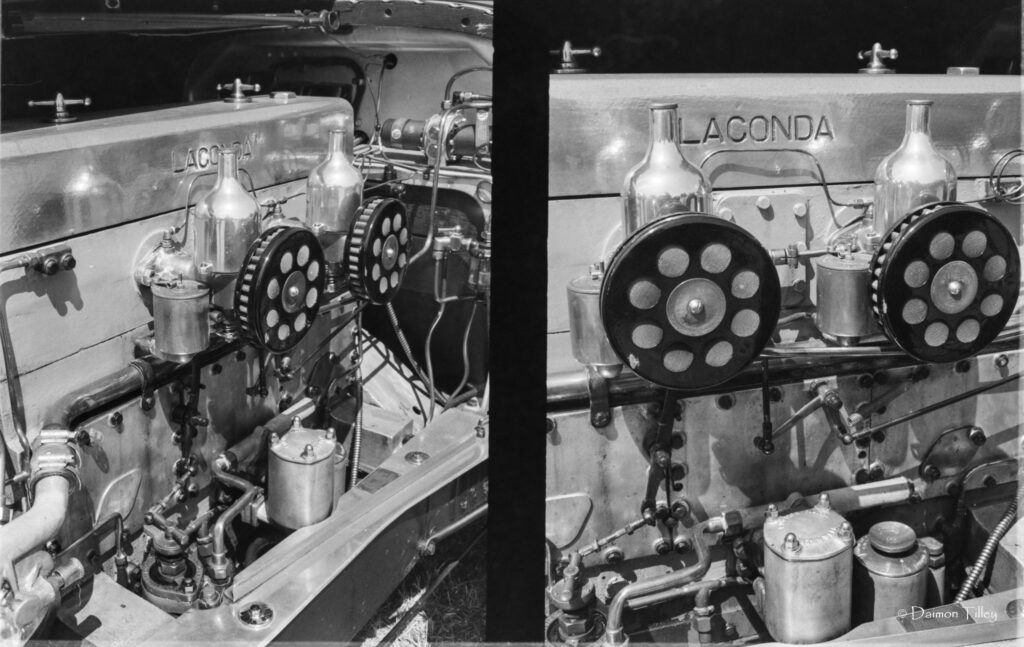
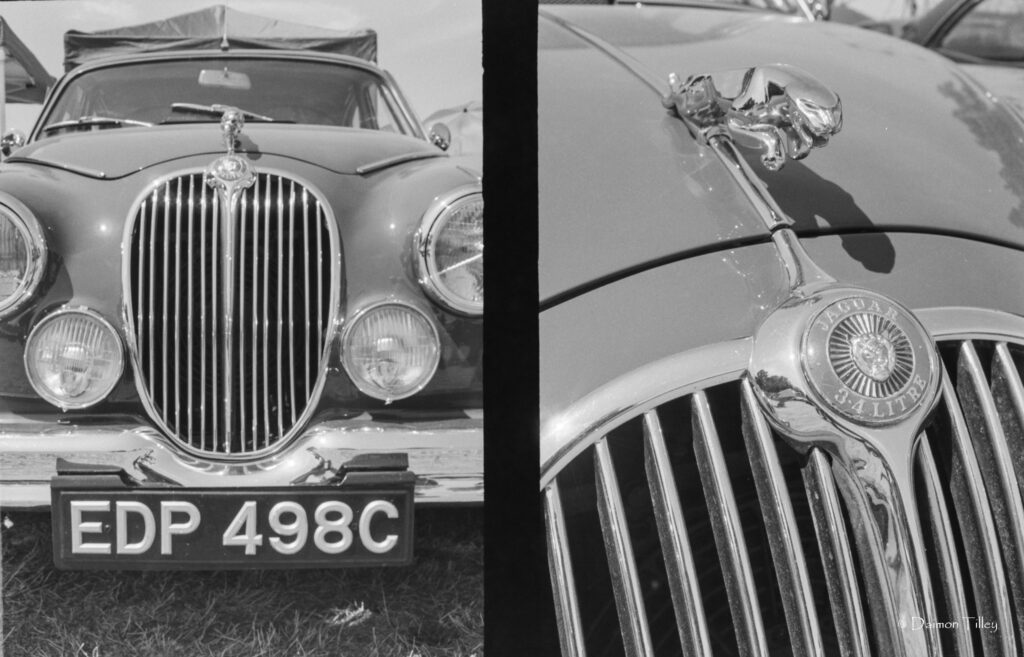
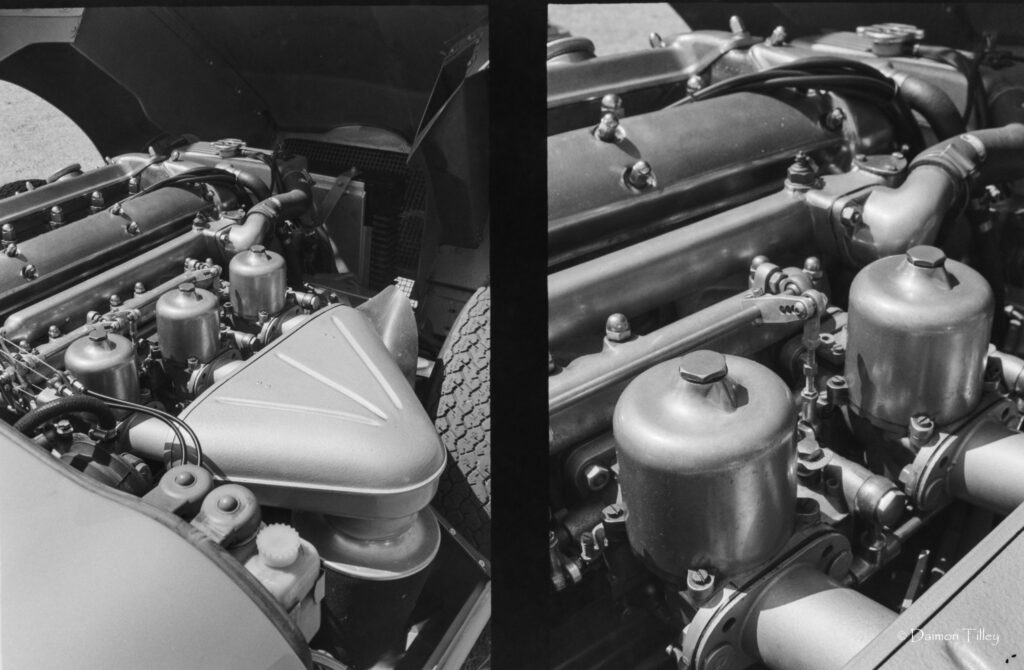
- Powderham Castle Classic Car Show: The mechanical details of vintage engines (Jaguar and Lagonda models) provided a benchmark for the lens’s micro-contrast. The diptych format—pairing two half-frame images side-by-side—emerged as a creative strength of the system, allowing for narrative storytelling within a single 35mm frame.
- Exeter City Centre: Interior shots in low-light environments (restaurants) revealed the limitations of the Pen FT’s internal light meter. While accurate in bright daylight, the aging CdS (Cadmium Sulfide) cell tended to underexpose in challenging lighting, requiring photographers to rely on external light meter apps for precision.
The Challenge of Maintenance and Repair
The primary threat to the continued use of the Olympus Pen F system is the specialized nature of its internals. The rotary shutter is a complex assembly that few modern technicians are trained to calibrate. Furthermore, the light meters in the FT models often require 1.35v mercury batteries, which are no longer manufactured due to environmental regulations. While zinc-air replacements or voltage adapters exist, they add another layer of complexity to the user experience.
Repair specialists note that the "sticking mirror" issue is often the result of "mirror foam" degradation—the small pads that cushion the mirror’s impact turning into a sticky residue over decades. While this is a relatively simple fix, failures in the titanium shutter or the film transport gears often require "donor" cameras, as new-old-stock (NOS) parts have largely been exhausted.

Broader Impact on the Analog Community
The experience of modern Pen F users serves as a cautionary tale for the broader analog revival. It highlights a shift in the hobby from simple "point-and-shoot" nostalgia to a more rigorous form of mechanical stewardship. For many, the appeal of the Pen F transcends its utility; it is viewed as a "design icon," a piece of kinetic sculpture that happens to take photographs.
The success of the third attempt in the documented case study suggests that while the risks are high, the rewards of the half-frame SLR format—portability, economy, and the unique vertical orientation of the viewfinder—remain significant. As film prices continue to fluctuate, the demand for high-quality half-frame cameras is expected to remain steady, potentially encouraging third-party manufacturers to produce new components or even new camera bodies inspired by Maitani’s original vision.

In conclusion, the Olympus Pen F stands as a testament to a period of radical experimentation in photographic history. Its survival into the 21st century depends not just on the availability of film, but on the persistence of a niche ecosystem of specialists and collectors willing to navigate the frustrations of aging mechanics in pursuit of a unique aesthetic. For those who find success on their "third try," the Pen F offers a photographic experience that is both economically sensible and mechanically sublime.