The English seaside town occupies a unique and enduring position within the national psyche, serving as a repository for collective memory, a destination for multi-generational recreation, and a preferred location for retirement. From the vibrant, colorful aesthetics of Devonshire resorts to the stark, functional architecture of the North Sea coast, these locales represent a specific cultural heritage. The poet Philip Larkin famously captured this sentiment in his 1974 work To the Sea, describing the "miniature gaiety of seasides." However, beneath this nostalgic veneer lies an escalating conflict between human habitation and the raw kinetic energy of the ocean. In contemporary England, the "gaiety" of the coast is increasingly overshadowed by the logistical and economic burden of maintaining structural integrity against a backdrop of climate instability. This tension is perhaps nowhere more visible than in the coastal town of Dawlish, Devon, where the intersection of vital transport infrastructure and the English Channel creates a perennial theater of environmental confrontation.
The Strategic Importance of the Dawlish Coastal Corridor
Dawlish serves as a critical point of interest for engineers, environmentalists, and policymakers due to its geography. The town is home to a section of the South West Main Line, a railway artery that provides the only rail link between the rest of the United Kingdom and the counties of Devon and Cornwall. The track runs directly along the sea wall, separated from the English Channel by only a few meters of stone and concrete. This proximity makes the line one of the most scenic in the country but also the most vulnerable.
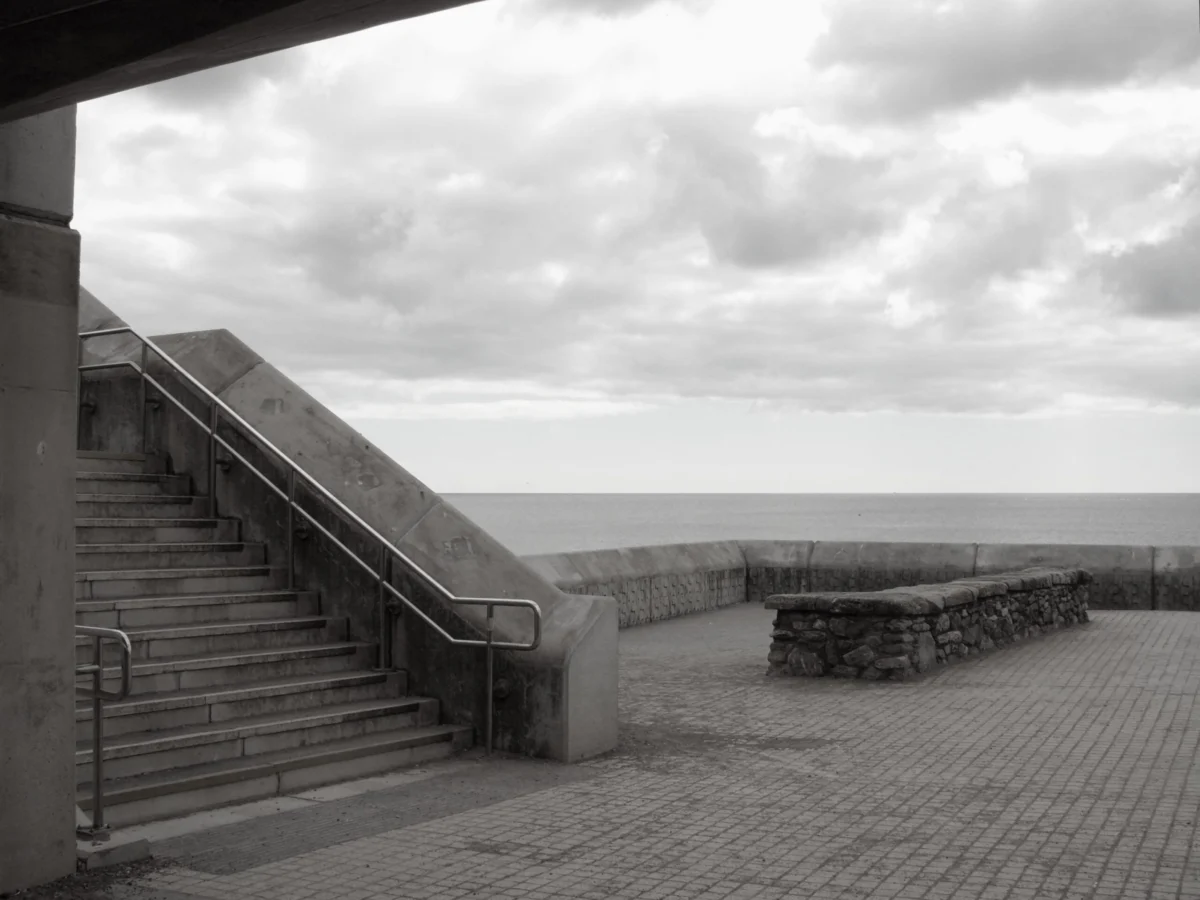
The infrastructure at Dawlish—comprising a complex network of walls, ramparts, steps, handrails, and promenades—is designed to absorb the impact of the Atlantic swells that funnel into the Channel. During the summer months, these defenses often appear over-engineered, framing a benign and passive sea. However, the seasonal transition into winter transforms the area into a high-stakes engineering challenge. The "Sisyphean task" of rebuilding and reinforcing these defenses has become a permanent fixture of local governance and national infrastructure planning.
Chronology of Coastal Conflict: From 2014 to Storm Ingrid
The modern era of coastal defense in Dawlish is defined by the catastrophic events of February 2014. A series of powerful winter storms decimated the existing Victorian-era sea wall, leaving the railway tracks suspended in mid-air and severing the rail link to the South West for eight weeks. The breach cost the regional economy an estimated £1.2 billion in lost productivity and tourism revenue, prompting the UK government to initiate the South West Rail Resilience Programme.
Following the 2014 disaster, Network Rail embarked on a multi-phase project to enhance the town’s defenses. Phase one involved the construction of a new sea wall at Marine Parade, completed in 2020, which featured a recurve design intended to deflect wave energy back towards the sea. Phase two, focusing on the section between the station and the Coastguard breakwater, was completed in 2023.
Despite these multi-million-pound investments, the winter of 2023–2024 provided a stern test for the new infrastructure. In January 2024, Storm Ingrid struck the Devon coast with significant force. High spring tides combined with a powerful storm surge resulted in thundering seawater overtopping even the newly elevated defenses. The storm caused localized flooding, washed away sections of the upper promenade, and forced a temporary closure of the railway line. While the new wall prevented a total structural failure similar to the 2014 event, the disruption underscored a sobering reality: even the most advanced human ingenuity remains at the mercy of extreme meteorological events.
Statistical Overview of Coastal Vulnerability in the United Kingdom
The challenges faced by Dawlish are reflective of a broader national crisis. The United Kingdom possesses approximately 11,000 kilometers of coastline, much of which is susceptible to erosion and flooding. According to data from the Environment Agency and the Committee on Climate Change (CCC), the following metrics highlight the scale of the threat:
- Sea Level Rise: UK sea levels have risen by approximately 16.5 centimeters since 1900. Projections suggest a further rise of between 0.5 meters and 1.0 meter by the end of the century, depending on global carbon emission trajectories.
- Property at Risk: It is estimated that over 1.3 million properties in England are currently at risk of coastal flooding. By the 2080s, this number could rise significantly without sustained investment in defenses.
- Economic Cost: The annual cost of coastal erosion and flooding to the UK economy is estimated at £260 million, a figure expected to triple over the next 50 years.
- Infrastructure Stress: Approximately 1,600 kilometers of major road and rail networks are located within 200 meters of the coastline, making them high-risk zones for structural damage.
In Dawlish specifically, the government has invested over £80 million into the new sea wall project. While this expenditure is justified by the economic necessity of the railway, it raises questions about the long-term viability of "holding the line" in less economically vital coastal regions.
Engineering Responses and the "Recurve" Strategy
The primary defense mechanism employed at Dawlish is the recurve sea wall. Traditional vertical walls often exacerbate erosion by allowing waves to crash directly against the structure, with the downward force scouring the foundations at the base of the wall. The recurve design uses a concave profile to catch the incoming wave and redirect its energy upward and outward, back toward the ocean.
However, as observed during Storm Ingrid, these structures have physical limits. When storm surges exceed a certain height, the recurve effect is neutralized, and water spills over the top (overtopping). This leads to the flooding of promenades and the saturation of the railway’s ballast—the crushed stone that supports the tracks. If the ballast becomes contaminated with salt or washed away, the structural integrity of the line is compromised, necessitating expensive and time-consuming repairs.
Institutional and Public Reactions
The ongoing battle at Dawlish has elicited a variety of responses from stakeholders. Network Rail has maintained a position of "resilience at all costs," emphasizing that the South West Main Line is a non-negotiable asset. A spokesperson for the South West Rail Resilience Programme stated following Storm Ingrid: "The new sea wall performed as designed, protecting the core structure of the railway. However, the sheer volume of water moved by Storm Ingrid demonstrates that we are in a constant state of adaptation. Our goal is to minimize downtime, but we cannot entirely eliminate the power of the sea."
Local residents and business owners in Dawlish express a mix of gratitude for the protection and anxiety over the town’s aesthetic and functional future. The heightened walls have altered the visual landscape, in some places obscuring the very sea views that draw tourists to the town. This "fortress mentality" is a point of contention for those who value the "miniature gaiety" Larkin described, yet most acknowledge that without these defenses, the town’s economic survival would be in jeopardy.
Environmental groups, meanwhile, argue for a shift in strategy. Some advocates suggest "managed realignment"—allowing certain areas to flood to create natural buffers—rather than continuing the Sisyphean cycle of building higher and stronger concrete barriers. However, managed realignment is rarely a viable option in towns where the railway and residential housing are inextricably linked to the shoreline.
The Philosophical and Cultural Dimension of Coastal Decay
The struggle at Dawlish serves as a physical manifestation of the themes explored by Philip Larkin. In his 1974 collection High Windows, Larkin frequently meditated on the transience of human effort and the eventual reclamation of the earth by nature. In the poem Going, Going, he warns: "Things are tougher than we are, just / As earth will always respond / However we mess it about."
This perspective offers a poignant lens through which to view the photograph of the Dawlish defenses. Recorded with a Samsung Digimax L85—a device that itself captures a fleeting moment in technological history—the image of the sea wall on a calm, humid summer day belies the inherent "otherness" of the ocean. The architecture, however "severe" and "strongly built," is essentially a temporary intervention. Larkin’s work suggests that the tides will remain "clean beyond" human interference, regardless of the "filth" or the concrete we cast into them. This sense of foreboding stems from the recognition that human ability to "tame" the natural world is fragile and ultimately finite.
Future Implications: Adaptation vs. Retreat
The situation in Dawlish is a microcosm of the global challenge of climate adaptation. As storm intensity increases and sea levels continue to rise, the cost-benefit analysis of coastal defense will become increasingly difficult. For the time being, the strategic importance of the South West Main Line ensures that Dawlish will remain a priority for engineering intervention.
However, the "otherness and destructive power of the sea" mentioned by observers is not a static threat; it is an accelerating one. Future planning may eventually have to consider the once-unthinkable: the inland relocation of the railway line. While such a project would cost billions and take decades to implement, it may eventually become more cost-effective than the perpetual cycle of damage and repair necessitated by the "Sisyphean task" of holding the Devon shoreline.
For now, the town of Dawlish remains a testament to human persistence. The walls, ramparts, and promenades stand as a defiant, if temporary, barrier against the English Channel. They represent a commitment to preserving a way of life and a vital economic link, even as the "thundering sea water" of storms like Ingrid serves as a recurring reminder of the ocean’s ultimate supremacy. The aesthetic of the English seaside, characterized by its "miniature gaiety," continues to exist, but it does so behind increasingly high walls of concrete and iron, marking a new era of cautious coexistence with the natural world.