The preservation of contemporary Italian art reached a significant milestone with the formal recognition of the studio of Franco Summa (1938–2020) as a Casa-Museo (Home-Museum) by the Italian Ministry of Culture. Located in the heart of Pescara, the Fondazione Summa now serves as a permanent repository for the works and philosophical inquiries of an architect and artist whose career spanned over six decades. This institutional acknowledgment places Summa’s former workspace within the prestigious "Luoghi del Contemporaneo" (Places of the Contemporary) network, an initiative by the Directorate-General for Contemporary Creativity aimed at mapping and promoting the nation’s modern artistic heritage.
Franco Summa was a pivotal figure in the Italian "Urban Art" movement, dedicating his life to the exploration of the symbiotic relationship between human inhabitants and the geometric, often sterile, environments of modern cities. His work, characterized by a vibrant use of color and a deep connection to the cultural roots of the Abruzzo region, sought to transform urban spaces into places of social interaction and aesthetic contemplation. The transition of his private studio into a public museum ensures that his vision of the "urban soul" remains accessible to scholars, tourists, and the local community.
The Chronology of an Urban Visionary
Franco Summa’s career was marked by a consistent effort to bridge the gap between high art and the public square. Born in Pescara in 1938, his early academic training in architecture and art history provided the foundation for a practice that would eventually see him represented on the world’s most prestigious stages.
In 1976 and 1978, Summa was invited to participate in the Biennale di Venezia, the pinnacle of international contemporary art. These appearances solidified his reputation as a thinker who viewed the city not merely as a collection of buildings, but as a living canvas. Throughout the 1980s and 1990s, he executed a series of "Urban Monuments" that challenged the traditional permanence of sculpture. Many of these works were temporary installations, designed to disrupt the daily routine of citizens and force a re-evaluation of their surroundings.
The year 1993 marked the creation of one of his most celebrated works, the "Porta del Mare" (The Sea Door). This monumental arch, though temporary, became an indelible part of Pescara’s collective memory, symbolizing the city’s historical and economic connection to the Adriatic. Following his passing in 2020, the establishment of the Fondazione Summa was accelerated to prevent the dispersal of his archives and to maintain the integrity of his studio, which remains a testament to his methodical approach to color theory and spatial design.
The Philosophical Core: Humanism and Urban Space
At the heart of Summa’s practice was the belief that architecture must serve a humanistic purpose. He often argued that modern urban development had become alienated from the people it was meant to house. To counter this, he utilized a specific palette of primary and secondary colors—his "chromatic alphabets"—to inject life into the concrete landscape.
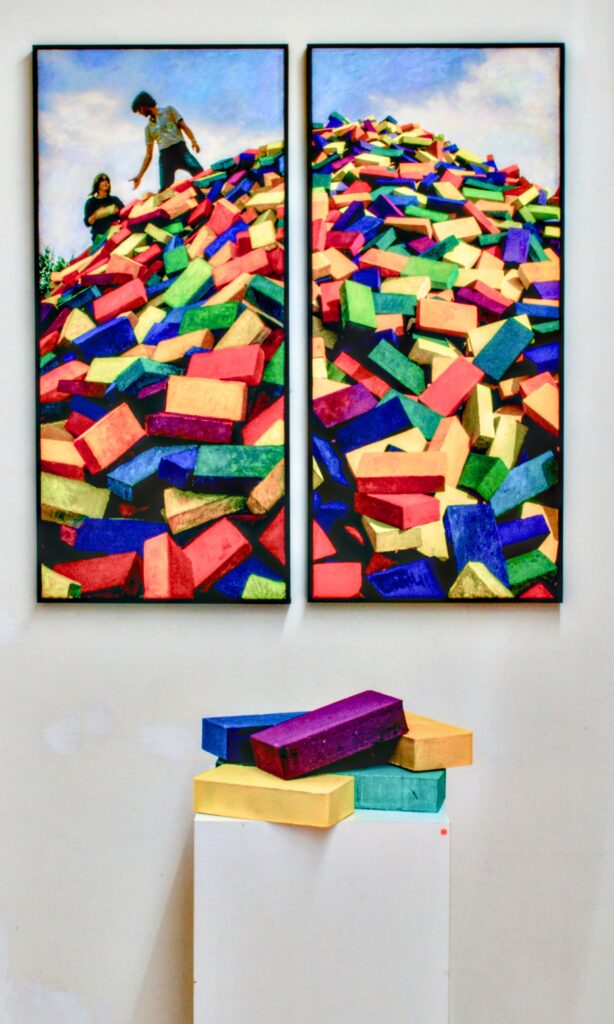
The Casa-Museo in Pescara houses a vast collection of these color studies and maquettes. Visitors can observe the evolution of his "Monumenti Urbani" (Urban Monuments) project, which sought to create focal points within the city that encouraged "pausing and reflecting." One notable piece in the museum is a reproduction of his urban monuments, which has transitioned from a plan for a public space into a self-contained work of art. These pieces illustrate Summa’s transition from large-scale interventions to more intimate, symbolic representations of the urban experience.
Le Fanciulle d’Abruzzo: A Synthesis of Tradition and Modernity
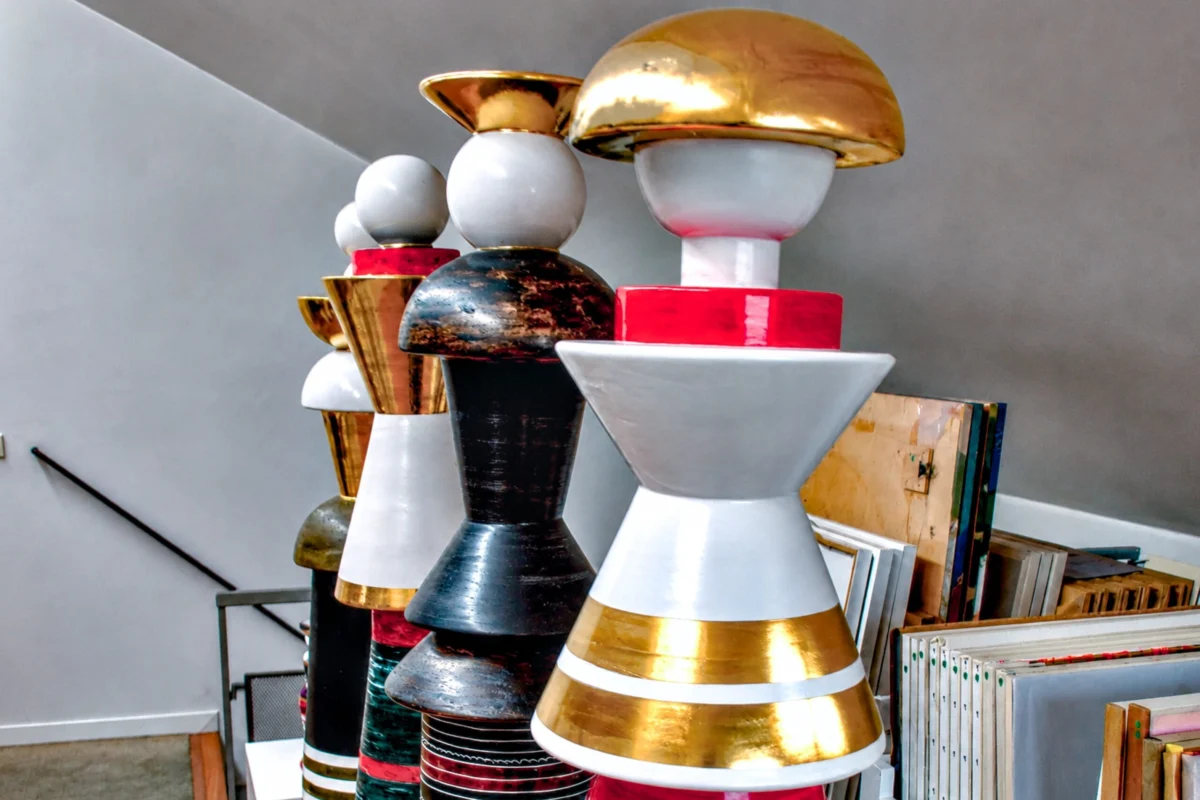
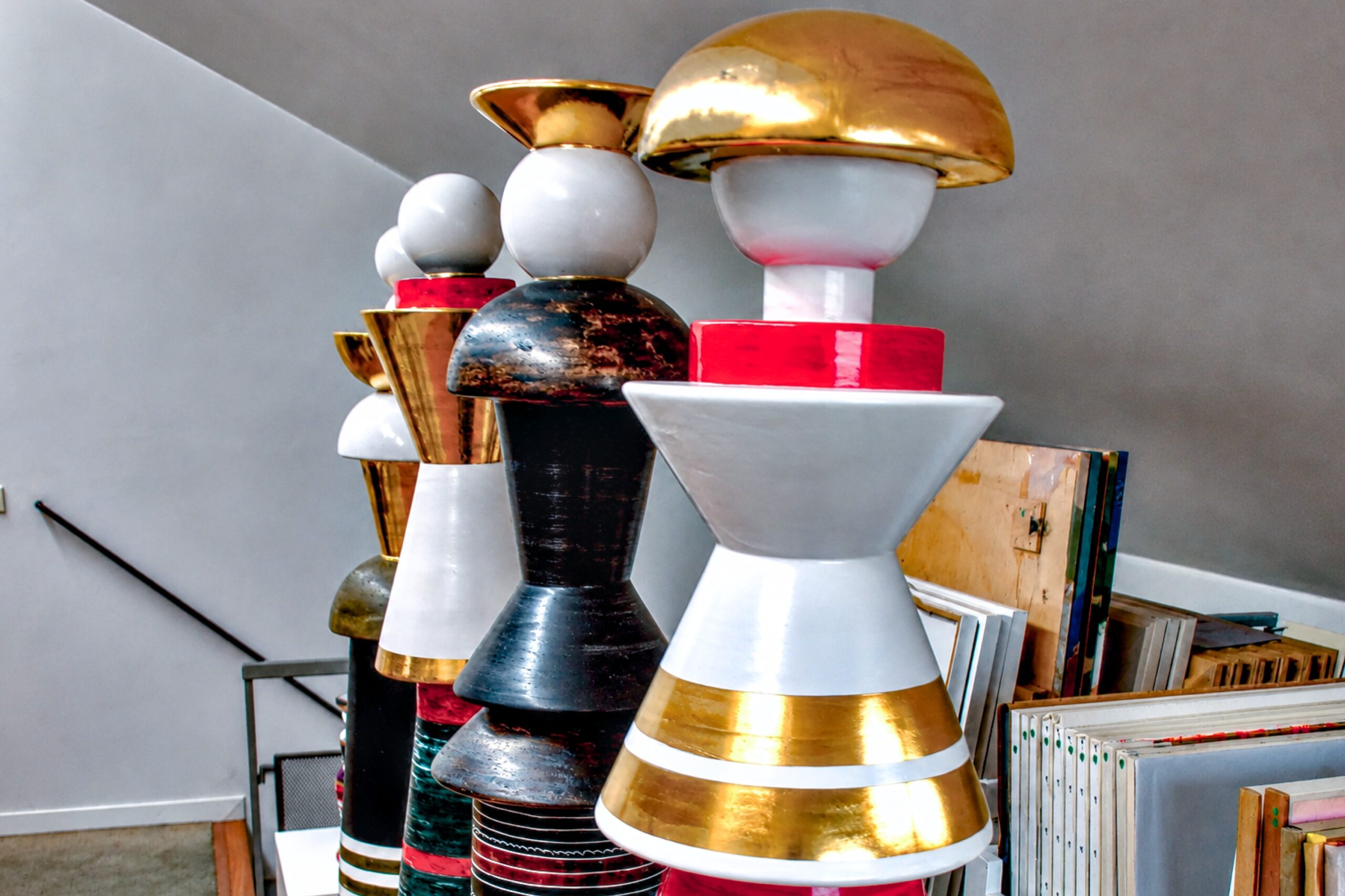
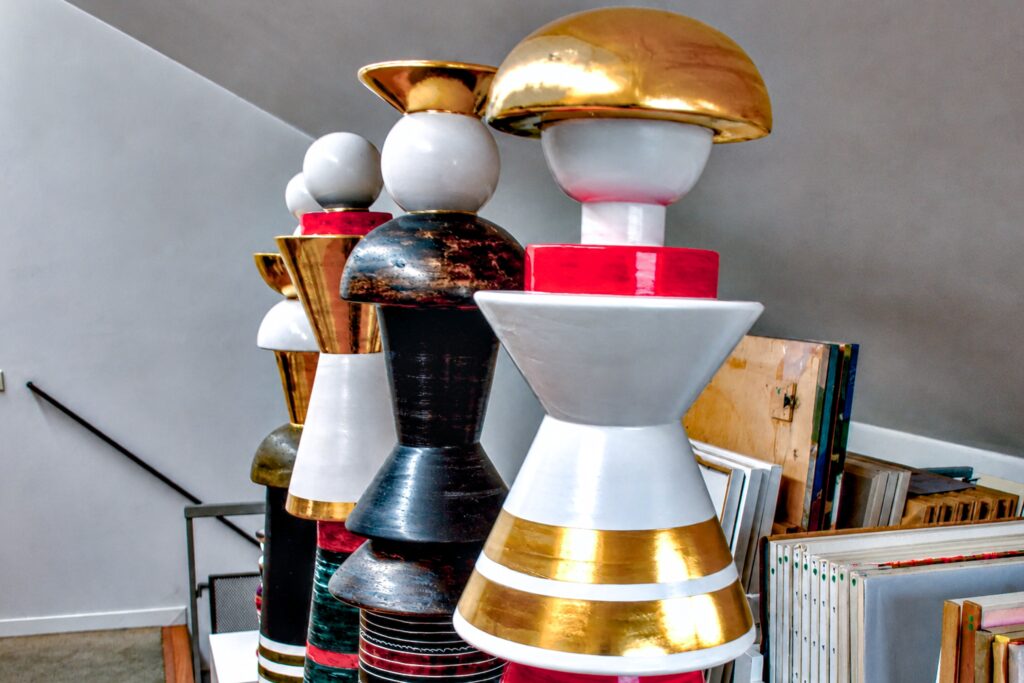
One of the most iconic series within the Fondazione Summa is "Le Fanciulle d’Abruzzo" (The Young Ladies of Abruzzo). This series consists of twelve monumental statues, each representing an idealized female figure. While the forms are contemporary and minimalist, they are deeply rooted in the traditional folk costumes of the Abruzzo region.
Each "Fanciulla" is distinguished by unique color patterns and geometric arrangements that reference the textile traditions and rural heritage of central Italy. By scaling these figures to monumental proportions, Summa elevated local identity to the status of universal art. The Casa-Museo displays smaller-scale reproductions of these statues, allowing for a close-up examination of the intricate color relationships that Summa used to define regional character. This series remains a primary example of how Summa successfully synthesized historical regionalism with the international language of abstract art.
Technical Documentation and the Role of Photography
The preservation of Summa’s legacy is not limited to the physical objects he left behind but also includes the way his work is documented and perceived through various media. Recent photographic surveys of the Casa-Museo highlight the complexities of capturing contemporary art in a domestic-turned-institutional setting.
A specific challenge noted by photographers visiting the studio involves the interaction between Summa’s art and the architectural environment of the museum itself. For instance, some of the museum’s displays utilize reflective surfaces and mirrors to expand the perceived space and create new visual dialogues between separate paintings. Capturing these reflections requires precise technical execution, often involving unconventional angles to avoid the photographer’s own reflection from intruding upon the composition.
In modern documentation efforts, such as those conducted by visitors using equipment ranging from high-end DSLRs to versatile bridge cameras like the Panasonic FZ100, the use of technology has become integral to the museum experience. The application of artificial intelligence in post-production to correct focus issues or lighting imbalances in these complex environments is becoming a standard practice in the digital archiving of art, ensuring that the visual integrity of Summa’s work is maintained for future digital catalogues.
Institutional Support and the "Luoghi del Contemporaneo"
The recognition of the Fondazione Summa by the Italian Ministry of Culture is more than a local honor; it is a strategic inclusion in the national cultural map. The "Luoghi del Contemporaneo" project was established to identify sites where contemporary art is produced, exhibited, or preserved, providing a framework for state support and international promotion.
According to statements from the Ministry of Culture, the designation of "Casa-Museo" is reserved for sites that offer an "extraordinary testimony of the life and work of an artist." By granting this status to Summa’s studio, the government acknowledges the vital role that regional artists play in the broader narrative of Italian art history. This status also opens avenues for cultural tourism, positioning Pescara as a destination for those interested in the intersection of architecture, sociology, and the visual arts.
Broader Impact and Regional Implications
The transformation of Franco Summa’s studio into a museum has significant implications for the city of Pescara and the Abruzzo region. Historically, Abruzzo has been celebrated for its natural beauty and medieval heritage, but the Fondazione Summa provides a necessary anchor for modern cultural identity.
- Urban Revitalization: Summa’s theories on color and social space continue to influence local urban planning. His vision for a "colorful city" is often cited by contemporary architects seeking to improve the aesthetic quality of Pescara’s post-war neighborhoods.
- Educational Outreach: The Foundation serves as a hub for workshops and seminars, educating the next generation of artists on the importance of public-facing art.
- Tourism Synergy: Located in proximity to Pescara Airport, the museum offers a sophisticated cultural experience for transit travelers and international visitors, diversifying the region’s tourism portfolio beyond its coastline and mountains.
Conclusion: The Living Legacy of the Chromatic Architect
Franco Summa’s death in 2020 marked the end of a prolific career, but the establishment of the Casa-Museo ensures that his dialogue with the city remains ongoing. His work serves as a reminder that the urban environment is not a fixed, immutable entity, but a flexible space that can be humanized through art and color.
The Fondazione Summa stands as a testament to a man who saw the city as a "theatre of life." Through the preservation of his studio, his monumental "Fanciulle," and his meticulous color studies, the foundation provides a roadmap for future urbanists and artists to follow. As Pescara continues to grow and evolve, the principles of harmony, identity, and human-centric design championed by Summa will undoubtedly remain at the forefront of the city’s cultural and architectural evolution. The Ministry’s recognition is a fitting tribute to an artist who didn’t just want to paint on canvas, but wanted to paint the very fabric of society.