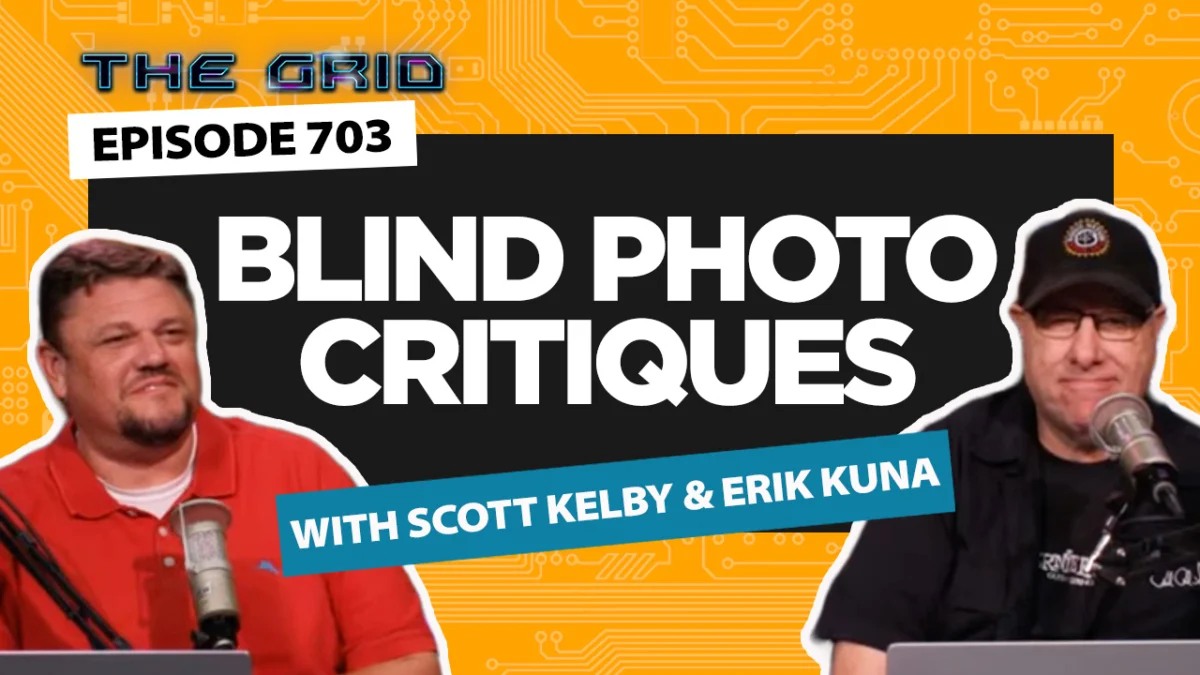
The latest installment of The Grid, episode 703, presented an illuminating and highly engaging session of its popular Blind Photo Critiques, featuring renowned photography educators Scott Kelby and Erik Kuna. This particular broadcast offered viewers a comprehensive exploration of photographic principles, ranging from fundamental capture techniques to sophisticated post-processing methods, across an expansive array of genres including travel, wildlife, sports, portraits, architecture, landscapes, and product photography. The episode underscored a critical and oft-repeated axiom in photography: while digital editing tools are powerful, they cannot entirely compensate for deficiencies in the initial capture, particularly concerning lighting. Scott Kelby, a prominent figure in the photography world, meticulously demonstrated how deliberate and effective lighting choices made in the field serve as the bedrock upon which all subsequent Adobe Lightroom adjustments build their efficacy.
The Enduring Legacy of "The Grid" and KelbyOne
"The Grid" has long stood as a cornerstone of online photography education, a weekly webcast produced by KelbyOne, a global leader in photography, Photoshop, and Lightroom training. Launched over a decade ago, the show has evolved into a dynamic platform where industry experts dissect photographic trends, review gear, interview leading photographers, and, notably, offer constructive critiques. KelbyOne itself, founded by Scott Kelby, has a rich history rooted in empowering photographers of all skill levels. From its origins in traditional seminars and print magazines like Photoshop User and Lightroom Magazine, KelbyOne transitioned seamlessly into the digital age, establishing an extensive library of online courses, tutorials, and live events. This commitment to accessible, high-quality education has solidified its position as a vital resource for millions globally, underscoring the ever-growing demand for expert guidance in a rapidly evolving visual landscape. The longevity of "The Grid" — now exceeding 700 episodes — is a testament to its consistent delivery of relevant, practical, and entertaining content, making it a reliable fixture in the educational calendars of amateur and professional photographers alike. The blind critique format, in particular, resonates deeply with its audience, providing unbiased feedback that often mirrors the challenges and triumphs faced by photographers in their own creative journeys.
The Pedagogical Power of Blind Critiques
The blind critique format employed in The Grid is a highly effective pedagogical tool. By anonymizing the submitted photographs, the critique process shifts its focus entirely to the image itself, eliminating any potential biases related to the photographer’s reputation, equipment, or personal connections. This objectivity ensures that feedback is purely based on composition, lighting, subject matter, technical execution, and overall artistic merit. For both the submitters and the vast viewing audience, this fosters a learning environment where critical analysis is paramount. Photographers learn to evaluate images based on universal principles, rather than subjective preferences influenced by extraneous factors. Industry data, while specific to KelbyOne is proprietary, generally indicates that interactive learning formats, especially those involving expert feedback, significantly enhance skill acquisition and retention. A study by the National Research Council on "How People Learn" highlights the importance of timely and constructive feedback in mastering complex skills, a principle expertly applied in "The Grid’s" critique sessions. The real-time discussion between Kelby and Kuna, dissecting images from diverse genres, provides invaluable insights into problem-solving, creative vision, and technical refinement that go beyond what a textbook or pre-recorded tutorial can offer. Viewers gain the ability to "see" their own work, and the work of others, through the eyes of seasoned professionals, accelerating their understanding of photographic excellence.
The Unyielding Primacy of Light in Photography
A recurring and central theme throughout episode 703, emphatically driven home by Scott Kelby, was the indispensable role of strong lighting. Kelby consistently articulated that no amount of post-processing wizardry can truly salvage an image fundamentally flawed by poor light. This principle is not merely an opinion but a foundational truth rooted in the physics of light and human perception. Good lighting defines form, creates mood, separates subjects from backgrounds, and establishes the overall emotional tenor of an image. Conversely, harsh midday sun can lead to blown-out highlights and impenetrable shadows, while insufficient light results in muddy tones, high noise, and a general lack of clarity and dimension.
Consider the technical implications:
- Dynamic Range: Modern camera sensors have impressive dynamic range, but even the best struggle with extreme contrasts presented by poor lighting. Capturing detail in both very bright and very dark areas simultaneously remains a challenge, often requiring compromises or advanced bracketing techniques. Optimal light, such as during the "golden hour" or in diffused conditions, naturally presents a more manageable dynamic range for the camera.
- Color and Tone: Light quality directly impacts color rendition and tonal richness. Harsh, unfiltered light can wash out colors, while soft, directional light can enhance saturation and create subtle tonal gradations that add depth.
- Form and Dimension: Light creates shadows, and shadows define form. Without effective light and shadow play, subjects can appear flat and two-dimensional. Kelby’s critiques often highlighted instances where a lack of directional light rendered subjects indistinguishable from their surroundings or robbed portraits of their sculpted quality.
Mr. Kelby’s enduring advocacy for mastering light in the field is a direct reflection of decades of experience and observation. He posits that investing time in understanding and manipulating available light, or introducing artificial light judiciously, yields far superior results than attempting to correct severely under- or overexposed areas, or artificially generate missing contrast and dimension in post-production. This emphasis serves as a crucial reminder for photographers, particularly those new to the craft, not to become overly reliant on editing software as a panacea for fundamental photographic shortcomings.
Mastering the Digital Darkroom: Advanced Editing Techniques
While emphasizing foundational principles, the episode also provided a deep dive into sophisticated editing techniques within Adobe Lightroom and Photoshop, demonstrating how these tools, when applied correctly, elevate good images to exceptional ones. The insights offered included:
- New Masking Feather Controls: A significant enhancement in recent Adobe updates, the masking feather controls allow for far smoother and more natural transitions between selected and unselected areas. Previously, complex selections, especially around intricate subjects like hair, foliage, or textured surfaces, often resulted in harsh edges or haloing effects. The refined feathering capability enables photographers to seamlessly blend adjustments, making local corrections (e.g., brightening a face, darkening a sky) appear entirely organic. This feature is particularly impactful for portraiture and landscape photography, where subtle, gradient-based adjustments are crucial for realism. The evolution of masking tools within Adobe products over the past few years, leveraging AI and machine learning, represents a major leap in accessibility and precision for photographers.
- Isolating a Subject for Pleasing Background Blur: This technique addresses one of the most sought-after effects in photography: selective focus with a creamy, out-of-focus background (bokeh). While optical depth of field is traditionally achieved through wide apertures and specific focal lengths, editing tools now offer powerful ways to enhance or even simulate this effect. The episode showcased methods to precisely select a subject and then apply blur, darken, or desaturate the background, effectively directing the viewer’s eye and creating a more professional aesthetic. This is especially useful for images where the background might be distracting or less appealing than desired, and highlights the convergence of traditional photographic principles with computational imaging techniques.
- Subtle Portrait Refinements with Liquify: Photoshop’s Liquify filter is a powerful tool for reshaping pixels, and its application in portraiture was demonstrated with an emphasis on subtlety. The lesson here was not about drastic alterations but about making minor, imperceptible adjustments that enhance the subject’s appearance without venturing into unrealistic or "plastic" territory. This might include gently adjusting hair volume, refining facial symmetry, or slightly altering the angle of a shoulder for a more pleasing pose. The ethical implications of using Liquify, particularly in photojournalism versus commercial or fine art photography, implicitly underpinned the discussion, with the emphasis clearly on natural-looking enhancements.
- Rescuing Challenging Images Without Overprocessing: This segment tackled the delicate balance between corrective editing and over-manipulation. Photographers often encounter images with less-than-ideal exposure, color casts, or noise. The hosts demonstrated various approaches—from targeted shadow and highlight recovery to selective color grading and noise reduction—that aim to improve an image’s technical quality while preserving its natural look. The critical takeaway was to avoid the common pitfall of making an image look "photoshopped," emphasizing that the most effective edits are often those that go unnoticed, seamlessly integrating with the original capture. This aligns with the broader industry trend towards "authentic" photography, even within commercial contexts.
Beyond Technique: The Art of Storytelling and Engagement
Beyond the technical merits, the episode touched upon the intangible qualities that elevate a photograph from a mere record to an evocative piece of art. The discussion around travel photography, in particular, highlighted that truly strong images in this genre do not merely document a location; they create an irresistible desire in the viewer to experience that place firsthand. This involves not just capturing landmarks, but conveying atmosphere, culture, and emotion—a deeper narrative that transcends simple visual information. This aspect of photographic storytelling is increasingly valued in an era saturated with visual content, where standing out requires a compelling voice.
Furthermore, the hosts’ dynamic, characterized by humor and genuine camaraderie (including a quick "burger update"), underscored the importance of personality in educational content. This lighthearted approach ensures that complex technical discussions remain approachable and entertaining, fostering a relaxed learning environment that encourages engagement and retention. The blend of serious instruction with relatable banter is a hallmark of "The Grid" and a key factor in its consistent appeal.
Broader Impact and Implications for the Photography Community
Episode 703 of The Grid serves as a microcosm of the broader impact that KelbyOne and similar platforms have on the global photography community. By democratizing access to high-caliber instruction, these resources empower aspiring photographers to develop their skills without the barriers of traditional art schools or expensive workshops. The emphasis on both foundational principles and advanced digital techniques reflects the dual nature of modern photography, where artistic vision must be supported by technical proficiency, both in-camera and in the digital darkroom.
The implications are significant:
- Skill Democratization: Expert knowledge, once exclusive, is now widely available, fostering a more skilled and competitive photographic landscape.
- Adaptability: Photographers are better equipped to adapt to new technologies and software updates, ensuring their relevance in a fast-changing industry.
- Creative Empowerment: By understanding the "why" behind the "how," photographers are empowered to make more informed creative decisions, leading to more impactful and personal work.
In an age where image creation is ubiquitous, the ability to produce truly exceptional photographs remains a valued skill. Shows like The Grid provide the necessary guidance, reinforcing that while tools evolve, the core principles of light, composition, and storytelling remain timeless. Viewers are strongly encouraged to watch the replay of this insightful episode, not only to glean practical editing ideas for their next shoot but also to internalize the fundamental truth that masterful photography begins long before the image enters the computer. The blend of practical advice, cutting-edge techniques, and overarching philosophical insights presented by Scott Kelby and Erik Kuna solidifies The Grid‘s position as an indispensable resource for anyone serious about elevating their photographic craft.