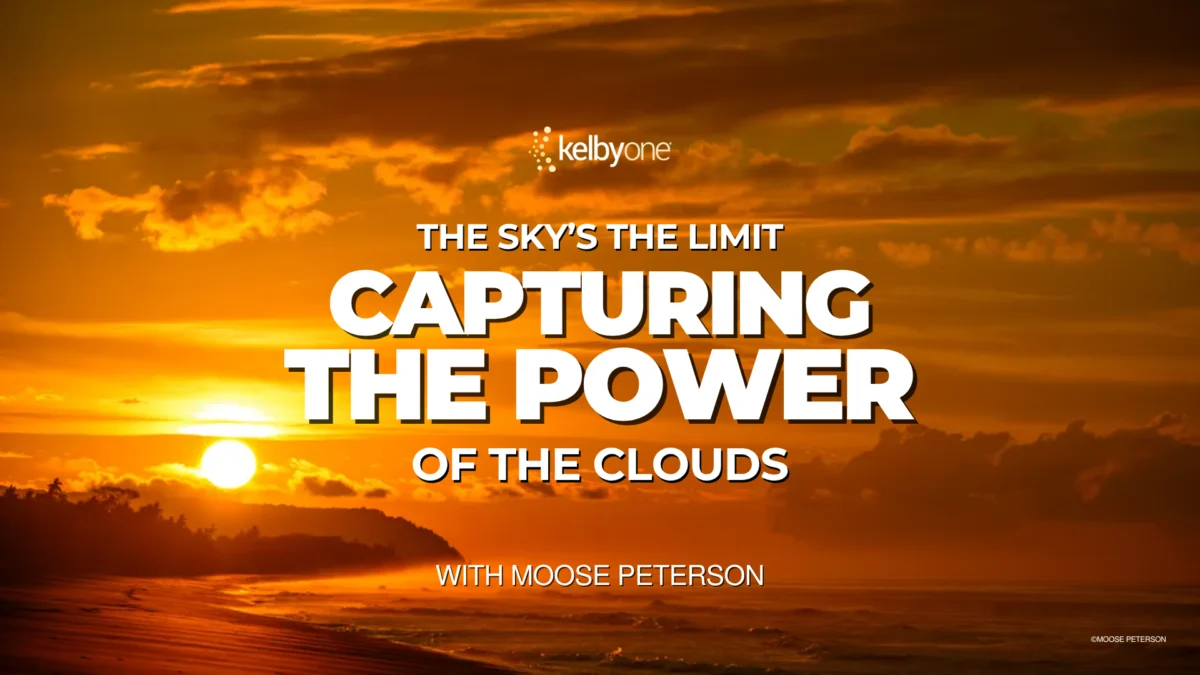
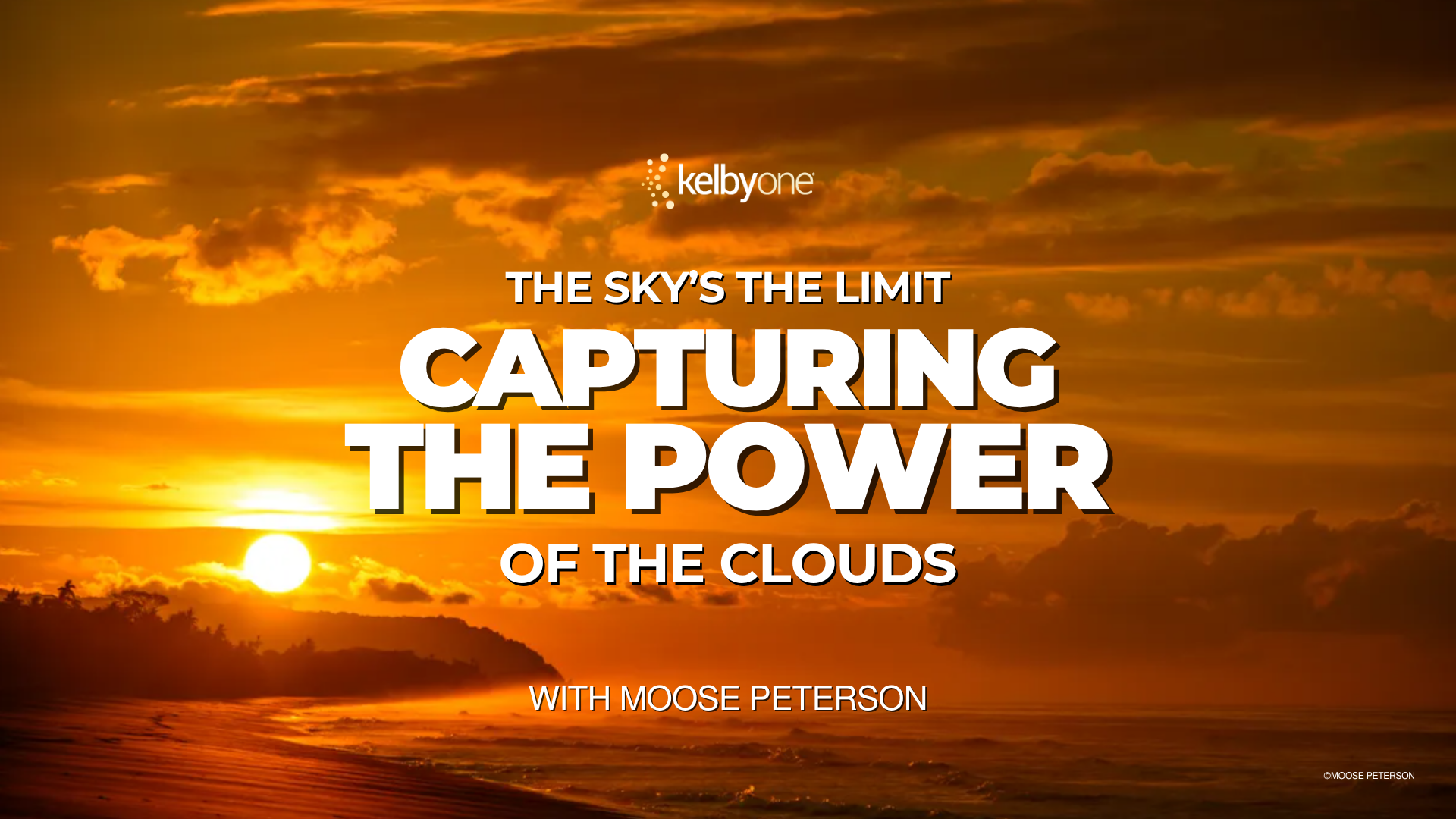
In a significant development for the global photography community, renowned photographer Moose Peterson has launched a new online masterclass designed to revolutionize how landscape photographers approach one of nature’s most dynamic and often overlooked elements: clouds. Breaking from the conventional wisdom that often advises waiting for "perfect light," Peterson encourages photographers to "look up" and actively integrate the unpredictable beauty of the sky into their compositions. This initiative, hosted on the KelbyOne platform, marks a paradigm shift, positioning clouds not as an obstacle but as a transformative force capable of imbuing scenes with unparalleled drama and narrative depth.
The Paradigm Shift: Embracing the Unpredictable Canvas
Traditionally, many landscape photographers meticulously plan their shoots around the "golden hour" or "blue hour," periods characterized by soft, directional light and often clear or gently diffused skies. Clouds, particularly fast-moving or overcast formations, have frequently been perceived as impediments, obscuring desired light or creating challenging high-contrast scenarios. Peterson’s new curriculum directly challenges this perspective, advocating for a proactive engagement with the sky. His philosophy posits that clouds, despite their unpredictability and transient nature, offer a unique opportunity to infuse a scene with character, mood, and a sense of movement that cannot be replicated. This approach is particularly timely, given the increasing demand for unique visual narratives in an oversaturated photographic landscape. Data from industry reports indicate a steady growth in landscape photography’s popularity, with an estimated 300 million landscape images uploaded daily across various platforms, underscoring the need for distinctive techniques to stand out.
Moose Peterson: A Legacy of Photographic Mastery and Innovation
Moose Peterson is widely recognized as a titan in the fields of wildlife and aviation photography, with a career spanning several decades marked by technical prowess, an unwavering dedication to his craft, and a prolific output of educational content. His work has graced the pages of countless publications, and his expertise is sought after by photographers worldwide. Known for his meticulous approach to capturing challenging subjects in diverse environments, Peterson has authored numerous books, led international workshops, and produced a vast library of instructional videos. His transition to specifically address clouds in landscape photography, while seemingly a departure from his core specializations, is a natural extension of his deep understanding of light, composition, and environmental dynamics. His reputation for demystifying complex photographic concepts makes him an ideal instructor for a topic as nuanced as cloud photography. This class builds upon his legacy, offering a fresh perspective that combines his characteristic technical rigor with creative vision, ensuring that participants gain both practical skills and an altered mindset.
Unlocking the Sky’s Secrets: Decoding Cloud Types and Weather Patterns
At the core of Peterson’s methodology is the ability to "read" the sky. The class delves into the fascinating world of meteorology as it pertains to visual artistry, teaching photographers how to identify various cloud types and understand their implications for light and mood. For instance, understanding the difference between towering cumulus clouds, which often signify fair weather but can build into dramatic storm fronts, and the wispy cirrus clouds, indicative of high-altitude winds, allows a photographer to anticipate changing conditions and compose accordingly. Peterson explains how low-lying stratus clouds can create a moody, diffused light ideal for intimate landscapes, while dramatic cumulonimbus formations can offer breathtaking backdrops for epic scenes.
This segment of the course provides a foundational understanding of atmospheric phenomena, moving beyond mere aesthetic appreciation to a practical application of meteorological knowledge. Participants learn to observe wind direction, cloud formation, and the interaction of light with moisture in the atmosphere, enabling them to make informed decisions in the field. This anticipatory skill is crucial, as the ephemeral nature of clouds demands quick thinking and preparation. According to atmospheric scientists, there are ten basic cloud types, further categorized into species and varieties, each with distinct visual characteristics and weather associations. Peterson’s class distills this complexity into actionable insights for photographers, empowering them to predict and react to nature’s ever-changing canvas rather than merely observing it.
Technical Acumen in the Field: Capturing Detail and Drama
A significant portion of the class is dedicated to mastering in-camera techniques crucial for capturing the intricate details and dramatic moods of the sky. Peterson emphasizes making "smart exposure decisions" to navigate the often extreme dynamic range presented by bright skies and darker foregrounds. This involves detailed instruction on:
- Exposure Bracketing: A technique where multiple exposures of the same scene are taken at different stops to capture detail across the entire tonal range, later merged in post-processing. Peterson explains how to apply this effectively to ensure neither the brightest clouds nor the deepest shadows are lost.
- Understanding Histograms: The course teaches how to interpret the histogram in-camera to avoid clipping highlights in the sky or crushing shadows in the landscape, crucial for preserving maximum detail.
- Spot Metering: Utilizing the camera’s spot meter to accurately measure light in specific areas of the sky, ensuring correct exposure for the most critical elements.
- Graduated Neutral Density (GND) Filters: While not explicitly mentioned in the original snippet, GND filters are an indispensable tool for balancing exposures between a bright sky and a darker foreground. Given Peterson’s emphasis on smart exposure, it is highly probable he covers their application to darken the sky selectively without affecting the foreground, thereby reducing the dynamic range the camera needs to capture.
Beyond exposure, the class delves into the creative application of Neutral Density (ND) filters for long exposure photography. ND filters are essentially darkened pieces of glass that reduce the amount of light entering the camera lens, allowing for longer shutter speeds even in bright conditions. Peterson demonstrates how using various strengths of ND filters (e.g., 3-stop, 6-stop, 10-stop, or even variable ND filters) can transform moving clouds into ethereal streaks, blur tumultuous waters, and create a serene, minimalist aesthetic. This technique adds a completely different feel to images, emphasizing movement and the passage of time, turning an ordinary scene into a painterly rendition. The strategic use of ND filters is a hallmark of advanced landscape photography, offering creative control over motion and light that transcends conventional capture.
The Digital Darkroom: Sculpting the Sky in Post-Processing
The journey of a photograph doesn’t end in the field; the digital darkroom plays an equally critical role in realizing a photographer’s vision. Peterson guides students through his comprehensive Adobe Camera Raw (ACR) workflow, a non-destructive editing environment crucial for processing RAW files. Key aspects covered include:
- Custom Presets: Peterson shares how to create and utilize custom presets to streamline the editing process, ensuring consistency across a series of images and providing a strong starting point for individual adjustments. This efficiency is vital for professional photographers handling large volumes of work.
- Color Mixers (HSL Adjustments): The class extensively covers the use of ACR’s color mixer tools, allowing photographers to precisely adjust the hue, saturation, and luminance of individual color ranges. This is particularly powerful for enhancing the subtle blues, purples, oranges, and reds often found in dramatic skies without affecting other colors in the scene.
- AI Masking: Leveraging the latest advancements in artificial intelligence within Adobe software, Peterson demonstrates how to use AI-powered masking tools (e.g., ‘Select Sky,’ ‘Select Subject’) to make incredibly precise selections. This allows for targeted adjustments—such as increasing contrast, clarity, or saturation—specifically within the sky or cloud formations, ensuring maximum impact without over-processing or creating unnatural halos. This technology has dramatically simplified complex masking tasks, making sophisticated edits accessible to a wider audience.
One of Peterson’s "standout techniques" highlighted in the course is shooting in black and white in-camera. While cameras capture color, setting the camera to monochrome mode during composition forces the photographer to perceive light, shadow, form, and texture without the distraction of color. This training helps develop a keener eye for contrast, tonal relationships, and structural elements within the clouds and the overall scene. Even if the final image is intended to be in color, composing in black and white can lead to stronger compositions and a deeper understanding of how light shapes the subject, a fundamental skill that translates across all photographic genres.
The Broader Impact and Implications for Photography Education
Moose Peterson’s new class arrives at a time when online learning platforms are experiencing unprecedented growth, particularly in creative and technical fields. Platforms like KelbyOne have democratized access to world-class instruction, allowing aspiring and professional photographers from any corner of the globe to learn from industry leaders. This class is poised to significantly impact the landscape photography community by:
- Empowering Photographers: It addresses a common point of hesitation and frustration, transforming a perceived challenge into a creative opportunity. By providing both the conceptual framework and the practical tools, Peterson empowers photographers to confidently engage with diverse weather conditions.
- Elevating Artistic Expression: By encouraging a deeper interaction with the sky, the class fosters a more dynamic and expressive form of landscape photography. It moves beyond merely documenting a scene to actively interpreting and shaping its mood and narrative.
- Influencing Educational Trends: The class underscores the value of specialized, niche instruction within broader photographic disciplines. As the field matures, there’s an increasing demand for detailed guidance on specific elements, and Peterson’s class serves as a benchmark for such focused learning.
- Fostering Continuous Learning: In a rapidly evolving field driven by technological advancements and shifting aesthetic trends, continuous learning is paramount. Peterson’s class reinforces the idea that even seasoned photographers have new frontiers to explore and master.
Industry analysts predict that the market for online creative education will continue its robust growth, with photography courses being a significant driver. The accessibility, flexibility, and often lower cost of online learning compared to traditional workshops make it an attractive option for a global audience. KelbyOne, as a prominent player in this space, continues to expand its offerings, featuring leading experts like Peterson to maintain its relevance and quality.
In conclusion, Moose Peterson’s "Mastering the Ephemeral Sky" class is more than just a photography tutorial; it is an invitation to redefine one’s relationship with the natural world through the lens. By transforming a common photographic challenge into a profound creative opportunity, Peterson encourages a shift from passive observation to active engagement. Instead of waiting for the perfect, clear sky, photographers may now find themselves eagerly chasing the dramatic, unpredictable beauty of clouds, equipped with the knowledge and tools to capture their ever-changing majesty. This class is set to inspire a new generation of landscape photographers to "look up" and discover the boundless artistic potential above them. The full course is now available for viewing on the KelbyOne platform.