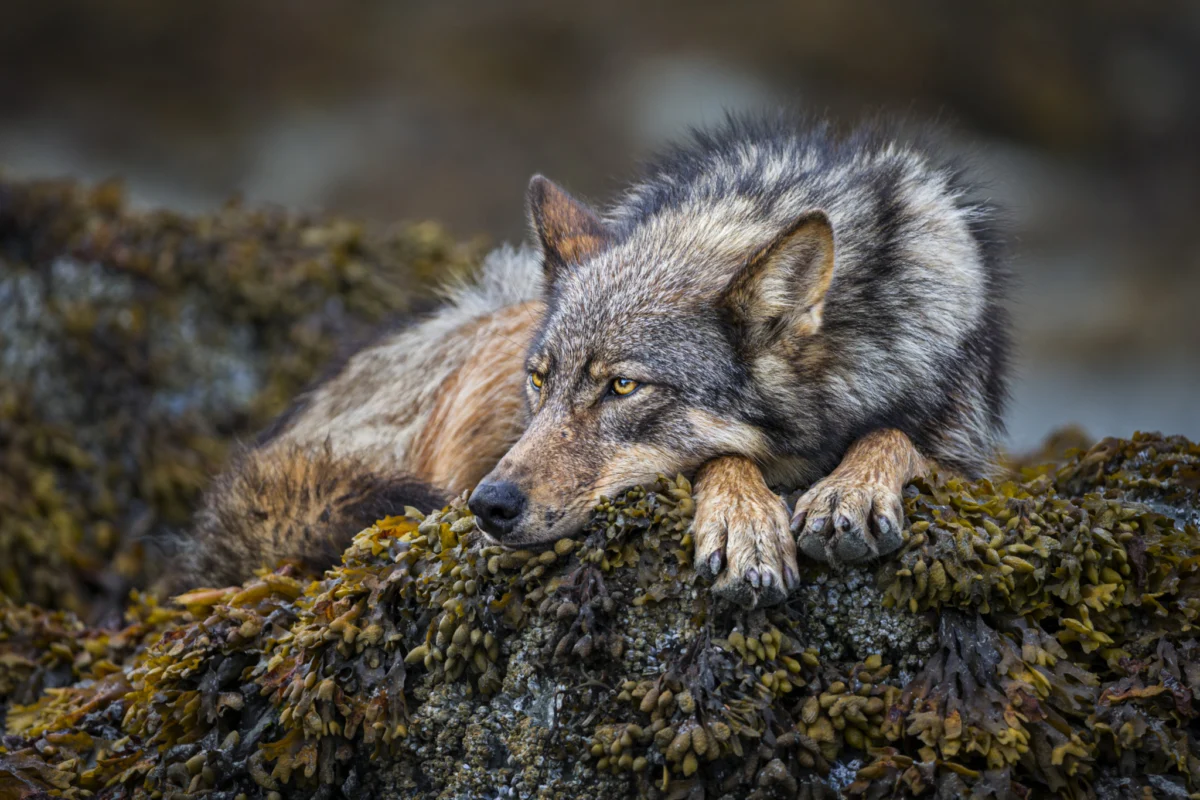
Thirty years ago, an expedition into the Canadian Barren Grounds, a vast expanse of tundra some 300 miles north of the Arctic Circle, offered a profound encounter with the wild. The journey, which spanned three months and involved over 600 miles of hiking and 2,000 miles of canoeing, was ostensibly undertaken to test personal limits and to photograph tundra wolves. This immersive experience in the unforgiving Canadian wilderness ultimately led to a pivotal sighting: after weeks of patient observation, a lone wolf, its tawny eyes and silver face emerging from the dense lupine undergrowth, was finally spotted. This initial, solitary encounter has since blossomed into numerous other interactions, including moments of proximity with relaxed wolf packs, each experience serving as an intensive lesson in earning the trust of these naturally cautious creatures. Wolves, by their very nature, are elusive and rarely approach humans. The historical record of attacks on people in North America over the past century is remarkably sparse, with only a handful of documented incidents. Despite this reality, the archetype of the "big bad wolf" continues to hold sway in popular culture, deeply ingrained in fiction, film, and age-old folklore, a testament to humanity’s enduring fascination with fear.
The Persistence of Folklore and its Ecological Consequences
While contemporary society largely recognizes that wolves do not impersonate elderly relatives to deceive children or possess the ability to physically demolish houses with their breath, an underlying fear, often rooted in childhood narratives and timeless legends, persists. Fairy tales such as "Little Red Riding Hood," while seemingly benign, can inadvertently contribute to a distorted perception of these animals. In an era marked by a precipitous decline in biodiversity across the continent, this ingrained, often subconscious, fear can transform the fictitious villain into a convenient scapegoat for ecological problems.
When populations of prey species, such as deer, begin to dwindle, wolves are frequently the first to be blamed. This tendency to assign culpability to predators overlooks a crucial aspect of North American ecology: wolves have inhabited the continent for an estimated 30,000 to 50,000 years, predating the arrival of humans by a significant margin. Their presence and role in the ecosystem are deeply historical and evolutionary.
Anthropogenic Impacts Versus Predator Perceptions
The ecological damage inflicted upon wildlife by human activities—including extensive road construction, deforestation, mining operations, and oil and gas drilling—far surpasses any detrimental impact wolves have ever had. Despite this stark reality, a prevailing narrative persists that the solution to restoring natural ecosystems lies in controlling and eradicating certain species, particularly predators. This approach is exemplified by government-sanctioned wolf culls, which are still regularly implemented under the guise of wildlife "management." Concurrently, corporate interests continue to aggressively pursue activities like oil dredging and copper mining, which have profound and often irreversible ecological consequences. In British Columbia, Canada, for instance, the government has initiated a taxpayer-funded program aimed at exterminating 4,000 wolves. This disproportionate focus on predator control, while largely ignoring the systemic damage caused by industrial activities, highlights a critical disconnect in conservation strategies. Until humanity is held accountable for the true extent of the damage inflicted upon landscapes, the cycle of flawed conservation efforts is likely to repeat.
The Ecological Role of Wolves: A Misunderstood Keystone Species
Wolves are often characterized as villains, but in reality, they function as keystone species within their ecosystems. Their presence helps regulate prey populations, which in turn influences vegetation dynamics. For example, in Yellowstone National Park, the reintroduction of wolves in 1995 led to a significant decrease in elk populations. This reduction in grazing pressure allowed vegetation, such as willow and aspen, to recover. The resurgence of these plants, in turn, provided habitats for beaver, songbirds, and other species, demonstrating a cascading positive effect throughout the ecosystem. This ecological principle, known as trophic cascade, underscores the vital role apex predators play in maintaining biodiversity and ecological health.
The narrative of the "big bad wolf" often overshadows scientific understanding of their ecological importance. Data from organizations like the National Park Service indicates that wolf-related livestock depredation, while a concern for some ranchers, represents a statistically small fraction of overall livestock losses, which are more significantly attributed to factors like disease, weather, and other predators. A 2015 study published in the journal PLOS ONE found that livestock losses to wolves in North America are minimal compared to other causes. This data suggests that the fear and management strategies directed at wolves are often disproportionate to the actual threat they pose to livestock.
A Call for a Paradigm Shift in Conservation
The author’s personal experiences underscore a profound hope: that by sharing the intrinsic beauty and complex lives of animals like wolves, a deeper understanding and appreciation can be fostered. The continued villainization of predators that have historically maintained ecological balance for millennia serves only to deepen a destructive cycle. Every species, regardless of how it is perceived or understood, contributes to the richness and complexity of our planet’s biodiversity. The crucial first step toward rectifying our fractured relationship with nature involves shifting our focus from scapegoating individual species to addressing the broader, systemic threats that truly endanger our planet. This necessitates a critical re-evaluation of human activities and their impact on the environment, moving away from short-sighted control measures towards a more holistic and science-based approach to conservation.
The implications of this shift are far-reaching. By recognizing the interconnectedness of all living things and the vital roles each species plays, humanity can begin to forge a more sustainable and harmonious coexistence with the natural world. This requires a commitment to evidence-based policy, a willingness to challenge deeply ingrained cultural narratives, and a recognition that true ecological restoration depends on embracing, rather than eradicating, the wildness that sustains us all. The legacy of the "big bad wolf" is a powerful reminder of how fear and misunderstanding can lead to ecological harm, and it is a legacy that urgently needs to be rewritten with facts, empathy, and a profound respect for the natural world.
Official Stance and Industry Perspectives
While the author advocates for a paradigm shift, it is important to acknowledge the differing perspectives and concerns surrounding wolf management. Livestock producers and some rural communities often express valid concerns about potential depredation of livestock. These concerns are often addressed through various management strategies, including non-lethal deterrents, compensation programs for livestock losses, and, in some cases, regulated hunting or lethal control measures.
Government wildlife agencies, such as the U.S. Fish and Wildlife Service and Environment Canada, grapple with balancing the conservation needs of wolves with the concerns of human stakeholders. Their policies are often informed by scientific research, public input, and legal mandates. For example, the Endangered Species Act in the United States aims to protect and recover populations of imperiled species, including wolves in certain regions. Decisions regarding wolf populations are often complex, involving scientific assessments of population health, habitat availability, and ecological impacts, alongside socio-economic considerations.
However, critics argue that the emphasis on lethal control, particularly when driven by industrial development or driven by outdated perceptions, can undermine conservation efforts. The ongoing debate highlights the challenges of integrating ecological science with human interests and the need for transparent, science-driven decision-making processes that prioritize long-term ecological health.
The Broader Impact: A Call for Ecological Literacy
The enduring myth of the "big bad wolf" is more than just a cultural artifact; it represents a fundamental disconnect between human perceptions and ecological realities. The author’s personal journey from seeking to conquer the wilderness to advocating for its preservation underscores a critical insight: true understanding comes not from domination, but from integration. As Robin Wall Kimmerer, a botanist and member of the Citizen Potawatomi Nation, eloquently states, "As we learn to listen to the land, we discover that we are not separate from it; we are part of it." This sentiment is a powerful call to action, urging a redefinition of our relationship with the natural world.
The consequences of failing to embrace this perspective are dire. Continued ecological degradation, driven by industrial activities and amplified by a misunderstanding of predator roles, leads to further biodiversity loss, destabilized ecosystems, and ultimately, a diminished planet for all. The eradication of apex predators, such as wolves, can lead to overgrazing, habitat degradation, and a loss of the natural checks and balances that maintain ecosystem resilience.
Ultimately, the conversation surrounding wolves, and indeed all wildlife, must evolve. It requires moving beyond sensationalized narratives and embracing a deeper ecological literacy. This involves understanding the intricate web of life, the vital roles of all species, and the profound impact of human actions. By fostering a culture of respect for nature and prioritizing science-based conservation, humanity can begin to heal its relationship with the planet and ensure a vibrant, healthy future for both wildlife and ourselves. The lessons learned in the Barren Grounds, etched in the patient observation of a lone wolf, offer a profound blueprint for how we might navigate the complex challenges of conservation in the 21st century.