When my parents chose to move our small family from Saskatchewan to the remote Arctic and undertake the biggest adventure of our lives, we had to let go of certain comforts. Both my mother and father came from farming families and inherited the unyielding work ethic that serves as the backbone of Canada’s heartland. Still, we found joy in the simple pleasures afforded by society—easy access to family, mild summer evenings, and the predictable cycles of the seasons. Uprooting to the Arctic meant trading the familiar for the unknown, but I quickly found that the benefits of living closer to nature far exceeded what we left behind.
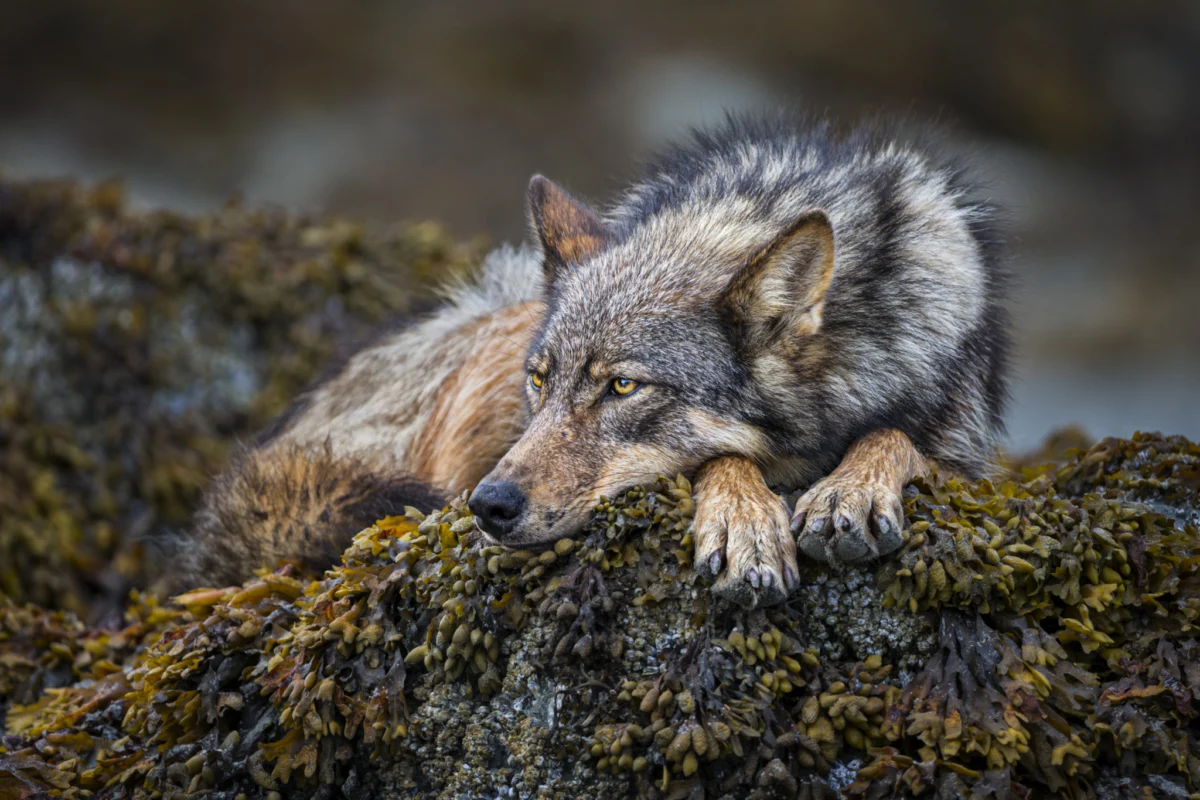
Since those early years, the best gifts in my life have always come from nature. After becoming a photographer, I used my camera to get closer to our wild kin. Wolves, penguins, lynx, sharks, and even the more elusive animals like spirit bears all became subjects of my lens. In my eyes, there is no greater privilege than living each day on a planet overflowing with more species and beauty than we could ever fully grasp. Of all the encounters I have shared with wildlife around the world, my experiences with whales, the true giants of Earth, have been some of the greatest gifts.
Like the Arctic wildlife I grew up with, such as wolves and polar bears, creatures like orcas and sperm whales inspire a mix of fear and awe in people. Despite their size and status as some of the ocean’s greatest hunters, there is no definitive record of orcas or sperm whales ever killing anyone. In fact, my own experiences have revealed their gentle nature and deep intelligence—a side that often goes unnoticed beneath the myths and misconceptions.
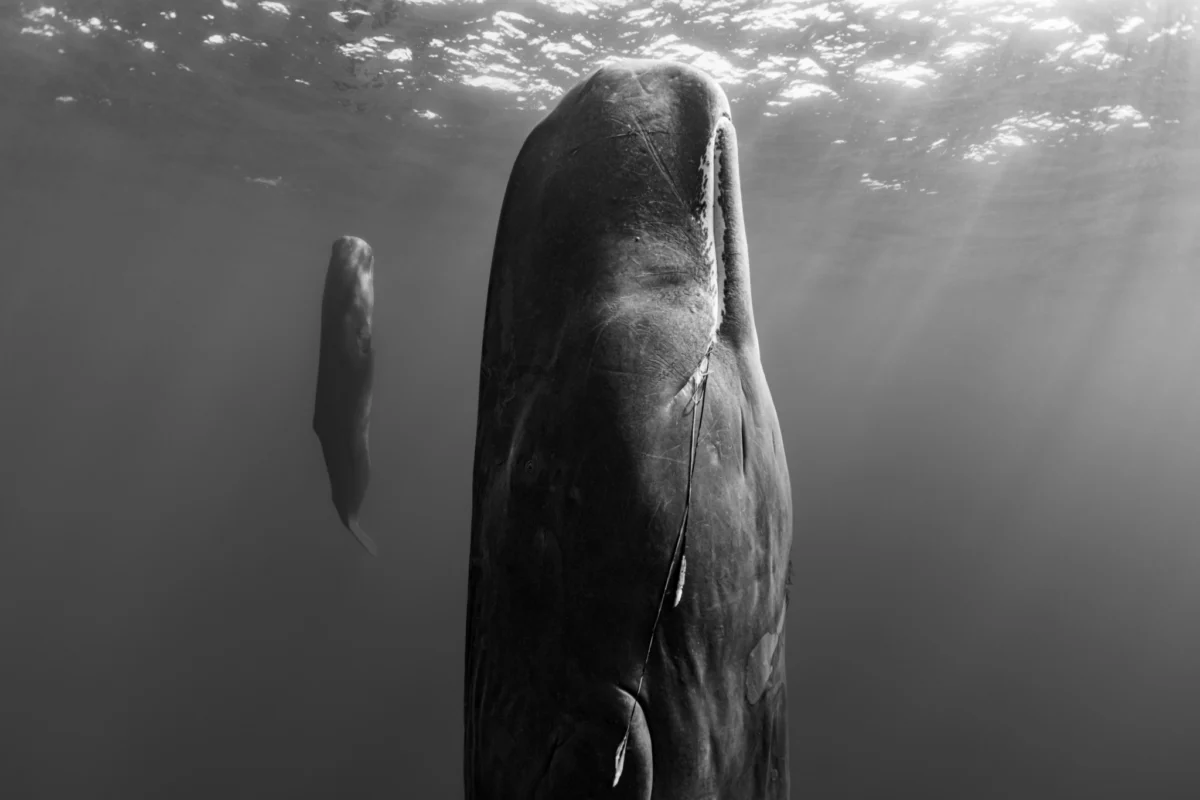
Sperm whales, in particular, have garnered a reputation fueled in part by works of fiction, stories, and legends. Of all my encounters with whales, however, swimming with a pod off the coast of Dominica proved to be one of the most wholesome and eye-opening experiences of my life. Free-diving with a snorkel, I was able to get fairly close to a group dozing vertically in the water column. Sperm whales spend most of their time deep below the surface until they finally come up to breathe and rest, suspended with their heads pointed skyward.
A Calf’s Curiosity: An Unforgettable Encounter
The photographic expedition off the coast of Dominica was intended to document the complex social structures and behaviors of sperm whales, a species that navigates the ocean’s depths and surfaces for crucial periods of rest and respiration. The shoot was proceeding as planned, with the matriarch and her group appearing fully aware of and comfortable with the photographer’s presence. This level of tolerance from such a large marine mammal is indicative of a healthy population that has not been subjected to excessive harassment or negative human interactions, a testament to Dominica’s commitment to marine conservation.
However, as the photographer ascended for a breath of air, a remarkable interaction unfolded. The youngest member of the pod, affectionately nicknamed "Ariel" by local guides and researchers, broke away from its mother. This calf, estimated to be approximately 20 feet in length, exhibited an unexpected and enthusiastic approach towards the lone diver.
Challenging Perceptions: The Gentle Nature of Marine Giants
The encounter with Ariel challenged preconceived notions often propagated by popular culture and historical accounts. The image of the sperm whale, particularly after Herman Melville’s "Moby Dick," often evokes a sense of monstrous power and vengeful intelligence. However, Ariel’s behavior painted a starkly different picture. Instead of aggression, the calf displayed an unbridled curiosity.
The young whale approached the photographer at speed, but rather than any display of aggression, she opened her mouth and began to playfully gum the camera housing. This action, described as akin to an "overgrown toddler," demonstrated a remarkable lack of fear and an inherent gentleness. The photographer, drawing upon years of experience in close proximity to large and unpredictable wildlife, remained calm and was able to disengage without incident. This moment underscored a key observation: that many large marine animals, including sperm whales and orcas, exhibit a deep intelligence and a capacity for gentle interaction when approached with respect and understanding.
Supporting Data on Sperm Whale Behavior
Sperm whales ( Physeter macrocephalus) are the largest toothed whales and are known for their deep-diving capabilities, reaching depths of over 2,000 meters in search of their primary prey, giant squid. These dives can last for over an hour, during which they utilize echolocation to navigate and hunt in the pitch-black abyss. Their resting periods at the surface, known as "logging," are crucial for recovery and are typically brief, lasting around 10-15 minutes. During these times, they are particularly vulnerable, and encounters with humans can be sensitive.
Studies on sperm whale social structures reveal highly complex matrilineal societies, with pods often consisting of related females and their offspring. The protective nature of mothers towards their young is well-documented, and Ariel’s playful engagement with the diver, while unusual in its directness, suggests a high degree of comfort within her pod and a potential for curiosity towards novel stimuli.
The Broader Implications of the Encounter
This singular event, captured through the lens of a seasoned wildlife photographer, serves as a powerful reminder of the intricate and often misunderstood lives of marine megafauna. The prevailing narrative surrounding large marine predators frequently leans towards fear and apprehension, often overshadowing their complex social behaviors, intelligence, and the vital ecological roles they play.

The encounter with Ariel, and the photographer’s subsequent reflections, highlight the importance of responsible wildlife tourism and the educational value of direct observation. Such experiences can foster a deeper appreciation for these animals and, by extension, a greater commitment to their conservation. The International Union for Conservation of Nature (IUCN) lists the sperm whale as "Vulnerable," citing threats such as entanglement in fishing gear, ship strikes, and historical whaling. Understanding their behavior and dispelling myths is crucial for garnering public support for conservation efforts.
A Timeline of Understanding: From Myth to Modern Science
The perception of sperm whales has evolved significantly over centuries. Ancient mariners and early naturalists often relied on fragmented observations and folklore, leading to tales of monstrous leviathans. The discovery of their deep-diving prowess and the immense size of their brains in the 19th and 20th centuries began to shift scientific understanding, but popular culture continued to propagate more sensationalized narratives.
In recent decades, advancements in acoustic monitoring, satellite tagging, and underwater photography have provided unprecedented insights into sperm whale communication, social dynamics, and feeding strategies. These scientific endeavors, often conducted in collaboration with local communities and conservation organizations, are critical in shaping a more accurate and nuanced public perception. The experience in Dominica, where local knowledge and scientific observation converge, exemplifies this ongoing process of understanding.
The Arctic’s Enduring Influence: A Foundation for Connection
The photographer’s narrative traces a profound personal journey, one that began with a pivotal family decision to relocate from the familiar plains of Saskatchewan to the stark and awe-inspiring Arctic. This foundational experience of embracing the unknown and immersing in a radically different natural environment laid the groundwork for a lifelong appreciation of the wild. The harsh beauty of the Arctic, with its predictable cycles and the raw survival of its inhabitants, instilled a deep respect for nature’s resilience and power.
This early exposure to the wild, characterized by interactions with iconic Arctic fauna such as wolves and polar bears, cultivated a unique perspective. It provided a visceral understanding of the interconnectedness of ecosystems and the inherent value of all species. This formative period equipped the photographer with the patience, observation skills, and emotional resilience necessary to approach even the most formidable creatures with a sense of wonder rather than fear.
Nature’s Gifts: A Photographer’s Perspective
The transition from a rural farming background to the challenges and wonders of the Arctic marked a significant turning point. It was a deliberate exchange of conventional comforts for an immersion in the natural world, an exchange that proved to be profoundly rewarding. The simple pleasures of rural life, such as easy access to family and predictable seasonal transitions, were replaced by the profound, albeit sometimes challenging, realities of life at the edge of the world.
This early life experience, steeped in the rhythms of nature, profoundly shaped the photographer’s future career. The decision to become a photographer was not merely a professional pursuit but an extension of this deep-seated connection. The camera became a tool for exploration, a means to bridge the gap between human observation and the wild lives of other species. The subjects chosen—from the elusive spirit bear to the powerful shark—speak to a desire to document and share the extraordinary biodiversity of our planet.
The Profound Impact of Wildlife Photography
The work of wildlife photographers like the subject of this article plays a crucial role in conservation efforts. By bringing the beauty and complexity of the natural world into the public consciousness, they inspire empathy and a sense of responsibility. Images of vulnerable species in their natural habitats can be powerful catalysts for change, prompting individuals and policymakers alike to consider the implications of human activities on the environment.
The photographic record of the encounter with Ariel, for instance, offers a compelling counter-narrative to the fearsome image of the sperm whale. It humanizes these magnificent creatures, revealing their capacity for playfulness and curiosity. Such representations are vital in fostering a deeper understanding and appreciation, which are prerequisites for effective conservation.
A Call for Connection
The photographer’s journey, from the open skies of Saskatchewan to the depths of the ocean, underscores a fundamental truth: that the most profound experiences often lie beyond the confines of modern, urbanized life. The article concludes with a powerful reflection on the true value of nature, not as a resource to be exploited, but as a source of genuine connection and fulfillment.
In an era characterized by rapid technological advancement and increasing disconnection from the natural world, the message is clear: the greatest gifts are often found not in material possessions or societal achievements, but in the immersive experiences and profound relationships forged with the Earth’s wild inhabitants. This perspective offers a vital counterpoint to the prevailing consumerist culture, urging a re-evaluation of what truly constitutes a rich and meaningful life. The beauty of the earth, as Rachel Carson eloquently stated, indeed provides "reserves of strength that will endure as long as life lasts," and for those who choose to listen, the call of the wild offers a pathway to unparalleled discovery and enduring connection.