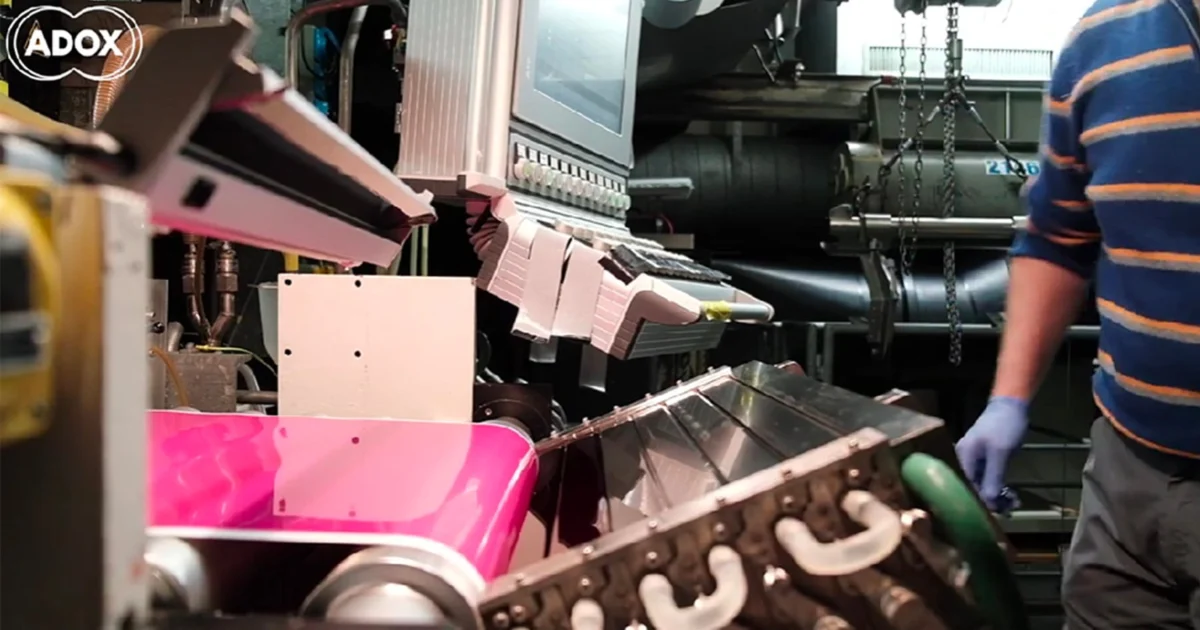
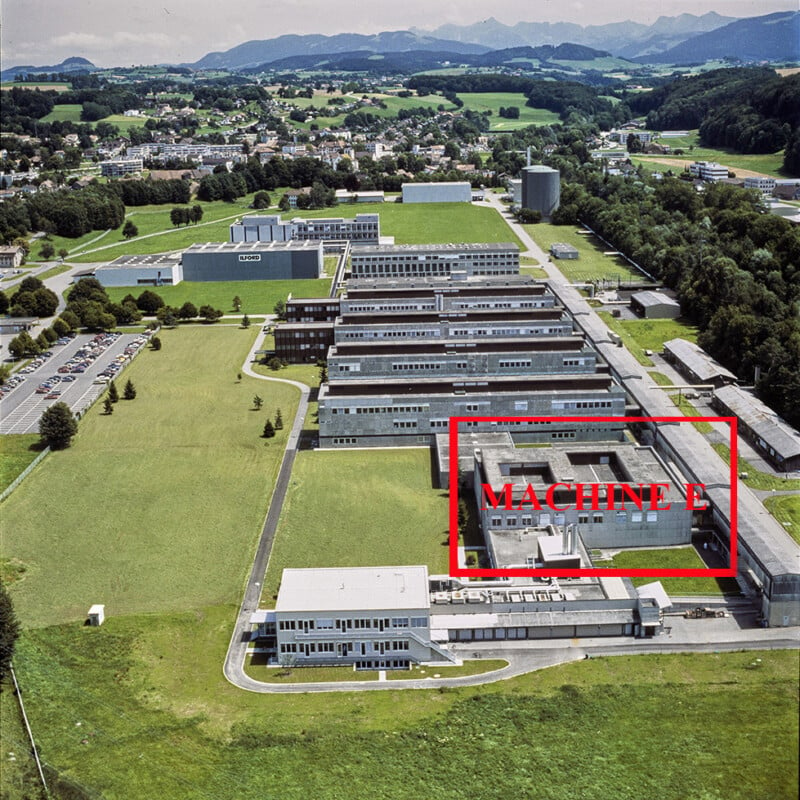
In the picturesque Swiss canton of Fribourg, near the linguistic divide between French and German-speaking Switzerland, lies Marly – a town that quietly holds a pivotal piece of photographic history. Within its industrial landscape stands Machine E, a sophisticated multilayer photographic coating machine that has been instrumental in the development and production of numerous world-leading photographic and inkjet products. This engineering marvel, once a cornerstone of Ciba and Ilford’s innovation, is now entering a new chapter under the stewardship of Adox, a German manufacturer committed to the future of analog photography. The machine’s journey from its inception in the late 1960s to its present-day operations encapsulates decades of photographic evolution, technological adaptation, and enduring dedication to image-making.
The Genesis of Innovation: Ciba and Cibachrome’s Legacy
Machine E was originally conceived and constructed by the Swiss chemical giant Ciba in the late 1960s. Its initial purpose was to serve as a critical asset within Ciba’s extensive dye and pigment research and development facility in Marly. At the time, Marly was a vibrant hub of chemical and photographic innovation, benefiting from Switzerland’s strong industrial base and a legacy of precision engineering. Ciba’s strategic vision included expanding its footprint in the photographic sector, a move underscored by its acquisition of the Swiss photographic company Tellko. Tellko, whose name paid homage to the legendary national hero Wilhelm Tell, had established expertise in coating both photographic paper and films in the Fribourg/Marly region, laying some of the groundwork for Ciba’s subsequent ventures.
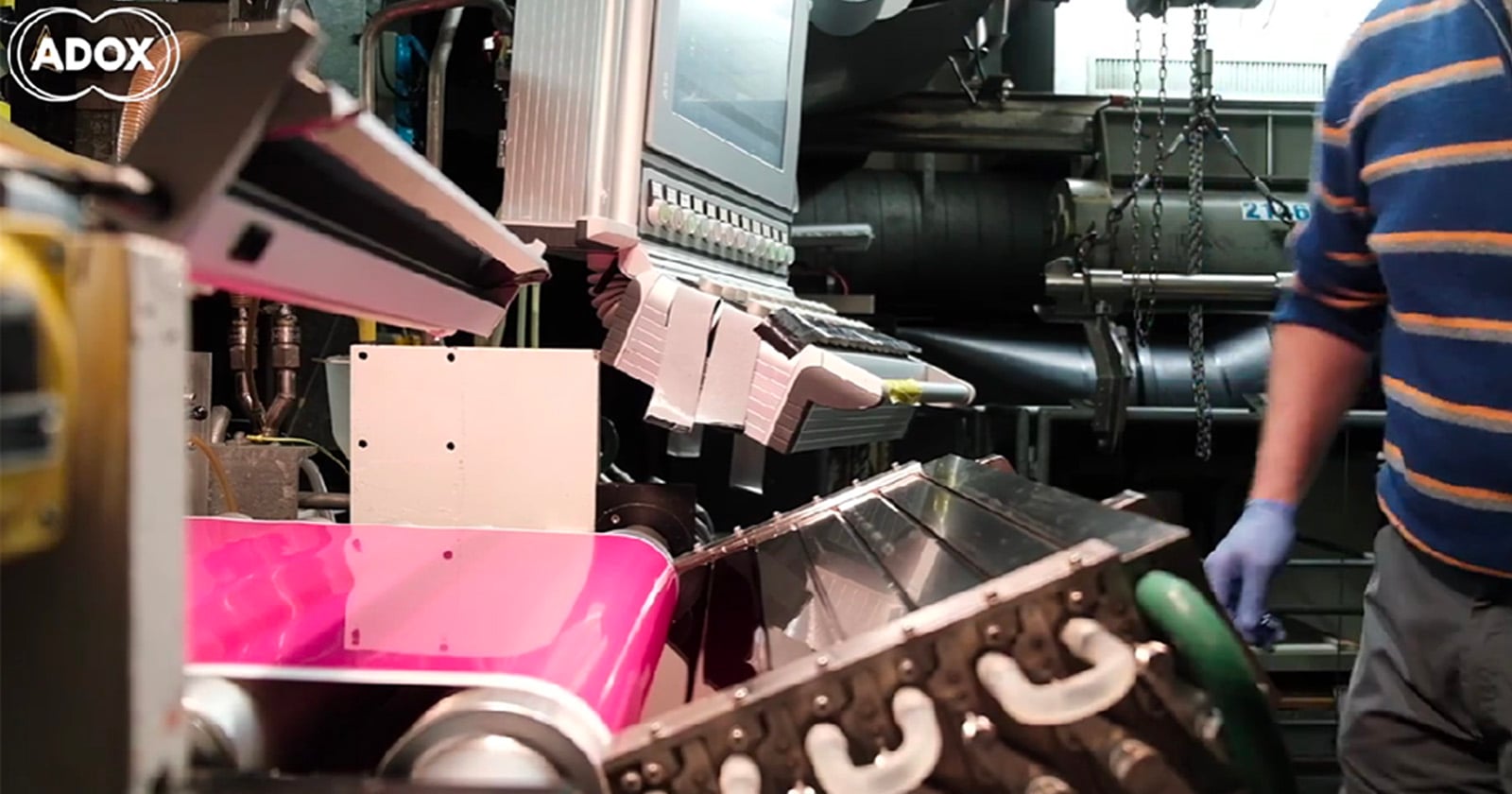
It was under Ciba’s aegis that Machine E played a crucial role in the pioneering development of graphic art films and, more famously, the iconic Cibachrome color photographic material. Cibachrome, a revolutionary print process renowned for its exceptional archival stability, vibrant colors, and unparalleled sharpness, was a complex product, featuring an intricate 13-layer coated photographic film/paper structure. The precision required to apply these multiple layers, each with specific chemical properties, was immense, making Machine E an indispensable tool for its research, development, and pilot production. The capital investment for Machine E was substantial, running into several million Swiss Francs at the time, an equivalent of approximately $100 million in today’s economic landscape, reflecting its advanced capabilities and strategic importance.
Ilford’s Era: Black & White Heritage and Color Innovations
Ciba’s foray into photography deepened with its purchase of shares in Ilford in 1963, eventually acquiring full ownership by 1969. Ilford, a venerable name in photographic materials, particularly renowned for its black and white films and papers, had existing coating facilities in the UK and France. This merger brought together Ilford’s rich heritage with Ciba’s chemical prowess and modern infrastructure, including the advanced Machine E.
From 1969 to 1989, Machine E served as a vital development and pilot coater within the integrated Ilford-Ciba operations. It was utilized to refine and improve a diverse range of photographic products before their transition to larger, fully automated production coaters like the T4 machine, also located in Marly. Beyond development, Machine E was crucial for testing new components, evaluating modifications to coating recipes, and ensuring quality control across the photographic material spectrum.
While Ilford maintained its esteemed black and white production in the UK – building a reputation for excellence that continues to this day – the Marly site, under Ciba’s direction, focused heavily on color materials. This strategic division saw Kodak championing color photography on a global scale, while Ilford, particularly through its UK operations, remained a bastion of black and white. In Switzerland, however, Ilford inherited and further developed Cibachrome and other color paper technologies. Following Ciba’s divestment in 1989, Ilford took full control of the Marly operations, and Cibachrome was rebranded as ILFOCHROME in 1992. ILFOCHROME prints were celebrated for their superb color rendition and remarkable stability. Unlike traditional silver-halide prints, ILFOCHROME processing resulted in a final image devoid of silver, composed entirely of highly stable, vibrant dyes. This unique chemistry contributed to its legendary longevity, with prints from the early Cibachrome era still retaining their original brilliance decades later, a testament to the material’s groundbreaking design and Machine E’s role in its perfection.
The late 20th century saw significant consolidation and restructuring within the photographic industry. Ilford’s coating facility in France was sold to an Indian company, a move that proved challenging as the facility has yet to be fully rebuilt decades later. Similarly, Ilford’s UK coating machine, M14, was controversially relocated from Brentwood in Essex to Mobberley, Cheshire. Many deemed such a move impossible for a complex coating machine, yet Ilford successfully executed it. M14 continues to operate today, benefiting from numerous upgrades, under Harman Technology, a company that holds the rights to use the Ilford name for certain photographic products. Harman has not only continued Ilford’s black and white legacy but has also expanded into inkjet media and recently developed its own color films, showcasing the enduring relevance of these coating technologies.
The Digital Shift: Inkjet Development at Marly
As the 20th century drew to a close, the advent and rapid proliferation of digital imaging began to reshape the photographic landscape. Recognizing this seismic shift, Ilford in Marly embarked on a strategic pivot, leveraging Machine E for the development of polymer-based inkjet products in the late 1990s. The author, who joined Ilford in 1998, witnessed firsthand the launch of the company’s desktop inkjet range, "Printasia," followed in 2000 by the more professional "Galerie" inkjet line.
These early polymer inkjet media were designed for broad compatibility with most inkjet printers, offering good color reproduction, with the Galerie Pearl finish becoming particularly popular among enthusiasts and professionals. However, they faced a critical limitation: slow drying times, a significant Achilles’ heel in a market increasingly demanding rapid printing and immediate handling. Ilford also served as an OEM supplier, coating and supplying inkjet media to other manufacturers. The demanding specifications of one particular OEM spurred Ilford to fine-tune its polymer inkjet recipes, with Machine E once again proving indispensable for precise pilot coating and iterative development before scaling up to full production.
The evolution of inkjet printer technology, particularly the shift from dye-based to pigment-based inks, further exposed the limitations of polymer inkjet media. Pigment inks, known for their archival qualities, required a different substrate interaction. This market demand, coupled with the need for instant dry capabilities, catalyzed a new wave of research and development at Ilford around 1995: nanoporous (ceramic) inkjet coatings.
Ilford emerged as one of the pioneers in ceramic coatings, dedicating several years to perfecting the technology using the same robust base materials from its polymer inkjet line. The key innovation lay in the ceramic particles themselves, which required a specialized dispersion process to achieve an impressively minute particle size of 20 nanometers. This ultra-fine particulate structure was critical for creating a transparent, highly absorbent receiving layer capable of trapping ink instantly. The resulting "Instant Dry" media, while still requiring approximately two days for full ambient drying, effectively locked the ink within its ceramic matrix upon printing, preventing smudging and offering superior image quality and permanence. The expanded Galerie range, now incorporating nanoporous coating technology, was warmly received, compatible with both dye- and pigment-based inks, a crucial advantage as Epson led the charge in integrating pigment inks into desktop printers. In 2005, Ilford’s inkjet division was acquired by OJI Paper, a Japanese paper manufacturing giant, which continued to produce and market Ilford’s advanced inkjet products.
Navigating Decline and a New Dawn
The first decade of the 21st century presented formidable challenges for traditional photographic materials. The inexorable rise of digital photography led to a dramatic decline in demand for analog films and papers. In 2011, a significant chapter in photographic history closed with the final coating run of ILFOCHROME. This decision was driven not only by dwindling market demand but also by increasing difficulties in sourcing essential chemical components required for its complex manufacturing process. Despite its discontinuation, Cibachrome/ILFOCHROME maintains a dedicated following among artists and enthusiasts who value its unique aesthetic and archival properties.
In a curious diversification effort in 2011, Ilford also announced the development of chemically treated mulch film aimed at assisting farmers in protecting growing seeds from pests. However, these new ventures could not stem the tide of financial difficulties, and in 2013, the Ilford Imaging Switzerland company, encompassing the Marly operations, went into receivership. This event marked a somber moment for a site that had been at the forefront of photographic innovation for decades.
Yet, the story of Machine E was far from over. In 2015, a beacon of hope for analog photography emerged: ADOX, a historic German photographic company with a deep commitment to preserving and advancing film photography, gained access to Machine E. This pivotal agreement signaled a new era, allowing ADOX to utilize this legendary machine to coat photographic materials once again, breathing new life into a critical piece of industrial heritage.
Machine E: A Technical Marvel Re-Engaged
Machine E is not merely a piece of equipment; it is a self-contained ecosystem for photographic coating, housed within building number 140 on the Marly site. Spanning three levels, it functions as a compact, specialized factory. The building was, in essence, constructed around the machine itself, making its relocation, initially considered by ADOX in 2015, an impractical endeavor. Building 140 is also equipped with dedicated laboratories to support the coating operations, though it does not house any finishing machines.
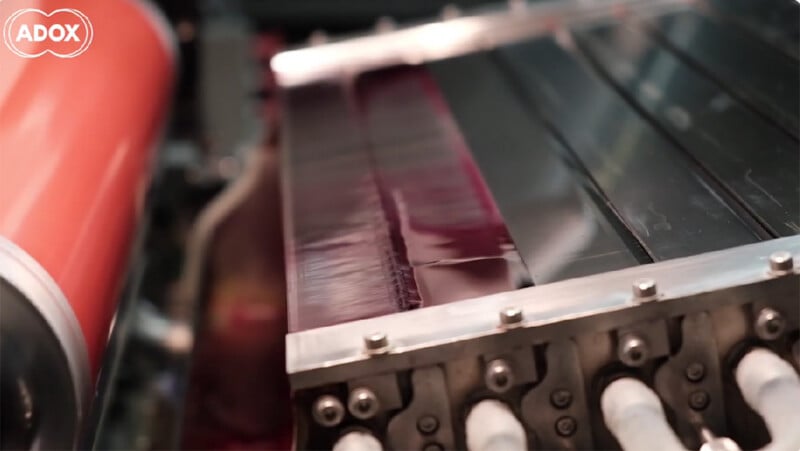
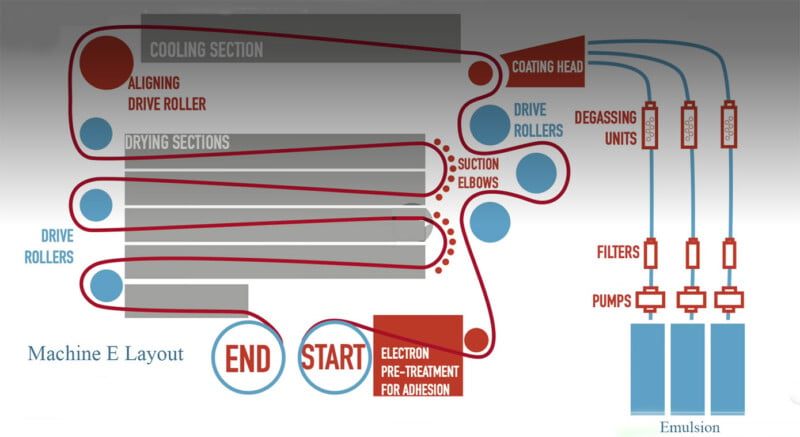
At its core, Machine E is a six-slot coating head development and pilot coater. This sophisticated design allows for the precise application of multiple layers of emulsion onto a substrate in a single pass, a capability essential for creating complex photographic and inkjet materials. The machine can coat materials up to 20 inches wide, operating at speeds of approximately 30 meters per minute. While this is sufficient for pilot runs and specialized photographic paper and film production, it is important to note that Ilford’s former production coaters were significantly wider and considerably faster, often featuring continuous coating capabilities with automatic loading and unloading mechanisms.
A key distinction of Machine E is its operational constraint: it lacks the continuous coating and automatic material handling features of larger production machines. This limits the amount of material it can process in a single coating run to approximately 2,500 meters. However, this capacity is ample for producing substantial runs of specialty film or paper products. For ADOX, the coated material produced in Marly is then transported to its Berlin facility for conversion. This involves intricate processes such as slitting wide rolls into 24mm strips, perforating them, spooling them into 35mm cassettes, and finally boxing them for distribution.
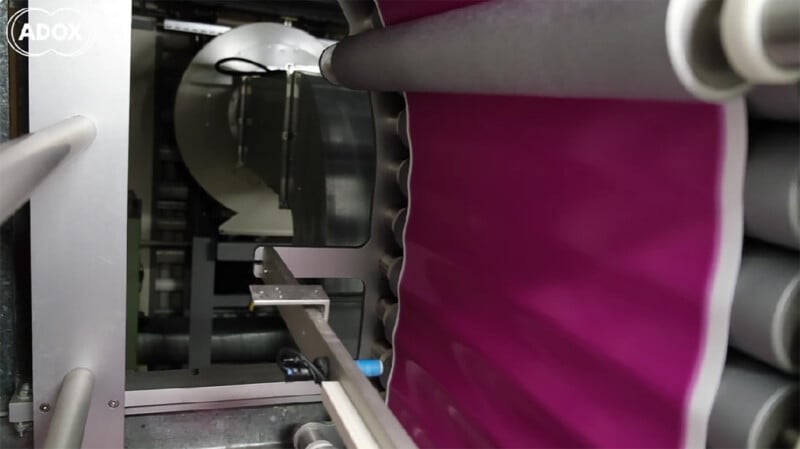
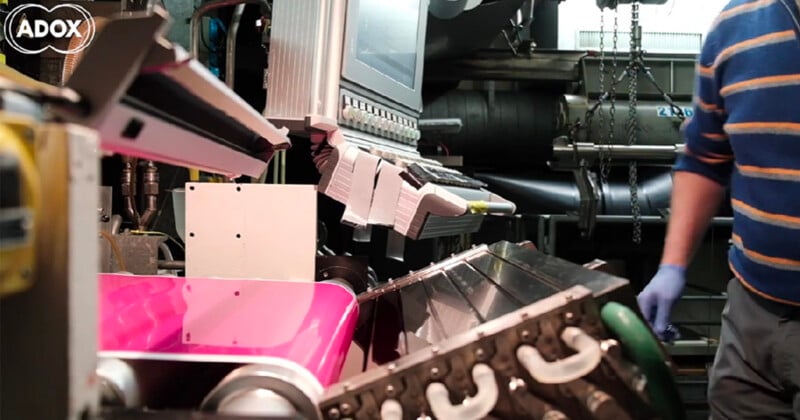
To ensure the pristine quality of the coated surface, Machine E incorporates several "vacuum turns" throughout its transport system. These innovative vacuum-backed rollers guide the material without direct mechanical contact, preventing any damage or contamination to the delicate emulsion layers during the high-speed coating and drying process. Following the coating head, the material passes through a crucial cooling section, immediately followed by a multi-stage drying system. This elaborate drying apparatus is designed to efficiently remove solvents and set the emulsion layers within the short time the material traverses the coater. ADOX, like many specialized coating operations in Europe, procures its coating emulsions from external suppliers, focusing its expertise on the precise application and development processes facilitated by Machine E.
ADOX’s Vision for Analog Photography
ADOX’s commitment to Machine E and the future of analog photography is evident in its plans for substantial investment. The company intends to implement significant upgrades to the machine, particularly focusing on enhancing its drying capabilities and optimizing operational costs. This sizeable financial commitment underscores ADOX’s long-term vision and its dedication to providing high-quality photographic coating services for analog film cameras now and in the future. By revitalizing Machine E, ADOX is not only preserving a historical asset but also actively contributing to the resurgence and sustainability of film photography. This move offers a crucial supply chain element for smaller manufacturers and niche products, ensuring a continued source of expertly coated materials in an increasingly consolidated market.
The Marly Innovation Centre: A Legacy Continues
Since Ilford ceased production at the Marly site in 2013, the industrial complex has undergone a remarkable transformation. It has evolved into the Marly Innovation Centre, a dynamic hub fostering innovation across a diverse range of companies and sectors. This vibrant ecosystem now hosts numerous enterprises engaged in developing new products and technologies. The site even boasts a hotel, catering to the international community of researchers, engineers, and entrepreneurs who collaborate on various projects within the center.
Remarkably, many of the original Ciba and Ilford buildings continue to stand alongside a vast array of new structures and state-of-the-art laboratories, symbolizing the seamless transition from a specialized photographic manufacturing site to a multi-faceted innovation campus. Machine E, located within Building 140, is part of this enduring legacy. The Marly Innovation Centre itself is a testament to the adaptability and foresight of the region, demonstrating how former industrial sites can be repurposed to lead new waves of innovation across diverse fields, while still honoring their historical roots. The site plan clearly delineates various zones, including technology parks, plugin areas, and eco-districts, illustrating a holistic approach to sustainable development and collaborative research.
Machine E’s journey from a Ciba research tool, through Ilford’s black and white and inkjet innovations, to its current role under ADOX, is a compelling narrative of adaptation and resilience. Its enduring functionality and the new investment from ADOX ensure that this "100 million dollar" piece of photographic history will continue to contribute high-end photographic coating for use in analog film cameras. The Marly Innovation Centre, encompassing Machine E, exemplifies how historical industrial sites can be reimagined to drive future innovation, securing a vibrant future for both the legacy technology and new ventures. The continued operation of Machine E is a powerful statement about the enduring appeal and technical viability of analog photography, ensuring that the intricate craft of coating photographic media will persist for generations to come.