For three decades, an intimate, almost constant proximity to one of the world’s densest cougar populations on Vancouver Island has yielded only fleeting glimpses for the author, a testament to the formidable stealth of these apex predators. This long-held fascination with elusive felines, fueled by the feeling of being perpetually observed, culminated in a transformative photographic expedition to the famed pumas of Chilean Patagonia. The journey, however, was not without its initial hurdles, including the logistical challenge of a lost passport and an unexpected detour to a Brazilian embassy, underscoring the complex preparations often required for international wildlife expeditions.
The author’s arrival in Chile marked the beginning of an immersion into a landscape where ecotourism is rapidly reshaping the economic and social fabric. The chosen accommodation, a meticulously preserved estancia on the periphery of Torres del Paine National Park, offered a tangible link to the region’s agricultural heritage, complete with operational farming and livestock equipment. This setting, increasingly influenced by the influx of visitors drawn to the park’s dramatic peaks, highlights a growing trend: the integration of ecotourism with traditional land use. The estancia owners exemplify this shift, having transitioned from viewing native wildlife as a threat to livestock to coexisting with them, recognizing the economic potential of Patagonia’s natural wonders. The estancia’s staff, deeply rooted in the values of gaucho culture—honesty, diligence, and hospitality—provided an authentic cultural backdrop to the wildlife pursuit.
The Pursuit of Petaka: A Legendary Puma Encounter
The expedition’s focus sharpened with the guidance of Rodrigo, a renowned local guide and puma expert, whose intimate knowledge of the area’s feline inhabitants was described as akin to knowing one’s own family. Under his experienced direction, the journey ventured deep into prime puma territory, a transition zone where manicured agricultural lands gave way to a dramatic panorama of rugged rock formations, crystalline, snow-fed lakes, and expansive grasslands, known as pampas. The majestic granite spires of the Andes Mountains served as a constant, awe-inspiring backdrop to this wild terrain.
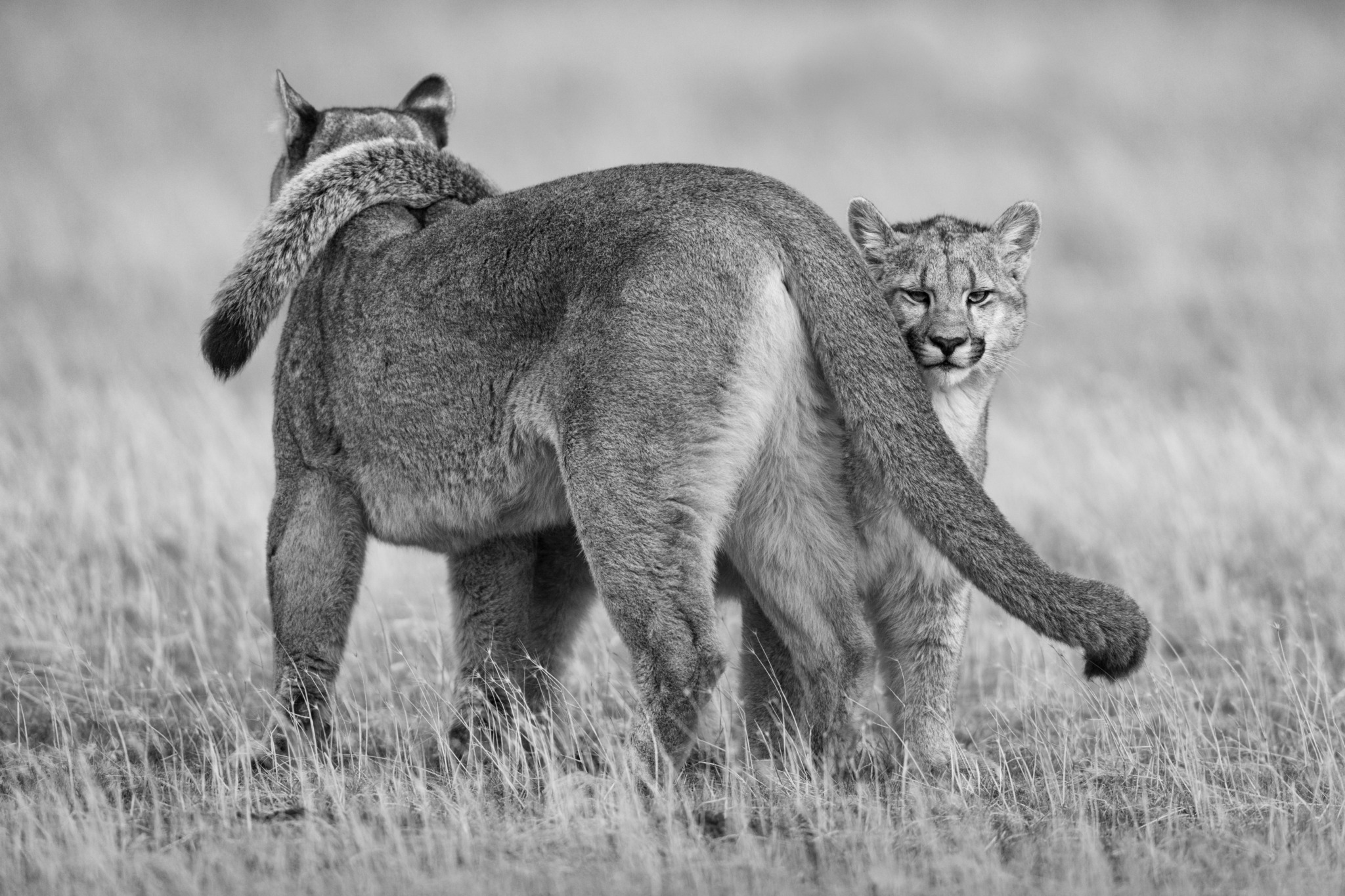
It was in this breathtaking setting, nestled within the mountain’s shadow, that the first significant sighting occurred: Petaka, a female puma of considerable renown, accompanied by her two young kittens. Petaka’s reputation preceded her; her calm demeanor and apparent indifference to human observers had cemented her status as a legendary figure among those who frequent the Torres del Paine region.
Conservation in Patagonia: A Shift in Policy and Perception
A critical factor contributing to the relative visibility of pumas in this specific region of Patagonia is Chile’s robust conservation framework. Unlike in some neighboring countries, such as Argentina, where hunting pressures may be higher, pumas in Chile are designated as a protected species, with hunting largely prohibited. This protective legislation has fostered an environment where some puma populations have adapted to the presence of humans, largely by exhibiting a remarkable degree of tolerance and often ignoring their observers. This adaptation represents a significant success for conservation efforts, allowing for the observation of wild animals in their natural state, undisturbed by human interference, a scenario deeply cherished by wildlife photographers and conservationists alike. The author’s experience of observing Petaka and her kittens, who displayed a complete lack of apprehension, underscores the positive outcomes of such protective measures.
A Moment of Serenity Amidst the Wild
The privilege of witnessing Petaka’s maternal care was a profound experience. The author recounted observing the mother tending to her offspring, a scene of quiet domesticity unfolding in the wild. The kittens, engaged in playful tumbling on the grass, offered a glimpse into the delicate bonds of family life within the species. The author’s emotional response, described as being "silently overcome with emotion," highlights the deep connection that can be forged through respectful observation of wildlife. This intimate encounter provided a stark contrast to the often-held perception of pumas as solely formidable predators, revealing a softer, more nurturing aspect of their existence.
Weathering the Storm: An Unexpected Close Encounter
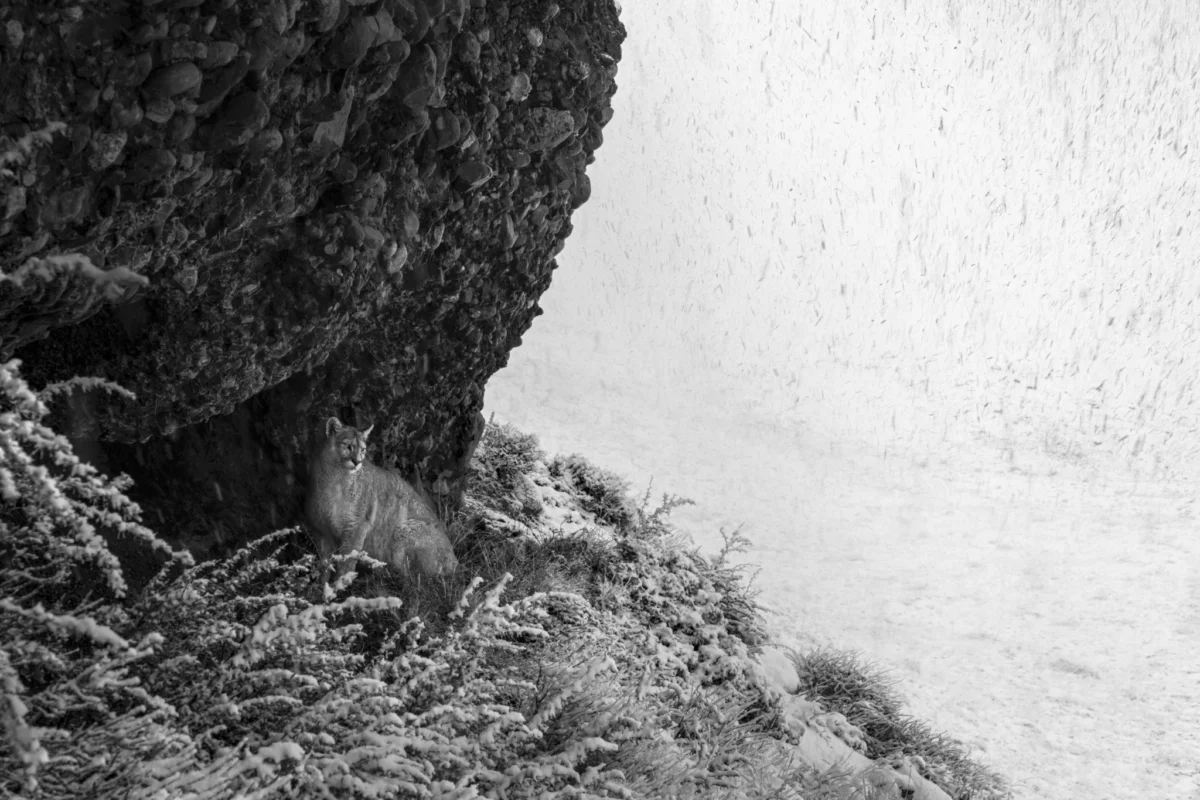
The serene atmosphere was dramatically interrupted by a swift and characteristic shift in Patagonian mountain weather. What began as a few errant snowflakes escalated into a full-blown blizzard, transforming the landscape and muffling all external sounds. Seeking refuge from the inclement conditions, the author found shelter within a mountainside cave. It was in this unexpected sanctuary that a large puma emerged from the swirling snow and settled within mere feet of the photographer.
This proximity, a direct result of shared shelter from the elements, created a unique and tense moment. Instinctively, the author maintained stillness, controlling breath and steadying the camera, a testament to the surge of adrenaline and profound excitement. The two beings, a human and a wild predator, shared the enclosed space in a profound silence, the only witness being the relentless snowfall that blanketed the surrounding willow thickets. The puma, exhibiting its innate wildness, remained entirely focused on its environment, never once acknowledging the human presence.
The Aftermath: Reflection on Nature’s Resilience
Only after the storm subsided and the landscape was transformed by a fresh canvas of snow did the author allow the pent-up emotions to surface. The puma, having disappeared as silently as it had appeared, left behind an indelible impression. This experience served as a powerful reminder of the profound beauty and raw power of nature when allowed to flourish undisturbed. The ability of wildlife to reclaim and thrive in their natural habitats, when granted the necessary space and protection, offers a compelling vision of Earth’s ecosystems as they were intended to exist: wild, untamed, and awe-inspiring.
The fleeting moment of shared solitude with a wild animal in one of the planet’s most spectacular natural settings was described as an unparalleled gift. This encounter, born from adversity and a shared need for shelter, underscored the potential for profound connections between humans and the natural world, provided respect and distance are maintained. The experience reinforced the understanding that when nature is allowed to recover and thrive, humanity becomes a privileged observer of its deepest wonders, offering a glimpse into a world that exists beyond human comprehension and control.
The implications of such encounters extend beyond personal reflection. They highlight the crucial role of protected areas and robust conservation policies in facilitating the survival and adaptation of species like the Patagonian puma. The economic benefits derived from ecotourism, when managed responsibly, can provide a strong incentive for local communities to support and advocate for wildlife conservation. The success of Petaka and her offspring, living unmolested in a region increasingly frequented by humans, serves as a tangible indicator of effective conservation strategies.
Broader Impact and Future Implications
The narrative of Petaka and the author’s blizzard encounter speaks to a broader global conversation about human-wildlife coexistence. As human populations expand and landscapes are altered, understanding and facilitating peaceful interactions between people and wildlife become increasingly vital. The Patagonian model, where conservation efforts have led to a degree of habituation and tolerance among pumas, offers valuable lessons for other regions facing similar challenges.
The economic viability of ecotourism, as demonstrated by the estancia’s success, presents a powerful argument for preserving natural habitats. When local communities can derive sustainable livelihoods from well-managed tourism centered around wildlife viewing, the incentive to protect these animals and their environments is significantly amplified. This creates a positive feedback loop, where conservation efforts translate into economic prosperity, further bolstering support for protective measures.
Furthermore, the author’s personal journey from distant admiration to intimate observation underscores the power of patience and respectful engagement in understanding and appreciating wildlife. The quote attributed to John Vaillant, "The tiger will see you a hundred times before you see him once," resonates deeply with the experience of observing elusive predators. It emphasizes the need for humility, keen observation, and a deep understanding of animal behavior when venturing into their domains.
The future of species like the Patagonian puma hinges on the continuation and expansion of such successful conservation models. Continued research into puma ecology, habitat needs, and human-wildlife conflict mitigation will be essential. Public education and engagement are also critical in fostering a global appreciation for these magnificent creatures and the importance of their preservation. The story from Patagonia offers a beacon of hope, illustrating that with thoughtful policy, dedicated conservationists, and a growing understanding of ecological interdependence, humanity can indeed share the planet with its wild inhabitants, fostering a future where both can thrive. The journey of the photographer into the heart of puma country is not just a personal narrative of a lifelong dream fulfilled, but a compelling testament to the enduring power of nature and the possibility of harmonious coexistence.