Owls are fascinating creatures, embodying an enigmatic allure that draws both naturalists and photographers alike to delve deeper into their mysterious lives. Photography serves as a powerful medium to showcase their captivating characteristics, profound beauty, and silent grace, intensifying our collective fascination with these nocturnal raptors. This burgeoning interest in capturing owls through the lens necessitates a deep understanding of their habitats, behaviors, and the critical importance of ethical observation to ensure their welfare and the integrity of the photographic pursuit.
Unveiling the Habitats and Behaviors of Owls
Owls exhibit remarkable adaptability, inhabiting a vast array of ecosystems across the globe, from dense boreal forests and expansive plains to arid deserts, rugged canyons, frozen tundras, and vital wetlands. Surprisingly, many species also thrive within densely populated urban environments, demonstrating their resilience and offering year-round photographic opportunities. However, this global distribution is not uniform. While some owl species, such as the Great Horned Owl (Bubo virginianus) prevalent across North and Central America, are generalists capable of adapting to diverse conditions, others are highly specialized. The Spotted Owl (Strix occidentalis), for instance, is intrinsically linked to old-growth forests, a habitat increasingly under threat, highlighting the critical importance of understanding species-specific needs.

Effective owl photography begins with rigorous research into local species. Free online resources, field guides, and ornithological databases provide invaluable information on regional owl populations, their relative abundance, and specific ecological requirements. However, sheer abundance does not guarantee easy sightings; factors such as an owl’s feeding habits, diurnal or nocturnal activity patterns, seasonal migration, and highly effective camouflage play significant roles. Tawny Owls (Strix aluco) in Europe, despite being widespread, are notoriously difficult to spot due to their secretive nature and cryptic plumage that blends seamlessly with tree bark.
The Science of Owl Spotting and Ethical Fieldcraft

To increase the chances of a successful encounter, photographers must become attuned to subtle environmental cues. Most nocturnal owls become active around sunset, making twilight an opportune time to listen for their distinctive calls or hoots. Regular outings to listen can help train the ear to identify local species. Visually, the challenge lies in discerning an owl’s silhouette or form amidst dense foliage. Experienced photographers learn to scan trees, focusing on unusual shapes or clusters that don’t conform to typical branches, particularly at mid-height or near the edges of trees as evening descends.
Owls often maintain consistent roosting locations, especially if food sources are plentiful. Returning to areas where owls have been heard or seen can yield repeated encounters. Signs like "whitewash" (droppings) on branches and the ground, or the presence of owl pellets (regurgitated undigested food), are strong indicators of a regular roost. For instance, Long-eared Owls (Asio otus) often form communal winter roosts, leaving noticeable whitewash beneath their favored trees.

Crucially, ethical considerations must always guide the search. Disturbing a resting owl during the day can cause significant stress, forcing it to expend vital energy or abandon its roost. Photographers should maintain a considerable distance—typically 75 to 100 feet—and use a long telephoto lens to capture images. Any sign of agitation from the owl, such as head bobbing, excessive blinking, or shifting nervously, signals that the photographer is too close and must immediately retreat. Pressuring an owl to leave its roost is detrimental to its well-being and is an unacceptable practice.
Not all owls are strictly nocturnal. Diurnal species like the Burrowing Owl (Athene cunicularia), Northern Hawk Owl (Surnia ulula), and many pygmy owls hunt during daylight hours, relying primarily on their keen eyesight. These owls are often more visible, perched openly as they survey the landscape for prey. Other species, like the Great Grey Owl (Strix nebulosa), may be crepuscular, active during dawn and dusk. Understanding these species-specific activity patterns allows photographers to strategically allocate their time for the best opportunities to capture diverse behaviors. Patience is paramount; it can often take a full year of consistent effort to locate specific owls and even longer to secure truly exceptional photographs. For accelerated learning and ethical guidance, hiring a local wildlife guide specializing in photography is an invaluable investment, providing access to local knowledge and ensuring responsible practices.

Essential Equipment for Ethical Owl Photography
Capturing stunning owl images while maintaining a respectful distance requires specialized photography equipment.

Telephoto Lenses: The cornerstone of ethical owl photography is a long telephoto lens, ranging from 300mm to 600mm, or even longer when combined with teleconverters. This focal length allows photographers to fill the frame with the subject while remaining far enough away to avoid disturbance. A significant advantage of shooting from a distance with a long lens is the ability to achieve an "eye-level" perspective, even when the owl is perched high in a tree. This optical compression creates a more intimate and engaging portrait than an upward-angled shot from too close, which can be unflattering and cause neck strain for the bird.
Wide Aperture Lenses: Given that many owl encounters occur in low-light conditions—at dawn, dusk, or within shaded forests—lenses with wide maximum apertures (e.g., f/2.8, f/4, or f/5.6) are highly advantageous. A wider aperture allows more light to reach the sensor, enabling faster shutter speeds necessary to freeze subtle movements or rapid flight. While f/2.8 lenses offer superior light-gathering capabilities, their cost can be prohibitive. Lenses at f/4 or f/5.6 are often excellent compromises. Photographers should typically start with the widest available aperture to maximize light and shutter speed, only stopping down to increase depth of field if lighting conditions permit.

Stability Systems: A sturdy tripod or monopod is highly recommended, particularly for capturing perched owls. Owls are often stationary for extended periods, and supporting a heavy camera-lens combination on a tripod prevents fatigue and ensures stability, which is crucial for sharp images, especially at slower shutter speeds in low light. A camera mounted on a tripod can remain ready for unexpected movements. For anticipated flight shots, a quick-release plate allows for rapid detachment, enabling the photographer to handhold the camera and fluidly track the owl in motion.
Remote Shutter Release: To eliminate any potential camera shake when using slow shutter speeds in low-light situations, a remote shutter release (wired or wireless) is an essential accessory. This ensures maximum sharpness, especially when the camera is mounted on a tripod.

Unique Photographic Opportunities Through Owl Anatomy
Owls possess distinct anatomical features that contribute to their mysterious aura and offer unique photographic opportunities.

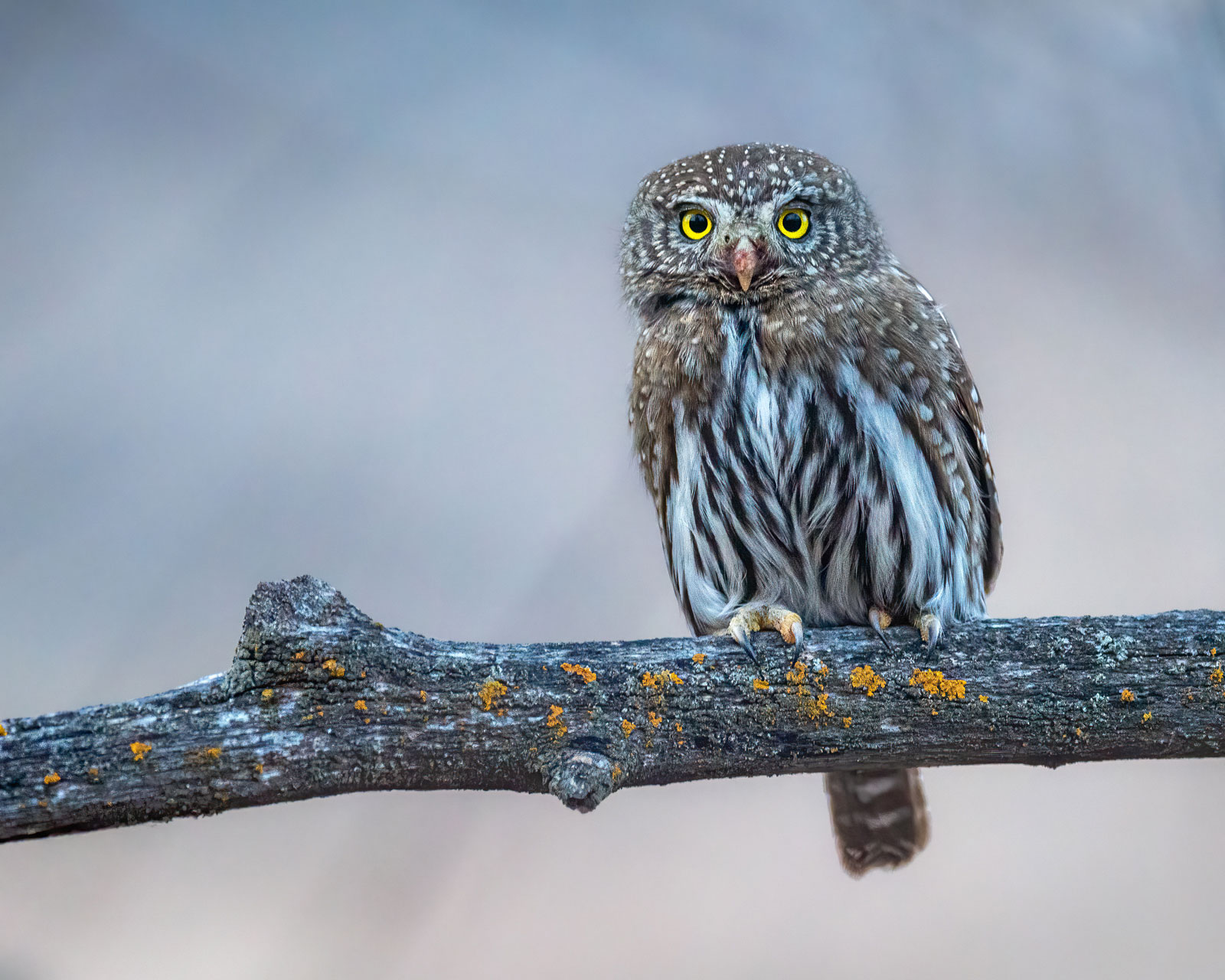
The Expressive Facial Disc: Most owls are characterized by prominent facial discs—specialized, stiff feathers arranged in a parabolic shape around their eyes. These discs serve a critical biological function: they funnel sound waves to the owl’s highly sensitive, often asymmetrical ears, allowing for incredibly precise auditory localization of prey. Visually, these discs create a powerful frame around the owl’s large, forward-facing eyes, forming a natural focal point in any portrait. As the eyes are typically on the same focal plane as the facial disc, achieving sharp focus across the entire face is relatively straightforward. Photographers should leverage this natural visual magnet, composing shots where the owl’s gaze and facial disc provide balance and draw the viewer’s eye into the image.
Hidden Agility: Legs and Talons: A surprising feature for many, especially when observing species like the Short-eared Owl, is the remarkable length of their legs, typically concealed by dense plumage. When an owl extends its legs for landing, repositioning, or, most dramatically, capturing prey, it reveals these powerful limbs and formidable talons. Capturing these fleeting moments, particularly the intricate action of talons gripping prey, adds a raw, dynamic element to images, showcasing the owl’s predatory prowess. This requires anticipation and a fast burst mode on the camera.

Silent Flight and Expansive Wingspans: Owls are celebrated for their virtually silent flight, a marvel of natural engineering attributed to specialized comb-like serrations on the leading edges of their primary feathers and a velvet-like texture on their flight feathers. This adaptation allows them to approach prey undetected. Their wingspans are often disproportionately wide relative to their body size, making flight shots particularly majestic. Opportunities to photograph their outstretched wings, especially when backlit by the rising or setting sun, can create dramatic silhouettes and highlight the intricate structure of their specialized feathers.
Mastering Compositional Techniques for Captivating Owl Images

Effective composition transforms a mere record shot into an impactful photograph, even with a seemingly static subject like a perched owl.
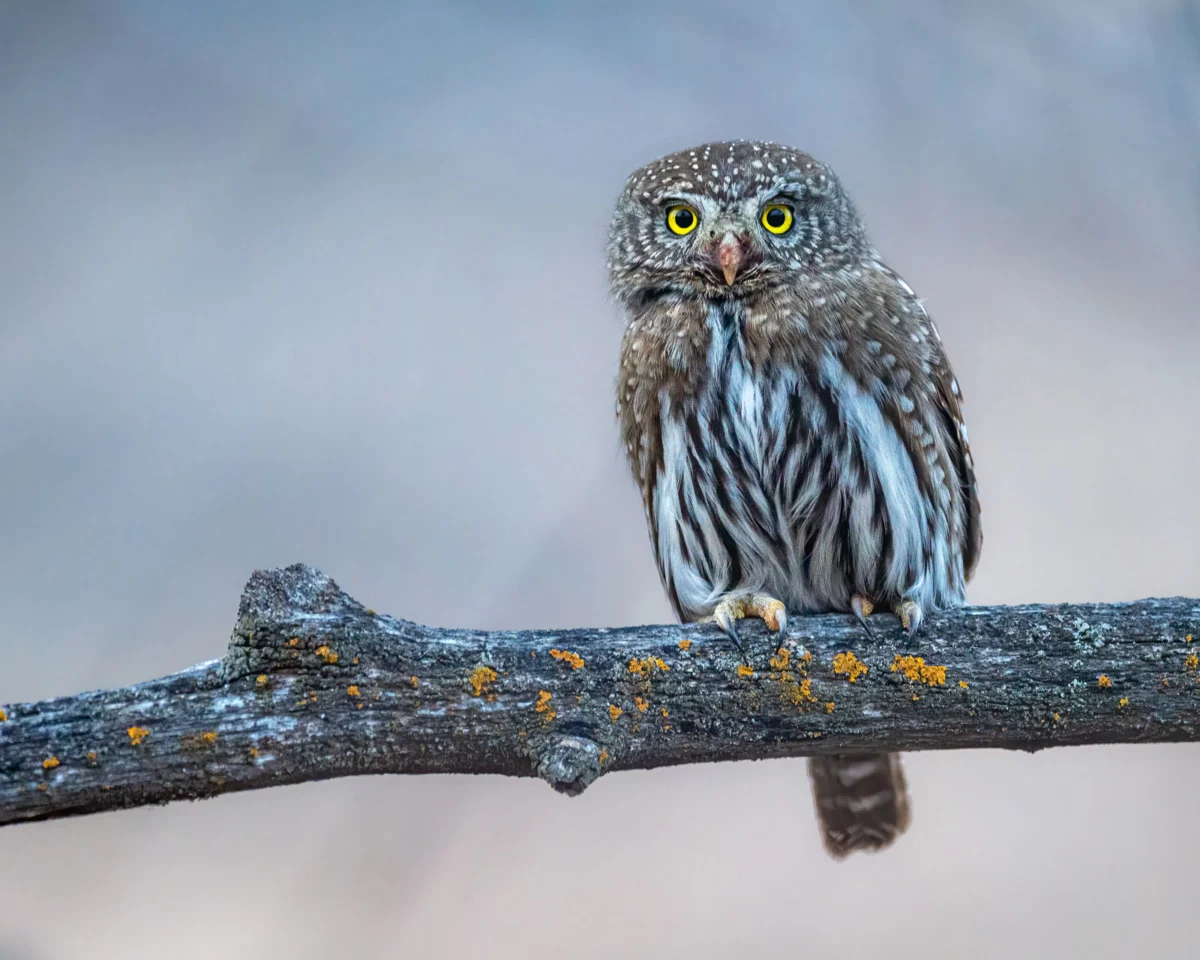
Perched Portraits and Environmental Context: When an owl is perched within a forest, the background can often be cluttered and distracting. Strategic repositioning is key to finding an angle that offers a clear view of the owl against a smooth, non-distracting background. This often involves using a wide aperture to create a pleasing bokeh effect, blurring distracting elements. Alternatively, the environment can be intentionally incorporated to provide context, depicting the owl "small in the scene" to convey its relationship with its habitat. This compositional choice works best when the surrounding forest itself is aesthetically pleasing, free from harsh highlights or visual clutter, and can be achieved with slightly shorter telephoto lenses (e.g., 70-200mm).

Ground-Level Encounters and Ethical Space: Some owls, such as Long-eared Owls, frequently perch at lower elevations, offering highly desirable eye-level perspectives. However, these owls can be more sensitive to human presence. When an owl is on the ground, particularly after a successful hunt, it is in a vulnerable state. Maintaining an extreme distance and remaining absolutely still is crucial to avoid startling it and causing it to abandon its hard-won prey. Rewarding images in such scenarios are a testament to patience and unwavering respect for the animal’s natural behavior.
Light, Contrast, and Supporting Elements: Consider how light interacts with the owl and its environment. A lighter-toned owl against a dark, shadowed forest background can create a striking, dramatic image. Proper exposure settings are essential to ensure that bright highlights on the owl’s plumage are not "blown out" while allowing the background to recede into deep, featureless tones. Compositionally, surrounding elements like prominent branches or natural framing can be used to guide the viewer’s eye to the owl, adding balance and depth without becoming a distraction. Subtle shifts in camera position can transform a distracting element into a supportive one.

Dynamic Flight Shots: Anticipation and Precision: Capturing an owl in flight is often the pinnacle of owl photography. This requires anticipating their movements. Learning a species’ hunting behaviors—for instance, the Great Grey Owl’s characteristic quick drops from a perch to catch prey under snow, or the Short-eared Owl’s graceful, low flight over open fields—allows photographers to predict flight paths. For larger owls, which tend to fly with a relatively predictable trajectory, a fast shutter speed (e.g., 1/1600 second or higher) is recommended for sharp images. Utilizing continuous autofocus and a high frame rate (burst mode) is critical to capture the dynamic sequence of flight. As the owl flies perpendicular or towards the photographer, continuous shooting can capture various wing and body positions, particularly when it changes direction, offering unique and compelling action shots. It is imperative that baiting techniques are never employed to attract owls or induce unnatural hunting behavior, as this is an unethical practice that harms the birds.
Image Orientation and Post-Processing

The choice of image orientation—horizontal, vertical, or square—is a key creative decision that influences how the viewer perceives the scene. A horizontal orientation often best conveys a sense of movement, such as an owl flying across a landscape. A vertical frame can emphasize the height of a perched owl or incorporate interesting compositional elements above or below the subject, adding a sense of grandeur. For symmetrical, face-on portraits, a square crop can create a balanced and impactful image. Experimenting with different orientations in the field and exploring cropping options in post-processing software allows photographers to discover the most compelling presentation for each image. Thoughtful post-processing, encompassing adjustments to exposure, contrast, sharpness, and noise reduction (especially for high ISO images), should always enhance the natural scene without misrepresenting it.
The Broader Implications of Ethical Owl Photography

The journey to photograph owls is often a prolonged and challenging one, demanding immense patience, persistence, and a profound respect for wildlife. However, the rewards extend far beyond the mere acquisition of images. It encompasses the extraordinary experience of connecting with these enigmatic birds in their natural environment.
Ethical owl photography plays a vital role in broader conservation efforts. High-quality, respectful images can serve as powerful tools to raise public awareness about specific owl species, their ecological importance, and the myriad threats they face, including habitat destruction, climate change, and human disturbance. Such photographs inspire appreciation, foster a deeper understanding of biodiversity, and garner support for critical conservation initiatives. By adhering to the highest ethical standards, photographers contribute to the long-term well-being of these magnificent creatures. Approaching owls with the necessary reverence for their space and silence ensures that both the photographer and the owl benefit from the encounter, leaving behind indelible memories and stunning, ethically captured images that advocate for their continued survival.