In an era defined by hyper-fragmented media consumption and the relentless demand for "always-on" marketing, the visual landscape of 2026 has undergone a fundamental transformation. As global brands navigate a digital environment that rewards both extreme authenticity and lightning-fast reactivity, the traditional binary choice between stock photography and custom photoshoots has evolved into a sophisticated strategic calculation. No longer a simple matter of budget constraints, the decision-making process now hinges on operational agility, algorithmic requirements, and the integration of generative artificial intelligence.
The 2026 Visual Paradigm: Speed and Volume as Market Mandates
The current marketing ecosystem is characterized by a multi-channel approach that requires a volume of content previously unimaginable. Where a quarterly campaign once relied on a handful of "hero" images, 2026’s performance marketing demands hundreds of variations tailored for specific demographics, regions, and platform-specific ratios. This shift has forced creative directors to re-evaluate the utility of visual resources.
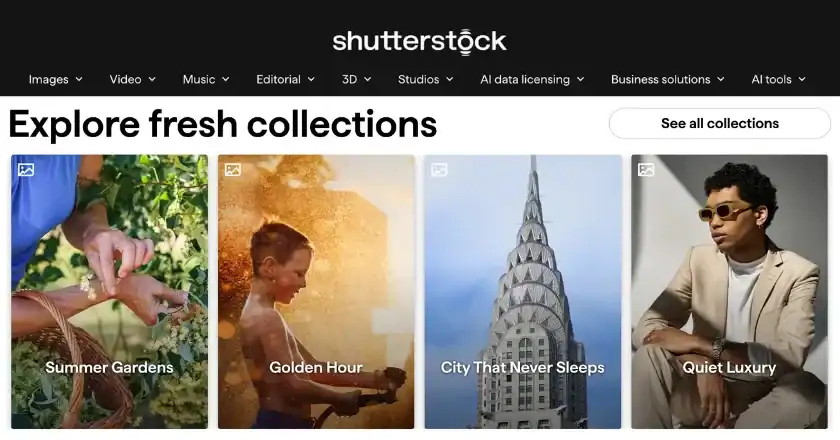
Stock photography platforms, led by industry giants like Shutterstock, have moved beyond being mere repositories of generic imagery. They have become essential infrastructure for the modern marketing department. Conversely, custom photography has transitioned into a specialized tool for high-stakes brand storytelling. The choice between these two is now governed by the specific Return on Investment (ROI) each provides within a particular use case.
Chronology of Evolution: From Static Libraries to Dynamic Assets (2020–2026)
To understand the current state of visual content, one must look at the trajectory of the last six years. In 2020, the global pandemic accelerated a shift toward digital-first commerce, creating an immediate need for stock imagery when physical shoots were impossible. By 2023, the emergence of generative AI threatened to disrupt the entire industry, leading to concerns regarding copyright and the "uncanny valley" of synthetic visuals.
By 2025, the market reached a point of "AI fatigue," where consumers began to prize human-centric, authentic imagery. This led to the "Realistic Stock" movement, where platforms like Shutterstock overhauled their libraries to prioritize candid, technically imperfect, and culturally diverse content. Entering 2026, the industry has settled into a stabilized hybrid model. High-volume, low-cost stock imagery handles the "churn" of social media and programmatic advertising, while custom photography is reserved for "brand-defining" moments where uniqueness is the primary currency.
Production Costs: A Granular Breakdown of Financial Investment
Financial considerations remains the most quantifiable differentiator between stock and custom solutions. In 2026, the cost of stock photography has become highly predictable due to the dominance of subscription-based models. On platforms like Shutterstock, a single image can cost as little as $0.20 when purchased as part of a high-volume enterprise plan, or up to $350 for specialized, high-resolution editorial or commercial licenses.
In contrast, custom photography remains a high-capital endeavor. A professional photoshoot in 2026 involves a complex layers of expenses:

- Talent and Creative Fees: Professional photographers and art directors often command day rates between $1,500 and $10,000, depending on the scope.
- Production Logistics: This includes location permits, equipment rentals, and studio fees, which can add $2,000 to $15,000 to a single session.
- Post-Production: High-end retouching and color grading are now frequently billed per hour, with specialized AI-assisted editing adding further costs.
- Insurance and Contingency: In an era of unpredictable climate events and supply chain issues, production insurance has become a non-negotiable expense, often representing 5-10% of the total budget.
When these factors are aggregated, a standard custom shoot can easily exceed $50,000, making it a difficult sell for high-volume, short-lived social media campaigns.
Time Investment: The Competitive Edge of "Instant"
In the 2026 market, time is often more valuable than capital. The "Attention Economy" moves at the speed of viral trends, meaning a brand that takes six weeks to produce a custom response to a cultural moment has already missed the window of relevance.
Stock imagery offers a turnaround time measured in minutes. A marketing team can identify a trend on a Tuesday morning, license a professional image from Shutterstock, adapt it using in-platform design tools, and have a sponsored post live across five platforms by lunchtime.
Custom photography, while offering superior specificity, remains tethered to a linear timeline. The cycle of pre-production, casting, shooting, and editing typically spans two to six weeks. For core brand identity—such as a website relaunch or a flagship product debut—this timeline is acceptable. However, for the daily "noise" of digital marketing, the speed of stock is an insurmountable advantage.

Scalability and Localization in a Global Market
For multinational corporations, scalability is the primary challenge of 2026. A campaign launching in North America, Southeast Asia, and the European Union requires visual assets that resonate locally. Attempting to achieve this through custom photography would require multiple shoots in different geographic locations, ballooning the budget into the millions.
Stock libraries solve this through vast, diverse repositories. A brand can use Shutterstock to find localized imagery that maintains a consistent "brand feel" while reflecting the specific cultural nuances of different markets. This ability to scale without a linear increase in cost is why stock photography remains the backbone of global content strategies.
The Role of Generative AI and Human Authenticity
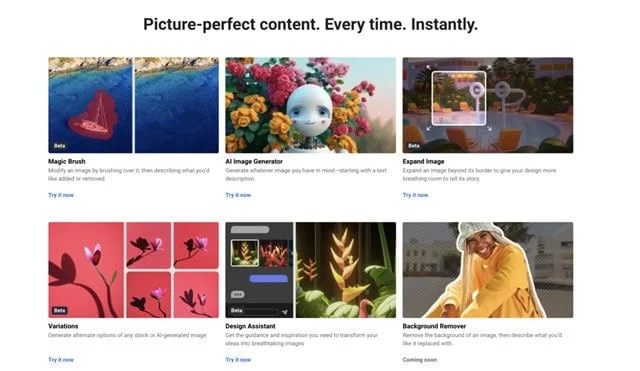
A significant development in 2026 is the integration of AI tools directly into stock platforms. Shutterstock, for instance, now offers generative tools that allow users to "remix" existing stock photos. A marketer can take a high-quality, legally cleared image and use AI to change the background, adjust the lighting, or swap out a product, effectively creating a "semi-custom" asset in seconds.
This hybrid technology has mitigated one of the traditional complaints against stock photography: that it is "too common." By allowing for high levels of customization within a stock framework, platforms have bridged the gap between the generic and the bespoke. Furthermore, because these tools are trained on licensed data, they avoid the legal and ethical pitfalls of "wild" AI generators, a crucial factor for corporate legal departments in 2026.

ROI Analysis: Matching Resource to Objective
The Return on Investment for visual content is no longer a broad metric; it is highly situational. Industry data from early 2026 suggests the following:
Stock Photography ROI is highest in:
- Social Media Advertising: Where the lifespan of an ad is often less than 48 hours.
- A/B Testing: Where multiple visual concepts need to be tested simultaneously to see which drives higher click-through rates.
- Educational and Informational Content: Such as blog posts, white papers, and internal communications.
Custom Photography ROI is highest in:
- Product Pages (E-commerce): Where the specific details of a unique item are the primary selling point.
- Hero Images: The "face" of a company on a homepage or a physical billboard.
- Brand Identity Revamps: Where the goal is to differentiate the brand from competitors through a unique visual "DNA."
The Hybrid Model: Strategic Allocation of Visual Capital
The most successful marketing teams in 2026 have abandoned the "either/or" mentality in favor of a 70/30 or 80/20 hybrid model. In this framework, 80% of the brand’s visual output is sourced from high-quality stock platforms like Shutterstock, ensuring speed and cost-efficiency. The remaining 20% of the budget is concentrated on high-impact custom shoots that provide the "authentic" anchor for the brand’s identity.

This strategic allocation ensures that the brand remains visible across all channels without exhausting its creative budget. It also prevents "creative burnout" among internal teams, as the heavy lifting of content volume is handled by ready-made assets, leaving more time for the high-level creative direction of custom projects.
Broader Impact and Future Implications
The shift toward this hybrid, AI-augmented visual economy has profound implications for the creative workforce. Professional photographers are increasingly pivoting toward high-end "artisan" services or contributing to the very stock libraries that brands rely on. Meanwhile, the role of the "Graphic Designer" has evolved into that of a "Visual Content Strategist," someone who can navigate stock libraries, AI tools, and custom assets to build a cohesive narrative.
As we look toward the end of the decade, the distinction between "taken" photos and "made" images will continue to blur. However, the core requirement remains unchanged: images must evoke emotion and build trust. In 2026, the brands that win are those that understand that stock photography provides the scale to be seen, while custom photography provides the soul to be remembered. By leveraging platforms like Shutterstock for the former and dedicated shoots for the latter, modern businesses are finding the optimal balance between the spreadsheet and the sketchbook.