This evolution comes at a critical juncture. Industry data suggests that the average social media manager or independent creator now manages between three and seven different platforms simultaneously, each requiring unique aspect ratios, tones, and engagement strategies. To meet this demand, Shutterstock has moved beyond simple downloads, integrating advanced editing tools, generative artificial intelligence, and sophisticated monetization programs that allow creators to both consume and produce value within a single interface.
The Strategic Evolution of a Digital Asset Giant
Founded in 2003 by Jon Oringer with a starting collection of just 30,000 of his own images, Shutterstock became the first stock agency to implement a subscription model. This move disrupted the industry, which had previously relied on expensive, individual-license "rights-managed" imagery. Fast forward to the mid-2020s, and the platform now hosts over 700 million images, 50 million video clips, and millions of music tracks and 3D assets.

The most significant shift in the company’s chronology occurred between 2022 and 2024 with the launch of the Creative Flow suite. This was not merely a cosmetic update but a fundamental re-engineering of the user experience. By acquiring platforms like GIPHY, Pond5, and Splash News, and partnering with tech leaders like OpenAI and NVIDIA, Shutterstock transitioned from a "search and download" site to a "create and deploy" platform. This move was designed to keep users within the browser, eliminating the friction of switching between asset libraries and heavy desktop design software like Adobe Creative Cloud.
Monetization and the Global Contributor Economy
For professional photographers, videographers, and illustrators, Shutterstock represents one of the most accessible avenues for passive income. The Shutterstock Contributor Program has paid out over $1 billion to its global community since its inception. This program functions as a bridge between localized talent and global corporate demand, allowing a photographer in Jakarta to sell a landscape shot to a marketing agency in New York within seconds.
The monetization structure is divided into levels based on the number of licenses a contributor sells annually. As a creator moves from Level 1 to Level 6, their percentage of the royalty fee increases. Beyond traditional stock sales, Shutterstock has introduced the "Contributor Fund," a pioneering initiative in the age of artificial intelligence. This fund compensates creators whose work is used to train the platform’s generative AI models. This ethical approach to AI training has been a cornerstone of Shutterstock’s recent corporate messaging, distinguishing it from competitors who have faced legal scrutiny over copyright infringement in AI datasets.

To maximize earnings, contributors are encouraged to utilize the platform’s "Shot List," a data-driven monthly brief that informs creators about specific visual gaps in the library. For example, if data shows a 200% increase in searches for "sustainable urban farming," contributors are alerted to produce that specific content, ensuring a higher likelihood of sales.
The Creative Flow Suite: Streamlining Production
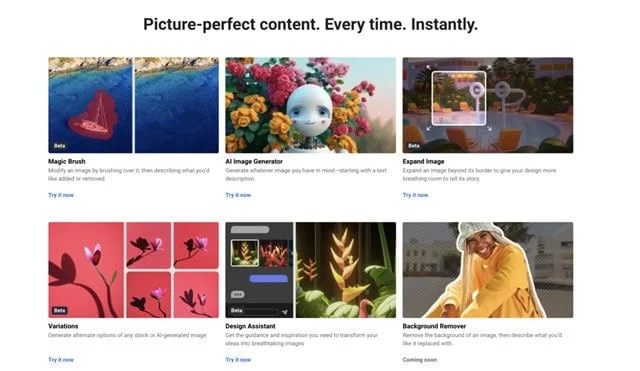
The "Creative Flow" ecosystem is the technical heart of Shutterstock’s offering for content creators. It integrates several AI-powered tools that automate the most tedious aspects of design.
- AI Image Generator: Powered by DALL-E and trained on Shutterstock’s own licensed library, this tool allows creators to generate unique visuals from text prompts. Crucially, because the AI is trained on licensed data, Shutterstock provides indemnification for these images, offering a layer of legal security that open-source generators cannot match.
- Shutterstock Editor: This browser-based tool mimics many functions of high-end design software but with a lower barrier to entry. It includes "one-click" resizing for various social media platforms, allowing a user to turn a horizontal YouTube thumbnail into a vertical Instagram Story instantly.
- Background Remover and Smart Scaling: These utility tools use computer vision to isolate subjects or increase the resolution of low-quality images without losing detail. For e-commerce creators, the ability to remove a background from a product shot in less than two seconds represents a significant operational efficiency.
- Brand Kit: This feature allows agencies and influencers to store their specific hex codes, logos, and fonts. When creating new visuals, the platform automatically suggests these brand elements, ensuring consistency across a multi-platform campaign.
Supporting Data: The Rise of Visual-First Marketing
The demand for these tools is supported by aggressive growth in visual-first marketing sectors. According to recent market analysis, 91% of consumers prefer visual and interactive content over traditional, text-based media. Furthermore, video content is projected to account for 82% of all internet traffic. Shutterstock’s expansion into high-frame-rate 4K video and royalty-free music tracks for TikTok and Reels is a direct response to these metrics.

In the corporate sector, the "Shutterstock Enterprise" division has seen increased adoption by Fortune 500 companies. These entities require high-volume content but must mitigate the risk of copyright litigation. The platform’s commitment to "clean" data and clear licensing pathways has made it a preferred partner for large-scale marketing departments that are increasingly moving their creative production in-house.
Ethical AI and Official Industry Responses
The integration of AI into creative workflows has been met with a mixture of excitement and trepidation by the creative community. Shutterstock’s response has been to position itself as a "pro-creator" AI platform. Paul Hennessy, CEO of Shutterstock, has frequently emphasized that "AI should be a tool for the creator, not a replacement for the creator."
In a statement regarding the platform’s AI ethics, the company noted: "We believe that the creators who provide the data that makes AI possible deserve to be compensated. Our Contributor Fund is not just a policy; it is a commitment to the long-term viability of the human creative spirit."

Industry analysts have noted that this stance has helped Shutterstock maintain a stable contributor base even as other platforms struggle with "contributor strikes" or mass deletions of portfolios in protest of AI policies. By providing a clear financial path for those whose work assists in AI development, Shutterstock has created a model that many in the tech industry are now looking to emulate.
Broader Impact and Future Implications
The long-term impact of Shutterstock’s evolution is the democratization of high-end design. By lowering the cost and technical barriers to creating professional-grade content, the platform is enabling a new class of "solopreneurs" and small business owners to compete with larger corporations in the attention economy.
However, this democratization also leads to a more crowded marketplace. As the "speed to market" increases, the value of unique, high-concept creativity becomes even more critical. Shutterstock’s tools are designed to handle the "commodity" side of creation—resizing, background removal, and basic layout—freeing up human creators to focus on strategy and storytelling.

Looking ahead, the platform is expected to deepen its integration into the metaverse and 3D design spaces. With the acquisition of TurboSquid, the world’s largest 3D marketplace, Shutterstock is already positioning itself to be the primary provider of assets for virtual reality and augmented reality environments. For content creators, this means the platform they use today for Instagram posts will likely be the same one they use tomorrow to build immersive 3D brand experiences.
Shutterstock has successfully transitioned from a static library to a dynamic, AI-powered partner for the modern creator. By balancing the need for rapid production with a commitment to ethical monetization, it has secured its position as a central pillar of the digital economy. Whether a creator is looking to earn their first dollar through photography or a major brand is looking to automate its global social media presence, the platform provides a scalable, secure, and efficient pathway to success in an increasingly visual world.